Tony Robbins on Investing
Tony Robbins treats investing as the path from trading time for money to owning assets, compounding patiently, controlling psychology, and diversifying intelligently.
- Investing starts with becoming an owner rather than only a consumer.
- Wealth grows through saving, investing, and compounding over long periods.
- The biggest investing mistakes are often psychological, especially fear and market timing.
- Fees and concentration quietly destroy returns, so diversification matters.
- Your best investment is also yourself, because skills and adaptability raise your earning power and judgment.

Investing is about becoming an owner
Robbins’s core investing idea is simple: wealth comes from ownership. He draws a sharp line between people who only consume and people who build freedom by owning assets, because ownership lets money work without requiring you to keep trading hours for income.123
That is why he frames investing as a life shift, not just a financial tactic. In his view, people stay stuck when they remain focused on earning and spending, while long-term wealth begins when they deliberately move some of what they earn into assets they own.3
“…someone who is financially rich is an owner.”Lewis Howes podcast interview, 2016 · full transcript →
Compounding, not hustle alone, creates financial freedom
Robbins argues that income by itself is not enough; some portion must be saved and invested so it can compound over time. His emphasis is less on chasing dramatic wins and more on building a durable process that keeps working year after year.
This is one reason he pushes back on quick-win thinking. He presents real wealth as the result of discipline, patience, and strategy rather than speculation, hype, or constant activity.
He also links investing to planning. The people who build wealth are usually not improvising every month; they decide on a direction and follow through consistently.45
Your psychology matters more than your market predictions
Robbins says many investing mistakes come from emotion, not lack of access. Fear during downturns, attempts to time the market, and reactive decisions can do more damage than the downturn itself, because the deepest losses often come from what investors do to themselves.6
That view fits his broader belief that results are shaped internally before they show up externally. In investing, that means steadiness, emotional control, and the ability to avoid panic may matter more than sounding smart about forecasts.76
His advice is practical: build an approach you can stick with when conditions get hard. For Robbins, consistency beats emotional brilliance.
“The market never took a dime from anybody. Only you can take it from you.”Lewis Howes podcast interview, 2016 · full transcript →
Diversification matters because concentration hides risk
Robbins stresses diversification, especially through genuinely uncorrelated assets. The principle he highlights is not just owning many things, but owning assets that do not all move together, which can reduce the damage from any one market shock.
That is part of why he is interested in alternative investments such as private equity and GP stakes. He describes them as ways to access different return streams, contractual income, and diversification beyond heavily correlated public markets.
His larger point is that investors should think structurally, not emotionally. Good diversification is a design choice made in advance, not an afterthought when markets get scary.48
The investor edge is principles, learning, and adaptation
Robbins repeatedly argues that ignorance about money is costly. Learning the basics of ownership, compounding, diversification, and decision-making is not optional if you want better outcomes.910
He also says the best investment is in yourself. Better skills improve your earning power, but they also improve your judgment, which matters even more in a world he expects to be reshaped quickly by AI and automation.1112
This is where principles come in. Robbins admires decision-making frameworks that help people face reality, test ideas, and avoid confusion, because investing gets harder when noise is high and clear principles are missing.13814

“The most important investment you can ever make is in yourself.”The Iced Coffee Hour interview, 2024 · full transcript →
Robbins on investing, in his own words
“…someone who is financially rich is an owner.”
“The market never took a dime from anybody. Only you can take it from you.”
“Ignorance is not bliss. Ignorance is poverty. Ignorance is pain.”
“The most important investment you can ever make is in yourself.”
“You're not going to be replaced by an AI. You're replaced by somebody who knows how to use an AI.”
Where to watch
 Tony Robbins on Financial Freedom: How to Own the Game2016 · 67 min · full transcriptBest overview of Robbins’s basic investing philosophy: become an owner, keep investing, avoid emotional mistakes, and respect compounding.
 Tony Robbins on Alternative Investments: Owning the Assets2024 · 72 min · full transcriptBest for his case for ownership, financial literacy, and using alternative assets for diversification.
 Tony Robbins on Frugality and Wealth Building: Don’t Be Cheap2024 · 99 min · full transcriptBest for understanding why he rejects get-rich-quick thinking and treats self-investment as foundational.
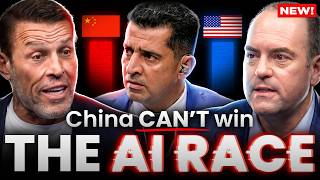 Tony Robbins on the Next 36 Months: AI, Jobs, and Investing2026 · 102 min · full transcriptBest for how he connects AI disruption to investing, adaptability, and the appeal of less correlated private-market assets.
 Tony Robbins on Principles and Decision Making: Ray Dalio interview2017 · 67 min · full transcriptBest for the principles-based decision framework that informs how Robbins thinks about investing under uncertainty.
Questions people ask
Sources
Every quote above, word for word from the transcripts. Numbers match the text.
“…someone who is financially rich is an owner.”
“You've got to become an owner.”
“There's lots of differences, but I'd say the first one is someone who is financially rich is an owner. They're not a consumer. They're a consumer also, but when somebody is poor, they're a consumer. All they do is they take the, you know, I always tell people we're all financial traders. People say, "I'm not a financial trader." Yes, you are. You're trading time for money. That's the worst trade you can ever make in your life. Um, somebody who's wealthy has made money their slave. They're no longer the slave to money, and the way they do that is they figured out how to become an owner.”
“Most people don't plan to fail, they just fail to plan.”
“It's in your moments of decision your destiny is shaped.”
“The market never took a dime from anybody. Only you can take it from you.”
“Our lives are not controlled by the external world. It's the internal world that determines how you feel about things.”
“If you don't have principles, everything looks the same, like you're in a blizzard…”
“Ignorance is not bliss. Ignorance is poverty. Ignorance is pain.”
“Most people major in minor things.”
“The most important investment you can ever make is in yourself.”
“You're not going to be replaced by an AI. You're replaced by somebody who knows how to use an AI.”
“Embrace reality and deal with it…”
“We're drowning in Information. We're starving for wisdom.”
How this guide was made: drafted with AI from the full transcripts of the recordings cited, then checked: every quotation must match a transcript word for word and be the speaker's own words, and an independent review gates accuracy. Methodology and corrections.