Steve Jobs on Steve and Wozniak: The early partnership

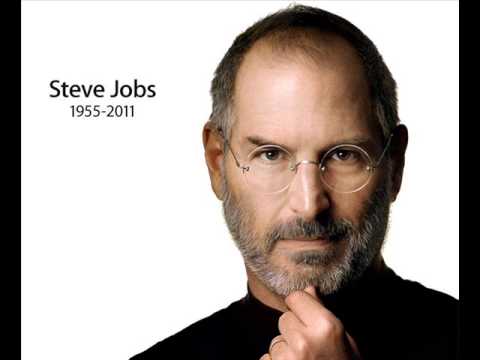
What Jobs talks about
Jobs tells the story of meeting Steve Wozniak and why the two clicked so quickly. He emphasizes Woz’s deep electronics knowledge, his engineering mindset, and the contrast between Woz’s shy personality and Jobs’s more business-driven approach.
A major thread is their early collaboration on electronics pranks and the Blue Box. Jobs presents it as the first real proof that they could combine technical skill and product instincts to build something bigger than either of them alone.
He also traces Wozniak’s childhood curiosity, family influence, and hands-on learning, using it to explain the roots of Woz’s inventiveness. The talk matters because it frames the origin story of the Apple partnership as a meeting of complementary talents.
Jobs speaks throughout, presenting his own recollections in first person.
In his words
“He is the first person I knew who knew more about electronics than I did.”
“I like him.”
“I've never lied, not even today.”
“I thought about it again and concluded that if it wasn't for the Blue Box, there wouldn't be Apple today.”
“We were confident that we could solve the technical problems and bring them to production.”
Key points
- Jobs says Wozniak was the first person he knew who knew more about electronics than he did.
- He contrasts Woz’s engineering-first identity with his own instinct for business and selling.
- Jobs describes how both of them loved electronics and music, especially Bob Dylan.
- He says the Blue Box showed them they could work together and solve both technical and product problems.
- He argues that the Blue Box experience helped lay the groundwork for Apple.
- He portrays Woz as brilliant, shy, and deeply motivated by engineering.
Full transcript
The second one is the difference between Steve and Steve. When I was studying electronic science with Ms. Michaelum, I met Steve Wozniak. He graduated earlier than me. He is my favorite student. He is a very good student. Wozniak is 5 years older than me. He has a brother who is in the swimming team with me. He knows more about electronics. But in terms of society, Wozniak is still like a high school student who is crazy about studying. Wozniak has a job. He has a lot of knowledge. But it's not the same. When he doesn't finish high school, but the experience from repairing cars makes him know how to make a profit from selling something.
But Francis Wozniak, or someone called Jerry, is a smart engineering student. He graduated from the California Institute of Technology. Caltech He is also the quarterback of the college football team. He majors in computer science. He looks down on businessmen, marketers, and sellers. Wozniak, who is a father, works as a scientist at Lockheed. He created a manned aircraft system. Steve Wozniak said, I remember that my father always taught me that engineering is a high-level field. The most important thing is that we can learn in this world.
It is a subject that helps improve our world. One of the first memories of Wozniak in his childhood was to get a tablet from my father on a weekend. And my father picked up a piece of electronics and showed it to me. My father put those pieces of electronics on the table for me to play. He watched my father work so hard that he saw my father trying to make a line on the video screen to be a horizontal line to show that the design he designed worked. I saw that whatever my father did, it was all good and important. Woz, which is the name that everyone has been calling him since then, often asked my father about the antipodes and transistors in the house.
My father would write a blackboard to explain how it works. He said, My father would explain to me what an antipode is. He explained back to the atom and electron. When I was in grade 2, he explained to me how an antipode works. Not by writing equations for me to see, but for me to imagine. Another thing that my father taught me was not to lie. This teaching is one of the things that makes Wos behave like a child. He's shy when he's in society. My father believes in the most honest thing. It's the most important thing that he taught me. I've never lied, not even today.
Maybe sometimes, except a little bit, when I tell jokes. In addition, Jerry still raises his son not to be too hard on him. Which is the opposite of Steve Jobs. After knowing each other for 40 years, Wos wants to talk about this difference in the launch of Apple's new product in 2010. My father taught me to always walk on the middle path. I've never wanted to go up high like Steve. Because I'm an engineer. And I want to be an engineer, too. I'm too shy to be a business leader like Steve. When I was in the fourth grade, Wos became an electronic boy.
He made it easier for him to look at his sister than to look at his sister. He was a handsome boy. He walked around with a cell phone all day. At the same age as Jobs, Jobs was still confused with a carbon microphone that his father couldn't find the answer to. Wos used a transistor to create an intercom system that has both an amplifier and a relay. Electronic devices are responsible for cutting to the circuit. Light and buzzer. A type of metal tube can generate sound by itself, but it can't change the frequency of sound. Transistor.
Which is the same as the bedroom of a 6-year-old in the same neighborhood. And when Jobs was still playing with the electronic devices, he thought, Wos was assembling the transistor and the radio receiver of Helicopter. Helicopter is a company that manufactures and owns radio equipment. It has a large office in Chicago. It was the most modern radio at the time, and it was already licensed to play with his father. Wos spent most of his time at home reading his father's electronic journals. He was interested in new computers, such as the Ineac Electronic Numerical Integrator and Computer, a world's first digital electronic integrated computer developed by the U.S. Army during World War II to calculate how weapons are attacked from Wikipedia.
Wos was good at Pythagorean Theorem anyway. He was addicted to the simplicity and complexity of those new computers. When he was in grade 8, he created a numerical instrument using the binary number theory. His numerical instrument used 100 transistors, 200 diodes, and 200 antiparticles, all on top of a 10-slot disk. Wos's numerical instrument won the competition, which was organized by the Air Force, and he won the competition as a grade 12 student. Wos was not very friendly. At the same age as the boy, he started to have a girlfriend, and he liked to travel.
He felt that it was more difficult than designing a computer. He recalled the old days and said, Before having a name, riding a bicycle, or doing anything, I became a person that society did not accept. It seemed that no one wanted to talk to me for a long time. He found a way by playing something hard like a kid. In grade 12, he created a metronome electronics, a numerical instrument used in music. There was a loud sound, tick, tick, tick. He found that the sound was similar to the sound of a time bomb. He removed a large battery, attached it to the metronome, and put it in the locker at school.
He made the sound, tick, tick, louder when he opened the locker. That evening, he was called to meet the principal. He thought that the principal would call him to receive a prize that could score the highest academic score as before. On the other hand, he met the police in the principal's office. The police called Moral Bright, the principal, to meet him. When he found that piece of equipment, Moral Bright hurried to the right, hugged it to his chest, and ran out to the football field. When the lights went out, Watts tried to stop him from laughing, but he couldn't stop him. In the end, he was sent to the detention center for one night. Watts said that it was an amazing experience that should be remembered.
He taught the prisoner to put a wire from the fan on the ceiling, tied it to the ball. If anyone came to catch the ball, they would be shot. Watts should have gained courage from being shot by electricity. He was proud to be a hardware engineer, which meant that being shot by electricity was normal. Once, he created a roulette game. There were four players. Everyone had to put their thumbs in the hole. When they dropped the ball, one of them would be shot. He concluded that the hardware guys liked to play this game. The software guys were too lazy. The last year, Watts got a part-time job at a company, Sylvania. It was the first time he worked with a computer.
He studied fortran from a book. He read manuals using the major computer systems available at that time, starting with mini computers, digital equipment, PDP-8. After that, he studied the specifications of the latest microchip and tried to design a computer using new parts. His goal was to design a computer with the same design using as few parts as possible. I closed the door and worked alone in my room. Every night, he would modify the design he had written the night before. When he finished studying, he became an expert. I designed a computer using the same design as the manufacturer's, but using less than half of the chips.
But all the designs were on paper. He didn't tell his friends, because most 17-year-olds didn't know how to design computers. On the weekend, I went to the University of Colorado. But the university was closed because of the weekend. I met an engineering student. I took him to the lab. He came back and complained that his father sent him to study there. Even though he knew that the tuition fee in a foreign university was more expensive than his father would pay. In the end, the father and son decided that I could only go to Colorado for a year. After that, I had to transfer back to De Anza. De Anza is a state-of-the-art university.
I had a choice. After I went to the University of Colorado, in the fall of 1969, I spent most of my time doing things like typing a lot of unhygienic text messages. I failed many exams and was suspended. In addition, I was planning to create a free-bonus program. It took me a long time to get a computer. The university threatened to collect money for the computer from me. I decided to transfer back to De Anza University without telling my family. After my first year at De Anza University, I found time to go to work to earn money and get a job in a computer manufacturing company in the automotive industry.
My good-hearted colleague said that he would help me find a chip that I didn't use anymore and let me build a computer in the way he designed. He intended to use the chip as little as possible to challenge himself and not to take advantage of my friend's kindness. He spent most of his time parking at Bill Fernandez's house to build a computer. Fernandez had a house nearby and was still studying at Holmsteel High School. In order to work smoothly, the two of them bought a brand of soft drink, Craymon Cream Soda, to drink a lot. They rode bicycles to return the bottle at Sunny Valley Safeway. They received money to pay for the return of the bottle and bought it again. So we called that computer a Cream Soda Computer.
He said that it was a computer that could multiply the numbers that were fed by the switch and show the result as a binary code. When he finished in the fall of 1970, Fernandez told me that he wanted to introduce a student at Holmsteel High School to me. His name is Steve. He likes to play something and likes to build electronic devices like me. The meeting in the car between Steve Jobs and Stephen was probably the most important meeting between the two of them in Silicon Valley. Since he met Packard in his car 32 years ago. He said, Steve and I were talking while walking in front of Bill's house.
We talked for a long time. We told each other our stories. Most of them were about our plans. And about the electronic device that we designed. We had a lot of things in common. It was a very difficult story for me to explain to anyone. And I could understand what I was designing. But Steve understood immediately. I like him. He is a young, strong, and full of power. Steve was also very interested in Voss. Voss was the first person I knew who knew more about electronics than I did. I liked him since the first time we met. I was a little older than him. While Voss was a little younger than me.
So we were about the same age. Voss was very smart. But he had the same feeling as someone my age. Apart from his interest in computers, both of them also liked music. Voss told me that listening to music was a lot of fun. It was like we were in the age when Beethoven and Mozart were still alive. Actually, Voss and I were very close. Voss was the one who introduced me to the music of the great singer Bob Dylan. We both looked for the name Stephen Pickering in Santa Cruz County. He was the one who wrote a letter about Bob Dylan.
He said that Bob Dylan would record a concert tape that he performed every time. But people around him didn't buy it. Soon, there were a lot of ghost tapes. Mr. Pickering had all of them. Soon, the journey to find Bob Dylan's tapes became a joint mission. Voss said that the two of us went around San Jose and Berkeley to collect Bob Dylan's ghost tapes and also bought his music brochure. We listened to and studied the meaning of the music all night. The lyrics in Bob Dylan's music were very creative. Voss added that he had a tape that was more than 100 hours long, including the concerts that Dylan toured in 1965 and 1966, which he played very well.
The two of us bought a tape and a cassette tape called T-AX. Voss said that he would use his tape to record concerts at low speed. I also bought some, but instead of buying a big speaker, I bought a good headphone and listened to music comfortably for an hour. I set up a club at school and organized a musical performance but it was still a mess. There was one time when they were sitting and painting the walls with paint and sticks and planting trees. The club was called The Bugfly Club. My name was Teacher Yai.
I was friends with Voss. His name was Alain Bomb. Even though he had finished school, he still came back to help. At that time, he was in grade 11. At the end-of-school party in the next 40 years, he came back to walk around the school again. He stopped and pointed to the point where he was playing funny. Do you see that wall? That's where we hang our friendship banner. Steve, Voss, and Bomb hung a large bed sheet in green and white, which is the color of the school, and drew a large hand and a middle finger. Bomb's mother, who is a Jew, also helped draw the color and the shadow to make it look real.
They all did it at Bomb's backyard. Bomb's mother said, I know what you're thinking of doing. They all helped with the rope system to make the banner look beautiful when the students who graduated that year walked through the wall. There was a message on the banner that said, Swap Job, which is the nickname of Voss, Bomb, and Job. That funny play became a hot topic in the school, and Job was suspended again. There was another important activity. Voss created a device attached to a bag that can send a telephone signal. He would put the device in the room where people were watching TV, such as in the student dormitory, and press and hold the button to send the signal.
It made the TV screen blur. When someone got up to touch the TV, he would stop and press the button. The screen became clear again. He teased the audience to get up, get down, and teased them harder. This time, the screen became blurry and people had to get up to touch the air-conditioning pole. Voss made the audience think that they had to stand on one leg or touch the air-conditioning pole for many years. Job found this joke when he opened the video in the Thakatha performance. He spoke out of the script and told the story to the audience that Voss would put the device in the bag, and we walked into the dormitory. There were people watching the movie Star Trek.
Voss teased them, made the screen blur, and teased them harder. When someone got up to touch the TV, he would stop and press the button. The screen became clear again. He teased the audience to get up, get down, and tease them harder. This time, the screen became blurry and people had to stand on one leg or touch the air-conditioning pole for many years. This time, the screen became blurry and people had to stand on one leg or touch the air-conditioning pole Voss used the electronic device to create the most important prank to tease people that helped make the Apple. It happened in the afternoon. Voss was reading a newspaper Esquire, January, 1971 that his mother put on the table in the kitchen.
Actually, he was driving to Berkeley the next day to attend the third university. The newspaper was called Secret of the Little Blue Box written by Ron Rosenbaum. He described that hackers and secret users invented the wireless phone without spending money by learning the voice of the phone signal on the AT&T circuit. Vosniak said, I can only read half of it, I have to hurry back to my best friend, Steve Jobs, and read it to him. He knew that Jobs, who was in the last year of high school, was one of the few people who would be excited about this story like him.
The hero of the story is John Draper, a hacker who has a nickname, Captain Crunch. He found out that the whistle that came with the breakfast cereal had a sound like the sound that has a frequency of 2,600 Hz, which is used by the switch to set up the call line of the mobile phone. This whistle can trick the system to send a long-distance phone signal without having to spend more money. The story also reveals that there are other sounds that give the same frequency signal in the same frequency range. In-band signal, frequency signal, which can set up a phone call line, is included in the The Braille System Technical Journal.
When AT&T found out, they asked the library to remove the journal from the bookshelf immediately. As soon as Jobs received a call from Vosniak in the afternoon, he knew that he had to find that journal. Jobs said that a few minutes later, Vos came to pick me up at home. We rushed to the library of Slack, the Stanford Linear Accelerator Center. But the library was closed for a week. They knew the way to the library because there was a door. There was probably no one there. Jobs was so excited that I remembered that we talked to the book. According to me, Vos was the one who found that journal. We opened it and at that moment we told ourselves that it was not a lie.
Everything was there, both sound and frequency. That evening, Vos hurried to Sunny Valley Electronic Shop. Before the shop was closed, he bought equipment and parts to create an analog signal generator. At that time, Jobs was able to create an analog signal generator. At that time, he was a member of the Recipe Explorers Club. He used it to check the desired signal signal. If there was a mobile phone dial, he could make a sound and record the signal. As stated in the letter, At midnight, Steve and Vos were ready to test the equipment. It was a pity that the signal generator they used was not reliable enough to make the signal sound like a mobile phone.
Vos said, The equipment of Steve that we use is not reliable enough. We still can't fix it. The next day, I had to go to Berkeley. So I thought that when I got to Berkeley, I would create a digital mobile phone signal generator there. At that time, no one had ever thought of creating a digital mobile phone signal generator before. But Vos wanted to try it. He used an old transistor from the radio check shop. Students and music students who stayed in the same dormitory came to help. He was able to listen and tell the different levels of sound accurately. Vos created this equipment before the holiday. Thank you, God. I've never designed anything as proud as this before.
To this day, I still think it's a really incredible invention. One night, Vos drove from Berkeley to his job at home to test the equipment he invented. They tried to call Vos's uncle in Los Angeles, but called the wrong number. But it's okay because it means his equipment can be used. Vos called his uncle and said, Hello, uncle. I'm looking for a musician. You don't have to pay me. He made everyone confused and annoyed. Job joined in and said, I'm calling from California. California? Use Blue Box. And it made the guy on the phone even more confused. Because he was also in California. At first, Blue Box was only for fun.
The most fun time was when they called Vatican. Vos lied that he was Henry Kringzinger, former US Secretary of State for Foreign Affairs during Nixon's presidency and Ford's presidency. And he said to Santa Papa, We're having a great meeting in Moscow. Would you like to talk to Santa Papa? He replied, It was 5.30 a.m. and Santa Papa was still asleep. When the phone rang again, the receiver was Bishop, who was on duty as a servant. But in the end, he didn't talk to Santa Papa.
Job said, Vos was not Henry Kringzinger because he was calling from a public phone booth. That experience caused an important event that shaped the cooperation between Job and Vos. Job thought that Blue Box should not be just for fun. It should be able to sell. Job said, I have collected all the remaining parts. For example, the circuit of the power supply, the numbering table. Let's think about how much we should sell. This role is what he did when he founded the Apple company. The work that was successful was equal to 2 for the total cost of equipment and parts, about 40 riyals.
Job set the price at 150 riyals. Job and Vos followed the hackers who like to fake phone signals. There are nicknames in the group, such as Captain Crunch. Vos has a new name, Berkley Blue. Job's name is Olatobark. Both of them walked to the door of the student dormitory in the dormitory. Asked if anyone wanted it. Showed the quality to the customer by connecting Blue Box with a mobile phone and speakers and called somewhere, such as the Ritz hotel in London, or listened to the news every day. The phone rang at Dial-A-Joke in Australia.
Job remembered that we made about 100 Blue Boxes, almost sold out, and the profit and fun were gone at the pizza shop in Sunnyvale. Both of them were about to drive to Berkley. Take the newly made Blue Boxes to sell there. Job wanted to sell things because he wanted money. He offered to sell to the group of men sitting at the table next to him because they were interested. Job went out to the public phone booth to see by phone to Chicago. The customer said he had to go back to get the money in the car. Job said that his friend and I followed them to the car. I was the one holding the Blue Box. The group of men got in the car and went under the seat and pulled the gun out. He was very shocked because he had never been shot this close before.
He aimed the gun at my belly and said, I have to go back to my room. In my head, I had a lot of thoughts. I saw the car door. I thought maybe I could open the car door and let them run away. But I thought they might shoot me to death. So I slowly handed the Blue Box to him very carefully. It was the strangest robbery because the man who received the Blue Box left his phone number for me and said he would pay me if it worked. Later, when I returned the phone to that number, it turned out that I had talked to that man. He said he didn't know how to use a gun. I used the most polite words to ask him to meet me at a public place. But in the end, he turned away and didn't dare to face the gun again even if he had a chance to get a reward of 150 baht.
The act of that time paved the way for both of us to make a great adventure together. I thought about it again and concluded that if it wasn't for the Blue Box, there wouldn't be Apple today. I was 100% sure. Both of us learned how to work together. We were confident that we could solve the technical problems and bring them to production. Job and I helped each other to create a device that only had a small screen but could control the system and create a foundation worth millions of dollars. I concluded that the Blue Box might not be a good idea but it showed us what we could do with my engineering knowledge and Steve's talent.
The exciting thing that happened to make the Blue Box became a model of cooperation between Job and me in the future. I was the best in the world who gave up everything I had for free. But Job thought about how to make it easy and user-friendly. These two qualities were brought together to create a product that was unique. Thai Tham Nguen.
Transcribed from the audio with OpenAI Whisper. Timestamps link to the video above. Errors are possible.