Steve Jobs on Digital Art: Immersive Multimedia and the Mac
What Jobs talks about
Jobs introduces a body of digital art built with the Macintosh, then walks through how he uses 3D tools, illustration software, and animation to create immersive worlds. He emphasizes that the Mac made it possible for him to keep working and keep making art.
He talks about collaborations with The Residents, including Freak Show and Bad Day on the Midway, and explains how those projects evolved from small ideas into long, deeply detailed labors of love. He also describes how the work pushed beyond conventional games into narrative, interactive worlds.
The talk matters because it shows Jobs speaking not as a product executive, but as a creator. He frames the Mac as an enabling tool for independent multimedia and highlights the power of technology to expand artistic expression.
An emcee introduces Jobs, and Jobs speaks throughout.
In his words
“I've dedicated my life to not having a job”
“I'd like to thank Apple and the Macintosh for making that lifestyle possible for me.”
“I wanted to make something more immersive”
“So the Macintosh made it possible for me to keep being... To keep keep working, to keep creating art.”
“I wanted to create a look for these characters that was really something that hadn't been seen before”
Key points
- The Macintosh made his creative lifestyle possible.
- He started with Mac art and kept chasing that original thrill.
- Immersive 3D and multimedia let him build worlds people could enter.
- His collaboration with The Residents grew far beyond the original plan.
- Bad Day on the Midway was designed as an anti-game, not a standard game.
- He values tools that let artists work independently and obsess over detail.
- The Internet opens a new space for his art and animation work.
Full transcript
Louis Fischop is in the company of other Apple masters in the design world. They include Paul Davis and product designer Seymour Powell. Our next Apple master is a shining example of what great minds can do in the cyber world, bending technology to create dreamlike images and surreal worlds. He has revolutionized the way that multimedia is created and perceived. He's probably best known for his collaboration with Bay Area underground artist, The Residence, on their award winning CD ROM titled Freak Show and Bad Day on the Midway, which won many awards. Please welcome digital artist Jim Lidke. Oh, you're right behind me. Thank you very much. I'm gonna continue in the the thread that seems to be unraveling here today of...
Do the Apple masters, they never leave the house? Is that the deal? We we stay at home. Personally, I I never leave because I'm I'm unemployable. I've dedicated my life to not having a job, and I'd like to thank Apple and the Macintosh for making that lifestyle possible for me. You're with me. Alright. Now I'm I'm gonna show you some of some of the work that I've been doing over the last few years and, tell you a little bit about how how I got there. Let's dim the lights just a little bit. I've I've been told many, many times, and also thank you, Macromedia, for making director possible, that my work is kinda dark. So let's... I'm sure they just mean in tonality because you'll see it's very upbeat and kinda happy. Ah, look at this.
Okay. I've really started out with a Macintosh around 08/1985 on a 05/12 and got my first big buzz when I got that Mac Plus. Could... Know, I didn't have to swap discs so much. And I've spent the last fourteen years now chasing that same initial thrill, you know, that we got. And, it's it's coming around. This year, when when Apple really gets the workstations going with this new g three chip, it's gonna be amazing. They they look great. But, as you can see, the the kind of work I do is is very intensive, you know, three-dimensional imaging. I use I use electric image, my background is in magazine illustration. And I always felt a little frustrated with that with this two d page, and I'm doing three d graphics and spending hours and hours creating scenes that I'm living in.
I want to bring people into it. I wanted to make something more immersive, and also just wanted to make crazy ass art. And, so, of course, you know, I met the residents when I moved out to San Francisco, and we started talking about collaborating. And around that time, Macromedia was, was just creating a new modeling software called the MacroModel, which is now Extreme three d, which is still my main modeler. And I was riding my motor scooter back from picking up a beta copy over at their Townsend Street offices and was whacked by a truck and broke fourteen bones, was laid up. I thought, wow. What am I gonna do? Oh, that's right. I don't have to go to work. I don't have a job. So, thankfully, the Macintosh made it possible for me to keep being... To keep keep working, to keep creating art.
And, so the residents and I were in our very early stages creating this this CD run called Freak Show based on an album they did. And we figured we worked five or six weeks on it and, you know, just sort of make a illustrated version of their of their album. And, you know, I was laid up with all these broken bones and everything, taking a lot of powerful pain medication. So I was already thinking differently way back then. And so I didn't have any place to go. So six weeks went to twelve weeks, went to eighteen months. We... The more we worked, the more ideas we got, we just kept elaborating on it. And, you know, it it turned into such a labor of love. It was really fun. And looking at these images now, certainly, technically, you know, I feel like I've come a long way.
The software, the power of the Macintosh has come a very long way, which you'll see in a minute. But this was really, for me, a turning point that I I finally found a place where I could create something that was completely mine, a world that was immersive that you could go in and explore and wander in and violate every possible rule that even existed back at that early time in multimedia that was out there. So, you know, we made something that was basically bizarre and offensive, and, loved every minute of it. And... Well, anyways, I'm skipping ahead now a couple years to another project I did with the residents called Bad Day on the Midway. And, luckily, with this project, we actually had a budget, which was kind of a new thing for us. And, we had months to do predevelopment work. So I created all these environments and spent a few months just making the world that the characters lived in.
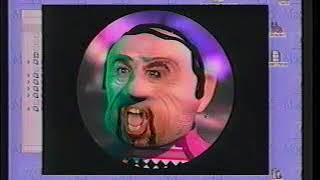
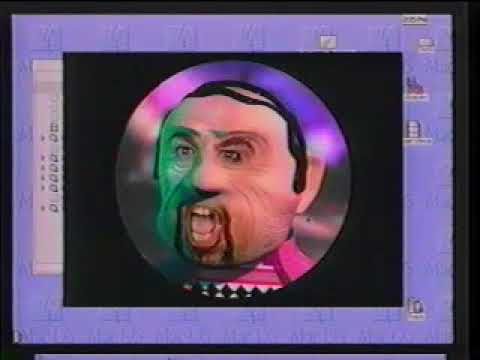
And the the work that I did with the residents wasn't really game per se. It was anti game in a way, and that you were in a narrative world that was sort of structured like a game, but you could never win. You always lost. And that was something we kept trying to explain to the publisher. I think they understood, but, it was hard to really explain it to marketing. But, you know, we we got it out there anyways, and, it made its money back in this first quarter, which I was very happy about. But I wanted to create a look for these characters that was really something that hadn't been seen before, well, since the days of Clutch Cargo, if any of you remember that. I wanted to, like, bring video actors onto these three d puppets that I was building. So we videotape these human actors, put their faces on these plastic masks using After Effects, and, and then map to the, the digital video on there.
You could become all these characters and jump from soul to soul and then ultimately die. Great fun. So that was that was quite an experience in the in in the days... Those those wonderful days when you could still do independent multimedia. At this point, it's really hard to do anything that's not really, you know, part of the the classic, you know, puzzle or shooter or something. And so I I kind of lost interest in it, and now the Internet is is there just waiting. You know? It's looking really great. These are these are some of the things that I'm working on now. Doing a lot of, high res illustration work, using electric image, creating characters, and I'm doing... This was a piece I did for PC World Magazine on computer viruses. So these are some of the viruses that invade you. These are happy little guys, getting stuck with a big needle.
And so I'm I'm right now doing a lot of illustration work and animation, you know, for television and the Internet. And the the stuff I'm doing for TV right now, I think I've got a couple of little shots here. I probably shouldn't even be showing this because it's all just sort of conceptual work. But, let's see. These are these are still magazine things. I tend to really get into the detail here, but I guess it's a little obsessive. But, that's the wonderful thing about working at home. If you if you wanna get up at three in the morning and add those bumps to the tongue, you know, you can can do it. Oh, here's... This is probably gonna make the lowland gorillas mad at me. Made them look bad here. This is sort of a demon monkey from a cover of a book that'll be coming out. One of those R. L. Stein horror books for kids called the curse of the blue monkey.
And, let's see here. These are just more illustrations. So the kind of the amount of detail. Electric image is amazing because you could you could feed it millions of polygons, and it never seems to choke. I love the software. Oh, here's what... Here's the little guy I'm I'm working on right now. He's kind of a... I mean, I'm trying to combine puppets with photograph backgrounds, which isn't really an original idea. They're doing it ILM for quite some time with a lot of success. I'm I'm just trying to make puppet shows, basically. And this is something I'm working on now, with the musician Stan Ridgeway, who's doing all the sound work for it. It's just a work in progress. I'll show you a few seconds of... You can crank up the sound if it if it exists.
It's not critical. I'll just keep talking anyways. Oh, here he comes. So these are shots of my own bathroom. Yep. Yeah. That was great, wasn't it? Now you know why that happened? It had nothing to do with the, with the Macintosh. It was actually just that, there were too many programs open. But, oh, well, anyways, thank you very much. I think my five minutes are up. So, I'll show you all Doctor. Colossus next time. Thank you. Thank you,. Thank you. You. Great. Thank you. Well, those are some visuals we're not likely to forget in a hurry, are we?
Transcribed from the audio by speech recognition (Deepgram). Timestamps link to the video above. Errors are possible.