Steve Jobs on Apple's Vision: People Before Mainframes

What Jobs talks about
In this 1985 TV report, Jobs frames Apple’s mission as building an alternative to IBM’s vision of the office. He says that alternative should start with people rather than mainframes.
The report also shows Apple introducing AppleTalk and pitching networking as something much easier for ordinary users to set up. Jobs and Scully are presented as steering Apple toward the business market with personal computers.
Jobs closes by describing Apple as an environment that attracts the best and brightest people around a shared vision. For him, the point is not just making products, but putting something back into the world.
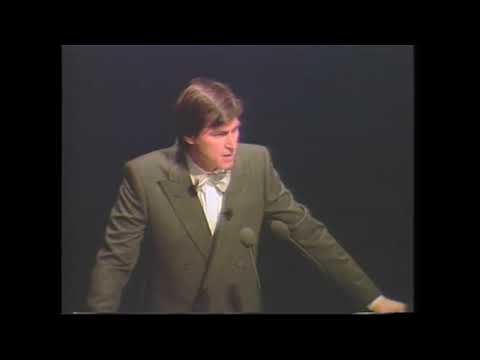
A TV correspondent narrates, with Jobs quoted and briefly shown speaking at Apple events.
In his words
“Our vision and concepts are right.”
“Today will be the beginning of an alternative to IBM's vision of the office, an alternative that starts with people rather than mainframes.”
“What Apple is, is it's an environment where we can attract the best and the brightest people to come together and sort of have a common vision about how we can change the world.”
“And it's very rare that we can actually put something back into the world.”
Key points
- Apple’s future is in personal computers for the business market.
- AppleTalk is presented as an easy way to build a small network.
- Apple wants to offer an alternative to IBM’s vision of the office.
- That alternative starts with people rather than mainframes.
- Apple’s strength comes from attracting the best and brightest people.
- The goal is to share a vision and change the world.
Full transcript
(Music) Finally, tonight we focus on Apple. Apple, the computer, not the fruit. Correspondent Elizabeth Brackett reports Apple co-founder Steven Jobs has a favorite story about Apple's impact on the country. He told it this year at the annual shareholders meeting: I received a letter from a six and a half year old boy a few months ago which, to me, completely sums up what we've accomplished in the last few years. It reads, dear Mr. Jobs, I was doing a crossword puzzle and a clue was
As American as apple blank. I thought the answer was computer, but my mom said it was pie instead. Scully and Jobs say Apple's future is with personal computers for the business market. To do that, Apple must attack a formidable competitor: IBM. (Music) Though on the darkened stage at the annual shareholders meeting, Apple introduced the new cable with as much hype as possible, turning the connecting cable named AppleTalk into a glittering fluorescent extension cord. Stringing together a modest sized AppleTalk network is much easier, for example
Than connecting a VCR to your TV set. Our vision and concepts are right. Today will be the beginning of an alternative to IBM's vision of the office, an alternative that starts with people rather than mainframes. Thank you very much. (Applause) Not only is Apple a newcomer to the business world, it still suffers from what some business people see as a rather flaky, laid-back California image. Steven Jobs' sometimes prickly attitude with both the business establishment and the press doesn't help. Jobs likes to deal with both on his own terms and on his own time. Can you guys catch me later?
Still, it is Jobs that provides the main inspiration and philosophical direction for Apple. Jobs, who insists the creative energy at Apple is as high now as it was back in the days of the garage: What Apple is, is it's an environment where we can attract the best and the brightest people to come together and sort of have a common vision about how we can change the world. And it's very rare that we can actually put something back into the world.
From YouTube captions, lightly punctuated for readability. Timestamps link to the video above. Errors are possible.