What did Richard Feynman say about why probabilities come from arrows in quantum mechanics?
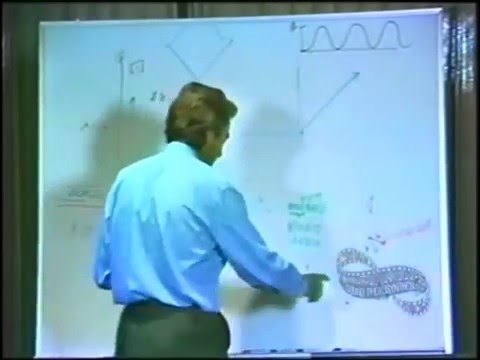
Feynman says quantum mechanics works by adding amplitudes first and only then squaring the result to get a probability. That is why two paths can each seem possible on their own, but together cancel out or reinforce each other in ways ordinary probability logic would miss. He concludes that this is just how nature works, even if it feels illogical.
“Either one is something, either one alone, but both is nothing. That works fine for the amplitudes, but to think logically about probabilities, it makes it very difficult, because you usually think if those that would do it, and the greens would do it, and you put them both there, they'll do it even better. So, uh, we can add amplitudes instead of adding probabilities. That is illegal, but adding probabilities is the wrong way. You have to add the amplitudes first and then make the square. Why? I don't know. Nature works that way.”
Key takeaways
- Add amplitudes before probabilities.
- Opposite contributions can cancel completely.
- Quantum rules can defy everyday intuition.
Context
In his 1979 Auckland lectures, Feynman was explaining how reflection and interference reveal the basic calculation rule of quantum mechanics. The quote above is taken word for word from the recording's transcript.
In the transcript
…the photons are coming. Bring them up. It would be easier for the photons; there's more places to reflect, and nothing comes. Then take away the blackness and leave just the greens, and you have lots of life. Took both together, nothing. How does that magic work? The blacks making them arrow this way, the greens were all contributing this way. When I have them both, the metal is nothing.
Either one is something, either one alone, but both is nothing. That works fine for the amplitudes, but to think logically about probabilities, it makes it very difficult, because you usually think if those that would do it, and the greens would do it, and you put them both there, they'll do it even better. So, uh, we can add amplitudes instead of adding probabilities. That is illegal, but adding probabilities is the wrong way. You have to add the amplitudes first and then make the square. Why? I don't know. Nature works that way.
Topics
More questions about Richard Feynman
- Why did Richard Feynman say you can't picture a photon?
- How did Richard Feynman explain why a particle model fails for thin-film reflection?
- What did Richard Feynman say about why atoms are hard to picture?
- What did Richard Feynman say about why helium behaves so strangely at absolute zero?
- What did Richard Feynman say about waves in quantum mechanics?
- What did Richard Feynman say about probability in physics?
All Richard Feynman answers · All Richard Feynman recordings
How this answer was made: the quote is checked word for word against the transcript of the recording and confirmed as the speaker's own words; the summary above it was drafted with AI from that transcript and quality-checked. Methodology and corrections.