Ray Dalio on Changing World Order: Big Cycles, Empires, and Disorder

What Dalio talks about
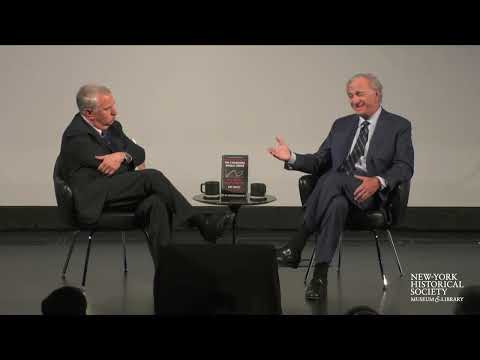
Ray Dalio joined Thomas Friedman on a podcast from The Investor's Podcast Network in 2021 to discuss big historical cycles, the rise and fall of empires, and the risks of debt, conflict, and geopolitical rivalry.
Also known as: Thomas Friedman and Ray Dalio Discuss the Changing World Order; Principles by Ray Dalio podcast conversation.
Ray Dalio explains why he wrote about the changing world order: he sees recurring historical patterns that help explain today’s debt, internal conflict, and geopolitical rivalry. He argues that the same forces that shaped the 1930s are now reappearing.
He lays out five major drivers of rise and decline: debt and money printing, internal conflict, geopolitical rivalry, acts of nature, and technological progress. He uses the history of empires and reserve currencies to show how these forces interact over long cycles.
Dalio also discusses China, Russia, India, AI, and the near-term outlook for the U.S. He emphasizes pragmatic, bipartisan problem-solving and warns that the next 18 months to two years could bring significant disorder.
Thomas Friedman interviews Ray Dalio; Friedman also briefly references audience questions.
In his words
“If you worry, you don't need to worry; if you don't worry, you need to worry”
“You have to earn more than you spend”
“The problem isn't with the technology, the problem is with the people.”
Key points
- Historical cycles repeat across empires, reserve currencies, and political systems.
- Dalio identifies debt monetization, internal conflict, geopolitical rivalry, natural disasters, and technology as the five great forces.
- He compares the U.S., China, Britain, and the Dutch as the main cases in his study of 500 years of history.
- China’s rise, in his view, reflects education, discipline, reform, and long-term strategic planning.
- He sees Russia as weakened by corruption, disorder, fragmentation, and lack of innovation.
- He thinks India has strong long-term growth potential because of low debt, low education costs, and entrepreneurial upside.
- AI is powerful but likely to be weaponized unless humans manage it wisely.
Full transcript: Ray Dalio, Changing World Order podcast (2021)
Ray, it's a treat to be here with you. Um, uh, Ray and our old friends, and um, I've been in conversation before, um. I wonder if you just start, Ray, by sharing with me, with the crowd, um, why as a macro investor you decided to step back and write this book on principles of a changing world order, and then let's go into the key principles, okay? I learned a while ago that the things that were coming at me that I had to deal with often surprised me, if they didn't happen in my lifetime, but I found that they happen many times in history. Uh, first time that it happened I was clerking on the floor of the New York Stock Exchange, 1971, August 15th.
President Nixon gets on the television and says that they're going to default on the obligation to turn cash money into gold. So I went on the floor of the stock exchange. I expected the code down a lot. It went up a lot, and I was real surprised because I never had a currency devaluation in your, in your experience in my life. Yeah, I went back and I studied and I found the exact same thing happened on March 3rd, March 5th, 1933, with Roosevelt doing the same thing on a radio. And I studied why, and I studied the currency. So what happened for me is there are three big things that are coming at us in our lifetimes now that didn't exist before, and that's the
amount of debt creation and the monetization of that debt. In other words, central banks printing money and buying all that debt never happened in that magnitude. The second is the amount of internal conflict, that political and so on, was the largest wealth gaps since the 1930 to 45 period, the largest political gaps by any measures, the largest amount of populism I never saw in my lifetime. Those two things, um, and at ozica number three was, of course, the changing world geopolitical situation. Well, I'm in my lifetime, in our lifetimes, we have never seen a power
being comparable, right, to the United States in power. We saw the Soviet Union, but they were not economically powerful, and it's very, very apparent that there's that rivalry and conflict between them. Those three things, all of them, um, never happened before in our lifetimes but all happened in the 1930 to 45 period. And then I said I, I need to understand those, and I need to understand, like, I'm dealing with the rises and declines of reserve currencies, and then they follow the rises and declines of empires, and in order since they have an arc—that’s a long arc, but it's right on top of this, I
needed to go back the last 500 years and see that cycle. And then I saw two more factors, which I'll get into in a minute. So let's go into that. You basically identified five factors that account for the rise and fall of countries and, um, uh, economies, geopolitical systems. You produced a video, um, to identify this. Can we, can we see that? Sure. I'll tell you the two others that I discovered when I was there, and when you have a confluence of these, you change the world order. And when I say order, I mean there's a system. We have a political system that's in order, we have a world system, how it works is the system, and we're changing how that works. And so the two others
that I found was that acts of nature—droughts, floods, and pandemics—had a bigger effect on toppling civilizations and causing more deaths than the first three I mentioned. Interesting, and of course very relevant to now, what you're watching. And then number five is the biggest force over a long period of time is, uh, man's learning and technologies that they make as a result of that learning over a period of time. So when we think of technology as having an effect, okay, all five of those things are the five great forces and how they relate to each other. So I think each one of them. So what I wanted to do was I found it important, other sounded important, and I wanted—it was a study
that I was using to deal with today, right? My positions today are driven by that, yes. And I decided that I was going to put this study out as a book and then try to communicate clearly. I did a video. It's, uh, it's about a 40-minute video, uh, animated video, but I'm taking a clip of it, and this just sort of describes the cycle that we see happening over and over again. So great how these five keep repeating themselves at different points in history with different powers, right? And that yes, we'll see. It'll speak for itself. Cue the video. I studied the 10 most powerful empires over the last 500 years and the last three reserve currencies. It took me
through the rise and decline of the Dutch Empire and the Guilder, the British Empire and the Pound, the rise and early decline in the United States Empire in the Dollar, and the decline and rise of the Chinese Empire and its currencies, as well as the rise and decline of the Spanish, German, French, Indian, Japanese, Russian, and Ottoman Empires, along with their significant conflicts as measured in this chart. To understand China's patterns better, I also studied the rise and fall of Chinese dynasties and their monies back
to the year 600. Because looking at all these measures at once can be confusing, all focus on the four most important ones: the Dutch, British, U.S., and Chinese. You'll quickly notice the pattern. Now let's simplify the form of it. As you can see, they transpired in overlapping cycles that lasted about 250 years with 10 to 20-year transition periods between them. Typically, these transitions have been periods of great conflict because leading powers don't decline without a fight. So how am I measuring an empire's power?
In this study, I used eight metrics. Each country's measure of total power is derived by averaging them together. They are education, inventiveness and technology development, competitiveness in global markets, economic output, share of world trade, military strength, the power of their financial center for capital markets, and the strength of their currency as a reserve currency. Because these powers are measurable, we can see how strong each country is now, was in the past, and whether they're rising or declining. By examining the sequences from many
countries, we can see how a typical cycle transpires, and because the wiggles can be confusing, we can simplify it a bit to focus on the pattern of cause-effect relationships that drive the rise and decline of a typical empire. As you can see, better education typically leads to increased innovation and technology development, and with a lag, the establishment of the currency as a reserve currency. You can also see that these forces then decline in a similar order, reinforcing each other's decline. Let's now look at the typical sequence of events going on inside a country that
produces these rises and declines. In a nutshell, the big cycle typically begins after a major conflict, often a war, establishes the new leading power and the new world order. Because no one wants to challenge this power, a period of peace and prosperity typically follows. As people get used to this peace and prosperity, they increasingly bet on it continuing. They borrow money to do that, which eventually leads to a financial bubble. The empire's share of trade grows, and when most transactions are conducted in its currency, it becomes a reserve currency, which leads to even more
At the same time, this increased prosperity distributes wealth unevenly, so the wealth gap typically grows between the rich haves and the poor have-nots. Eventually, the financial bubble bursts, which leads to the printing of money and increased internal conflict between the rich and the poor, which leads to some form of revolution to redistribute wealth. This can happen peacefully or as a civil war. While the empire struggles with this internal conflict, its power diminishes relative to external rival powers on the rise. When a new rising power gets strong enough to compete with
the dominant power that is having domestic breakdowns, external conflicts, most typically wars, take place. Out of these internal and external wars come new winners and losers. Then the winners get together to create the new world order, and the cycle begins again. Um, it's a little scary because it's a little, um, it's quite bleak when it comes to America, um, in terms of where we are in your cycle, where China is, and even if China weren't rising, um, uh, you can't watch that video and watch the evening news without thinking, yikes.
Um, you know that, uh, curve is heading down. Well, I'm, I have to be a realist. I have to make bets on what's likely to occur, and uh, and I have a principle: if you worry, you don't need to worry; if you don't worry, you need to worry. Okay, I like that because if you worry about that, right, then maybe you'll do something about it, right? Right. In other words, I think if we worry about that, maybe we'll do the healthy things, right? These basic healthy, yes, broad-based education, equal opportunity, how do you get out of it? Yes. Right. That's interesting. Um, do you see anything right now, and we'll move on to China in a second, but in America,
where you think maybe the alarm is being heard and we can, um, reverse that curve? Um, the alarms, I think, are beginning to be heard. Okay. I thought the last midterm elections, yes, there was less of a move, the extremist loss, right? Yes. Okay. I think you need a strong middle, yes, and then you have to do healthy things. Interesting. The magnitudes of that movement are very small, really, relative to the issues. Yes, like this, dealing with the debt ceiling. Yeah, you know, it's ridiculous, right? How it happens, right? Nobody does anything, really; they just, and they go on, right? Okay. Yeah, so the finances haven't changed. Yes, and so on. I mean, there are, there are glimmers,
but you have a, you have a structural issue. It, it's just like if you got deeper into debt, you're not as healthy as you were. It's like if you smoked and didn't exercise or something, right? You're not as healthy as you were. So when you think about the debt, all the amount of money that everybody's holding, a debt expects to get a real return on that, yes, and you think, okay, it's not like you didn't have the debt, and so you have to make, let's take the economic one: you have to earn more than you spend, right? I mean, that's the basics. You have to earn more than you spend, and in order to get healthy, well, that means that you either have to cut your spending, and that's a problem, or you have to raise
your income, so it's not easy. Okay. Um, and so it's, we are where we are, right? And, uh, but it is, I think, I think the real big thing is how people are with each other. In other words, if we think about the whole, right, because if you take per capita income until the highest it's been, we take technologies, and our living standards are still in the world the highest they've been. Um, but how you work that all out domestically, how are we dealing with other, I mean, with respect to, um, in a way that can produce collaboration? Yeah. I like, I would, well, not only collaboration, but I mean the basics, like
you look at the societies that are doing well, you have to have a basic, uh, education, nutrition, these types of basics. If you look at the societies that, by and large, do well throughout history, and it's back to equal opportunity, more equal opportunity. Nothing's perfect, but you have to deal with those structural basic issues, and it's difficult because, you know, different, everybody wants to hold on to the money, and of course, you're deeply in debt, and then you need a lot of money. Yeah, um, and the hole gets deeper. So China, uh, Ray, what, what are they getting right, um, relative to us, and what would you say?
China's getting right that most Americans don't appreciate and understand. Oh, okay. I've been going to China for 39 years. I want to say I started in 1984, soon after Deng Xiaoping came to power. And I've been very lucky. They didn't have much money; I didn't go for money, right? I went for curiosity and then I really got to be part of helping them build the system and so and so forth. And so, since I started to go, per capita income has increased by 28 times, life expectancy's increased by 10 years, the poverty rate has gone from 88 to hungry poverty to less than one percent.
These kinds of things. And what they got right was the reform, and they did it in a symbiotic relationship with the United States, in which essentially they sold us inexpensive, good value goods that we preferred the prices of, and they lent us the money to do it. It's a difficult relationship. And if you — I studied the dynasties going back over 2,000 years, and what they have — oh, they're intelligent, they have a work ethic. It's semi-Confucian, meaning that they're, you know, orderly, they're
intelligent, hard-working people. You know those basic elements they've got right. They had it the easy way because they started with, you know, when they closed the door, right? From 1949 until 1978, they closed the door, so they got really backwards, and so that bounced. But they have a population that's more than four times the size of the United States. So when you get an income, let's say that's half the United States, so then you have an economy that's twice the United States. So there's a great deal of that. I would say their water lead, they're disciplined, they're hard working, they can be very creative. There are different cultures
within China. You know, the southern is more the business community, whatever, open to the world and so on. I think that one of the things that is not understood is how the Confucian way of thinking affects their foreign policy. So, Confucianism is an idea of how a family should operate, that within your family you are controlling your family, you have the right to be a good — be a good — you have these rules. Then you interact with others. So it's an extension of that; they view that within China
that that is their family. They call it an extended family. The word country in China is two Chinese characters, which is state and family. Okay? So, and then that also is why it's autocratic because it's very much top down, like strict parents operating that way. When they're dealing with the outside world, a man, I think that we both know Wang Qishan, who's the—who was just the Vice President of China and so on, described to me, he said this idea of taking over and proselytizing other countries, in which you want to, it just doesn't work, you know, if you're going to
occupy and you're taking away their basic rights, you know, that doesn't work. Afghanistan doesn't work that way. And he said that that was the development of the Mediterranean culture, and he described that up really to the Peace of Westphalia when they had the 30 Years War, and then we came up with the idea that we would make a country and we would make borders and that those within the borders would control how they did things and those outside. So when we think of it, I think they want to be as competitive and do as well as they can, but when you ask how do we misunderstand, yes, I think this idea
of fight and conquer, right, is not the same. It is more of a hierarchical thing in which those who become more powerful or are more powerful need to be more respected, and then there's a relationship which is almost a vassal-safe relationship—those around them—and there's a way that those who are powerful should deal with those who are less powerful, right? And those who are less powerful should deal with those who are more powerful. That is a sort of a mutual respect, and that. So, I don't think they're out to conquer the world, and I don't think they're out to have a military power. There's an argument one could make that China got to this rise through a very
clear policy laid down by Deng Xiaoping of regular rotations in power, so the system is constantly refreshed and that there are opportunities for rising people. It was also, "Hide your power a little bit. Don't freak out the world." And one could make the argument that Xi Jinping, the current president, is breaking a lot of those rules. He ended the rotation in power, at least by taking another five-year term. He's freaked out, I think, a lot of China's neighbors, let alone us. How would you—could China be at peak China right now, not, you know, on this upward curve? How do you think about
those? First of all, I want to make clear that I'm not a defender of China. I'm just an observer, and you know, and that I'm trying to just factually answer your questions to produce understanding but not to produce advocacy. Yeah, I'd much rather live in the United States and have all the freedoms that we have and all the blessings that we have than to be living in China under those set of circumstances. So I just want to be clear in doing that. If you study the dynasties, then this is in their minds. Chinese study history, they all the leaders know the dynasties. There is an arc in terms of what types
Of leadership, what types of ways work? Okay, so you can have all of these different types of styles of management, the more autocratic and not. And if you go back to Plato and you look at The Republic, he wrote how there's an evolution of democracies because democracies are not a new concept way back then. And you look at those cycles, there is a cycle over that. And we see that cycle in the, um, in the history of our own country or the history of the world that what happens is during the biggest risk of a demo of a democracy is anarchy during a difficult time, then, right? So in the 30s, 1930 to '45 period,
Four major democracies chose to be autocracy. So Deng Xiaoping says that there's, I, uh, big storm, a hundred year storm on the horizon. Okay, now what's that hundred year story? I think he does believe that we have this issue, this great power conflict. It's a big deal. And then they have internal storm, they have lots of things internally that are their problems and he wants to take control of it. And so I watched the evolution of that from Deng Xiaoping. I think if you exactly, you described it very well, you know, um,
When you have power, you hide it, and when you don't have power, you show it as much as you can, you know, and that whole process, absolutely. And then if you couldn't hide it anymore and you moved beyond that. And so, um, we're part of that cycle, I think. I think they view that as part of that cycle, that's where they are now. Your question is, does it work? Okay, um, and I think the right question is, does it work better than our democracy, also, which faces its particular challenges? But, um, the truth of it is, I think that it works a lot less well because, um, there are big changes now. Um, it's no longer glorious to be rich.
Yeah, okay. The decision making is very dictatorial from the top down, which makes it very difficult to run a country because you, at that level, you're not having it bottom up. You have to control almost all things. That's a particular challenge. Um, also people are afraid to make decisions. Um, they're fearful, you know, better no decisions than to make the wrong decisions to get in trouble with it. So there's more fear over there. And then, of course, we have these other things that are going on, this great world conflict which is having an effect on Chinese companies and Chinese who themselves say, am I, you know, maybe I should set my
business outside. Yes, and foreign countries, companies too, that say, okay, am I going to get sanctioned and where is it? And so elsewhere in the world is benefiting, the neutral countries are benefiting and India is benefiting, the ASEAN country. So outside of Singapore, Indonesia, Vietnam, all of those countries are benefiting. So let me ask, um, uh, country I didn't figure in here but another big part, Russia. How do you see Russia today in terms of the, the very patterns, um, and attributes of successful countries? How do you look at Putin in Russia today? Well, even before, even before, very interesting.
I took all of these indicators and I could forecast pretty well, you with them the next 10 years growth rates. If anybody wants to see them, they're in the back of the book and they're also, I update them free online so you could see them. And what Russia had, um, or they basically had a cultural problem in terms of, um, uh, corruption, um, disorder, fragmentation, all the elements that you say where you have equal, um, education, you educate your population well, alcoholism as a problem in terms of those types of things. Their strengths
was they didn't get much in debt but they didn't have creativity and all of that technology development. They had nothing. They became, they're a big resource exporter and so on. So that's it. You take that away, so they didn't have the elements that I'm describing. In other words, the building of the quality education, the inventiveness and all of that problem in terms of that. So that existed before. And then we have this real screw-up to be to make this kind of move. That's right. I mean, it's a, you know, it's a very, very bleak situation. And one might have said it when after World War II or even in up, all through many of our years that if you were to look at Russia
and you to look at China, you would say, okay, well, you know, maybe you'd bet on Russia, yeah, and do that. But these cultural issues in terms of indicators like there's a negative 54 correlation between corruption and the country's next 10-year growth rates. So these are the problems Raya for Kevin McCarthy and, and President Biden invited you into the Oval Office right now said, uh, we both read your book, we see those curves China going this way and us going that way, what can we do in the near term? Okay, um, first of all, smart bipartisanship, yeah.
What's number two? (laughter) But no, I know what you mean. Without that, there's okay, you, we can re-engineer things. In other words, there is a certain amount of debt. How do you deal with the debt and how do you deal with the payments on that debt? How much is going to be monetized? How much is going to be whatever it is? How do you raise productivity so that it benefits the majority of the people? Let's say the basic things like education, then civility of the population. In other words, these, these basics that we're talking about, um, how do you do that?
Um, like, I basically think that if we had a strong middle, I almost don't, if you had smart bipartisan people from the middle government who fought for what they agreed on, yes, and so on, and were inventive, I think that they could deal with that. I worry about the extremes, okay. I worry about the extremes: the rich, the poor, or that the lack of opportunity and so on. Yes, so, um, I think smart bipartisan chip, if they said, I would get together, and we will, um, deal with the extremes. And I think that what you need is a like a Manhattan Project plan in other—
words, take six months, uh, and bring those people together and make them make an agreement of how that thing works. They don't come out of that until they have an agreement of how that thing works. I think smart people could engineer a lot in order to make that. And I, I almost don't care what they've come up with if it's smart and they're bipartisan, and then they fight the opposite extremes, the extremes. I think we'd make a lot of progress. It's well, uh, I think there's a lot of wisdom in that. Um, Ray, you alluded to India. A lot of people, you know, um, think India may be the, the real winner between the competition between China and the United States. What do you see—
the strengths and weaknesses of India in terms of your framework? They, the, the indicators give a 10-year projected growth rate. India has the highest projected growth rate, um, and the reason is, uh, some of the indicators are the cost of an educated person. Okay, education is very important, but in many places an educated person can be very expensive. Right? In India, they have very low costs of an educated person. Okay, so that means that's powerful. Okay, the, um, level of indebtedness—
if you have a high level of indebtedness, you're going to probably have a problem. They have very low levels of indebtedness. Technology development: we're seeing big leaps forward in terms of how this incredibly poor country that doesn't have toilets is going to technology development in in many ways, this inventiveness and so on. So it has, you know, if I was to go many of those three types of things within this country, they have, um, wonderful education, they have wonderful family, they have, you know, there are more millionaires in India than there are in the United States or anywhere, really. So the ability to have—
that middle class and to rise. And then we go back to the basics, you know, three basics are: you earning more than you're spending as a country. Yeah. Well, and it's good for an individual, too. Yeah. Okay. Are you learning more than you're spending? Um, are you working well together or are you fighting with each other internally and/or you're at risk of a war externally? If you take those criteria, those basic things: your financial condition is good; you earn more than you spend, so your income statement and balance sheet are good; you're not at work internally, so you—
don't have the disruption; and you're not at war externally. Okay, you're in a good place. What I like about yours, and the other thing about it, just one more point, is if you look at the history of wars, it might have: there's the winners, the losers, and the neutral countries. The neutral countries, economically and by almost all measures, their markets, their investments do better than even the winners. And if you're a loser, you're wiped out. Okay, so when we look at this types of thing, you're seeing a prosperity that's happening in these places, places—
you go to, I go to, you look at them, you know, they're beautiful, they're, they're operating efficiently and so on, and they're neutral in this. So we've got some questions from the audience. Um, uh, you know, since you wrote the book, uh, chat GPT has come out, um, and, uh, we've had this great leap forward in AI. Um, you know, how do you think that can or will change, um, the criteria, especially for China, which, um, will, it's got its own AI, but they will be limited when you can't ask your AI what happened in Tiananmen Square in June 6, 1989, or write me 10 jokes about Xi Jinping. Yeah, I mean, that will be— that—
will be a limiting factor. I'm kind of thinking so. But how does AI figure in now to your thesis? Well, yeah, um, it is a tremendously powerful resource, uh, not just in terms of giving you information, but, um, I know somebody in terms of computer programming, Nastya Mountains, it says, "Go find the mistake in the program," and they can go into it. It's an incredibly powerful thing. So how it's used is the most important thing, and there are no regulations, right? So the problem isn't with the technology, the problem is with the people. And so when we have this war, okay, are we going—
to use it to improve mankind, or, and all, are we going to use it to fight? So we're in this environment in which this incredibly powerful force is not regulated, nor any prospect of regulation. And we are in an environment of confidence in which most likely, I worry that this would be weaponized, and there's not an easy way around it because there's no world government or anything like that. Now, you're exactly right with, uh, China being behind on this. Yeah, um, they're behind for, uh, two reasons. First of all, the chip development is two to four years behind on this type of chip, and they're worried about this because on, um, in that two to four years, there's—
going to be a tremendous amount of learning that they'll be behind on, yes, just because of the chip development. And then it's exactly right as you say. It used to be that, um, when you can get all the information because they could get all the information, all the data on everybody, on everything, right? And you put AI on that, wow, that was a powerful alternative. Plus, they have eight times as many engineers, computer engineers, and you figure, wow, what a competitive advantage. That really helped them on healthcare. They did a lot and official recognition because they didn't have privacy regulations, batteries, and all sorts of things, right? Just amazing. But when you have this impermeable bubble, right, or something just as you're referring, and you can't get information in, yes, or even that whole notion and—
You're two years behind in terms of the technology. It's a problem, and I want to emphasize that if we take the next 18 months to two years, this is going to be a period of great disorder. Yeah, I think I agree with you because we have, in our tightening of the financials, we have the tightening, yes, and not yet the consequences. So you just think of a normal business cycle. Just explain that to the audience, just what we're having, a tightening. Okay, and yet we haven't seen the consequences. I think people would be okay. There are these cycles, you know, recession, growth, recession, stimulation, growth, prosperity gets too hot.
Unemployment's through, low, tight monetary policy, tightened stock market goes down, right? And then the economy goes down, right? Those on average have lasted seven years, give or take about three years. And since 1945, when the new system, the new water came about, there's been 12 and a half of those. So we're in the spark of the cycle right now where they have tightened the monetary policy, interest rates. They have had the costs of those types of this and at the part of the cycle where just credit is beginning to fall, and the consequences of that are going to happen, and that will move us into the next 18 months. Okay, in terms of
the normal consequences of that, meaning a worse economy, profits, more unemployment, right? Those kinds of issues go going into elections, right? Okay, now in elections we have a great deal of polarity, a great deal of polarity. Yeah, and you put together that with this other, with, and you have the wealth gap, the rich, the poor, and so on, that, and then you also have the popularity of anti-China, yeah, and, and, and that issue in terms of the conflict going into that. And in China's case, so we're taking these three forces, yeah, I take the, and then you have the Chinese. We are really very close to the edge, yes, in terms of brinks of, yes, and it could be a sanctions war, an economic
War or a military war related to Taiwan. They're both at the edge, and then you have the technology that we're just talking about, usually disruptive. Yeah, we're gonna feel it. You're going to start to see it in dramatic ways, and there's no order now. I mean, there's no system for coordinating that, right? So that's likely to be a period of significant disorder.
From YouTube captions, lightly punctuated for readability. Timestamps link to the video above. Errors are possible.
Cite this recording
Ray Dalio, “Changing World Order podcast (2021)”, The Investor's Podcast Network (William Green), 2021. Transcript and video: Thinkers Archive, https://thinkersarchive.com/ray-dalio/changing-world-order-podcast-2021-2/
Quoting a passage? Link to its exact moment: every timestamp above has its own anchor (for example https://thinkersarchive.com/ray-dalio/changing-world-order-podcast-2021-2/#t-131).