Peter Thiel on Contrarian Thinking: Why the Tracks Stop Working

What Thiel talks about
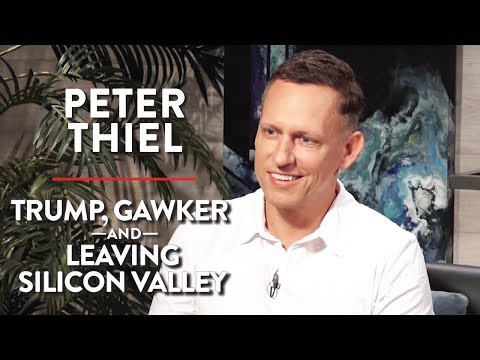
Peter Thiel joined Reid Hoffman for this Masters of Scale podcast in 2017, discussing PayPal, Facebook, competition, monopoly, contrarian thinking, Trump, and Silicon Valley groupthink.
Also known as: Trump, Gawker, and Leaving Silicon Valley; Rubin Report interview.
Peter Thiel traces how PayPal grew by linking money to email and solving the chicken-and-egg problem of payments. He emphasizes distribution, network effects, and the balance between usability and fraud prevention.
He then moves to Facebook, Silicon Valley groupthink, and why he has long argued that conformity can masquerade as diversity. Thiel says real progress depends on being willing to question prevailing assumptions rather than simply following the track.
The conversation also covers his support for Trump, the collapse of old political certainties, and why he thinks debate has widened. His closing advice to younger people is to stop over-optimizing for competition and instead think for themselves, look upward rather than around, and find something meaningful to build.
David Rubin interviews Thiel throughout.
In his words
“The critical question for any consumer internet product is always not what the idea is but how do you get it out”
“You can’t simply get rid of fraud because you always get rid of fraud and make it cumbersome”
“Think Different. That's the Silicon Valley 2018: Think the Same.”
“You don't have real diversity when you just have a group of people who look different and think alike”
“The tracks are not working”
Key points
- PayPal succeeded by tying money to email and creating a viral on-ramp for payments.
- Consumer internet products live or die by distribution and network effects, not just the original idea.
- Fraud prevention and ease of use are always in tension in financial products.
- Facebook stood out because it cracked real identity and grew fast enough to matter early.
- Silicon Valley has become increasingly conformist, despite its self-image as open-minded.
- Thiel argues that many people pretend to hold independent views while actually following fashion and group pressure.
- He tells young people to stop chasing the same tracks as everyone else and to seek transcendence, not just competition.
Full transcript: Peter Thiel, Masters of Scale interview (2017)
Joining me today is an entrepreneur, a venture capitalist, and author, the co-founder of PayPal, the first outside investor in Facebook, the founder of Palantir, and Silicon Valley's ultimate contrarian thinker, Peter Thiel. Finally, welcome to The Rubin Report. David: Thanks for having me on the show. It's good to be here with you. I normally don't have this many cards for a guest, but I've got a lot of cards for you today. Are you ready to roll? David: Ready to go. All right, so we have to start obviously Rogan had Elon Musk on last week, last week, and they smoked a joint. So do you want me to put the joint on the table right now, or how are we doing this? You know, my number one rule is never to compete with the Elon man. Oh, you know I would never, I—
Would never bet against Elon. It's been like this: I was a close partner of his at PayPal in the late '90s, early 2000s, and after PayPal, you know, Elon set out to start these, you know, both the rocket company and the electric car company, SpaceX and Tesla. Yeah. And I think the conventional wisdom on Elon was these were both completely harebrained projects, and if one of them had succeeded, that you have to sort of question it. And when both of them succeeded, it suggests that, you know, he knows something other people don't. All right, well, that is a matter of luck. I'll keep the joint right here for now. Don't compete with you on. All right, but look, that's a good place to—
Start, because first, you know, it's interesting because we've gotten to know each other a little bit in the last couple years, and it seems to me that the person that I know privately is sort of different than the way the media portrays you. So I thought maybe at the beginning, let's just do a little history about you and then we can get to some of the controversies and some of the ideas that you're really interested in and things like that. So let's start with PayPal, since you mentioned it already. Where did the idea of PayPal first come from? Well, you know, it's when you start one of these companies, it's typically not the case that you get the whole idea fully formed, you know, instantaneously. We certainly—there was this incredible internet boom going on in Silicon Valley in the late '90s. It felt—
There was sort of this open frontier, open gold rush. One of the natural things to look at was, you know, was finance. I was sort of very interested in the cryptocurrency, could there be new forms of money? There's always something, you know, super mysterious, powerful, important about money. It was—it was going to change. So we had, I think, we had this general idea to do something with security, with money, with payments from very early on of the founding of the company, and then you iterate a lot on how to, how to get the idea out. And the critical question for any consumer internet product is always not what the idea is but how do you get it out, how do you get the—
Distribution out. And we've seen a lot of payments companies, internet payments companies that already started and failed by 1998. There was one called, when? One called up, other CyberCash, there were, you know, there's sort of a variety of these different ones that had tried to create these, you know, comprehensive currency schemes, and they would work if everybody used them, but you could never get even the first person to start. But the challenge was how to make it viral, how do you get something to work where it's good for the first person, for the tenth person, to the 100th person, and once you have millions of people, you have a network, you have network effects, and that was sort of the chicken and egg problem. Yeah, so how did you guys overcome that hurdle? Well, we eventually stumbled on this idea—
Of linking money with email, because there were nearly 300 million people in '99 that had email accounts, and so if you could send money to an email address, you know, send it to your email, and then you get an email saying you've received cash, and then you'd obviously click on the links and do the work necessary to get the money out. So, you didn't need both counterparts to a transaction to be part of the PayPal network. Only the sender could be part of it, and then the recipient, the recipient would sign up as they took the money out. And then we started with the 24 people in our office; those were the first 24 customers, and they sent money to friends and to other people but gave—
These referral bonuses. We gave you $10 who signed up, ten dollars you got someone to sign up, and it just grew exponentially. When we were, you know, it grew about seven to ten percent compounding daily, and now if you're, you know, and you start with a small number, if you can get seven to ten percent daily compounding, and after about a month, you're at a thousand people. By mid-November of '99, by end of December of '99, it was at twelve thousand. By February 3, 2000, it was at a hundred thousand. By mid-April 2000, it was up two million. And so— So what did you do? Look in terms of getting people to understand the way you could work with money differently, because I actually remember the first time I used PayPal. I think it was in 2001. I was a—
Struggling comic. I had moved into a roommate's little apartment because I didn't have much money, and I had to pay him a couple hundred bucks or something a month for rent. And he, I was gonna give him a check, he said, "PayPal me." And just the idea that I was somehow linking my bank account to something on the computer — we didn't even have, I don't know if I'm not mistaken, I think I was still using dial-up. I don't even know that we, you know, had had Wi-Fi or anything like that. But it's about an idea that this can even happen. How did you train people to realize, "Well, this is something that's real and it's always on"? Normally you serve to get people start doing something like that, it has to be something where there's an intense need and maybe it's not too dangerous. And so, one of the natural places that started was on
the eBay auction site where at small dollar transactions, maybe $40, the typical amount. And if you send a check across the country, that's like a seven to ten day delay, 10-day delay. It's slow. Most people aren't set up to process credit cards. Your roommate probably couldn't process credit cards. And so, you know, but since you could make PayPal payments with a credit card, you could in fact send a credit card payment to 300 million people whereas there were only something like three or four million that are set up to process, like, a hundred fifty million people with emails in the U.S. at the time. There may be three million that were set up to process credit cards, small businesses, things like that. So we expanded it by, you know, 147 million. Do you remember
what it felt like as it started compounding the way you're talking about? Like what it was like as it was growing and you realize like, "Wow, we really have this." Well, you are — you're new, you're at the forefront of like some sort of revolutionary thing. It's incredibly exciting, and it's incredibly scary. And it was like, "Is it going to take over the world? We're all gonna die?" And move several times between, you know, those two — several times a day. Yeah. Was there any bizarre pushback from banks or anyone that was doing financial tradition that was traditionally there? There were certainly like more than our share of challenges. You had an enormous problem of fraud where people just figured out ways to hack the system and steal money. Mm-hmm. And then, and you can't simply get rid of fraud because
you always get rid of fraud and make it cumbersome, but it's easy. Then it's also easy to defraud. So your challenge was how do you get it to be easy to use but hard to defraud? And that took some time. On certainly banks didn't like, there were, you know, they're all the incumbent players that didn't like something new. And then, of course, it was sort of in this strange regulatory zone where, you know, it was a new form of payments, a new form of moving money. And, you know, the way often thought of it at the time was that we were in a race between technology and politics. And, you know, the politicians didn't like us, but if we got the system, the PayPal network, to be big enough, it would sort of overwhelm the regulators, and they'd have to accept it as a fait accompli. So the Libertarian Party, you must have
loved that concept! Like, you were actually doing something that libertarians or so suppose. There was an early 2000 conversation, you know, one of the execs at PayPal said that, "We need to hire a whole bunch of lawyers, else what we can do or can't do else we can't do, so we have to just go ahead and not hire the lawyers and just just do it." Yeah. Now, you know, the sort of, uh, I actually, I do not know if a company like PayPal could have been started even two, three years later. So, you know, in the aftermath of 9/11, we got the Patriot Act in the U.S. and that attached, you know, much more regulatory scrutiny to financial transactions, to payments. That no-your-customer rules became much, much trickier.
And so, I do think that there's a weird way in which there was an opening to start a business like PayPal in 1999, 2000. Even three years later, I think it might not have been possible. Yeah. And it's so cool to me just knowing a lot of your ideology and the libertarian ideas you care about and just going ahead and building what you want to build instead of waiting for other people to do it. I mean, you actually did it and that's a pretty, pretty great thing. Well, it was, it was sort of the sense that, you know, we were gonna change the world, we're gonna, you know, give people more control over their money. We had all these ideas about, you know, getting rid of central banks and creating a new currency. We never quite, you know, got to the Bitcoin-y stage of it — we'll get to that later, but
but certainly, certainly these ideas were, you know, incredibly motivational in doing it. And it is always a little bit of a contrast from, you know, I always have this view on politics where it's both, you know, incredibly important and then in many ways incredibly frustrating. Yeah. As it's so on, it's like the air we breathe that permeates our whole system. And then it's also so hard to ever change. You know, as a college student, I started, you know, this conservative libertarian newspaper at Stanford, the Stanford Review. And there's a lot, and it's important to have debates, to discuss things. And then it's often so hard to change things. Indeed, the PayPal hack was, in a way, and we're gonna change the world, we're gonna ask for permission. Yeah, you know, we're
Just tech, technology over politics. Well, speaking of changing the world, let's flash forward a couple years. So we're just doing some business background first before we get to a lot of your ideas of the day. You were the first outside investor in Facebook, 500 grand to this Zuckerberg? I did. You know him well before that? Had you guys communicated a lot? How did that even come to pass? Not really. It was sort of actually literally the first day we met. We thought, wow. He, for an hour, we came back and we gave him the term sheet about an hour later. So it was—how was it? It was a fast decision. I think people always have the sort of Shark Tank image of these things, the exam sort of, you know, super sophisticated pitch and you could say just the right things. Right? That's what works. And it was nothing of the sort. And he was a, he was a, you know—
Kind of introverted 19-year-old, you know, sophomore between sophomore junior year summer, summer too, 2004. And the main, and the main thing I was going for was it was just growing fast. They were at something like twenty college campuses. They had about a hundred thousand people on the network, and they just needed more money for computers because there was such a demand for the product as they were gonna launch at more colleges in the fall. So as that would appeal to you more than the product itself, just that you saw engagement was already—it was already working? Yeah. Um, and then, but I would, I would say the other part of it was that there was like a prehistory to it. So one of my, one of my good friends from PayPal back from—
Stanford, a guy named Reid Hoffman, he started LinkedIn later years. But he'd worked with me at PayPal in the late 90s, early 2000s. But before that he had started a social networking company back in 1997, seven years before Facebook. And they had, they already had, you know, they had SocialNet was the name of the company. So there's social networking in the name of the company seven years before. And there were all these things that they had, they had thought about doing. So it was gonna be, you know, it was gonna be you're on the 1990s version of social networking was we're gonna have these avatars in cyberspace, and I might be a cat and you might be a dog. A virtual cat, you're a virtual dog. We have to figure out how we relate. And—
It turns out people aren't, weren't really interested in that. They weren't really interested in sense of a fictional, an online persona. It was much more about real identity. And somehow Facebook was the first one to crack the problem of real identity where, you know, even those always a little bit curated, certainly for the most part, people on Facebook are who they say they are. Yeah. For the most part at least. So am I mistaken, you're the only person who's been on the board of Facebook the entire way out except for Mark, right? Right, right, right, since the beginning. Yes. Yeah. What can I ask you about that that Facebook won't get too angry about if I ask you? Well, just what's the experience like of being a—you're part of a board from the beginning of really the thing of the—
Internet? What seems to drive conversation the most on the internet? Well, there's, um, you know, there's—I mean, it's been, sir, like this incredible trajectory, you know, where it's gotten probably much bigger than I would have thought possible at the time. You know, I was, you know, I was incredibly optimistic and bullish on it certainly back in, back in 2004-2005. I think that one kind of perspective for a lot of the world-class entrepreneurs is they're not specialists there. There's something close to polymaths. And so, you know, if you have a conversation with Mark Zuckerberg, he'd be able to speak, you know, with, with, you know, surprising amount of understanding—
About a lot of things. So we could speak about the details of the Facebook product. You could talk about, you know, the way people think about social media, the psychology, the way the culture is shifting, the management of the company has ideas on that, his ideas on it. And then how this fits into the bigger history of technology. And so it's, you know, it was sort of an academic view, is often that you're like a sort of a narrow expert on one thing. Mm-hm. And that's what you do. And, and what it is about is it's much more sort of this, this polymath-like intellect to understand all these different things. The kinds of board conversations we've had over the last, you know, 13, 14 years—
Have, it's just been this crazy range. Yeah. It must be particularly interesting for you though as sort of the outsider in Silicon Valley. And we're gonna talk about you why you moved down to LA and all that stuff that you've been there the whole time, that it's not, you know, they didn't, for all the reasons that Silicon Valley may be what it is, you weren't ever booted off the board or anything like that. They've, they've let you be the contrarian guy there. So that actually must—that's a good thing about Silicon Valley, I suppose, or at least within the little microcosm that you sit in, right? No, I—I, you know, I, I don't experience, you know, a great deal of hostility to me personally, you know, people, you know, it's, it's, it's you just—
You, you always, you know, it's, it's, it's sort of manifests in all sorts of other ways. So I do think Silicon Valley at this point has a bit of a conformity problem. It has, you know, a bit of a way in which people are too much all thinking the same way. It's just like, there was, you know, the Apple—I saw this meme on the internet the other day—where it was sort of the Silicon Valley 1997: "Think Different." That's the Silicon Valley 2018: "Think the Same." Yeah. And so there is something that's, uh, that's gone, that's gone a bit wrong, even though, you know, it's, it's, I'm hard-pressed to cite things where, you know, it's really affected me personally. Yeah, all right. Well, I was actually gonna push that to a little bit later, but let's just stay
with that for now. Then, do you remember moments? Did you see some markers along the way where you realized some of this groupthink was affecting the actual products, where the actual ability to create new technologies or new products, where that was actually causing stagnation? Because I said, it's been sort of a long road to get here, but you have sort of been talking about this for a while now. And I think there's a direct connection to the diversity myth, which we'll also talk about, what you wrote, you know, twenty years there. Great. Right. Well, I do think Silicon Valley has shifted a lot over the years. So I was an undergraduate at Stanford in the late 1980s. Stanford was sort of a
very liberal, politically correct place, but the Silicon Valley surrounding, not so much. It was vaguely libertarian, you know? It was a moderate Republican congressional district. And then, so by the late 90s, I would say it shifted to being sort of a moderate, moderate Democrat, which is around the time I started PayPal. And he fast forward another twenty years, it's sort of, it's, it's, it's sort of a pretty hard left. Yeah. So what is it? What do you think has—because it seems to me that if I was taking the people that I wanted to be the most creative, the most outside the box, the most to look at the system and go, How do we fix the system from the outside? You'd want a lot of libertarian thinkers. That's the way I would at least look at it, so you'd think that
everyone in Silicon Valley would be pretty libertarian. They want to do things on their own. And yet, somehow in those twenty years, it became the Opera. Well, it's, it's all—I can only ask the question, why is it? Why is it so, so long? I think these things are, you know, there's somewhat over a term. So I would say part of it is one, is that it's probably the most educated part of the country in terms of how much time people spent in college. Mm-hmm. And I think one of the downsides of too much education is that you get the most brainwashed. And so it's, it's, it's the most educated can also mean that it is, it is the, it is the most brainwashed. You know, this is perhaps not so true of the founders, but certainly of many of the rank-and-file people who are on, you
know, if you're sort of like a really good engineer or, you know, really good at some specific thing, your education typically does not involve you thinking that much about politics. And so it's not necessarily from deep ideological conviction—it's often more as a fashion statement than as a question of power. And so, and so one of the things it's always a little bit hard to score is that even if you took a survey in Silicon Valley, it, it comes out as, you know, quite far to the left, you know? Weirdly uniform, weird sort of groupthink. It's super hard to know whether people really believe this or whether they're just going along. Or so I, I think it's pretty liberal, but, but of course not as liberal
as it looks. And that's, that's in a way worse because it means people are too scared to articulate things right. There was a dinner I had at my house a week before the 2016 election with a group of sorts of center-right Silicon Valley people. One of them was, uh, a very prominent angel investor in Silicon Valley, and he said, you know, I'm voting for Trump in a week, but because I live in Silicon Valley, I'm lying about it. And so he's saying this to you but told full people there. Yeah, and Avenges who's honest about why it's unusual is a little bit unusual. Yeah. And the way I lie is, I tell people I'm voting for Gary Johnson, the libertarian. So it's like you couldn't
you couldn't quite get away telling people that he was voting for Hillary Clinton because about your facial muscles wouldn't work. And tell that your line is so small, I Gary Johnson—that was sort of what you, what you could do. Yeah. And I think, you know, if you sort of looked at what happened in the weeks before the election, the Gary Johnson support sort of collapsed; it all went to Trump. Mm-hmm. And the question you have to ask is whether did those people just change their minds the last minute or were they lying all along or were they lying to themselves? And so I think the sort of political correctness, you know, it's always bad for thought, but it always makes things appear more uniform than they are, even in Silicon Valley. Yeah. Well, I think, you know, this I said I
Was gonna vote for Gary Johnson, and I did vote for Gary Johnson. And as I always say, I should be judged accordingly. But here we are. So this is actually a perfect segue then to The Diversity Myth, because 20 years ago, you're at Stanford and you saw a lot of the problems that we are talking about today over and over again. I told you a couple months ago I was listening on C-SPAN to a talk you gave about The Diversity Myth, and again, it's from about, I think at that point it was like 18 years ago or something. And I was listening to it, and David walked into the room and he said, Who is that talking? Because it was all true. And he thought it was somebody—I would—he thought I was listening to the news of today, like somebody laying out what's going on today. But you saw this, this
issue with multiculturalism, with faux diversity, the focus on equality of outcome, not opportunity. You saw all this way before seemingly anyone did. How did that come to be? Well, there was certainly quite a wave of this stuff in the late ’80s, early ’90s on, you know, a number of college campuses, and for a variety of reasons. A lot of it crystallized at Stanford. There was this—there was this super intense debate about a Western culture, which was both a freshman one-year-long freshman sort of general humanities course where you learned about, you know, Western culture, history, Western civilization. But then it was a course
and then the—Jesse Jackson showed up at campus one day and sort of led this chant: “Hey, hey, ho, ho, Western culture’s gotta go.” And people were talking about both the course and, of course, the whole society and culture that was represented by that. And then—and so there were a lot of these different debates that got sort of thrown up. So, is it—you know, was concerned about racial discrimination, gender discrimination, you know, other kinds of people who are victimized. And then, in many cases, it felt like it was this incredible overreach where people were in some sense using their victim status as a stick with which to beat other people up or something like that, or—and we’re going to now victimize
the victimizers, and it’s gonna be sort of something like that. And so multiculturalism and political correctness were somehow very linked. The multiculturalism part was, we’re gonna give special privileges, you know, to disadvantaged people or gonna somehow correct injustices of the past. And the politically intolerant politically correct part was we were gonna go after their oppressors, whether they were real or imagined. And in many ways, it felt like, you know, incredible overreach. You ended up with these draconian speech codes on campus, and with sort of the humanities, in a
sense, effectively got gutted in the late ’80s at Stanford. Of course, it took, you know, many years for that to fully play out. But then, of course, one of the buzzwords then is now was diversity, which—and, you know, I think diversity is a good thing. I think, especially, you know, diversity of ideas, mmm-hmm, is to be valued. But you don’t have real diversity when you just have a group of people who look different and think alike. And so it has to me—it has to be more than just, you know, than just having the extras from the space Cantina, see, something like that, right? And that’s—and so that’s always— that’s always, so it’s always like an internal critique. The diversity myth is
that it’s not about diversity at all; it’s about conformity. Was that the first time that you had really staked out what is seemingly an unpopular position, although I think actually, especially in 2018, it is quite a popular position even if it’s thought of as out there? Was that the first time you would publicly—because nobody wants to be the guy that says stuff and then immediately is gonna be called a racist and a bigot and a homophobe, all those things? Have you ever done anything like that before? You know, it’s—it’s, uh, you know, I probably, you know, and it’s—it’s hard to know how far to go back in the pre-heated biographical sphere how good I am at this, but probably already in junior high school, high school I would
you know, I would, you know, I would take the positions that I believed in and they wouldn’t—they wouldn’t necessarily be the majority positions. And so it was, you know, in junior high school I was totally against drug legalization of any sort and that was a minority—that was a minority view. War—I—I supported Reagan in 1980 and, you know, you know, we were sort of a relatively liberal area. That was again sort of a minority view. So I think I—I would have had, I wouldn’t say like extreme outlier positions, but I’ve—I’ve always thought that it was an important thing for yourself. Yeah. So when you wrote the book and then started talking about these issues, what kind of pushback did you get? Because that, I think, is the
core issue that most of my viewers are identifying with these days—that they’re taking positions that are true, that don’t mean that they’re racists or bigots or homophobes, but that they mean they care about more about diversity of ideas than diversity of skin color or those things. And they’re scared to say those ideas. And yet you were doing it a long time ago. Well, it’s—it’s—it’s always a—it’s always a very tricky thing, so it’s—it’s, on some level, on some level, the way we’ve just been talking about it, there aren’t that many people who will go out of the way to disagree with us. So people know, you know, the people—I mean, there’s some people, but mostly we’re gonna say, you know, we’ll find out we know don’t we? We don’t want any different views or, you know, we
Just suppress views? People—some people say that, but not really that many, right? Well, they mask it in other ways, right? No one's gonna outright say, but then, in practice, yeah, you end up with this incredible conformity, even though that's not in theory what people want. One of the professors I studied under at Stanford is René Girard. He's a cultural philosopher, literary theorist, really a brilliant guy. He sort of always had this mimetic theory that people imitate each other, they copy each other. They're much more prone to fashion and things like this. One of them, he was from France, and so one of the metaphors he had for a lot of the more politically...
Correct. Professors at Stanford was that they all thought they were in the French Resistance, but if they had lived in Vichy France, they would have all been collaborators. Huh. And so the self-understanding people have is that they're super courageous, independent thinkers, and that's why they, and that they would have been in the resistance in France. But then, in reality, if you ask them what the views are that they have, it's the same as everybody else around them. Yeah. Well, that's right, and you have to always ask: if everyone has the same views, it can mean one of two things. It can mean that you've reached the absolute truth, or it can mean that you have this sort of incredible conformity.
Yeah, well, it's so interesting because he was talking about the resistance in France, and now we have a group of people in America that think that they're part of the resistance. And I suspect that if they were in power, they would be treating the people who were the resistance of them much worse than they're being treated right now. Well, I thought that the Girard critique could also apply to them, that by identifying yourself as part of, you know, some mob-like resistance movement, you're suggesting the exact opposite. Yeah, that, you know, it counts, you know, political views. You know, I respect, you know, I think people can have sincere views, even if they're in the overwhelming majority, but it's it's
Impressive. If you're in the minority, so if you're, if you're speaking out against President Trump in your small town in Alabama, I think that's a person. Yeah. If you're, if you're in, if you're in San Francisco or Manhattan and you're part of the resistance, I suspect something very different. It's, go. So that's like, what, like a different word. Getting at this is, uh, is, it's, you know, in a democracy we always think the majority is right. So it's 51 and 49, and 51 is probably right. If it's a big majority, it's even more right. So 70/30, even, even more right. But if it's a hundred to zero...
99 to one. That's, that's what we start to suspect: that it will not be in a democracy, but we're in North Korea, or that something's gone wrong with a voting machine or something like this. And so, when we have these sort of hothouse environments at places like Stanford or Silicon Valley, where you have this complete, um, you know, uniformity of thought, the thing you have to suspect is that's not the wisdom of crowds. It's not that everyone's figured out the truth. It's a madness of crowds. It's some psychosocial insanity. Yeah, and this seems to be directly linked to what's going on on our campuses today, right? I mean, if twenty years ago you had been thinking these things, do you think your prediction would have been, "Oh, we'll be"?
Able to break these ideas enough so that the class of teachers and professors may not be so addicted. You know, it seems to— it seems to have come back with a vengeance on college, or even, even, you know, radicalized further. But, but again, it’s, you know, this is sort of, this is like, it’s a subtle, you know, you don’t want to always psychologize people you disagree with. But, but the question, when you look at what’s happening on campuses or in various places, is always: is this really what people think, or is it just— are they just under, you know, incredible peer pressure to fit in? Yeah. Do you see that as a bizarre, direct connection to the way many other institutions seem to be crumbling now, the way people don’t trust?
The media, the way they used to, the way that we're just seeing sort of a new, you know, Alan on Rogan last week. You're sitting here today, the way that people want different conversations. We're gonna sit here for as long as it needs to, do all that. People can see through it. Yeah, they can. They can see through the manufactured consent. They can see, they can, you know, it's, it's if you have conformity and it, and it looks real, that's powerful. If it's conformity in people's sense that it's force, that's, that's a lot. Shake here. And so, there's, it's, it's sort of like, I don't know, it's like the... I'm not sure what the right metaphor is, but it's like maybe, maybe it's like, you know, The Wizard of Oz where you have the man behind the curtain and we're looking at the men behind the curtain on the internet, and that it doesn't quite work and you
No, I think our sort of media political machine maybe, maybe it always worked when people didn't understand how it works. It's okay. You sort of see what's going on the sausage-making factory, you know, you might not want to eat as much sausage anymore. Yeah. All right, well, this is clearly gonna be a theme to almost everything else we talk about, so let's sort of catch up to where you are today and then we're gonna go back to some of that stuff. Tell me a little bit about Palantir. Well, this was another company I started in 2004. It was sort of the big picture. The big picture where PayPal was sort of to revolutionize money and payments. The big picture for Palantir, like in the wake of 9/11, a few years after that was...
Could one do something from a libertarian or civil liberties point of view that would still be, you know, tough on terrorism and things like this? And the sort of sense I had was that the way we were going with just, you know, ridiculous airport security checks and super intrusive surveillance all the time, it wasn't really making us safer. Yeah, so this was sort of your answer to the Patriot Act. You know, in a way, this was sort of, you know, it's like, yes, you had the ridiculous lines at airports, you'd been, you know, through all the ways that, you know, they responded. And it was, and there was a question.
Was there some way, was there some technological fix? And, you know, one of the ways I often think of technology is that it's a way to do more with less. And so, you know, you can get, you know, you can get more energy for less money. That's like an energy innovation. And cleaner energy for, you know, less pollution. More energy that pollutes less, that would be like a technological innovation in clean energy. And in the security space, doing more with less is something like, is something like more security with less intrusion on people's civil liberties. And that's kind of the, that's kind of the trade-off that you want, and that the non-technological debate
that we had in the US in 2004—in many ways that we still have in 2018—is, it's always, it's always you do more with more versus less with less. So you can have the neocon Cheney version, let's say, would be that we're gonna have, you know, we're gonna have, you know, more security with more civil liberties violations. And then you can sort of say that the equally Luddite ACLU would say something like we're gonna have fewer, you know, civil liberties violations and we're gonna have less security, right? And that's kind of the, that's the way the ideological debate gets framed. You know, I'm sympathetic to the ACLU
on civil liberties, but I think they will always lose that debate because the way you preserve civil liberties is not to have terrorist attacks. Because when you get a terrorist attack, you get the Patriot Act. And, you know, if the World Trade Center would erode civil liberties as much as it did in 2001, I didn't even want to think what would happen if you had another terrorist attack. And so you have to prevent it to stop more erosion. What Palantir does is, is it sort of as a way for, for, for, you know, patterns and data to be visualized through a combination of computers and human analysts. And then, and then in
a way that doesn't simply scour the planet and get all the information about everybody. So it's just if there's something suspicious, then you look some more. Mm-hmm. And so there's sort of a, there's a natural predicate you build before you investigate people. And in that sense, it's way less intrusive. Is this a tough position to hold just because people seem all too eager to give up their civil liberties? Like, we always want easy answers. So that's why I think the Patriot Act passed with two dissenting votes, if I'm not mistaken—that people don't, we act so emotionally all the time. And especially after a time like September 11th, we were really, I think, out of whack individually and collectively that you can come in with a more sane answer and say, I understand civil liberties and I
don't want big government, but I want us all to be safe. And that, that almost doesn't ring for people because they just want the easy answer. They want the bumper sticker answer. Yes, yes, I, I think it's, it's not the easiest sell, but, but I think there is certainly a lot more awareness today about how much civil liberties have been eroded, you know, how we're living in this quasi-surveillance state all the time, and how deeply uncomfortable that is on so many levels. I think that, I think that the way, um, you know, I think certainly if it worked, if the, if the Luddite heavy-handed approach has actually worked. Mm-hmm. Then I think people, people would be more
tolerant. And then there's this sort of a sense that they, they don't even, they don't even work. Yeah, is it hard to define what work even means? Because something could say work for three years, make sure everybody's safe even if it's violating all sorts of personal privacy and all that, but then if there's an attack, then you, oh, well, it doesn't work. Well, what work means, you prevent terrorist attacks from happening in the, but in the met—narrow, narrow. So it's just about the, the window that it works, basically, because the second it doesn't work, it doesn't work. And, well, it's, it's, it's how many you prevent that would have otherwise happened, yeah. So, I mean, it's, it's, it may be if it works perfectly around all of them, if it, you know, works pretty well prevents most. Yeah, like that. So this must be a little bit of a tricky situation for you because you obviously have to work with the government on some of this stuff.
Right, and I'm sure that's probably not thrilling for you at some level. Well, I look, I, I believe that, I believe that it's, you know, I, I believe you can be both a libertarian and, and work with the government or even work for the government or work in the government. And, and even, even if you believe that there should be a much smaller, much less intrusive government, you can still try to work to make it fun better and and and so there's both an outside and inside game. Yeah, you know, there're all these versions like this. So it's like if you're libertarian, should you refuse to take a Social Security check? And, well, you can be against Social Security and still personally collect a
Check. I'm pretty sure I ran to, or a charity. If you're, you know, if you're libertarian, should you refuse to be a public school teacher because you're the government? Well, maybe. Maybe it's actually better to be a public school teacher, red ants on the socialist person who otherwise get it, it by default. So, right, I think, I think, I think we can, we can have certain kinds of principles and then act in pragmatic ways, and this isn't necessarily hypocrisy. You once said to me, and I'm sure you've said it to other people, that I wouldn't be a libertarian if it worked. Do you sort of picture a moment, or do you remember a moment where you think it-- I guess basically big government stopped working because it didn't work for a while, basically, right? Not in our lifetimes, not, or not very well in our lifetimes.
Mm-hmm. I would say it's easier to see with the benefit of hindsight, but I think, yeah, I used to think, you know, when I was in college in the 1980s, I used to think that libertarianism was a timeless and eternal thing. It was just these absolute truths for all times, all places, and all times. Mm-hmm. And I've now come to think that it can be sort of, there's certain contexts where it's more true or less true. And so if you have, and if you have incredibly well-functioning government political institutions, there's sort of, you know, less of a need for libertarianism. So, you know, in the 1950s or 1960s when the state of
California had first great public schools across the board. And if you said, well, the government can't do anything, the public schools can't work, there might have been problems with them, but that argument would have gotten a lot less traction than it would today in 2018, right? Because you'd be the utopian person at that point, right? Yeah. Or you'd be—or you'd be too pessimistic. Obviously, things weren't that—about horseshoe theory. I and certainly, or in the military context, we had, you know, we had the, you know, the atom bomb, we had the Manhattan Project, we had the Apollo space program in the 1960s where you got a man on the moon. So if you said the government can't do anything, that that
That felt somewhat wrong. Now, III now, I think that I think the thing, if we were honest, this is always the, you know, somewhat disturbing thing, is that our government works much less well than it used to. Mm-hmm. You know, I think. So that's my question. Do you like a moment where that? Yes, yes. I think libertarianism started probably failing in the 1970s in a serious way, maybe building up in various ways. But and libertarianism, Libertarian Party in the U.S. started in the early '70s and it sort of makes sense because there was sort of more of an opening, and so it was more true than it had been before. And I would argue that it is, it is much more true in
2018 than it was thirty years, thirty years ago. You know, the ADI and when the Iran books were written in the 1950s, it was like it felt like it was crazy. Like when I first—and because it's like so bleak, so pessimistic, I think, or so, you know, so busted, so broken, you know, when I first read them in like the late '80s, it still felt pretty crazy, you know. And then the last decade, it's, it's in many ways felt, you know, much more correct. It was, you know, there's an in an Atlas Shrugged, there's the trying to find who, you know, who is John Galt. The clues eventually take them to the state where everything has gone haywire, is the
state of Michigan. Mm-hmm. And there's this great company, the 20th century American Motor Company, sort of a thinly disguised General Motors, that had just gone bankrupt and it was because we'd been completely mismanaged along these sort of socialist kinds of principles. And Detroit was sort of falling apart; someone was farming in the middle of the city. And this was like 1957, was sort of a crazy thing. And then it's, it's, it's, it's disturbingly more true today. Yeah. Well, you're on Brook, who used to be the head of it. Ar too-hoo. I've had on the show many times, and I do some speaking events with. He always tells me that when he travels internationally now, that it's the countries that are sort of worse off at the moment that are just trying to reset, that find those ideas the most interesting because they're just
desperate for ideas. Yes. So in a way it almost sounds like you're calling libertarianism almost a course correction for when either capitalism, or not necessarily capitalism—it's for when big government just gets out of control. Libertarian can come in. Libertarianism can come in and kind of... well, that's the unfurl. So that's the hope. I mean, certainly on a lot of these sort of bad, Burker-otic things don't solve, correct that much. And it is probably very hard for there to be incremental reform from within, and that's why something like a libertarian shock therapy there, maybe, maybe what you actually need. But, but you know, one way to think about what, what's happened in the U.S. is you
had, you had sort of institutions set up and then over time they sort of ossified and degraded. So, you know, when NASA was started in the 1950s, you had no great scientists that were driven, motivated, and then eventually it became sort of more and more bureaucratic and somehow the politics replaced the science and we can't reset it, you know, something like this. I think something like this happens, by the way, in a lot of the private sector where, you know, big companies become bureaucratic and less functional, but in the private sector you can have new companies get started. And if big companies are too badly run, they go broke. And in the government thing, you know, for government to go broke it has
To be incredibly bad, and the tricky questions always, how do you course correct before you get there, right? So do you have a general prescription for how government and private enterprise can work together? Is there a general view on when it is right? That seems to be what a lot of people are talking about right now, 'cause I do sense that there's a, as I would call it, sort of a classical liberal movement happening right now or a libertarian movement. And the question always is, well, when then is the right moment for government to do more or, well, or do less depending on which way you look at it? I don't know if I have a sort of formulaic general answer. My ideological bias as a libertarian is that we should have a smaller government that's less intrusive, less regulatory, mostly across the board. I don't think I
have to tell you exactly how small it should be. It should just be, it should do less, right? You know, and we don't have to talk about, and we have to privatize roads or, you know, all the sort of, Christ, you have drivers like, don't have set all the boundaries we know we have. There's a lot of room to go, a big picture. And then I think in terms of the details, there are, of course, always these ways that you can try to reform things, try to make things work better, recognizing that you often have a super entrenched bureaucracy. So, you know, if you can shift from public schools to charter schools, that's a way to change the bureaucracy. If you could, if you could shift things where you could fire people, shut down agencies, that would probably reform things quite a bit, even though that's seemingly a
very hard left. Yeah, so I wanted to hold Trump a little bit longer but I feel like this is the right segue because there's an interesting piece of Trump that I think a lot of people, a lot of libertarians are happy with when it, you know, comes to cutting taxes, cutting regulation, which he's done a ton of, and a few other things in that regard. And then on the other hand, it seems that there is a piece of him that's more than happy to do as many things by his executive action as they'll allow him to do, and maybe in some cases he would try to do things that they wouldn't allow him to do. So you supported the guy. So let's just start there. When it was bubbling up in your head that you were gonna support him or at least, or get, you gave his campaign money, all of that. What kind of internal discussion, or who are you having? Whether it's up or
were you having it with friends and colleagues and things like that? Well, um, well, that one of the things that I would say was is I think a super important issue for me, and I think should be for libertarians generally, is foreign policy. And I believe that the US should have a less interventionist foreign policy. I believe that we've gotten into too many stupid wars over the years and that, you know, these questions of if the government can kill you, and that's sort like, that's maybe one of the most intrusive forms of government. Really hard about, you know,
how often we, we do that and that there was some, there was some need to reset that. And I think, and so if you, from my point of view, if you got someone who's not great on a lot of issues but was libertarian on foreign policy, that would count for a lot. And if you had one who is good on a lot of other issues but bad on foreign policy, that would actually erode it in a lot of ways. And I think, you know, the Bush 43 administration, who was also sort of lower tax, anti-regulatory, but then because you had the insane war in Iraq and you got to have all these deficits and you do congressional log-rolling. And so then you end up with No Child
Left Behind, you end up with the Medicare Part D, the whole, you know, all the sort of crazy expansion of the welfare state as part of the log rolling exercise for the foreign wars. And so if we're going to do the anti-Bush 43, I hope actually have a smaller government, maybe the sort of art committee, DeeAnn lever removing that is foreign policy and is for us to be less engaged. And I think that that is, you know, and it was, and this was, this was the place where Trump broke the most sharply from Republican orthodoxy in the primaries. You know, the person who served most opposed to was, you know, Jeb Bush,
yeah, who was somehow represented in just a continuation of the war strategy. You know, these devastating questions like, you know, was the Iraq war a bad idea? Jeb had never thought about it. And it was, and he had never thought about it because you had this Washington DC pro-war foreign policy bubble. And it was Clinton's, the Bushes, you know, Obama maybe moderated a little bit but still got pulled into Syria. We sort of messed up Libya even more than it had been for. And, and, and, and, and, and I think Trump represented, you know, a really big break. I gave, I gave to, did I
speak at the convention in 2016? And I also spoke in the fall at the Washing Prescott. In both speeches, I stressed this foreign policy theme. So it was, it was that, you know, should we, should the US really be, you know, how aggressively should the U.S. be involved in Syria and risk, you know, a confrontation with, uh, with Russia? Mm-hmm. And I think Trump's instincts continue to be, you know, much less in this, in the sort of a superpower confrontation. And if you, if you look at where the opposition to President Trump comes from, the sort of the most deranged part of it is from the neoconservative Republicans because this
Is where he's broken the most with orthodoxy. I think that the Russia debate is a completely insane debate that we have, like this, where, you know, it's—and I think Trump has been consistent for, you know, thirty years—we should not have a, you know, even if Putin is an evil man, it doesn't mean that we should, you know, be risking a nuclear war with Russia, right? So that needs to be a position of the left, by the way. Recently, as 2012, when, you know, when Romney was hawkish on Russia and Obama said, "The '80s are calling," yeah, and this is like—and then, and so it's, it's—there's something about it. It's just incredibly crazy how tribal it is. Well, it's so interesting because that moment in the debate between Romney and Obama, if the left was being consistent about this, they'd be
looking at Obama now and going, "Man, you must have been the worst president of all time because you misjudged that," and then that led us to our Russian puppet president or something. But you don't see that side; you don't see that sort of consistency. Has anyone these days? I suppose, yeah. It's, it's, it feels incredibly deranged. But certainly the intuition is that we shouldn't be this fixated on, you know, escalating—escalene means potentially military conflicts with places like Russia. And to the extent we have that as the focus, it distracts us from, from a lot of other things, mister axis—from the very real economic competition we have with China. Mhm. And which I think is something we should be taking more seriously. And then, of course, even more importantly maybe
distracts us from, mom, from solving some of the problems at home. So I, I do think, you know, the foreign policy, foreign policy—that's maybe the preliminary step to—getting to then really fixing on, you know, solving their own problems. Does that show you how, how deranged the conversation has gotten? Because if you listen to conventional thinking on this, most of, I think, Trump's critics will say, "Look, he's saying all these things about North Korea, or he's making all these threats about Syria, or we dropped the mother of all bombs," or all of these things. But you're actually making the reverse argument. I mean, they're trying to argue that he's really the war monger. He's the one that's gonna lead us to World War Three. And really your argument
is he's the one doing the reverse of those things, at least. Yes, for now. Yes. I mean, I look, I think, I think there is—we have a certain type of military-industrial complex, and so there are parts of this that are sort of almost on autopilot. But, but, but certainly, I think all of President Trump's instincts are to, you know—it's like, you know, if we have to rethink NATO, we have to, you know, rethink, you know, how much we should really be committed to Afghanistan. We have to, you know, we shouldn't be escalating like crazy with Russia and so on, you know. Yeah, the North Korea dictator's a genocidal maniac, but we'll talk to him.
So I think the instincts are, are very powerfully on the de-escalatory side. What is it about Trump that made you think this is the guy who could do that? Because as I was hearing you say that, you could have said, "Well, Ron, Rand Paul, he's doing a pretty good job on that stuff, right? He's been talking about getting out of these wars for a long time." Like, you could have been like, "All right." Even when I would watch the debates, I'd be like, "This poor guy, he's on the stage with the wrong group of people. He's making a lot of sense to me." But this is—I've sworn it, you know, I did that court—Ron Paul. Ron Paul in both 2008 and 2012. I think that, you know, I think in some ways, Rand Paul was sort of making those arguments. Well, I actually think Trump
made them more powerfully in the 2015-2016 primaries than even, even Rand Paul. And invite a critique of Rand Paul a little bit on this. It was sort of—he was sort of making this judgment call that his dad hadn't been able to get enough votes, and so he got to be a little bit less doctrinaire. Foreign policy had to be a little bit more agreeable. And of course, he did, you know, doing much less well than his dad because he sort of, in a way, downplayed what might have been one of his best issues. And then, and then Trump just articulated far more powerfully. So what is that X-factor thing with Trump? Because obviously, this was starting to be like a runaway train, and all the momentum was there, all the media attention was there. It takes us kind of
back to the beginning of when we sat down—the way you described PayPal, when it started really getting into that growth phase. So you must have seen that too and thought, "All right, the right ideas are kind of here, but really what I'm seeing is—well, it's—well, there's, um, you're at least talking about some things. You're talking about some of the important substance of things that we should be talking about." And, and you know, part of it, again, part of that, the negative part, is that it's a contrast to how bad a lot of the other people were. Yeah. I mean, I, I met a number of the different Republican candidates running in 2016. Small one-on-one meetings, and they're like zombies, you know. And it was just, you know, yeah, just are the ideological talking points. We're sort of
not fluid, very hard to get off-script, to say anything, and, and that somehow wasn't quite always called for. And of course, you know, you know, there was something else about, you know, Hillary Clinton that was very much like this. And, and I think, you know, I think the revisionist, you know, sort of history people like to now say is that Hillary Clinton was this terrible candidate. And I, you know, I think, I think she was—she was the best candidate the establishment could put up. You know, was just the ideas were wrong, they didn't make sense. You know, Hillary Clinton thinks she should run again in 2020. Man, and in a way, she's right because from her point of view, I can understand why she thinks that, because she's smarter.
Than the other Democrats, she has more experience and, you know, within the zombie establishment, it may still make more sense for it to be Hillary than, you know, someone like Cory Booker, Kamala Harris. Yeah, but the ideas are just—the ideas would just become, you know, completely ossified. What does it say about sort of the state of the West that when things are basically pretty good—not to say they're perfect, but basically pretty good—that there's always this feeling that the establishment has to be destroyed or washed away? Well, well, we—there's—well, that's a big question, but I think
there's something that goes back in our, you know, we are, you know, there's something about Western—and Western civilization that is, it is perhaps unique as sort of like it's open, it's self-referential, self-critical, and so—and so—and you don't have this sort of internal self-criticism in other societies and other cultures. And so, you know, there's always—there's always an argument that, you know, ours is an extremely racist, sexist society, discriminates in all kinds of ways. And without challenging that for now, you can also say that ours is a society that cares a lot about racism, sex, and cares a lot about injustice.
—that is the ways things are not working. And so I think—and so I think the establishment, you know, has not gotten a free pass in our society for a very long time. And that's—and you can say that's—that's unhealthy and it makes us weak or divided, but I think it's a—it's that part of the motor that drives our civilization. And, you know, maybe it—you know, maybe goes back to, you know, the Enlightenment or the Renaissance or, you know, the Greco-Roman or Judeo-Christian traditions. But, you know, it's, uh, when Jesus Christ says that he's the Son of God, you know, that—you can—you can describe that as a metaphysical
religious statement, but you can also describe it as a little e atheist statement because Caesar Augustus was the Emperor and Caesar, his sort of adopted father, had been divinized. And so Caesar Augustus also claimed to be the Son of God. That's when Jesus Christ says that he's the Son of God. That is a challenge—the establishment. That's an act of political atheism. It's the state is not divine, the establishment is not divine. And that, I think, that's—that's just—that's—that's just been part of our civilization. And I'd be—I’d be much more worried if people stopped—stop asking these questions. Yeah. So, for the people that are watching or listening to this right now that still have all the
concerns about Trump that you may or may not have, or that you feel maybe are somewhat deranged in terms of the conversation: you've met the guy obviously a bunch of times. You know, there's that one video when you guys had that slightly awkward handshake. Is there anything—well, first I guess I have two parts. This one is: do you have any regrets about supporting—and we're speaking at the convention, and I want to talk a little bit more about that in a minute also—but also, is there something that you can impart on us that maybe we don't know or that's not being told? You know, just from sitting down with the guy: is he more stable than the way the media would portray it or something along those lines? We certainly were less—he’s certainly very smart and—and it sort of is a common
sense intuitive thing. And so there's sort of a way that, you know, he can X-ray people and can get an immediate read on somebody that's—that's incredibly impressive. Yeah. And so do you think there's a risk in that also always relying on that instinct as opposed to only—it’s—it’s, well, I, you know, there always are risks with these things. But yes, that's, you know, it’s a—it’s a powerful ability. And and then there is a degree to which it, you know, he has his ideas and, you know, it’s sort of he’s thought these things through for himself and sort of the evidence that, you know, he's not as conformist is that is that the ideas are actually pretty different. You know, it’s—it’s, you know, he’s broken with
the Republican orthodoxy on foreign policy. You know, there's, um, you know, rethinking the immigration question, rethinking the free trade questions. And these are—these were like not, not mainstream views at all pretty 2016. Yeah. And there is a way in which, you know, what I think has been even more impressive than I would have expected is the degree to which the debate has shifted. And so if we—if we take the debate about free trade, you know, the consensus in 2015 would have been free trade is simply good in all times, in all places. And if you don’t understand that, then you didn’t study Econ 1 and you’re, you know, you’re a low IQ person. End of
argument. And and at this point, you know, it’s—it’s much closer to, you know, there’s obviously something just very, very wrong with a lot of the trade arrangements in the world. It's like, you know, we import four hundred seventy-five billion dollars a year from China, we export 100 billion a year to China, and it’s completely unbalanced. And this is actually not, if you—we had a genuinely globalizing world, that’s not the way it would look at all. A globalizing world, the less developed parts of the world would grow faster and therefore capital should flow to those parts, and therefore we should have a trade surplus with China that we
Get extra capital that we then export. So in the right way, you're almost making a globalist argument for him, even though he's always against the globe. It's a little different. So yeah, I would say that I would say that the incredible trade imbalances tell us that something's completely wrong with the sort of Pollyanna globalization story we're told. Mm-hmm. You have Chinese peasants saving money, and it's being sent upstream into the slower growing U.S. and the even slower growing Japan and Western Europe. And it's all the money is flowing. It's flowing in the wrong direction, and that tells us some things, you know. And you're doing—then we can debate, you know, what do you do about it, you know, do you escalate in order
to deescalate? Do you do—you know, how do you rethink these things? But it's—it's all been opened up. And the prediction I would make is that whoever the Democratic nominee in 2020 is, they will not—they will not disagree with Trump on the trade issue. They won't admit Trump changed their mind. Woo-hoo. But this is one of the ways you win debates, is that people come around to your side, and they still say they never—I know it wasn't because of you. All right? Was—that's how you really went. Yeah, that was his really clever move during the primary still, where he kept saying, "Oh, look how unfairly the DNC is treating Bernie," because basically he was hinting to all of those people that were so frustrated with the system when they screw him over, "Guess what? I'm
your guy. It's not—it's not Hillary." So it was a pretty, pretty, pretty clever little tip with all these—all these things like this. But I think it is—it is just these other debates where the country, you know—I think, you know, the question about NATO is on the table now. And, you know, once you put it on the table, you know, why should the U.S. be paying the lion's share when we're actually mostly defending these other countries? Like NATO's on the southern border defending us from Mexico, right? Right. And you, if you listen to the way the mainstream media focuses it, it's always, "Well, Trump wants to blow up NATO," but that's not really what he said. He said he wants other countries to pay their fair share. Those are very, very different things. Yes.
I mean, they're linked because you might say, you know, if you don't—you know, we might be willing to pull out if you don't pay your fair share. So it's not—mm-hmm—it's not like we're never gonna change. But certainly, certainly people—people nobody would disagree that everyone should pay their fair share. When I talk to even people in Germany, which is, like, punk may be the most egregious offender of all, nobody disagrees with on this behind closed doors. Mm-hmm. So do you have any regret? I don't have any regrets about it, you know. I—I would say that it certainly was a—it's been a crazier two years than I would have thought, and I underestimated how, you know, how intense some of the feelings people have about
politics are. But no regrets. Yeah, what do you make just the general tenor then right now that we sort of are between a rock and a hard place where it's like you've got Trump, and he's not gonna change his tactics, and, you know, I think I've been very fair to him, and that's why I get a lot of criticism on that front. And then you've got the resistance, or whatever you want to call it, that seems to be doubling down on a lot of the bad ideas that got them there in the first place, and that both sides now are just splitting and splitting, and we're losing what I—where I think most people are, which is within some sort of basically free society libertarian live-and-let-live thing. I think I really believe that's where most people are, but we seem to be being pulled in opposite ways. Well, the way I would—I
would frame a little bit differently: I would say we're moving past the Bush-Clinton sort of duopoly. Mm-hmm. And—which was not exactly libertarian; it was putting—they're pretty narrow zone. It wasn't very much debate. You know, all the smart people supposedly agreed on everything, and it didn't work all that well at the end of the day, and we had sort of, you know, one fake bubble in our economy after another. And—and it, you know, it sort of got us into a lot of things that were—not optimal. And so, so I think, you know, for the Bush-Clinton—maybe also
Obama year. So those 24 years, the debate I would say was too narrow. And I think within that sort of super narrow center-to-center-left debate in this country, you—you're not going to find the solutions to problems. It's gonna be—it's gonna be way outside of that. And I think, you know, I think we will not go back. You know, we're not going to go back to Hillary Clinton, into money, money. We're not going to go back to Jeb Bush, and it's going to be—it's going to be a more wide-open debate. And there are the parts of it that I don't like. Yeah, I know. I think, you know, I think the socialist question is going to be on the table in ways that it hasn't been for a long time. And—and I think, you know, I suspect the Democratic
Party is gonna move much further to the left, and that's going to be a debate we're gonna be having for the next decade. You know, I ain't there. I think that's not going to work, but it's—it's again, it's the Clinton—the narrow Clinton stuff, not going back to that. Okay, so one more thing on Trump for now. When you finally then came out, so to speak, and said, "Alright, I'm gonna support Trump," just personally, do you feel like it cost you anything? Just, you know, friends, family, like, or did you even care if that was going to be the case? Because a certain amount of people are gonna go, no matter what you just said here about all the legitimate issues related to trade and government and all that, they're gonna go, "He's racist," so now Thiel's racist or something along those lines. You know, I—I only—it didn't cost me any.
Friendships, and, you know, and—but there probably were, you know, there was some set of people that, you know, where they were mad at me that had not been mad at me before, and, you know, that's unfortunate. I don't—I don't, um, you know, I—I didn't think it was that controversial. You know, I, you know, sort of—I sort of like, like, in one, what was one of the least contrarian things I've ever done was like half the country. It's not that contrarian, right? I've heard you say that before, it's valued, felt really contrarian. Yeah, but, but, so that's, that's sort of why, in a trick, if you're doing something that half the country agrees with you on, that it's kind of weird for
That to be beyond the pale, and maybe it is. That's actually hilarious. Several drugs with your least contrarian move. It was, it was, it was in a way the least contrarian thing I've done. And so, so it, it, it's kind of, you know. But there is something about the politics that's intense. It, it's felt zero-sum for a long time, and, and, you know, it is polarized. It's extreme. We don't know what the answers are. And so, there are, there are ways that it's been, it's been weaponized that are, that are not always, not always healthy. So, I, I, you know, I don't think we can go back to the status quo ante. Unfortunately, fortunately or unfortunately, that's just sort of gone with the wind. We're not going back. You
Know it's, and it's, it's quite possible we're gonna, you know, have sort of, you know, ever more intense politics for quite some time. And one of my colleagues coined this term about a decade ago that, you know, it was John Jim Kramer, the crazy person on CNBC. Yeah, he has this line where there's always a bull market somewhere. You have to just look for it; you have to know where to find it. And, you know, and then the bull market my colleague suggested—this was 'round 2008—that was getting started was a bull market in politics, which is not necessarily a place where you want there to be a bull market, but I think, I think we are in a sort of bull market in politics and it still...
Has no end in sight, and we're gonna be looking for options that are further outside the box. And the debate may be, there may be even more intense in the years ahead than it has been before. Alright, I think that's enough about Trump for now. I have a feeling he'll probably appear again, but let's talk about sense making, because Eric Weinstein, who I guess is the architect of the intellectual dark web, who is the... what is his title? He is the managing director of Thiel Capital. Many hats, a man of many hats. Okay, so one of the ideas that he has discussed many times in this very studio is that what's happening right now is that our sense making, our communal sense making, in
America is just failing. Our ability to trust the media, or CNN, or New York Times, or the rest of it, has failed to the point that this intellectual dark web, this crew of about 20 or so people, are the last bastion of our ability to just make sense of things, or at least try to be sensitive. So, I have a couple questions on this. But first, Eric works for you. You guys have major disagreements. He was a Bernie guy. You obviously supported Trump. I'm sure he's been on these shows and talked about probably policies that you don't agree with, and things like that. Yet, you let this guy do whatever he wants. I think that's a great credit to you. But why? Why do you do it? I mean, why do you let this guy run around and do whatever he...
Wants to do even when it's in conflict with what you believe. I don't think most people would do that. Well, I'm, I'm interested in ideas, as always, and I think that—I don't think all the ideas are just the conventional ideas. I think there are, I think that—I think we need to find new ideas, new ways of approaching the world, thinking about it. And Eric is certainly, you know, absolutely first great heterodox thinker, and, and you know, I don't think—you know, I think all of our politics are somewhat eclectic and somewhat complex, and, you know, and, you know, Eric's more on the left, I'm more on the right, but, but we're both interested in ideas. We're interested in figuring out how to make.
Sense of our world, and that unites us. And it's always surprising how that's a pretty unusual place to be there. Yes, it's much—it's not about ideas, it's, as we said earlier, it's about power or fashion or something like that. But most guys in your position wouldn't be allowing one of their top people to be out there often taking positions that are against them. That there's something about you that's allowing you to do that, right? You know, I know you don't want to sit here and pat yourself. I think it's an important piece of something. I think I'm not sure I'm right about this, but let me be a little bit more modest, honest. But I think most, most of my
Peers in Silicon Valley think that the ideas are more set. We sort of know all the right answers. It's inefficient; it's a waste of time to be exploring outside of that. And so the sort of the substantive question you have to ask is, are the ideas right, or, you know, should we have more exploration? So it's like, you take the climate change debate. Mm-hmm. There's a view that, you know, we know it's happening, or we go to, yeah, we know that it's a runaway problem. And if we, we can't, we can't even pause. Mm-hmm. And think about it because we know all these things. We have to just focus all our energy on solving them. And so if those things are true, then
That might be reasonable if they're, if they're not entirely true. Like maybe, you know, maybe, maybe climate change is, maybe it's more methane than carbon dioxide, in which case maybe eating steak is worse than driving a car. It's maybe, maybe climate change, the problem's a little different from the way we think it is. And so, if these things are not true, then we need to have much more of a debate. And so the kind of question that's very hard that you have to have make some judgment on is: do we more or less have the truth about everything, or don't we? Yeah, and my view's that we're like really far off, and I think a lot of my peers think, you know, we're kind of at the end of history. We've sort of figured everything out. There's, we don't want to be long ideas. We don't want to be, you know, interesting weird ideas are just wrong and they're
just a waste of time. And that's sort of their, their bias. Mine's the opposite. Yeah. Do you think that this set of people — and I think I would include you in that, and in a broader sense, I mean now you're sitting here and doing this — do you think we have a chance of resetting some of this stuff? I mean I think that just if you look in the last week, I mean, Olan going on Rogan, you sitting down here again without patting myself on the back for a moment, like I view that as like a landscape change of the way people that are our influencers, our visionaries are reacting well in media. I think, yeah, look, I think, look, I think boxes are too narrow. You know, it's like what? One? It's like we, you know, it's like the baby boomers since 1968
they've been relitigating 1968 for 50 years. We've had like the same fights. They're getting kind of old, but it's been then Groundhog Day for 50 years. And, um, and maybe there's something past Groundhog Day, and that's, that's the bias you have otherwise I have. Right? And I think part of it is, it's not just talking about talking about ideas. It's, you know, it's bringing forth some specific ideas. These are things that are different, that are changing, that are, you know, where the world may look very different in the future from where it looks in the present. But I, I think we're not at the end of history. We're not at a time where ideas don't matter or where people can't do things. I think the future will be very different from the present. Maybe it's gonna be better, maybe it's gonna be
worse. It's up to us. And, and so I'm, I'm super-long having a very broad conversation about things. Yeah, I'm glad that you brought up the baby boomers for a moment, 'cause it does seem like that partly what's happening here is that they're at their last grasps of controlling things. And in an odd way Gen X, my generation, got — which I think you're probably at the right around the little bit ahead of me on Gen X — that we sort of got lost, and then we, it's like almost like we handed everything off to the Millennials, but we didn't give them any of the tools to be able—they were too young and didn't have the tools or the, or the financial instruments to be able to make any change. Does that, does that mean, well, there are a lot of strange generational dynamics one could, one could talk about.
I've been very struck in recent months in thinking about this how there is something very odd in terms of what happened to Gen X, which is people born say 1965 to 1980. It was the birth years. Baby boomers were sort of 46 to 64. Yeah. And somehow, you know, the Boomers dominated things like crazy, and there was, we were so like in the shadow of these people on, and then all sorts of different, in all sorts of different contexts. And it was, it was Gen X was probably first time that you had a generation that was smaller in numbers than the one that came before us. You know, it sort of coincided with an era of
slower growth, slower progress. So there were fewer opportunities to rise. You know, baby boomers held onto their positions, and in some ways, you know, it was like when I, when I started working in a law firm in Manhattan in the early '90s, I mean, I wasn't thinking about consciously this way, but it was the baby boomer partners; they just became partner, and they were sort of pulling the ladder up behind them, and it was gonna be much harder for people my generation, our generation, to do the same things, to go down the track in the same way. And so there is something, you know, there's something very weird about how, how Gen X has gotten, you know, it has been sort of sidelined by the Boomers for so long. Yeah. And then the rap on us is
always that we're, you know, we're too young or too old, right? And so we were, you know, in the '90s when Gen X was starting the tech companies, we were seen as too young and who needed adult supervision. We needed the baby boomers to run the companies. And that's an almost every Gen X founder: and some exceptions, but I'm overwhelmingly the boomers took over the company's. There was a version of this with Yahoo and eBay, Netscape, even Google, which was the biggest of the Gen X companies. We got a 10-year period where Eric Schmidt, the baby boomer, took over, took over Google, whereas, you know, the Boomer companies Apple, Microsoft, Amazon
Microsoft and Amazon were just saying people got to run the whole time. Mm-hmm. And then, you know, a little bit more chaotic Facebook, millennial company, they got to run it. Gen X, not so much. Do you think? I think, I think what could, and in tech, it's like meritocratic. It's not supposed to be about, right, culture and voting and stuff like this. And then, I think, I think on a political level, it's striking how underrepresented we are. You know, 2020 should be a prime year for a Gen X presidential candidate on the Democratic side. So Warren, between 1965 and 1980. And I challenge you to name me a single
plausible Gen X Democrat. I don't pick a loser like Cory Booker, right? I mean, that's the thing. Well, I think there's several reasons for that on the Democratic side, but God, it's somehow the Boomers. They're more of them, and so they, they, they look like, it's, it's truth in numbers. And it's the baby boomer bubble in a way has always been that the numbers make it right, that if you have a lot of people, it's true. And that's kind of what worked. And so, you know, the Boomers were this unusually big generation, and it was just about them, just about getting consensus, and then you could overwhelm things. And that's, that's what you had to do. And I think that's that sort of coming to an end slowly. I wonder: do you think there's also just a flat-out technological component to
this? That we in Gen X were the last generation that grew up without all of this tech. So I don't know what the exact connection is, but I remember being in college. I think my freshman year, I remember some kid down the hallway screaming on the internet. And I went into his room, and I've told the story a couple times. I went to his room, and it said Yankees three, Royals one, and it had two pictures at Lola's, and I swear on my life I remember thinking, this is the stupidest thing I've ever seen. Like, we did not grow up with the phones in our pockets. We didn't grow up connected. All of those things. So it almost seems to me there's some connection to that where then the Millennials came in, they were so connected to all of this. Then the media, because the media wants cliques and everything, paid so much attention to
them that that may be pushed out Gen X a little bit more. Do you think there's—I'm just, I'm just doing this cultural history. It's always many variables. Yeah, super overdetermined. I, I do think there's, there's something about the Millennial vibe that feels more conformist, yeah, and Gen X feels less conformist. And so, and so one of the, you know, good and bad things about being overly connected, overly technologically connected is, you know, you get to get to know the score right away. You get the answer right away. You know, you're supposed to be scared of climate change right away. And that's good if it's true.
Ah, that's bad if it's a shortcut. And so our generation, because, hey, was the last one where that didn't take shortcuts. And most of the time, you—the Boomers learned to take shortcuts. We, you know, we didn't take as many shortcuts. I like that Millennials know to take all the shortcuts, and it's a good idea to take shortcuts in a world where nobody takes shortcuts. In a world where everybody takes shortcuts, you know, you have to actually figure out maybe the shortcut isn't gonna work, and you're actually better off figuring out the other thing. Yeah. So one way to frame is to be in the Boomer era, the Boomers who figured out how to take shortcuts. So the shortcut in politics is, "I'm not gonna figure out what I think about the issues.
I mean, just go look at the polls." Mm-hm. And the pollster is the one who's really running for president, listening to the pollster. And that was, that was an effective Boomer technique for many years, that you just look at the polls and if you were—you had a better pollster, you could more quickly get to where the puck was going, where the crowd was going, and you didn't need to think in, waste time thinking about stuff. And so in a world where very few people were doing it, that could be a very good strategy. By the time you get to that, something like the Millennials, where everyone's been trained to do shortcuts, that somehow it doesn't quite work. It vaguely maps onto the tracking because you can think of tracking and school tracking professionally is a way that
it's like a shortcut to a successful career. And so the baby boomers who stayed on track did quite well. So we didn't, you know, tune in and drop out in the late 60s, and just went to law school and you’re being a partner in a law firm. That it kind of tracks worked. Mm-hmm. By the time we get to the Millennials, they know all the tracks. You're supposed to do tracks. Tracks work less well when everybody knows them, everyone's doing the same thing. So it has, there's sort of, there are these similarities between the Millennials and the Boomers, but the lesson that they're really different in practice, and it's working really differently. So the things that would have worked perfectly for you as a Boomer are deadly if you're a Millennial. Yeah. So, okay, so hearing that, and knowing that our sensemaking is breaking down
and our ability, even our ability to just get away from all this, what you said before about, you know, paying that much attention to politics and all that. Everyone asks the whole IDW crew constantly, “Well, what are you guys gonna do?” And you just said something about, you know, we shouldn't just talk about these things; we gotta do things. Do you see either a technological answer here or a business answer here or something? And I, we've talked about this a little bit privately before, and it's been kind of bouncing around. But like, everyone wants some answers to what's going on here with the media and everything else, and the pipes, you know, that Google owns all the pipes and all of that. Yeah. And I think a lot of people, as a default position, is, well, to old fix it was, it's like there's only a couple people that
Actually, could well, it's, it's, um, I don't, I don't actually quite know what one does to, to fix the media industry. I, I would say the, on the thing that I'm always super fixated on is the business model questions. My Zero to One book, the, so the main motif is always on the shouldn't compete. You should try to have a monopoly, should try to do something that you do so well that you have no competition. And, you know, there are good and bad things about monopoly, but from the inside you generally want to have a monopoly. It gets a little bit bad if you become too fat and lazy, and, and if you then ever have competition, you're really in trouble.
And you know, in a way, the, the business history I would tell of the, the mainstream media is that they used to have great monopolies. The newspapers had local content monopolies, and they got local monopolies and advertisers because the only way could advertise was through the classified section, a newspaper or news magazines, or you know, they're all these sort of, all these sort of media monopolies. And what technology, what the Internet has done is it's, it's, it's opened things up in ways that are good for information, for, for learning things, but it's very bad for their business models. And, and I think this is something
they, they never really understood. Mmm-hmm. And so if you were, you know, if you were at the Washington Post in the 1990s, you know, if you sort of imagine what the holiday party would have been like, um, you know, the, the owner of the Post would have said something like, you know, you know, we're all, you're all getting paid, you know, we're doing great, business is doing great. We have all these talented people that are writing great stories. And so the narrative would be that it was a great business because of the great work the people they were doing. And the true story was something like, no, you're working for a utility company and doesn't matter what you do because we'll, we're gonna make these monopoly profits year after year after year. And then when the monopoly story
started to break, the story was not the monopolies going away because they can't talk about that. Right? Right. But the story was rather, we don't, we don't know anything about the internet or something like that. Right? And so I think, I think the, the challenge that a lot of the media, old media businesses have haven't even been described correctly. Mmm-hmm. And then, you know, and then it's, but then it is, it's sort of, it sort of plays out. And you know, in, you know, it, and, and, you have to figure out some new ways to get distribution channels, new ways to monetize. And, you know, there are, there I think there will be models for doing that, but that's the, that's the question: how to do it? How do you, you know, you can't go back to the old monopolies.
Though, yeah, we need some answers. All right, let's, let's shift a little bit to some of your, some of your history because I think a lot of people or a certain set of people probably only know you through the, the Gawker prism. And every time I read anything about Gawker or what happened with you or Hulk Hogan, it always seems so distorted the way they presented, which is probably very obvious to you. But to me, it was like you weren't people because people will say, well, he'll hates the media, he sued a publication, he obviously hates the media. And it's like actually, you were defending the right to privacy, which is something that the media should be doing in and of itself. What made you want to get involved in this? You had your own history with
Gawker, obviously, before Hogan. Yes and all that. Yeah, it is. You know, there are all these elements, the story that are, of course, you know, sort of a little bit larger than life where you have sort of a sociopathic Manhattan media company. And I think that's a, to kind of our interim code name for Gawker was the MBT. Oh, the Manhattan-based terrorist organization. There you go. Well, you've liken them to al-Qaeda before, and then, yeah, it was, it was some, I was a crazy story. No nine where they, I'm just completely distorted things. I was speaking to a reporter at the San Jose Mercury News and I was like, what do you think of them? I said, oh, that they'll Qaeda Silicon Valley. Yeah, okay, say that.
Yes, you can. And because of course you get on, but, but the, the, the. And so I think they were sort of this, and it was in some ways you're all sorts of things you can say about. They were kind of crazy and it was super destructive. They went mostly, they didn't go after people like myself. They went after people who were relatively powerless, you know, often just average people, not public figures in any sense of the word. You know, Hogan was sort of an in-between person. He'd been like a very high-profile celebrity but was definitely, it was definitely beating up on a weaker person in a, in the context
in which they, they did it. And so it had a, it had this sort of heroic underdog fighting this, the sort of hate factory. Yeah, hate factory machine back at the right way to describe. Get targeted at, at various, at various people, you know. You know, we have a First Amendment and I believe in, I believe in freedom of speech, you know. And you have, of course, always, you know, the, the Hogan trial, the, you know, the jury trial. It's a jury trial. You can always argue the law. We can argue the facts. So the, the, the Gawker side argued the law, which is, you know, we're, there's a First Amendment and it's sacred and we're journalists. We get to
Do whatever we want. That's sort of, that was roughly their argument. The Hogan side of it was, you published a sex tape that was secretly taken in the privacy of a bedroom. And those are the facts. That has nothing to do with the First Amendment. Mhm. It might have something to do with the Fourth Amendment, which is against unreasonable search and seizure. Huh. Not just by government, but also by, you know, private people obviously. And so, yeah, is there a comp—can there be a conflict between freedom of speech and, and right to privacy? Probably. Are there cases where in theory there can be conflict? But this was one where it was simply a violation of privacy. And I would say it wasn't speech at all. And
Then, and then, you know, yeah, sir, all sorts of like super, you know, egregious facts that came out in trial. You know, one of the, one of the reporters, uh, the editors had posted the sex tape. You know, he had a deposition with, with the—it was a one-day long deposition a few years before the trial. And it was, you know, you got a lunch break and come back after lunch. AJ Dole Area came back reeking of marijuana, which, not—not against it, but I wouldn't do on your show. I didn't do a little of a legal deposition either, yeah. And then, you know, the lawyer in our side asked a Steller’s, "Is there any sex tape you wouldn't
publish?" Well, I guess it involved a child. It was like, what age child? A four-year-old. Uh-huh. And so when you show that to the jury, that's pretty devastating. And so it was one of these things where, you know, we, I thought that if, if Mister, if Terry Bollea, a.k.a. Hulk Hogan, ever had his day in court, it was going to be a runaway effect. Mm-hmm. He was gonna be completely runaway. And that's—that's—that's an effect what happened. You know, the last day of the trial, Charles Harder, he thought the largest amount of money he could ask for with a straight face was 100 million dollars. And then, you know, after seven hours, the jury comes back with 115. And
So it was just—it was just—it was just a runaway thing. And it was, you know, maybe it was—you can argue that was too much for this one person. But in some ways, it was. It was, you know, it was a million posts they published over the years that were—that was what was really at stake, right? Well, I think a lot of people, the people that liked you and defend you on this will say, "Well, this was a defense actually of free speech. It was a defense of just the, the media coming after it. Everybody finding out anything you've ever done, finding out any access to any picture you've ever sent or any of that." And we see the way this is—this is sort of infecting everything in society. This is a—not that simple argument to make. But the way I would argue is I think, I think we need
to have vigorous debate. We need to have people with heterodox views be able to articulate things. And you can silence people by not letting them speak. But you can also silence them by if you say something that's even slightly out of line, "We are going to send the hate mob at you, and we're gonna make up stories about you and, and, and personally destroy you." And in a way, that was the logic of the hate factory, of the scapegoating machine that was Gawker. It, you know, in some ways the victims were picked at random, and in some ways they were not at random. In some ways they were the non-conformists. They were the people with
with views that were, were sort of heterodox. I suspect that's one of the reasons they targeted me. And again, I was not targeted more than some other people, hurt even more than I was. But yeah, but it was—he was—it was very often people who said things that were just a little bit outside the zone, and then they were destroyed. And the lesson was one of silencing. Yeah. So we should talk a little bit about them targeting you. So, so they may, in effect, they outed you, right? I mean, is that—were they officially the ones that, that outed you? You know, I don't—I think even that history can be sort of contested side. I mean, I know you were out privately. And so I think hard to say. I think was it was sort of—it was in a somewhat in-between zone. They, they targeted me
repeatedly over years. It was—it was, it was various other articles on the—and it was, of course, if we talk about outing, it's—it's never—it's never a simply factual thing. Mm-hmm. It's never a "Peter or David or gay FYI." It is, it's more like "Peter Thiel is gay, and we have no idea why he didn't want us to talk about it," right? And maybe it's because, maybe it's because his parents don't know and they'd be embarrassed. Or maybe it's because he's trying to get money out of Saudi Arabia. And, and we don't really—we don't really know why.
Yeah, and so, so outing is always the way it worked. I think it happens actually much less. But the way it worked always involved a description of someone's sexual orientation and a description of how psychologically messed up they were, right? Because they didn't want you to write the article. And the way I think our society has progressed is that the word we have for outing today is something like bullying. Mm-hmm. And the question is shifted from the psychology of the person being written about to the psychology of the writer. And the question is, why would you, why would you do something as nasty as this? And so there was—that's a pretty powerful but
It's been a a very big cultural shift. Yeah, so in 2007, when they went after me, outing was still acceptable. Mm-hmm. In 2015, they went after the CFO of Conde Nast, and, you know, yet again, sort of, who knows if the story was even true, right? But the response was, "Well, it's an incredibly vicious thing. Why are your reporters so vicious? Why are they so hateful? What's wrong with you, Peter?" And it was sort of like linked to bullying, high school bullying, all these kinds of phenomena. So, so we've, so I think, I think things, you know, I think we have actually progressed. You know, transparency doesn't always mean
that you make things better. It's sometimes just—it's just, it's just, Nick, you know, it's a just an excuse for, for attacking people. Do you think that in your case that it was also directly linked to your politics? Because if you had been the exact same person you are, with the exact same resume, and it created the exact same companies, but you had been a lefty, you had been playing ball the way that they want you to play ball, that, yeah, why would they try to harm you? I mean, in effect, they were trying to harm you one way or another. I think that's why they, they do these things. That's why, the label bully is applicable here— that to me it's like, "Well, he's the libertarian, he's some scary anti-government guy, so how can we get him? Let's out him." Do you think that's a fair estimate? You know, it's probably a factor. It's hard to, you know,
I think, I think on some level, we were just trying to get page closers or something. I mean, you know, it's, it's, um, we're still—I think that you're being too charitable to them in a way because you're giving them an ideological motive and you're saying, "Okay, they were these principled left-wing people who went after the bad right-wing power structure that is a printable baya." Yeah. And I think they weren't even—they were more nihilistic than liberal or left-wing. And, and, you know, you could, you could dress up the nihilism: "We're gonna blow somebody up, we're gonna do some crazy attack on some random person, and we're gonna try to give it some thin ideological gloss." But
I think it was just—it was just, you know, it was, it was like—it was run as like this crazy sweatshop where, you know, the people were paid very little and they were paid based on how many clicks they got, and so you had to come up with crazy sensational headlines and then stories that, you know, sometimes had a relationship with the truth and sometimes didn't. Yeah. And that has really permeated the internet altogether now. I mean, if I look every week, you know, I'm on tour with Jordan Peterson, it's like every morning I wake up and it's like somebody writes something awful about him that I know is not the truth. And it's like, they have every interest in doing it because he will defend himself, thus driving clicks. Although I know, I will still say that I think Gawker was in some ways a singularly sociopathic phony, and it is true
that there's a lot of stuff like what you, you characterize. I don't think—I think people discounted more. It has less impact, I think. You know, in its heyday, Gawker had impact because they were, they were sociopathic, they were bullying, and people didn't see it yet, and that's that's the devastating kind, you know. If you try to bully someone, everybody says right away, "You're a bully." You might still be a bully, but not as—you're not gonna be that effective, right? If you're bullying people say, "Oh, this is just the Internet, this is tech, this is the future, you're gonna have cart wash." And so Gawker had cart launch for many years to destroy people in a
way that I think has gotten much less effective. I mean, still happens, they're still, you know, you can have the hate mob form on Twitter, or there are sort of still versions of this. But it's, it's, it's much less generative. All right, so let's talk about sexuality for a little bit because this isn't something that you talk about that often. We've talked about it privately a little bit. Well, you first off, you're married—congratulations, you got married. And though in the last year, how much of your sort of contrarian view of the world, just the way you see things differently, do you think is linked to being gay? Because before, just the last couple years, where I think being gay has been so attached to leftism, gay used to mean fun
or different or politically incorrect and making edgy jokes and being, you know, subversive clubs or all of these other things, whatever it was. And gays were really about the individual—that was the whole point. You now are sort of, as I said, it's kind of the ultimate contrarian and I wonder, is there a link between that and sexuality? Do you think? I wouldn't, I wouldn't want to exaggerate and say any such link. Um, and I think, you know, I think I think of myself as like there's—I'm always bad at autobiography, so I'll start that qualifier—but I always think of myself as somehow I was both a total insider and a total
outsider. So I was like a straight-A student, you know, on the elite university, elite law school, elite law firm track. You know, it's a bit of a nerd. I was, you know, I was born in Germany, sort of immigrant to the US, you know, the gay thing. So all these, so all these ways that I was talking about, both an outsider and insider, and probably there's some way, yeah, some way all this stuff, you know, summed up to make me less, less prone to just believing in the received wisdom. Mm-hmm. But I, you know, I would, I would, I would certainly not want to say anything.
Remotely like that—that gay people have privileged access to the truth or anything like that. That's, that seems kind of crazy. Okay, so a couple years ago, you go to the Republican National Convention and you talked about being gay, which had always been anathema over there. What was the exact line that you had said? Well, it was a, "I'm proud to be gay. I'm proud to be a Republican. Most of all, I'm proud to be an American." And so it was, it was, it was, and so I think it functioned in both a way that, you know, every American has an identity. It’s not something we should ignore or totally diminish, and we should not make it all-important.
And we start trying to steer a certain, you know, middle course on, on, on identity politics, sir, where you know it's, I think it's very easy to go too far in one, one direction or another. You can say that, you know, all identity is fake, it doesn't matter, it's all made up, and that's—I think that's, that's wrong. I think there’s an African-American experience, there’s a female experience, there’s a gay experience, and they are, they’re different. And then, and then, of course, there's, you know, an equally bad mistake of making it all important where, you know, that's all there is, that's what defines you, and then it ends up becoming more of a straitjacket. So, you know, the—or the gay metaphor that I've
used is that, you know, you know, you can be in the closet, you can be in the ghetto, and those are, they're mutually exclusive. But I hope they're not exhaustive. There’s something in between, right? Because those two are pretty, something that’s neither, neither of those two. Yeah, so when you step out in the closet— I don't want to be in the ghetto. Yeah, so when you said that line and then got bad ovation, first off, were you—we're nervous to say that line, 'cause that's a little small feet just to have it in the speech and ready to go? Here I am, later, nervous to speak, you know, it’s just, you know, it's like speaking to 15,000 people, or it’s kind of a strange, you know, super adrenaline type experience. Yeah, but that particular line, I mean, when you got the applause on that, there must have been some part of you
that was like it worked or, or, or something has changed or—yeah, something? That’s alright. You know, I again, I—I don't think—I don't think the Republicans are that anti-gay, they don't think of that as anti. And I mean, I think maybe they were in the past, but, but, but it was clear that this was not the issue, this was not the hill they wanted to die on in 2016. So somebody had to say it. Yeah, so I did. You know, it felt a little bit risky, but I don't even want to exaggerate that. Yeah, I think it would have been a very crazy thing to say 20 years earlier. Yeah, all right, let's shift to some new ideas. How about, how do you feel about that? So let's do
some new idea. So seasteading is one of the things that you've been interested in for years, this idea that we're gonna basically create, in effect, states that are gonna be on platforms in the sea that I think are sort of going to be libertarian utopias, or at least that would be the general idea. Seems like it had a lot of momentum behind it for a while, then kind of went away. I think there's some renewed interest in it now. What got you interested in this, and well, where is it at now? It—it was Milton Friedman. I sort of knew Milton Friedman a little bit; his grandson, Patri Friedman, mm-hmm, sort of got in touch with me, and he was super, he sort of spearheaded this seasteading idea probably about a decade
ago now, and it was sort of a creative, different, interesting idea. You know, I gave it a small amount of funding. It wasn't one of the things I did that much with, but it somehow hit an incredible nerve. Mm-hmm. And so, and I think it hits such a nerve because in this idea of starting a new country or doing something new, it reminds people that if we had to design a country from scratch, from designing the state of California from scratch, it would be so different, and, you know, there’s all these sort of super corrupt governance institutions we'd clean out, and we'd, you know, and and so
it's a, you know, I'm not sure I’ve called utopian, but it's a thought experiment that that gets, that energizes people and gets them to think about things. I spoke at this Free Market University in Guatemala years ago, and they told me that they had free speech on everything but the one thing that you weren't allowed to speak about were things like seasteading or score countries. Reason you won't want to speak about them was that if you started, people don't want to talk about anything else, right? And it's because it's, because it's, it's always such a such a powerful hook. And, you know, there are, there are questions about whether it will be allowed, so you have to sort of get probably some, some local permission. There's a question on how
technologically feasible it is. There’s sort of a pilot program that they're working with French Polynesia and starting. It's still somewhere in the, you know, in the intermediate stage. But yeah, you can prop see if you can get, um, if you can get political autonomy. The assumptions you would do things are very different. I do medical tourism, you might— You know, there might be all sorts of offshore banking you could do there, all kinds of things that one might be able to do differently. And, and the, you know, the link to the, link to—to technology that, you know, I mean, I think he said, you know, you've let a lot of these different microstates bloom and you'd sort of see what would
Come out of the specific technological, scientific technological thing that I think could come out of some new political arrangements at some point. It's always this question: whether we could get new medicines, new drugs, you know, could you have something where, you know, you use psilocybin or MDMA as an antidepressant drug? Mm-hmm. Or can you get new—can you get new medical treatments through where you sort of break the FDA monopoly on medicine worldwide? So basically, you would see all of these different units sort of having different rules that they live by, kind of as an experiment to see.
What would work is that. That's—that's one level. But then the specific thing that I would—so, you know, that's—that's the general abstract whole. The specific thing that I—I would hope would come out of it would be more scientific and technological progress that's too heavily regulated by the heavy hand of our existing state, and that there are all these things we can't do. So there are all sorts of things of governance it might be better—you might have, you know, a different penal system or, you know, have, you know, millions of people who are incarcerated. There are all sorts of things one might do very differently. The specific one that I—that I'm probably most attracted to is this is this question of whether we can do new biomedical things. Yeah, so we could do three hours just on this, but it's only one more question on this, which is how do you decide who gets in on this? How do—
You decide who can—who can live there, who can be part of this? I mean, is this purely a financial move? If you've got enough money, you're good to go, or are you trying to build a society and picking all sorts of other people? And all of those things? Well, you get—you have to make all these decisions, get to make these decisions, make these decisions, and that's—and that's—but I think that's—that's always, you know, that's always sort of one of the foundational decisions in the society: who’s part of it, how do we define it? And, and, you know, it can be unfair and oppressive if, if you have just one society and if you're not in it, you're nowhere. Mm-hmm. But if you have—if you have many of these places, that's—that's very different. Yeah, and that's, oh, the pushback on this
Is then that that somehow this means you don't like America or something like that, which is—I know. But I, I certainly think that if we have competition governance, we—we could—we would do a lot better. Yeah, all right, so let's—let's move. So flying cars: Elon is against them now. He's building an underground tunnel in this very city where he—out on the flying cars these days. Plus, we had the—we had that was a tagline we had on our venture capital website. You know, they—they promised us flying cars and all we got was 140 characters sort of a—we've got 280 now, we got up to 280, and—and so it was—it was—it was, uh, it was
More a commentary on, on technology that we were—we were promised these massive breakthroughs that would transform the way the world works, and then that we got sort of incremental communication technologies, but not—not world transforming. And so I do think flying cars would be, you know, would be a good thing. I know—I think Elon's objection was they were too, too noisy. And then, of course, the question is: can you design them so they're not so noisy? So there's always—and so what are, what are the actual limits on, on the technology? But they're the sort of iconic for: can we have a Jetsons future? And we have a future where things look really different, and the striking thing is that we live in a world that doesn't look
That different from the 1980s. Again, the—you know, we're looking at screens, you know, we're distracted by our iPhones all the time. But the iPhones that distract us from our environment also distract us from the way in which our environment strangely hasn't changed. We're running, you know, maybe riding on a hundred-year-old subway in New York City, or, you know, the zoning laws mean that cities like San Francisco look like they haven't changed in 50 years. No, not a technologically advanced San Francisco is getting so expensive you had to leave, but being—that's not the size reason, but—but—but it basically, so it's sort of like: can we—can we have more technological progress than we have? And, you know, it's—it's a—the, the—the
Sort of iconic image I always have: you have the two Back to the Future movies. The first one, they went from ’85 to 1955, and things have changed a lot from 1955 to 1985. The second one, they went from 1985 to what they thought 2015 would be like, and you’re gonna have, like, I mean, all is gonna be like this crazy different world. And I think the reality is the world of 2015 looks, you know, much less different, right, in the world of 1985 than ’85 was from ’55. I'm still waiting for that hoverboard. What happened to the hoverboard? All these kinds of things. Yes. And so it’s—and so there is sort of this, this, this, and I think that, you know, one of the, one of the ways our society works, one of the
Ways liberal democracy or representative government works is that you have scientific, technological progress going on in the background, you have growth, the pie is growing. If the pie grows, we can find creative ways to chip the pieces so that everybody gets more. When the pie stops growing, when there is no progress, then you end up with this polarized world with these zero-sum politics. You know, for every winner, there’s a loser. Anyone who succeeds is suspected of being part of some kind of a racket or something. And—and so I think I—I think there is actually, you know, a pretty, uh, there’s a link, a pretty deep link.
Between this, the question of scientific and technological progress and the health of our sort of representative democracy. Yeah, so I—that's a good segue to a—because we've talked about this a little bit and you told me something once that I—I'm actually not sure if you've said publicly but I think it's pretty on point: that basically if you're an authoritarian you should be for AI and libertarians are sort of against. Am I getting that roughly correct? I think it was on Bitcoin. So yes, if crypto is libertarian, then AI is communist. So everyone thinks of crypto as libertarian because you have all these ideas about decentralizing money and things like this. Nobody says AI is communist, and that's because we're sort of more
conscious of people with different views like libertarian, and we're less conscious of people with collectivist views because that's sort of the—that's more the zeitgeist, right? But, but yes, I think AI, you know, and the crypto versus AI dichotomy goes to the sort of question about what's the future of the computer age going to look like, and—is it going to be more centralized or more decentralized? We have to think about the history. We've had these very different pictures. So, you know, in the late 60s, the early Star Trek episodes, you had maybe—it was one planet. They got to where there was one big computer that ran the whole planet, had been running it for 8,000 years, and the, you know, people didn't have any thoughts, they were all sort of docile, kind of happy, nothing ever happened, and that was
what people thought the future would be in the late sixties when we centralized big computers. In the late 90s, it was going to be crypto, it was going to be decentralized—the internet was going to, you know, split up all these sort of structures. If you know, that was like 1998 let's say. So let's see: '68 was centralized, '98 was decentralized, 2018, in some ways, the pendulum has swung back to centralized—this big governments, big databases that can monitor and survey people and know more about you than you know about yourself or think. Things like that sort of creepy Big Brother type thing. Mm-hmm. I think—I think since the pendulum has swung back and forth so much over the last 50 years, there's no reason that that's the future, and it's
actually a choice. Do we want it to be centralized? Do we want it to be decentralized? And what I think, again, AI can mean many different things. But if it means that you have law databases that are controlled by, let's say, a large government that can monitor people more effectively, you know, it's something that could make communism maybe more effective, certainly more scary, more totalitarian than it ever was in the in the 20th century. And on the—and I do think, and it's not a coincidence along these lines, that the Chinese Communist Party hates crypto and the AI. And again, you know, they—I mean something a little bit different in what it means in a Silicon Valley context where
in Silicon Valley, I often just means, you know, a super smart computer that will leave all the humans behind. In China, it means a really smart computer that helps a few humans control the rest. Yeah. So it almost seems like we're gonna splinter off into two versions of this where we'll have these two tracks that'll be side by side. Half the people are really going to be into this sort of centralized idea of things and the ease that AI will allow you to get products or whatever else it is. And then you'll have this other group of people who maybe who are into all the cryptocurrencies and all that who are just sort of, I suppose, operating outside of the system or something. It's, you know, I—I think it's, um, it's possible these
things can be overlapping but it's also possible can go much more one way or the other, and that it can be ultimately that the future can be more decentralized or more centralized, too—give more capitalist, more communist, more libertarian, more totalitarian. So I think it can go, and, you know, a lot of different ways. And it's an input. This is why these debates are important because it's, you know, up to us to decide, you know, which technologies do we push and which ones, you know, are we—are we maybe, you know, gonna be a little bit more careful. And I don't think you should outlaw AI or regulate it but, uh, but I think that that, that certainly are other technologies that I would like to do better. So I know
you're not in the—well, what are some of those technology? Well, you know, something like the contrasting example. Yeah, so I know that a huge percentage of my audience just 'cause they know of all the craziness I've been through with demonetization and I'm always complaining about the algorithm in our video is not going to feeds and all of these things, and that we've just sort of—we just don't know what's going on, you know. And, you know, my feelings on this about—I don't want the government telling these companies what to do, but I would like a little more transparency out of it, out of the government. I'd like to know what's kind of going on with the algorithms and things like that. Is there any way we could know more about these algorithms and things that are giving us all this information or is that just—there's reasons why we can't know all of that. I'm not even sure if I frame that question correctly. Yeah, look, I always
have to be careful here since I'm on the face. Yeah, Gordon, and I—I certainly think that in my judgment, you know, Facebook has been given a bit more of a bum rap than it deserves on on many of these scores. But, but I would say that that I think there is—that this, this question is going to continue. It's, it's, you know, does Silicon Valley discriminate against certain voices? Is it—are the algorithms in fact neutral or are they coded to discriminate against conservative libertarian voices that are out a little bit outside the mainstream?
And I think Silicon Valley is making a mistake if it thinks that that question can be sort of swept under the rug and is going to go away. I think the question is going to be asked with, you know, more intensity in the years ahead, and I think people are, they're gonna have to answer it. Yeah. All right, so two more for—yeah. Did you ever think if 20 years ago someone would have said to you, you know, Teal in 2018 you're gonna leave Silicon Valley, and not only you're gonna leave Silicon Valley, you're gonna go to LA for freedom, you know, you're gonna go to LA to escape, to find some free thinkers? Now, there's something interesting happening in LA right now, and it goes to something that you referenced earlier: politics and media are sort of becoming one thing, and
there is suddenly this new home here of kind of free thinkers that are interested in politics and all that. But the fact that you ended up here, of all places, where this is thought of as Hollywood and the liberal left, the elite and all that stuff, does that seem crazy to you? That of all places, you're going to end up here? Now, I know the way I—don't know—would have predicted it 20 years ago. Certain. Yeah. I think, I think there's a lot of different reasons when one chooses to live in a place. I like bigger cities. It's something, there's sort of a lot, a lot of things you can do in big cities you can't do in smaller places. One of the, one of the things that, however, is a very different feel between Los Angeles and Silicon Valley is that Los Angeles is, it is a weirdly—it is the
big city that is weirdly decentralized, and, you know, it doesn't have a center. You know, people always complain about how about the traffic is, but one of the virtues of it is it's somehow—it isn't—it isn't like this, this intense manic bubble like Manhattan or like San Francisco and Silicon Valley have become. And so the super intense network effects you have in Manhattan and in Silicon Valley can be very positive because it's like you communicate things, you get ideas, but then at some point, you get a tipping point gets crossed where it goes, it becomes more negative, becomes groupthink, lemming-like behavior, the
madness of crowds. And my judgment is somehow Silicon Valley is, you know, jumped the shark just a little bit over the last few years, that the very things that were positive got pushed so far till on they actually became poisonous. Yeah, do you think you get more support privately from some of your colleagues than maybe publicly on something like that? Like, where people, other CEOs calling you and going, you know, I get it? —I'm having trouble hiring qualified people because of all of—? Absolutely. There's an economic—there's a whole bunch of reasons there. The, you know, the reductionist economic reason that things have gotten less desirable and Silicon has gotten too expensive. You know, if it's $2,000 for
one-bedroom apartment, maybe that's like a boomtown and that's showing things are going well. If it's $4,000, that's like just a crazy tax, right? Maybe should think twice about paying. Yeah. And so, so yes, I think that, yeah, even on the nuts and bolts, if you're starting a new company, you know, five, six years ago, it was clear intact that Silicon Valley was the right place to do it because of all the network effects and had more capital and more talent, and that sort of helped. Today, I think it's much more ambiguous. Doesn't mean it's all gonna move to LA or all you move some other place. I think things gonna be much more decentralized, you know. And it is, it is actually, you know, one of the very strange ironies or paradoxes of the
Internet age that it was supposed to—the internet was supposed to eliminate the tyranny of place. Yeah. And that, it almost—almost all of it happened in this scenario of Silicon Valley area. You know, there's a—I remember there's a talk I gave at Stanford University or a panel discussion in—back in 2005, and one of the questions was, "Where will we find the next Google?" So it was a student audience, the student union in Stanford, and was sort of a—and so there, they were interested in working for the next Google companies. It was a search problem. They're searching for the next Google. Can't type into the Google search engine, but it's really valuable to figure it out. Yeah. And I sort of thought, sort of clever, slightly cryptic answer I gave was, you
know, I think there's a 50% chance the next Google is within a five-mile radius of this room. So it's—so I'm narrowing the search problem five-mile radius was about maybe roughly a millionth of the surface area of the earth, so he's reducing it by a factor of a million—still pretty hard—a lot of garages and things you have to look at within a five-mile radius. And I think that was actually right. Who was that concentrated? So, wow. You know, the next Google was Facebook, and it was 1.8 miles from that rat. And so, you know, I didn't realize it at the time, but that was—it was correct. If I had to give the same speech today, it would be—it would be way less than 50% within 50 miles. Wow. And so I think, I think it is going
to be much more decentralized. So, yeah, the consensus is total centralization, and just as with AI and crypto, I'd be more in the crypto than the AI side in general. I mean, I'd be much more on the decentralization than centralization side. So I know you haven't been here for that long, but do you think that there's been any costs that you maybe didn't expect? Like, that there's something going on there, still, there's some, still some spark of something that maybe you won't have access to enough or be around as much or something like that? You think there's any risk there? You know, I think, I think I'll have access to the same set of things, but I think, I think, I think, I think it's just getting a little—the outsider perspective is healthy. Yeah.
You know, and when we initially set up my office, we were, you know, in San Francisco, which was a little bit outside of Silicon Valley for many years. So, I always think you want to be—you want to be, you know, you want to be not in the middle of the insanity. You don't want to be totally in the boonies. Gonna be somewhere in between. Or, and I don't, I don't think L.A. is totally in the boonies. All right, well, where I live might be, but, you know. All right, okay. So one more for ya. So, you know, I've been on this tour with Jordan Peterson for the last couple months, and, you know, it's so interesting because I go online all day and there's people yelling at each other and seemingly hating each other. And then I spend my nights with thousands of people who are
coming together over ideas who may disagree on this or that but really want to find some answers. So, as someone, one of the few people now that I think is trying to find answers that is actually making sense; that really wants to look at different ways to solve the problems of the day. For the young people that are watching this, you know, take anyone under 30 that's watching this and wants to feel hopeful, because that's the other part that I think is changing. There's a huge amount of people that don't feel hopeful for the future. They feel our political establishment is just at odds. They feel this constant hate online. For those people that want to feel hopeful, what do you, what can you give them that they can look to for a hopeful future? Well, it's, it's always
hard. It's always really hard to give—you know, it's always really hard to give generic advice. And I, I'm not going for generic. No, I always have so many things you can say that just sound like, you know, like BS in a way. And that's, so that's why this is actually a simple but difficult question. Yeah, a very hard question. I think, um, you know, the autobiographical part I tell about my history was that, you know, I was, I was super tracked, you know. It's like eighth grade, junior high school yearbook, when my friend says, you know, they're gonna give him to Stanford in four years. Four years later, I get him to Stanford Law School. I end up at a top-tier law firm in Manhattan, and it was, you know, when these places, on the outside, everybody wanted to get in, on
the inside, everybody wanted to get out. And, and the sort of, the sort of a quarter-life crisis—I’ve never had a midlife crisis, but it may be a quarter-life crisis—in my mid-20s. And the quarter-life crisis was, you know, why did I end up in this? What did I do? And I think it was that I just followed the track and I wasn’t thinking about, you know, why I was doing things, what I was doing. And, and, and I think that’s, that’s sort of, that’s the generic advice: is that the tracks are not working. Maybe they work; I think they work better in the past. They had problems, but they worked better. They stopped working for Gen X; they're
working even less well for Millennials or Gen Z or whatever is next. Mm-hmm. And it’s, it’s, it’s, it’s, and so it’s more important than ever to think for yourself, to find something you’re good at, you’re interested in, you’re motivated at, and do it. The, you know, the again, the generic, this thing of somewhat will actually just cross-the-board advice I always have is not to be overly competitive. That, the, you know, the tracks forced you to compete: who you compete, you win, you cycle and repeat. And, and you need to find something where, you know, you’re not always just looking at the people around you, and you have some, some other reference point. You know, this sort of
more of a religious cut on this, but I’m always struck by how, on, you know, the Ten Commandments, they’re sort of, there kind of the, the first and last in some sense are maybe the, the important ones. At the end, and one’s the first one is you should only look to God. There’s only one God. You should worship Him. Mm-hmm. And then the last one is you shouldn’t covet anything that belongs to your neighbor. Or, and so that you shouldn’t look at the people around you too much. And, and so we need to find some way to look up, to look — not to look around, because when we look around it, it’s, it’s not that we figure
out what we, what to do. It just ends up being the hyper-copycat, the mimic-crazed environment. And that’s, uh, so it’s always, there needs to be more of a — you need to find some transcendence. I think this is, you know, this is what, this is what’s powerful about the Peterson’s message. It’s no, it can’t just be fashion. It can’t just be what everybody thinks, because that’s just, uh, you’re gonna, you’re just going to be competing with people like crazy. Yeah. There’s a literal metaphor here, and that we’re always looking down on our phones, while you’re telling us to look up, sort of. Yeah. Yeah, we, we’re always—we’re looking too much at the people around us, and we’re, you know, and, and, and it’s, it can be efficient, it can be a shortcut, and then at some point
it can just be a trap. Because, you know, if it’s, it’s like that, you know, there’s a business school example I often give, where—in, think of a business, Harvard Business School or any of these business schools as hothouse environments where you have a bunch of people. They have no transcendent reference point. They, they, they have no idea what they want to do. They’re all sort of extroverted. They all spend two years talking to each other about what to do. They don’t have any ideas. And there’s almost a dynamic where you end up with the most faddish, the most wrong idea being though a consensus choice for, for so many of these people. And that’s, that’s always a dynamic to, to try to avoid. Yeah. I don’t know how to end an interview better than that. I’m so glad that we finally got to
Do this. You know, I was thinking before I sat down with you, where do I point people to with Peter Thiel? And I could point them to your companies and everywhere else, but then I thought, you know what, the guy's only tweeted once, and that's probably the best place I could point people to. Because these days, everyone's fighting on Twitter, and you only tweeted one time. So I look at the camera: Follow Peter on Twitter at Peter Thiel. Unless you want me to point them somewhere else, that's okay. That's okay, my friend. Thank you very much. All right, thanks a lot. (music)
From YouTube captions, lightly punctuated for readability. Timestamps link to the video above. Errors are possible.
Cite this recording
Peter Thiel, “Masters of Scale interview (2017)”, Masters of Scale (Reid Hoffman), 2017. Transcript and video: Thinkers Archive, https://thinkersarchive.com/peter-thiel/contrarian-thinking-rubin-report-2017/
Quoting a passage? Link to its exact moment: every timestamp above has its own anchor (for example https://thinkersarchive.com/peter-thiel/contrarian-thinking-rubin-report-2017/#t-134).