Marc Andreessen on Silicon Valley
Marc Andreessen sees Silicon Valley as a rare innovation cluster built on founders, talent, trust, and ambition, but he thinks its old political and cultural consensus has broken apart.
- Silicon Valley works because exceptional founders and innovators cluster together and can move fast.
- Its culture depends on trust, reputation, repeat relationships, and a bias toward building.
- Andreessen thinks technology is the Valley’s core moral project: improving a still-primitive world through new products and companies.
- He argues Silicon Valley once fit naturally with pro-growth Democrats, but that bargain collapsed under employee activism, censorship fights, and anti-business politics.
- He believes the Valley has shifted right because many founders concluded they were no longer dealing with institutions that shared their assumptions about growth, speech, and entrepreneurship.
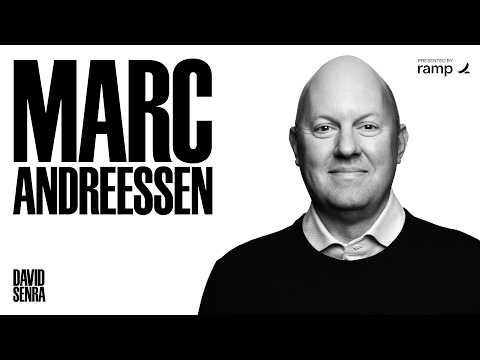
“…the founder is going to be the core engine of progress in the world…”David Senra interview, 2024 · 10:28
Silicon Valley matters because it concentrates the people who can make new things
Andreessen’s basic view is that Silicon Valley is important because breakthrough innovation comes from a small number of unusual people, and those people tend to cluster. He describes real innovators as highly open to new ideas, intensely applied, and willing to endure social resistance, which means they are both rare and difficult for normal institutions to absorb.123
That helps explain why Silicon Valley keeps producing outsized results. In his account, new ideas often come from the fringe rather than the center, and fast-moving environments work better for those people than heavily normalized bureaucracies do.45
This is also why he gives founders such a central role. He sees the founder not as a romantic mascot but as the operating core of technological progress, especially in industries changing too quickly for conventional managers to handle well.67
“…the founder is going to be the core engine of progress in the world…”David Senra interview, 2024 · full transcript →
The Valley’s real engine is a founder culture that treats the world as changeable
Andreessen thinks Silicon Valley is powered by a particular mental model: the world is more malleable than most people think, so ambitious builders should try to reshape it. That belief turns entrepreneurship into a practical act of agency rather than just a career choice.8
He pairs that with a strongly technological worldview. The central problem, in his telling, is not that humanity has too much invention, but too little technology, information, and intelligence applied to real problems.9
That is why Silicon Valley, at its best, is not mainly about finance or status. It is about taking a world he sees as primitive and crude relative to what it could be, then building products and companies that close that gap.109
“…the world is way more malleable than you think.”David Senra interview, 2024 · full transcript →
Silicon Valley runs on trust networks, momentum, and staying in the game
Andreessen’s view of Silicon Valley is more social than many outsiders realize. He argues that the Valley’s high-trust culture comes from repeat interactions, reputation, and the fear of missing the next great company, which makes people surprisingly willing to back talent early and keep relationships intact.
That trust system connects directly to venture capital. Rather than pretending anyone can consistently call tops and bottoms, he favors a disciplined pace of investing through booms and busts so you are still present when the next great company appears.11
He also emphasizes how advantage compounds once a startup gets momentum. Credibility, talent, capital, and attention tend to accumulate around the companies already moving, which is one reason Silicon Valley becomes so powerful as a networked ecosystem instead of just a place on a map.12

“So, Fred Wilson's the guy who kind of really walked me through this originally, and his version of this would be, yeah, bubbles bust, it's all random and crazy and we never know what's going on in the whole thing, and you get wrapped up in the psychology, and so, his rule of thumb always was you have a disciplined mechanical process for the pace of investment and then also for the pace of exits, and you don't deviate from it, and a lot of that justification would be precisely so that you keep investing at the bottom.”Cheeky Pint conversation, 2024 · full transcript →
The old Silicon Valley–Democratic alliance was real, and then it broke
Andreessen says Silicon Valley once had a strong natural alliance with the Democratic Party of the Clinton-Gore era. In that period, he saw Democrats as pro-business, pro-startup, and enthusiastic about the technologies entrepreneurs were building.13
He describes this arrangement as a broader social bargain in which entrepreneurs could build companies, create jobs, become successful, and later convert wealth into philanthropy. That was, in his view, the accepted Silicon Valley life cycle and a stable basis for legitimacy.1415
His argument is that the bargain later unraveled. He says the attack widened from isolated criticism to a broad hostility toward tech and business, and he ties that breakdown to a deeper collapse in shared assumptions about rational debate, growth, and the role of founders.161718

“The deal with a capital D…”Matter of Opinion interview with Ross Douthat, 2024 · full transcript →
Why Andreessen thinks the Valley moved right
Andreessen’s explanation for Silicon Valley’s rightward shift is not mainly tax policy or narrow self-interest. He says many people in tech came to believe they were facing a culture of internal activism, speech restriction, and institutional pressure that no longer treated company-building as a social good.
He frames this as a reaction against what he sees as a repressive moral and political environment. In his telling, the Valley changed politically because builders concluded that the institutions around them had become more hostile to growth, more censorious, and less willing to work with them constructively.1619
That shift fits his broader optimism about America. He still believes the country has the preconditions for a new golden age, but only if technology, entrepreneurship, and government are aligned again around building rather than blockage.2021
Andreessen on silicon valley, in his own words
“…the world is way more malleable than you think.”
“…the founder is going to be the core engine of progress in the world…”
“The world we live in is just a very primitive and crude place as compared to what it should be…”
“…we are no longer dealing with rational people.”
Where to watch
 Marc Andreessen on Politics and Silicon Valley: How the Valley Moved Right2024 · 61 min · full transcriptBest single overview of how Andreessen thinks Silicon Valley’s old political alignment formed and why it broke.
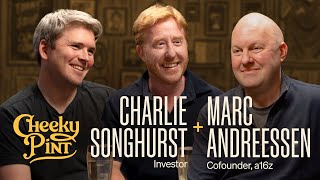 Marc Andreessen on AI and Silicon Valley: Trust, Cycles, and Power2024 · 129 min · full transcriptBest for understanding the Valley’s trust culture, venture logic, and how networks and momentum actually work.
 Marc Andreessen on Founders Run Companies: Why Managers Fail2024 · 110 min · full transcriptBest for his founder-centric theory of why Silicon Valley keeps producing important companies.
 Marc Andreessen on Innovation and AI: How Wild Ducks Win2024 · 177 min · full transcriptBest for his view of the rare innovator personality and why clusters like Silicon Valley exist.
 Marc Andreessen on Techno-Optimism: America Can Have a Golden Age2024 · 74 min · full transcriptBest for how he links Silicon Valley’s political shift to a broader techno-optimist vision for America.
Questions people ask
- What did Marc Andreessen say about philanthropy and the role of government?
- What did Marc Andreessen say the Silicon Valley–Democratic Party alliance was like in the Clinton-Gore years?
- What did Marc Andreessen say was the old Silicon Valley bargain?
- What does Marc Andreessen think technology is for?
- What is Marc Andreessen's advice for investing through bubbles?
- What traits does Marc Andreessen say real innovators have?
Sources
Every quote above, word for word from the transcripts. Numbers match the text.
“Yeah. So I'm not a psychologist, but I've picked up some of the concepts, some of the terms. And so I've... Was a great moment of delight in my life when I learned about the big five personality traits because I was like, There's a way to actually describe the answer to this question in at least reasonably scientific terms. And so I I think what you're looking for when you're when you're talking about real innovators, like people who actually do really creative breakthrough work, I think you're talking about a couple things. So one is very high in what's called trait openness, right, which is one of the big one of the big five, which is basically just like flat out open to new ideas. And of course, the nature of trade openness is... Trade openness means you're not just open to new ideas in one category, you're open to many different kinds of new ideas. And so we might talk about the fact that a lot of innovators also are very creative people in other aspects of their lives, right, even outside of their their their specific creative domain. So that's important. But, of course, just being open is not sufficient.”
“You need somebody who's really willing to apply themselves.”
“They need to be able to deal with social discomfort to the level of ostracism.”
“So the way I would put it is that new ideas come from the fringe. And who's on the fringe? Right? People who are on the fringe. Right? So what attracts somebody to be on the fringe? Like, step one is always, am I on the fringe? Right. Step two is what does that mean? Like, what form of the fringe? Right? But they they tend to be on the fringe in all these all these departments at the same time. And so you're just not gonna get the new ideas that you get from people on the fringe. It's a package deal. You're not gonna get that without all the other associated craziness. It's it's it's all the same thing. That's that's my theory.”
“But at least they can move quickly. Right? They can organize fast. They can have a... You know, if there's an issue today, they can have a meeting today. They can solve the issue today. Right? And everybody they need to solve the issue is in the room today. Right? So they can just move a lot faster. I think that's part of it, but I think there's another deeper thing underneath that that people really don't like to talk about that takes us back full circle to where we started, which is just the sheer number of people in the world who are capable of doing new things is just a very small set of people. And so you're not gonna have a 100 of them in a company or a thousand or 10,000. You're gonna have three, eight or 10 maybe.”
“…the founder is going to be the core engine of progress in the world…”
“If it doesn't change, maybe they can run the banks for a long time, or they can run the power company for a long time, or the car company, and as long as the car is the car is the car, or soup is soup is soup, it kind of doesn't matter. But the minute things change, the manager personality type, because it's not the founder personality type, it doesn't know how to deal with change. Not everything is changing. A lot of things aren't changing, but for the things that are changing, they're changing like really, really quickly. I mean, SpaceX is like the classic example of this. Imagine being a professionally trained manager, trained at a top management school, working for a rocket launch company, competing with SpaceX. And the assumption of the entire rocket industry for the last 100 years has been the rockets are used once, and then that's it. And the economics of launch are dominated by having to build a new rocket every time. And then, this crazy guy in California comes up with this thing where the rockets land on their butt.”
“…the world is way more malleable than you think.”
“We just have this like fundamental view that technology is, on balance, an enormously powerful force in the world, and basically that the big problem with the world is that there's not enough technology, there's not enough information, there's not enough intelligence. And we have this opportunity, we have these special sets of technologies that let us fundamentally improve things. And then there's this very special kind of personality type of the entrepreneur, who's able to build the product, and then able to build the company, and build a phenomenon, and really make an impact on things. And so when I look at the world, I'm just like, okay, this is just like... The world we live in is just a very primitive and crude place as compared to what it should be, and what it could be.”
“The world we live in is just a very primitive and crude place as compared to what it should be…”
“So, Fred Wilson's the guy who kind of really walked me through this originally, and his version of this would be, yeah, bubbles bust, it's all random and crazy and we never know what's going on in the whole thing, and you get wrapped up in the psychology, and so, his rule of thumb always was you have a disciplined mechanical process for the pace of investment and then also for the pace of exits, and you don't deviate from it, and a lot of that justification would be precisely so that you keep investing at the bottom.”
“All of these resources that you need to be able to succeed as a business, and so, there's a snowball-rolling-down-the-hill phenomenon, which is you're either a snowball rolling down the hill, picking up resources as you go, gaining size, and scale, and scope, and power as you go, or you're not, and you're stuck at the top of the hill as a snowflake and you're just not going anywhere, and so the question is how do you get into this kind of aggregation of resources thing? Economists call this, what's the term for the things that are at the height of the power... Preferential attachment. Yeah. But it's— A sort of beating of companies. It's the Matthew principle from the Bible, which is, he who has a lot will get more and he who doesn't... And so, when a company gets momentum, you hear about momentum, when a company gets momentum, what it means is the next resource that you need is preferentially willing to attach to your thing as opposed to somebody else. That's the mechanical process that drives the power-law curve. So that creates a chicken and egg question— Correct.”
“That era was basically over by the time I arrived. I, I met a few of those guys, but when I got there in '94, it was in the full swing of the Clinton-Gore kind of, you know, restoration of the Democratic Party, um, you know, kind of recovery of liberalism as a mainstream political force. And this goes back again to Al Gore's role in this, who, you know, who I got to know quite well, and Bill, you know, basically it was the pro-business Democratic Party. It was the proto-tech Democratic Party. It was the pro-startup Democratic Party. And so Clinton and Gore and their administration was incredibly enthusiastic about what we were doing.”
“The deal with a capital D…”
“And nobody ever said it out loud, but it was just assumed. And the deal was, you can be a high tech entrepreneur, you can build all this amazing technology, you can build a successful company, you can create lots of jobs. The technology makes the world a better place. It's great, you take the company public, you make a lot of money. At some point, you take the money and you donate it to philanthropy. And that's the total arc. And then when you die, in your obituary, it's like, he was an entrepreneur and a philanthropist, and all of his- >> Peter Robinson: The Silicon Valley circle of life. >> Marc Andreessen: The circle of life, and it's just like, it's great. It was a great deal cuz it's like, you get to do what you want, you get all the professional satisfaction out of executing in your field, you get all the material satisfaction out of financial success. And then you get all the psychic, moral satisfaction out of- >> Peter Robinson: And the government leaves you alone. You have more than enough scope to do what you need to do as an entrepreneur.”
“They came for tech, and they came for business in a very broad-based way.”
“…we are no longer dealing with rational people.”
“…the deal was somebody like me basically could start a company…”
“Which is philanthropy is evil because the morally correct thing to do is for the government to do all this. And so what they should be doing is they should be getting taxed at 99%. The government should take the money, then the government should allocate the money. And that's a level of statism and, you know, kind of bordering on communism that, you know, is sort of, unfortunately, kind of, you know, infected the culture right now. But so basically it's like, okay, every single part of that deal no longer works. And so it's basically the entire thing has been jettisoned out the airlock. And so it just, you know, for me it then raised the question of like, okay, if none of that is true, then what world am I living in? What role do I play?”
“We have all the preconditions for a golden age.”
“One of my favorite questions to ask in Washington is, okay, what's the whole of government strategy on technology? Of course, zero. What's the whole of government strategy on China? Zero, right? It turns out the president matters. And so, yes, this is precisely why this all matters so much. This has to be directly confronted. We and our companies are enthusiastic at signing up to solve these problems. >> Peter Robinson: And the president- >> Marc Andreessen: We need a government that wants to work with us on this. >> Peter Robinson: Donald John Trump is alive to all of this? >> Marc Andreessen: Yes, 100%, no question. He is, and then his people are. And they, yes, this stuff, they understand.”
How this guide was made: drafted with AI from the full transcripts of the recordings cited, then checked: every quotation must match a transcript word for word and be the speaker's own words, and an independent review gates accuracy. Methodology and corrections.


