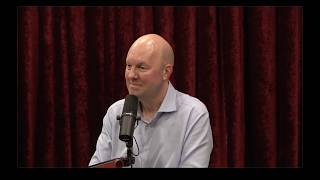
Marc Andreessen on Artificial Intelligence
Marc Andreessen sees AI as a world-changing general technology whose biggest questions are adoption, falling costs, and who gets to shape its values and use.
- AI is, in Andreessen’s view, the biggest technological shift of his lifetime, larger than the internet.
- He expects AI to augment people, change tasks more than erase roles, and make ambitious individuals far more capable.
- He thinks today’s AI products are early and likely to look very different within a decade.
- He argues the main political fight is not killer machines but who controls AI systems and what values they express.
- He believes fast cost declines and rapid diffusion will widen the gap between early adopters and incumbents.

AI is a bigger technological break than the internet
Andreessen treats AI as a foundational technology, not a passing software trend. He describes it as the biggest technological revolution of his life and frames it as closer in scale to the deepest platform shifts than to an ordinary product cycle.1
That leads him to a simple implication: most people are still underestimating how early this is. He is skeptical that the products people use now will be the ones they use five or ten years from now, and he expects much more sophisticated forms to emerge.23
He also emphasizes uncertainty as a sign of opportunity rather than failure. In his view, many of the most important economic and product questions are still open, which is why he treats the current moment as the beginning of a long buildout, not the end of a hype wave.4
“This is the biggest technological revolution of my life.”Interview, 2024 · full transcript →
AI matters because it amplifies human capability
Andreessen’s core lens is augmentation. He describes AI as a new method for extending human ability, and he repeatedly argues that people should think less about replacement in the abstract and more about how intelligence can be made broadly available in software.57
That is why he focuses on task change more than immediate role extinction. He argues that the right unit of analysis is task loss, meaning jobs may persist while large parts of the work inside them get automated, accelerated, or upgraded.8
He thinks the winners will be people who combine agency with breadth and depth. In his view, being good at two or three things becomes much more valuable in an AI world, while merely average routine skill becomes easier to automate. He goes so far as to argue that people serious about improving themselves should spend extensive time learning through direct use of AI systems.91011

“Everybody wants to talk about job loss but really what you want to look at is task loss.”This Week in Startups interview, 2023 · full transcript →
Education, search, and software will be rebuilt around AI
Andreessen expects AI to change how people learn. He sees it as a path to personalized tutoring and coaching at scale, with systems that can adapt to an individual over time and become increasingly useful for development and decision-making.11
He also expects AI to reshape how people use the internet. In search, he argues the shift is from lists of links toward direct answers and conversational interfaces, with AI becoming the front end through which many systems and knowledge sources are accessed.13
He views current interfaces as transitional. Voice, conversation, and more continuous interaction appear in his comments as signs that AI products are moving away from static software categories toward more adaptive, personal forms of computing.3
The biggest AI fight is over values, control, and censorship
Andreessen does not think the central AI question is whether models suddenly become autonomous beings. He argues that current systems do not naturally progress toward independent will, and he pushes back on apocalyptic framings that assume a hidden agent waiting to break free.151617
Instead, he says the real struggle is over what values AI systems will embody. That makes alignment, in his view, a social and political problem as much as a technical one: the crucial question is who decides what the systems are allowed to say, prioritize, refuse, or reinforce.1819
This is why he is so wary of AI safety language when it becomes a justification for restrictions. He argues that panic about AI can become a vehicle for censorship, surveillance, or control over speech and innovation, and he sees that governance battle as more important than science-fiction fears about sentient machines.171820

“…the single biggest fight is going to be over what are the values of the AIs…”Jordan B. Peterson Podcast EP 515, 2024 · full transcript →
AI will widen the gap between fast adopters and everyone else
Andreessen thinks AI is creating the largest gap he has seen between what early adopters know is possible and what incumbents believe. Because capabilities are changing so quickly, many established organizations are reasoning from outdated assumptions while entrepreneurs are building against the frontier.2122
He expects falling costs to intensify this. As the price of AI declines faster than Moore’s law, more uses become economical, more products can be built, and more companies can reach meaningful scale with smaller teams.2324
That dynamic supports his broader startup view. Smaller groups can move faster, organize faster, and pursue ideas that once looked too ambitious, which is why he expects AI to accelerate company formation and reward unusually ambitious builders.2425

“…this is the biggest delta between what the early adopters understand as possible…”YouTube interview, 2024 · full transcript →
Andreessen on artificial intelligence, in his own words
“This is the biggest technological revolution of my life.”
“AI is the philosopher's stone.”
“Everybody wants to talk about job loss but really what you want to look at is task loss.”
“The price of AI is falling much faster than Moore's law.”
“…the single biggest fight is going to be over what are the values of the AIs…”
“AI is the latest in a long series of basically augmentation methods…”
Where to watch
 Marc Andreessen on AI Timelines: Markets, Policy, and Open Source2024 · 81 min · full transcriptBest overview of why Andreessen thinks AI is historically big, still early, and economically accelerating.
 Marc Andreessen on AI and Education: The Super-Powered Individual2023 · 105 min · full transcriptBest for his practical view of AI as augmentation in careers, education, and self-improvement.
 Marc Andreessen on AI Alignment: The Values of the AIs2024 · 107 min · full transcriptBest for understanding why he thinks the main AI battle is over values and alignment.
 Marc Andreessen on Artificial Intelligence: Why the Panic Is Overblown2020 · 160 min · full transcriptBest for his critique of AI panic and his argument that control, not sentient takeover, is the real issue.
 Marc Andreessen on AI Gap: Early Adopters vs. Incumbents2024 · 61 min · full transcriptBest for how AI changes startup ambition and widens the gap between early adopters and incumbents.
 Marc Andreessen on AI and Search: The Future of the Internet2019 · 196 min · full transcriptBest for how he thinks AI will reshape search, interfaces, and the future structure of the internet.
Questions people ask
- What did Marc Andreessen say about AI as a life coach for kids?
- What did Marc Andreessen say about AI sycophancy and honesty?
- What did Marc Andreessen say about why podcasts and newsletters matter?
- What does Marc Andreessen say about how early AI products are?
- What did Marc Andreessen say about AI voice tools?
- What did Marc Andreessen say about the UK's approach to AI regulation?
Sources
Every quote above, word for word from the transcripts. Numbers match the text.
“This is the biggest technological revolution of my life.”
“I'm very skeptical that the form and shape of the products that people are using today is what they're going to be using in five or 10 years.”
“From all that, it kind of feels like it has to be early. Like, it's kind of hard to imagine that we've, like, we topped out in any way. It feels like everything is still developing. I mean, quite frankly, it feels like the products—to me, it feels like the products are still super early. Like, I'm, I'm very skeptical that the form and shape of the products that people are using today is what they're going to be using in five or 10 years. I think things are going to get much more sophisticated from here. Um, and so I think we probably have a long way to go.”
“These are trillion dollar questions, not answers.”
“AI is the latest in a long series of basically augmentation methods…”
“AI is the philosopher's stone.”
“Everybody wants to talk about job loss but really what you want to look at is task loss.”
“The additive effect of being good at two things is more than double.”
“If the goal is to be a mediocre coder, then just let the AI do it.”
“…people who really want to improve themselves and develop their careers should be spending every spare hour, in my view at this point, talking to AI…”
“AI will end up being the front end on all those things…”
“It's more like a puppy than a person.”
“…there's no genie in the bottle.”
“The natural course of progression is not for that to all of a sudden decide it has a mind of its own.”
“…the single biggest fight is going to be over what are the values of the AIs…”
“The way Anthropic puts it is you want the, you want the, you want the AIs to be honest, helpful, and harmless. And, and there's a whole bunch of questions in all three of those. Right? Which is, like, for example, exactly how honest do you want it to be. Right? Like, do you really want it to tell you all the, like, all the truth about... You know? Whatever. Anyway, there's that. But there's also... Okay. Harmful. Okay. Well, the harmful and helpful, it's like, okay. Do you want it to always agree with you? Okay. Well... And then that... That's what in the field is called the sycophancy issue. The AI is a sycophant. Right? It sucks up to you. Right? And so it's like, oh, I have a... You know, I I I I I I wanna get a promotion at work, and you help me do it. A 100%, you, of all people, definitely deserve this promotion. And then you go back the next day, oh, I didn't get it here.”
“The UK again has chosen—UK's chosen this middle form, which is they've sort of made it illegal, right? And so they did this—the last administration did this disastrous AI safety push which was basically a massive red light basically saying, don't even bother to try to start AI startups in the UK, um, so but it wasn't like as overt as a ban as the EU put on, but it was like this massive signal that basically says this is not a safe place to do it. And I I think the UK is kind of stuck halfway in the middle right now, and kind of has to decide which way it wants to go.”
“…this is the biggest delta between what the early adopters understand as possible…”
“I'm full-time, I'm basically drowning in the pace of development right now…”
“The price of AI is falling much faster than Moore's law.”
“…we used to ask the question, is this idea too ambitious?”
“But at least they can move quickly. Right? They can organize fast. They can have a... You know, if there's an issue today, they can have a meeting today. They can solve the issue today. Right? And everybody they need to solve the issue is in the room today. Right? So they can just move a lot faster. I think that's part of it, but I think there's another deeper thing underneath that that people really don't like to talk about that takes us back full circle to where we started, which is just the sheer number of people in the world who are capable of doing new things is just a very small set of people. And so you're not gonna have a 100 of them in a company or a thousand or 10,000. You're gonna have three, eight or 10 maybe.”
How this guide was made: drafted with AI from the full transcripts of the recordings cited, then checked: every quotation must match a transcript word for word and be the speaker's own words, and an independent review gates accuracy. Methodology and corrections.