Greats, Rivals, Coaches
How Kobe learned by studying Jordan, clashing with Shaq, and being challenged by Phil Jackson.

The lesson
Kobe treated greatness as something you study closely, not something you admire from a distance. He sought out people who had already solved problems he still needed to solve, and he was direct about learning from them. His relationship with Michael Jordan mattered because it gave him not only technical feedback but also lessons about leadership and preparation, showing that mentorship can speed up growth when you are humble enough to ask and sharp enough to apply what you hear.12
He also improved by turning rivalry into useful energy. His partnership with Shaq worked not because it was comfortable, but because both players put winning above ease and kept pushing each other at a very high level. Kobe's standard was simple: personal tension is acceptable if the shared mission is clear, and if conflict appears, the productive move is to convert it into fuel rather than self-pity or distraction.345
That edge was supported by obsessive craft. Kobe believed you do not rise to big moments by emotion alone; you earn confidence through repetition, curiosity, and close study of details. Film, footwork, and fundamentals were not side work to him—they were how you reduce guesswork, understand what is really happening, and keep improving over time.678
Hard coaching fit the same logic. Kobe valued being challenged by coaches and teammates who would tell him the truth, because honest correction raises your ceiling more than praise does. Leadership, in his view, also had to mature: a great player cannot just impose force, but must stay calm under pressure, absorb discomfort, and help others perform their roles within a winning structure.910
5 principles from Kobe Bryant
Seek out great teachers directly
Kobe did not wait passively for mentorship; he reached toward people who had already achieved what he wanted to learn. Apply this by identifying one person whose experience can shorten your learning curve, then ask specific questions you can act on immediately.
“…you've got to do what's right…”
Use rivalry as fuel
Competition becomes productive when it sharpens standards instead of turning into excuses. When someone pushes you, focus on what their presence reveals about the level you must reach and turn that pressure into better work.
“…the best thing that I could do is use that as fuel…”
Build confidence through obsessive fundamentals
Kobe tied confidence to preparation, not mood. Study the small details of your craft, repeat them until they hold up under pressure, and keep asking why something worked or failed.
“You have to be obsessive about the process, you know?”
Welcome hard truth from coaches
Growth requires people who challenge your habits and expose your blind spots. Choose feedback that makes your performance better, even when it is uncomfortable to hear.
“…you be captain of the ship, you go down with the ship…”
Lead by calming the moment
Kobe's version of leadership was not just intensity; it was emotional control that helped the group execute. In stressful situations, your first job is to steady yourself so others can steady themselves too.
“…as a leader, you have to be able to suppress whatever nervousness you may be feeling…”
In his own words
The quotes behind the lesson, word for word from the transcripts. Numbers match the lesson above.
“But what happened is that we wound up, he wound up becoming a big brother to me. What are you doing? Like I know where you're going. You got to get up quicker. If you knew where I was going, why you go for the fake? Mike, after you fake the ball, where else you going? You jump off your feet. Yeah, but where else you going to go? In the game, I go for you. I prepare. I go for these reels right here. He saw something in me that reminded him a lot of himself when he was coming up. He took me under his wing a lot. He showed me a lot of things, taught me a lot of things, like leadership things. Kobe Bryant passes the great Michael Jordan and moves into third on the NBA's all-time scoring list. So when I passed him up, I remember talking to him after we said, you know, this is kind of, it's, it's, you know, he's still here. The information and the stuff that he's passed on to me, I'm breathing that spirit back into the game all over again, which is a lot of…”
“…you've got to do what's right…”
“I don't care about anything else on the basketball court but winning.”
“…the best thing that I could do is use that as fuel…”
“I got a kid that's going to give me 40 whenever he wants to.”
“You have to be obsessive about the process, you know?”
“The most important thing about it is curiosity.”
“I would love for people to look at, you know, my career and say that, um, I maximized everything…”
“…as a leader, you have to be able to suppress whatever nervousness you may be feeling…”
“…you be captain of the ship, you go down with the ship…”
Reflect
- Who is one person—mentor, rival, coach, or peer—who could most improve your craft right now, and what exact question should you ask them?
- Where in your work are you avoiding tension or hard feedback that could actually make you better?
- What are the fundamentals of your field that you need to study more obsessively so your confidence rests on preparation instead of emotion?
Check your understanding
Go deeper
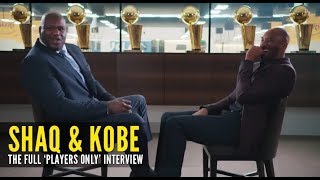 Kobe Bryant on Kobe-Shaq Rivalry: The Fire Behind the Dynasty2018 · 40 min · full transcript
 Kobe Bryant on Recovery and Winning: Mamba Mentality After Injury2013 · 56 min · full transcript
 Kobe Bryant on Mamba Mentality: Rest at the End2018 · 68 min · full transcript
 Kobe Bryant on Competitive Mindset: Winning Beats Friendship2015 · 47 min · full transcript
 Kobe Bryant on Mentorship and Leadership: Doing What's Right2017 · 20 min · full transcript
 Kobe Bryant on Competitive Mindset: Staying Hungry, Smart, and Honest2012 · 57 min · full transcript
 Kobe Bryant on Mamba Mentality: Curiosity, Standards, and Purpose2019 · 55 min · full transcript
 Kobe Bryant on Injury, Leadership, and Legacy: Playing Fearlessly2013 · 29 min · full transcript