Winning With Others
Even the fiercest scorer had to learn when to trust, push, and adjust.

“I don't care about anything else on the basketball court but winning.”Jimmy Kimmel Live interview, 2013 · 43:20
The lesson
Kobe’s standard for teamwork was simple: winning came first. He did not judge a partnership by comfort or friendship, but by whether both people could help the team get where it needed to go. That is why he could accept tension, hard accountability, and even rivalry inside a successful partnership, as long as it served the larger goal12.
His relationship with Shaq shows this clearly. Kobe saw that great teammates do not have to be alike or easy with each other; they can be demanding, combative, and still deeply effective. What mattered was mutual force: each player had to bring something the other could trust under pressure, and the friction itself could sharpen both players instead of breaking them apart.
Kobe’s thinking about leadership also changed over time. Early on, he was driven by proving himself, but later he put more emphasis on how to draw the best out of others. For him, leadership was not just about making the right play yourself; it was about understanding people well enough to know when to challenge them directly and when to step back so they could grow into responsibility45.
That is why role clarity mattered so much to him. In a team, someone has to own the outcome, especially late, and leaders cannot hide from that burden. But taking responsibility did not mean doing everything alone. It meant reading the game honestly and choosing the action that most increased the team’s chance to win, even if that meant scoring less, rebounding more, or trusting a teammate in a big moment67.
Kobe’s 2010 Finals Game 7 mindset is the practical model. He desperately wanted the title, but he was exhausted and hurt, so he adjusted instead of forcing the game into his preferred style. That is one of his clearest lessons about winning with others: do not cling to your identity when the situation demands something else; give the team what the moment requires89107.
5 principles from Kobe Bryant
Put winning above comfort
Kobe believed a good partnership is not necessarily a pleasant one. If tension, accountability, or hard truths help the team win, they are worth tolerating.
“I don't care about anything else on the basketball court but winning.”
Let rivalry sharpen collaboration
Kobe’s partnership with Shaq shows that two strong personalities can push each other productively. The key is that each person respects what the other brings and keeps the shared goal bigger than the ego battle.
Lead situationally
Kobe did not treat leadership as one fixed style. Sometimes the right move is to push hard; sometimes it is to create space for someone else to develop confidence and ownership.
“The key is not passing the ball.”
Own the outcome, not every possession
Being the leader does not mean forcing yourself into every play. It means taking responsibility for the result and choosing the action that best serves the team in that moment.
“…you be captain of the ship, you go down with the ship…”
Adjust your role when the game demands it
Kobe’s standard was not to win only in his ideal way. When he was tired or hurt, he still looked for other ways to contribute, which is what mature teamwork requires.
“I was on E. I was really, really tired.”
In his own words
The quotes behind the lesson, word for word from the transcripts. Numbers match the lesson above.
“I don't care about anything else on the basketball court but winning.”
“I'd much rather have the latter…”
“The key is not passing the ball.”
“I would love for people to look at, you know, my career and say that, um, I maximized everything…”
“…you be captain of the ship, you go down with the ship…”
“You got to do whatever it takes.”
“I just wanted it so bad.”
“I was on E. I was really, really tired.”
“I was hurt. You be old all you want. I was hurt.”
Reflect
- Where in your work are you choosing harmony over honest accountability, even though clearer standards would improve the result?
- Think of a difficult partnership in your life. What useful pressure might that relationship contain if you focused less on personality and more on the shared goal?
- In a recent high-pressure situation, did you insist on contributing in your preferred way, or did you adapt to what the team actually needed?
Check your understanding
Go deeper
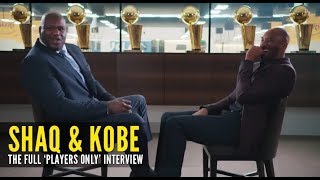 Kobe Bryant on Kobe-Shaq Rivalry: The Fire Behind the Dynasty2018 · 40 min · full transcript
 Kobe Bryant on Recovery and Winning: Mamba Mentality After Injury2013 · 56 min · full transcript
 Kobe Bryant on Mamba Mentality: Turning Pressure Into Greatness2015 · 54 min · full transcript
 Kobe Bryant on Competitive Mindset: Winning Beats Friendship2015 · 47 min · full transcript
 Kobe Bryant on Winning Through Pain: 2010 Finals Game 72010 · 10 min · full transcript
 Kobe Bryant on Competitive Mindset: Staying Hungry, Smart, and Honest2012 · 57 min · full transcript