Protect Open Discourse
Musk treats speech, truth-seeking, and platform transparency as democratic infrastructure.

“The point at which you lose free speech, it doesn't come back…”BBC interview with James Clayton, 2023 · 18:21
The lesson
Musk frames open discourse as democratic infrastructure, not just a product feature. Across these interviews, he argues that people can only make legitimate political choices if they can speak freely and access competing claims without hidden suppression or manipulation12. That is the core reason he gives for buying Twitter/X: he says he became increasingly uneasy with how the platform was shaping visibility and enforcing deplatforming, and saw that as a civilizational risk rather than a normal business issue34.
From that view, X should function like a digital town square where lawful speech is generally allowed, while the platform stays transparent about how information is ranked and corrected. In the TED interview and later discussions, Musk ties this to open algorithms and a more visible moderation philosophy, so users can inspect the system instead of just trusting opaque decisions. His standard is not that everything posted is true; it is that truth-seeking works better when more speech stays up and bad claims are met with context rather than quiet removal5.
That is why bots, verification, and Community Notes matter in his operating system. Musk treats bots as a distortion of public discourse because they can fake consensus, spread misinformation cheaply, and undermine trust in who is real, which is why he links paid verification to raising the cost of manipulation6. He presents Community Notes as the mechanism that lets the platform correct falsehoods openly, including ads and even his own posts, instead of relying only on top-down censorship; in his framing, the goal is to become the least inaccurate source of truth, not a perfectly error-free one5.
This also explains his willingness to clash with advertisers. Musk argues that if advertisers can force the platform to suppress or shape speech, then the incentives of discourse become distorted by commercial pressure rather than public truth-seeking7. In the CNBC interview, he extends the same principle to ads themselves: they should be useful and honest, and if Community Notes exposes misleading claims, preserving accuracy matters more than protecting ad revenue5.
Still, his approach is not 'anything goes.' He repeatedly anchors free speech to the law, and he accepts that platforms need rules, labeling, and context systems to reduce deception while staying open6. The tension in this chapter is that Musk wants maximum lawful openness, but also stronger identity signals, bot resistance, and transparent correction tools; his answer to the moderation-openness tradeoff is less hidden control and more visible accountability.
3 principles from Elon Musk
Treat speech as infrastructure, not decoration
Musk’s view is that free speech is upstream of democratic legitimacy, because citizens need open information to make informed choices. Apply this by asking whether your system helps people compare claims openly or silently steers what they are allowed to see and say.
“…if we don't have free speech, we don't have democracy…”
Prefer transparent correction over opaque suppression
His preferred model is to leave more content visible and add context, rather than relying mainly on removals that users cannot inspect. In practice, this means building mechanisms that show why a claim is disputed and letting correction happen in public.
“But my aspiration for the X platform is that it is the best source of truth or the least inaccurate source of truth. And well, I don't know if you will believe me or not, but I think honesty is the best policy. And I think that the truth will win over time. And the we've got this great system, and it's getting better, called community notes, which is fantastic, I think, at correcting falsehoods, or or adding context. In fact, we we make a point of of not removing anything, but only adding context. Now that context could could include that this is completely false, and here's why. And and and no one is immune to this. I'm not immune to it.”
Do not let advertisers set the truth standard
He argues that commercial pressure should not decide what can be said or what claims get corrected. In your own work, separate revenue incentives from the rules that govern accuracy and public trust.
“If somebody's gonna try to blackmail me with advertising... Blackmail me with money, go fuck yourself.”
Moments to watch
In his own words
The quotes behind the lesson, word for word from the transcripts. Numbers match the lesson above.
“…if we don't have free speech, we don't have democracy…”
“Uh, First Amendment, um, if we don't have free speech, we don't have democracy because people cannot make an informed vote. Those are my controversial views, and, you know, and, and look, I, I, I don't think either party, I don't think the Republicans are perfect. I don't think obviously I right now I’m more Republican than Democrat, but it's not like I think the Republican Party is perfect or, or without issues. Um, but we've got a choice between two candidates, and I think on balance it's a no-brainer, uh, to vote for Trump. And if we don't vote for Trump, I think we are at serious risk of losing our democracy and…”
“The reason I bought it was because I... I'm pretty attuned since I I was, like, the most interacted with user on Twitter before the acquisition. So before the acquisition, I had more interactions than than... Like, there's some accounts like Obama or whatever had higher follower accounts, but, I had the most number of interactions of of any account in the system. So, I was very attuned to, like... If if they saw chain... If they changed the system, I can tell immediately. Like... And I'm like I'm like, something weird is going on here. You know? Like Yeah. So there's like... I I just got increasingly uneasy. And, obviously, when when they deplatformed the setting president, you know, not the deep deep deep platform Trump, that was that was just insane. You know? And and and the things he was posting, like, was posting things that that... Like, was posting good things.”
“The point at which you lose free speech, it doesn't come back…”
“But my aspiration for the X platform is that it is the best source of truth or the least inaccurate source of truth. And well, I don't know if you will believe me or not, but I think honesty is the best policy. And I think that the truth will win over time. And the we've got this great system, and it's getting better, called community notes, which is fantastic, I think, at correcting falsehoods, or or adding context. In fact, we we make a point of of not removing anything, but only adding context. Now that context could could include that this is completely false, and here's why. And and and no one is immune to this. I'm not immune to it.”
“So yeah, I think verification is going to be extremely fundamental in the future. That's why we're so focused on it. So I mean, the reason I brought that up is, you know, as a content creator, I'd like to keep making those and I don't want to necessarily fool people, right? So would it be possible to, I don't know, add a flag to it so that content creators can say, "Hey, this is AI-generated content. Don't take it seriously. It's a parody." Well, I think in the tweet, you know, in the post, I think it would be advisable to say that this is not real, right, if it is something that can be potentially misinterpreted. It was crazy how viral that picture of the Pope with the…”
“If somebody's gonna try to blackmail me with advertising... Blackmail me with money, go fuck yourself.”
Reflect
- Where in your work do hidden gatekeeping decisions shape what people can see, say, or compare? How could you make those decisions more transparent?
- When you see false or misleading claims, do you instinctively remove them, ignore them, or add context? What would a better correction system look like in your environment?
- What pressures—money, reputation, politics, customer demands—most tempt you to compromise truth-seeking, and what guardrail could keep that pressure from controlling your decisions?
Check your understanding
Go deeper
 Elon Musk on Free Speech: Twitter, Elections, and Civilization2024 · 159 min · full transcript
 Elon Musk on Twitter Takeover: Free Speech, Bots, and X2023 · 87 min · full transcript
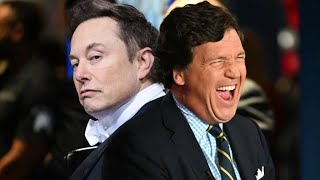 Elon Musk on AI Safety and Free Speech: We Need Insight, Not Nothing2023 · 96 min · full transcript
 Elon Musk on a Future Worth Excited About: AI, robots, space2022 · 70 min · full transcript
 Elon Musk on Twitter, Tesla, and AI: Ads, Autonomy, and Control2023 · 62 min · full transcript
 Elon Musk on Trust and AI: The mind is a storm2023 · 94 min · full transcript