What Is AGI?
General intelligence means breadth, consistency, and transfer.

“Yeah, artificial - I mean there’s not an agreed definition of artificial general intelligence, but the way that Shane and I think about artificial general intelligence is a system that is capable of a wide range of tasks, and if we think about human level artificial general intelligence, then we’re talking about system that can pretty much do the full spectrum of cognitive tasks that humans can at least as good as humans are able to do, that’s you know one reasonable definition of artificial general intelligence.”DeepMind podcast interview, 2019 · 20:26
The lesson
Hassabis defines AGI in broad cognitive terms, not as a system that excels at one benchmark. Across these interviews, he describes it as a system with a wide range of capabilities comparable to the full spectrum of human cognitive tasks, or even all the cognitive capabilities of the human mind12. That definition matters because it shifts the question from “Can a model do one impressive thing?” to “Can it handle many kinds of thinking?”
From that view, narrow tests are not enough to establish general intelligence. Hassabis treats intelligence operationally as performance across a wide range of tasks, emphasizing breadth rather than isolated skill3. He also stresses that this kind of intelligence must be flexible and adaptive, which means success should involve transfer across contexts rather than repeated wins on a single type of problem4.
This is why he does not treat language alone as sufficient, even though natural conversation is one important signpost. He points to several high-level abilities on the road to AGI, including natural language use, abstract concept learning, creativity, and major scientific discovery5. In the same spirit, he argues that current large models are promising but probably not enough by themselves, because more general capability will likely require stronger world models plus planning and search on top67.
Hassabis also connects AGI to grounded interaction with the world. He argues that systems need grounding to achieve goals properly in the real world, and sees multimodal learning as part of how that grounding improves8. So general intelligence is not just about producing convincing text; it includes understanding, acting, and transferring knowledge across modalities and environments.
Taken together, his definition of AGI has three core tests: breadth across many tasks, consistency of performance rather than scattered demos, and transfer to new settings through flexible, adaptive reasoning934. That is why narrow benchmarks, including any single test of conversation or competence, are insufficient on their own. For Hassabis, AGI means an integrated system that can generalize across the full range of cognitive demands humans handle12.
5 principles from Demis Hassabis
Define AGI by full cognitive breadth
Use a definition that covers the wide range of human cognitive tasks, not one standout capability. When evaluating a system, ask whether it can handle many different forms of reasoning, learning, and problem solving.
“Yeah, artificial - I mean there’s not an agreed definition of artificial general intelligence, but the way that Shane and I think about artificial general intelligence is a system that is capable of a wide range of tasks, and if we think about human level artificial general intelligence, then we’re talking about system that can pretty much do the full spectrum of cognitive tasks that humans can at least as good as humans are able to do, that’s you know one reasonable definition of artificial general intelligence.”
Do not mistake narrow success for general intelligence
A model that performs impressively on one benchmark may still be far from general. Look for strong performance across many tasks and settings before calling a system general.
“…the ability to perform well across a wide range of tasks…”
Require flexibility and transfer
General intelligence should adapt when the task, environment, or modality changes. In practice, test whether a system can reuse what it has learned in new contexts instead of relying on task-specific tuning.
“…the hallmark of this kind of AI is that it's flexible and adaptive…”
Treat language as one sign, not the whole target
Natural conversation matters, but it is only one indicator among several. Include abstract learning, creativity, planning, and scientific problem solving in your picture of AGI.
“My betting would be that the final AGI system will have these large multimodal models as part of the overall solution, but they probably won’t be enough on their own.”
Expect AGI to need more than scaling alone
Promising large models are an important component, but Hassabis expects additional capabilities such as planning, search, and better world models. So when thinking about progress, watch for system integration, not just bigger models.
“I think that’s a super promising direction. We’ve got to carry on improving the large models. We’ve got to carry on making them more and more accurate predictors of the world, making them more and more reliable world models. That’s clearly a necessary, but probably insufficient component of an AGI system. On top of that, we’re working on things like AlphaZero-like planning mechanisms on top that make use of that model in order to make concrete plans to achieve certain goals in the world.”
In his own words
The quotes behind the lesson, word for word from the transcripts. Numbers match the lesson above.
“Yeah, artificial - I mean there’s not an agreed definition of artificial general intelligence, but the way that Shane and I think about artificial general intelligence is a system that is capable of a wide range of tasks, and if we think about human level artificial general intelligence, then we’re talking about system that can pretty much do the full spectrum of cognitive tasks that humans can at least as good as humans are able to do, that’s you know one reasonable definition of artificial general intelligence.”
“AGI as basically a system that exhibits all the cognitive capabilities the human mind has.”
“…the ability to perform well across a wide range of tasks…”
“…the hallmark of this kind of AI is that it's flexible and adaptive…”
“Certainly for me I’m waiting to see a lot of key moments, for example I think a really big moment will be when an AI system comes up with a new scientific discovery that’s of Nobel prize-winning level, that to me would be a big watershed moment and I think ah an important step in the capabilities of these systems, so you know, capable of some kind of true creativity in some sense. I think other big points will be when it can use language and converse with us in a naturalistic way. It’s capable of learning abstract concepts - these are all things that I think are high-level cognitive abilities that we’re nowhere near yet - and I think will be big signposts on the way.”
“My betting would be that the final AGI system will have these large multimodal models as part of the overall solution, but they probably won’t be enough on their own.”
“I think that’s a super promising direction. We’ve got to carry on improving the large models. We’ve got to carry on making them more and more accurate predictors of the world, making them more and more reliable world models. That’s clearly a necessary, but probably insufficient component of an AGI system. On top of that, we’re working on things like AlphaZero-like planning mechanisms on top that make use of that model in order to make concrete plans to achieve certain goals in the world.”
“I think if it’s not properly grounded, the system won’t be able to achieve those goals properly. In a sense, you have to have some grounding for a system to actually achieve goals in the real world. I do actually think that these systems, and things like Gemini, are becoming more multimodal. As we start ingesting things like video and audiovisual data as well as text data, then the system starts correlating those things together. I think that is a form of proper grounding. So I do think our systems are going to start to understand the physics of the real world better.”
“I think to get all the way to something like AGI may require one or two more new breakthroughs.”
Reflect
- Think of a system you consider “intelligent.” Is your judgment based on one impressive demo, or on breadth, consistency, and transfer across tasks?
- In your own work, where do you rely too much on narrow metrics that may not reflect real general capability?
- If you had to design a better AGI evaluation, what kinds of tasks would you include beyond language to test grounding, planning, and adaptation?
Check your understanding
Go deeper
 Demis Hassabis on AGI and Intelligence: Games, Science, and Reality2020 · 131 min · full transcript
 Demis Hassabis on AGI Bottlenecks: Compute, Learning, and Safety2025 · 32 min · full transcript
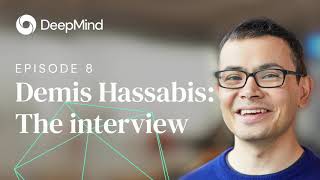 Demis Hassabis on Artificial General Intelligence: Building It Safely2019 · 37 min · full transcript
 Demis Hassabis on General Artificial Intelligence: DeepMind and AlphaGo2015 · 68 min · full transcript
 Demis Hassabis on Frontier AI and AGI: What Comes Next2024 · 30 min · full transcript
 Demis Hassabis on AGI Scaling and Alignment: Planning, Safety, Governance2024 · 62 min · full transcript