The Long Mission
Why Hassabis set out to solve intelligence first.

“Certainly for me I’m waiting to see a lot of key moments, for example I think a really big moment will be when an AI system comes up with a new scientific discovery that’s of Nobel prize-winning level, that to me would be a big watershed moment and I think ah an important step in the capabilities of these systems, so you know, capable of some kind of true creativity in some sense. I think other big points will be when it can use language and converse with us in a naturalistic way. It’s capable of learning abstract concepts - these are all things that I think are high-level cognitive abilities that we’re nowhere near yet - and I think will be big signposts on the way.”DeepMind podcast interview, 2019 · 21:22
The lesson
Hassabis’s mission starts from a very large question: if intelligence is the mechanism behind so much human progress, then understanding and building it becomes a way to tackle many other problems. Across these talks, he frames DeepMind’s goal as solving intelligence first and then applying that capability broadly, rather than building one narrow tool after another12. That mission is personal as well as scientific: he ties it to a long-standing desire to understand mind, reality, and the deepest open questions about the world345.
That is why he focuses on AGI rather than narrow AI. He describes AGI as a system able to handle a wide range of tasks, and he treats breadth, flexibility, and adaptation as the real signs of intelligence, not peak performance on a single benchmark627. In this view, solving intelligence means building systems that can generalize across many cognitive challenges, closer to the versatility of human intelligence than to one-off specialized programs8.
His confidence in this path also comes from what such systems could enable. Hassabis repeatedly argues that AI can become a general-purpose tool for scientific discovery and for addressing major societal problems, especially when human institutions struggle to improve fast enough on their own91011. He points to science as the highest-leverage application: if AI can help produce major discoveries, learn abstract concepts, and interact naturally with humans, that would mark meaningful progress toward the deeper mission1213.
DeepMind’s institutional design follows from that ambition. Hassabis presents it as science-led work done through a startup vehicle because he believed academia alone could not support the speed, scale, and resources required for the mission; even major company decisions were justified in terms of accelerating the science and the mission3. At the same time, he stresses that building AGI requires responsibility alongside ambition, including technical safety work, attention to values and goal specification, and broader coordination with outside groups and institutions141516.
5 principles from Demis Hassabis
Start from the deepest problem, not the nearest product
Hassabis’s approach is to work on intelligence itself because he sees it as the root capability behind many downstream advances. In your own work, this means asking whether you are solving a local symptom or building a more general capability that could unlock many solutions later.
“Well, the broad arcs of it have gone. I mean, unbelievably well, perhaps. You know, when we started DeepMind in 2010, that's... Can you imagine we used to go to, try to go to VCs in the UK, which there weren't very many, and with that as the business plan. It was literally step one, solve intelligence, step two, use it to solve everything else, and people were quite confused. But we really meant it, and- Actually, we may go back to exactly using that mission statement because, so by solve intelligence, we meant build AGI. Ideally, also understand the nature of intelligence on the way to building AGI and perhaps using AGI to help that, Help us understand our own brains and minds better.”
Judge intelligence by breadth and adaptability
For Hassabis, intelligence is not narrow excellence but performance across many kinds of tasks. When evaluating systems or even your own skills, look for flexibility, transfer, and the ability to learn in new settings.
“…the ability to perform well across a wide range of tasks…”
Use AI as a tool for discovery
The mission is not only to build capable systems but to apply them where they expand human knowledge. A practical implication is to prioritize domains where better reasoning and prediction can accelerate science and help with large social challenges.
“I think ultimately, you know, it could be the best tool ever for accelerating scientific discovery.”
Pair ambition with the right institution
Hassabis chose a startup structure because he thought the mission needed more freedom and resources than academia could provide on its own. The lesson is to choose an environment that matches the scale and pace your goal demands, rather than assuming one institutional model fits all problems.
Treat safety as part of the mission
In Hassabis’s view, progress toward AGI includes technical work on control, values, and careful deployment choices. If you are building powerful systems, responsibility is not a separate phase after success; it shapes the research agenda from the start.
“We’re cognisant of some of the technical questions around AGI - making sure that they do exactly what we want, how do we programme in our values, how do we specify our goals? So these are all the theoretical and technical questions around AGI that people like Nick Bostrom are worried about, and so we and Shane leads our safety team that works on a lot of these questions from a research and technical perspective, and I think there’s a lot more work that needs to be done there. And I think that’s what we’re going to see over the next decade or two.”
Moments to watch
In his own words
The quotes behind the lesson, word for word from the transcripts. Numbers match the lesson above.
“Well, the broad arcs of it have gone. I mean, unbelievably well, perhaps. You know, when we started DeepMind in 2010, that's... Can you imagine we used to go to, try to go to VCs in the UK, which there weren't very many, and with that as the business plan. It was literally step one, solve intelligence, step two, use it to solve everything else, and people were quite confused. But we really meant it, and- Actually, we may go back to exactly using that mission statement because, so by solve intelligence, we meant build AGI. Ideally, also understand the nature of intelligence on the way to building AGI and perhaps using AGI to help that, Help us understand our own brains and minds better.”
“…the ability to perform well across a wide range of tasks…”
“I’m an entrepreneur second, I’m a scientist first. It’s just that this was the right vehicle to make this happen, and it seems to have born out, but if I could have made it happen in academia, I would have just done it in academia, it just wasn’t possible under the constraints academia has. And that’s why we also sold the company to Google because it was about what accelerates the mission and the science, and ultimately that’s what I want to do with my life is I want to understand what’s going on here in the universe. Both inside here in the brain and externally out there in the universe. And I guess that’s what’s always driven me is this deep desire to understand what seems to me to be an incredibly interesting and fascinating mysteries that are going all around us and I don’t really understand why more people don’t think about that all the time - I can barely sleep because I’m just fascinated and also troubled by the things around us that we seemingly don’t understand - all the big questions, you know the meaning of life - how did the universe start, what is consciousness, all these questions, which I feel like a blaring klaxon in my mind that I would like to understand and my attempt at doing that is to build AI first.”
“I've always been obsessed and maybe troubled by the biggest questions…”
“…we don't know what time is. We don't know what consciousness is. We don't know how quantum mechanics works.”
“Yeah, artificial - I mean there’s not an agreed definition of artificial general intelligence, but the way that Shane and I think about artificial general intelligence is a system that is capable of a wide range of tasks, and if we think about human level artificial general intelligence, then we’re talking about system that can pretty much do the full spectrum of cognitive tasks that humans can at least as good as humans are able to do, that’s you know one reasonable definition of artificial general intelligence.”
“…the hallmark of this kind of AI is that it's flexible and adaptive…”
“DeepMind started with the idea and still continues now as Google DeepMind with, we want to build AGI, right? That's the aim. This general system that can exhibit all the cognitive capabilities humans can, and that's important because of all the things we've just discussed. That's the only way, obviously, you would have massive economic value, but actually that's not the interesting thing about it from my perspective. It's more from a theoretical standpoint. That's when we would know we would have a fully general system, right? At least an approximation to it if it can do things the human mind can do because, as far as we know, you know, we're this generalized intelligence.”
“I think ultimately, you know, it could be the best tool ever for accelerating scientific discovery.”
“I believe it could be the ultimate tool to help with science.”
“And I would be quite pessimistic about some of the problems we are facing as a society, like climate change and sustainability or inequality. I think these are going to get exacerbated in the next few years. And I’d be pessimistic about our ability to solve that if there wasn’t something like AI on the way, in the near future. I think in order to solve some of these big problems, challenges society has, we either need an exponential improvement in human behaviour, more cooperation, less selfishness, more collaboration, or we need an exponential improvement in technology, and unfortunately the way politics is going right now, I don't really see much evidence of the former and um you know we don’t seem to be able to get our act together globally to do something about climate anywhere near fast enough to deal with the problem and so I think we have to double down on a technical solution.”
“Certainly for me I’m waiting to see a lot of key moments, for example I think a really big moment will be when an AI system comes up with a new scientific discovery that’s of Nobel prize-winning level, that to me would be a big watershed moment and I think ah an important step in the capabilities of these systems, so you know, capable of some kind of true creativity in some sense. I think other big points will be when it can use language and converse with us in a naturalistic way. It’s capable of learning abstract concepts - these are all things that I think are high-level cognitive abilities that we’re nowhere near yet - and I think will be big signposts on the way.”
“…science is the most important, and the scientific method is probably the greatest invention humanity’s ever come up with.”
“We’re cognisant of some of the technical questions around AGI - making sure that they do exactly what we want, how do we programme in our values, how do we specify our goals? So these are all the theoretical and technical questions around AGI that people like Nick Bostrom are worried about, and so we and Shane leads our safety team that works on a lot of these questions from a research and technical perspective, and I think there’s a lot more work that needs to be done there. And I think that’s what we’re going to see over the next decade or two.”
“We’re only one company but we are the biggest probably group anywhere in the world, and we you know are definitely one of the world leaders and acknowledge as so. So that gives a powerful platform to set an example. We can create initiatives, like we helped create the Partnership on AI, which is a cross-industry initiative to talk about some of these issues in products, and we’ve also sponsored a lot of academic groups, we’ve given them money for post-docs and other things at arm’s length to study this, we have close contacts with a lot of the institutes that work on these things, like the Future of Humanity Institute which is just down the road in Oxford, we talk with them all the time, and we ourselves as leaders at DeepMind, we’ve always talked about ethics, and I’ve always had that in mind, and the reason we have from the beginning of DeepMind is that we plan for success, so if we’re planning all these ambitious things for AI to do, then we also need to think carefully about what would that mean, and so we’re doing a lot of things behind the scenes, and I think by sort of being an example, that will influence everybody else I’m hoping, given that we’re in the lead technologically, so, for the moment.”
“I've always felt the best way to do this is that, um, as we got closer to AGI, sort of around now, you know, maybe what I would be advocating, what I have advocated for, is we create a kind of a CERN…”
Reflect
- What is the most general problem underneath the projects you are currently working on, and what would it look like to address that root problem instead?
- Where in your field do you currently reward narrow benchmark performance more than adaptability across tasks? How might that distort progress?
- If you had a mission that required both scientific depth and execution speed, what kind of institution or team structure would best support it?
Check your understanding
Go deeper
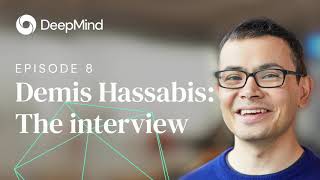 Demis Hassabis on Artificial General Intelligence: Building It Safely2019 · 37 min · full transcript
 Demis Hassabis on General Artificial Intelligence: DeepMind and AlphaGo2015 · 68 min · full transcript
 Demis Hassabis on AI and Scientific Discovery: Cambridge Reflections2024 · 17 min · full transcript
 Demis Hassabis on Artificial Intelligence: AlphaFold and AGI2024 · 24 min · full transcript
 Demis Hassabis on AGI and Society: From AlphaFold to Governance2024 · 25 min · full transcript