Brain-Inspired Algorithms
Use neuroscience as inspiration and validation, not as a literal copy.

“…we want to combine the best that machine learning has to offer and systems neuroscience…”Singularity Summit, 2010 · 26:24
The lesson
Hassabis treats the brain as a guide to intelligence because it is the strongest working example we have, but he does not argue for copying it neuron by neuron. His claim is that the useful level is the algorithmic one: if general intelligence exists in the brain, there are likely shared computational principles worth extracting and testing in machines123. That is why DeepMind looks to neuroscience both for ideas and for checks on whether an AI approach is capturing something important, rather than as a blueprint for literal imitation4.
This view also explains what he rejects. In the 2010 talk, he contrasts the neuroscience route with brittle symbolic approaches and with trying to reproduce every biological detail, arguing that the productive middle ground is systems neuroscience: study the brain mechanisms that produce intelligence, then rebuild those ideas computationally. Across the later talks, the same logic appears in his emphasis on creating systems and comparing them with minds as a way to understand intelligence better, not just theorize about it6.
From that perspective, DeepMind's goal is not a narrow expert system but a general learning system. Hassabis defines intelligence operationally as performing well across many environments and describes AGI as a system capable of a wide range of tasks, so the target is flexibility and transfer rather than a single impressive benchmark89. That is why research directions are judged by whether they help a system learn, adapt, and generalize, not just whether they solve one task efficiently.
Neuroscience mattered to DeepMind because it suggested concrete algorithmic ingredients. Hassabis highlights reinforcement learning and replay as examples where brain science helped inspire AI methods, while also showing that successful AI systems can in turn illuminate what may matter in brains. In recent work, Hassabis extends this same pattern: large multimodal models look important because they can absorb broad world knowledge, but he expects they need added capabilities such as planning, search, memory, and grounding to reach more general intelligence10111213.
So the chapter's main idea is a disciplined borrowing strategy: use the brain to narrow the search for AGI, extract high-level principles, build computational versions, and test whether they produce broad competence. For Hassabis, the strongest path combines scalable machine learning with insights from systems neuroscience, then validates the result by building systems that can act across many tasks and eventually support discovery in the real world483. Neuroscience is neither a decoration nor a cage; it is a source of hypotheses and a reality check.
5 principles from Demis Hassabis
Study the brain at the algorithmic level
Look for the computational principles behind intelligence rather than copying biology in detail. In practice, ask what mechanism a brain system seems to implement, then test that mechanism in code.
“…we want to combine the best that machine learning has to offer and systems neuroscience…”
Use the brain as inspiration and validation, not a literal template
Neuroscience helps generate ideas for AI and gives a benchmark for whether those ideas are plausible, but you should not assume the same implementation is required. Apply this by borrowing a principle only if it improves learning or generalization in an artificial system.
“…the brain is the only existence proof we have in the universe that intelligence is possible…”
Build systems to understand intelligence
Hassabis's approach is strongly synthetic: understanding grows by constructing working systems and comparing them with minds. When facing a vague theory, try to operationalize it into a model or training setup that can succeed or fail.
Aim for broad competence, not narrow mastery
A method matters more if it helps performance across many tasks and environments than if it only wins on one benchmark. Evaluate your work by transfer, adaptability, and robustness, not just peak performance in a single domain.
“…we define it as the ability to perform well across a wide range of environments.”
Add planning and grounding to large models
Large models are promising components, but Hassabis argues they are probably not sufficient alone for AGI. Apply this by considering what extra machinery a system needs for goal-directed action in the world: planning, search, memory, and multimodal grounding.
“My betting would be that the final AGI system will have these large multimodal models as part of the overall solution, but they probably won’t be enough on their own.”
In his own words
The quotes behind the lesson, word for word from the transcripts. Numbers match the lesson above.
“…the brain is the only existence proof we have in the universe that intelligence is possible…”
“…the brain is a useful proof of concept for AGI…”
“I think that suggests there must be high-level common algorithmic themes around how the brain processes the world around us.”
“…we want to combine the best that machine learning has to offer and systems neuroscience…”
“What I cannot create, I do not understand…”
“…we define it as the ability to perform well across a wide range of environments.”
“Yeah, artificial - I mean there’s not an agreed definition of artificial general intelligence, but the way that Shane and I think about artificial general intelligence is a system that is capable of a wide range of tasks, and if we think about human level artificial general intelligence, then we’re talking about system that can pretty much do the full spectrum of cognitive tasks that humans can at least as good as humans are able to do, that’s you know one reasonable definition of artificial general intelligence.”
“My betting would be that the final AGI system will have these large multimodal models as part of the overall solution, but they probably won’t be enough on their own.”
“I think that just shows we’re still at the beginning of this new era. I think there are some interesting use cases where you can use these chatbot systems to summarize stuff for you and do some simple writing, maybe more boilerplate-type writing. But that’s only a small part of what we all do every day. I think for more general use cases we still need new capabilities, things like planning and search but also things like personalization and episodic memory. That’s not just long context windows, but actually remembering what we spoke about 100 conversations ago. I’m really looking forward to things like recommendation systems that help me find better, more enriching material, whether that’s books or films or music and so on. I would use that type of system every day. So I think we’re just scratching the surface of what these AI assistants could actually do for us in our general, everyday lives and also in our work context as well.”
“I think that’s a super promising direction. We’ve got to carry on improving the large models. We’ve got to carry on making them more and more accurate predictors of the world, making them more and more reliable world models. That’s clearly a necessary, but probably insufficient component of an AGI system. On top of that, we’re working on things like AlphaZero-like planning mechanisms on top that make use of that model in order to make concrete plans to achieve certain goals in the world.”
“I think if it’s not properly grounded, the system won’t be able to achieve those goals properly. In a sense, you have to have some grounding for a system to actually achieve goals in the real world. I do actually think that these systems, and things like Gemini, are becoming more multimodal. As we start ingesting things like video and audiovisual data as well as text data, then the system starts correlating those things together. I think that is a form of proper grounding. So I do think our systems are going to start to understand the physics of the real world better.”
Reflect
- In your field, where are you copying surface details of a successful system instead of extracting the deeper principle behind it?
- Pick one current AI capability you use or study. What would have to be added for it to work across a much wider range of environments rather than just one task?
- What is one hypothesis about learning or decision-making that you could test by building a simple system rather than only debating it conceptually?
Check your understanding
Go deeper
 Demis Hassabis on Building AGI: Why Neuroscience Matters2010 · 33 min · full transcript
 Demis Hassabis on Brains and Machines: Neuroscience for AGI2015 · 39 min · full transcript
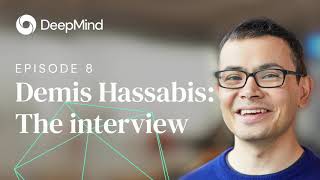 Demis Hassabis on Artificial General Intelligence: Building It Safely2019 · 37 min · full transcript
 Demis Hassabis on Artificial Intelligence: From Games to Science2018 · 68 min · full transcript
 Demis Hassabis on AGI Scaling and Alignment: Planning, Safety, Governance2024 · 62 min · full transcript