Investment Temperament
Do less, know more, and stop pretending to forecast the market.

“Oh, yes. Well, it's a hugely important thing, going the edge of your... It's hardly a competence if you don't know the edge of it. You know, if you if you have a misapprehension regarding your own competency, that means you lack competency. You're gonna make terrible mistakes. So hardly anything is... I think you gotta constantly measure what you achieve against what other people will achieve, and then you have to keep being determined really rational and avoiding a lot of self delusion. But after a lifetime of observing it, I think the tendency to be pretty rational about one's own competency is largely genetic. I think people like Warren and I were just born this way.”Daily Journal annual meeting, Los Angeles, 2019 · 1:55:40
The lesson
Munger’s basic investing posture starts with humility about what can be known. He does not treat the market, the economy, or interest rates as things an investor can reliably predict; instead, he focuses on whether a specific opportunity offers clear value and fits inside a real circle of competence12. That posture pushes you away from commentary and toward judgment: know the edge of your competence, and do not pretend certainty beyond it23.
From there, his method becomes intentionally inactive. If you do not find something intelligent to do, you can simply wait and let cash build rather than forcing action4. This is why patience is not passivity in Munger’s framework; it is discipline, and he treats sitting still as a sign of intelligence when no clear edge is available56.
He also argues that most investors hurt themselves through trading, overconfidence, and fees. For the vast majority of people, a very low-cost index fund is better than trying to pick securities, because activity and advisory tolls compound against long-term results78. His broader point is that many investors act as if they know when to buy and sell, but that confidence is usually misplaced and costly93.
When genuine understanding does exist, however, Munger does not recommend timid diversification for its own sake. He sees broad diversification as useful when you lack knowledge, but he also says the best results come from a few well-understood opportunities and from acting decisively when a rare, obvious edge appears101112. The combination he wants is unusual: patience most of the time, aggression when the facts are clear6.
Finally, this posture supports long-term ownership instead of market timing. Lower prices are good news for a net buyer because they create more chances to buy good businesses at attractive prices, and that matters more than guessing the market’s next move13. Munger’s investing temperament is therefore simple but demanding: own strong assets for the long run, ignore the crowd’s forecasting game, keep costs low, and act only when you can do something genuinely intelligent.
5 principles from Charlie Munger
Stay inside your circle of competence
Do not build decisions on topics you cannot truly judge, especially macro forecasts and broad market calls. Apply this by asking, before every investment, what you actually know, where your competence ends, and whether you are slipping into self-delusion.
“Oh, yes. Well, it's a hugely important thing, going the edge of your... It's hardly a competence if you don't know the edge of it. You know, if you if you have a misapprehension regarding your own competency, that means you lack competency. You're gonna make terrible mistakes. So hardly anything is... I think you gotta constantly measure what you achieve against what other people will achieve, and then you have to keep being determined really rational and avoiding a lot of self delusion. But after a lifetime of observing it, I think the tendency to be pretty rational about one's own competency is largely genetic. I think people like Warren and I were just born this way.”
Be willing to do nothing
Good investing does not require constant action; when no opportunity is clearly intelligent, waiting is a valid decision. In practice, this means keeping a watchlist, holding cash without embarrassment, and refusing to trade just to feel productive.
“Well, I don't think we have a master plan of knowing where the opportunities are. We're trying to find intelligent things to do with a torrent of surplus cash. And we've always had a torrent of surplus cash. And we're always looking for intelligent things to do with it. And if we find things that are intelligent to do, we do it. And if we don't find anything, we let the cash build up. What the hell is wrong with that? Not much. Yeah. Not much is right.”
Minimize fees and unnecessary trading
For most investors, low-cost indexing beats active behavior because costs and churn eat away long-term compounding. If you do not have a clear, durable edge, prefer a very low-cost index fund over frequent stock picking or expensive advice.
“I think that even attempts to pick individual securities is, that's a mistake for people; they will do better with a very, very low-cost S&P 500 Index Fund.”
Bet bigger only when the edge is rare and clear
Diversification protects ignorance, but exceptional opportunities should matter more when you genuinely understand them. The application is to be selective: make many small judgments, but only commit heavily when the business, price, and your understanding all line up unusually well.
“An idiot could diversify a portfolio…”
Treat lower prices as opportunity, not prophecy
A falling market is not mainly a forecasting puzzle; it can be a better buying environment if the businesses remain sound. Instead of trying to call bottoms, focus on whether cheaper prices improve the value available to a long-term owner.
“…if the market gets cheaper, we will have many more opportunities to do intelligent things with money.”
In his own words
The quotes behind the lesson, word for word from the transcripts. Numbers match the lesson above.
“I don't know how it will morph.”
“Oh, yes. Well, it's a hugely important thing, going the edge of your... It's hardly a competence if you don't know the edge of it. You know, if you if you have a misapprehension regarding your own competency, that means you lack competency. You're gonna make terrible mistakes. So hardly anything is... I think you gotta constantly measure what you achieve against what other people will achieve, and then you have to keep being determined really rational and avoiding a lot of self delusion. But after a lifetime of observing it, I think the tendency to be pretty rational about one's own competency is largely genetic. I think people like Warren and I were just born this way.”
“You know, you stop and think about it, it's pretty hard. It doesn't look so damn easy just to go out. If you go to the ordinary person trying to promote himself as an investment adviser or some guy, he just thinks he knows everything about everything and how the Federal Reserve should be run and so on. We don't feel that way.”
“Well, I don't think we have a master plan of knowing where the opportunities are. We're trying to find intelligent things to do with a torrent of surplus cash. And we've always had a torrent of surplus cash. And we're always looking for intelligent things to do with it. And if we find things that are intelligent to do, we do it. And if we don't find anything, we let the cash build up. What the hell is wrong with that? Not much. Yeah. Not much is right.”
“It's amazing how intelligent it is to spend some time just sitting.”
“Obviously you have to know a lot, but partly it's temperament, partly it's deferred gratification. You got to be willing to wait, and it's a weird—good investing requires a weird combination of patience and aggression, and not many people have it. It also has to—it requires a big amount of self-awareness and how much you know and how much you don't know.”
“I think that even attempts to pick individual securities is, that's a mistake for people; they will do better with a very, very low-cost S&P 500 Index Fund.”
“And of course, what people don't realize because they're so mathematically illiterate is if you make 5% and pay two of it to your advisors, you're not losing 40% of your future. You're losing 90% because over a long period of time, that little difference causes a 90% disadvantage to you. So it's hugely important for somebody who's a long term holder not to be paying a big annual toll out of the performance. And of course, there are a few big time advisors now who are using indexation very heavily. And of course, they're prospering mightily. And of course, every time they get somebody, it's just agony for the rest of the investment counseling business. And this is a very serious problem.”
“The main thing we want to give them—well, Char, I feel this way—is the right attitude toward investing.”
“An idiot could diversify a portfolio…”
“It's very hard and rare.”
“There aren't many times in a lifetime when you know you're right and you know you have one that's really gonna work wonderfully.”
“…if the market gets cheaper, we will have many more opportunities to do intelligent things with money.”
Reflect
- Where in your investing or decision-making life are you acting as if you can forecast something that you do not actually understand?
- What would 'doing nothing' look like for you over the next 6 months, and what habits or incentives make that difficult?
- If you are not a true specialist, would a low-cost index approach improve your results by removing fees, trading, and overconfidence?
Check your understanding
Go deeper
 Charlie Munger on Value Investing: Do Less, Know More2019 · 120 min · full transcript
 Charlie Munger on Stock Market Opportunities: Ignore Macro Forecasts2005 · 260 min · full transcript
 Charlie Munger on Investing Philosophy: Bet Heavy When You Know2023 · 67 min · full transcript
 Charlie Munger on Value Investing: Stay Away from Trading2017 · 450 min · full transcript
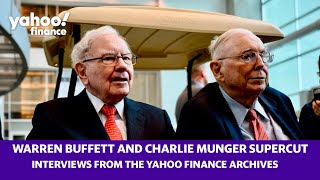 Charlie Munger on Pandemic, Markets, and Investing: Lessons from Berkshire2021 · 150 min · full transcript
 Charlie Munger on Investing and Judgment: Daily Journal Q&A2017 · 108 min · full transcript
- What did Charlie Munger say makes a great investor?
- What did Charlie Munger say about short-term thinking in markets?
- What did Charlie Munger say about the cost of investment fees over time?
- What did Charlie Munger say about efficient market theory?
- What did Charlie Munger say about becoming an investment adviser?