Human Misjudgment
Learn the predictable ways your own mind can fool you.
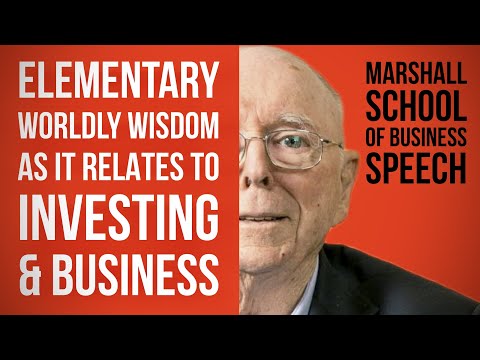
“The human mind has enormous power but it also has standard misfunctions.”USC Business School lecture, 1995 · 10:55
The lesson
Munger’s starting point is that bad judgment is not random. Human minds have recurring failure modes, so better decisions come from learning the patterns instead of assuming you will simply think your way clear in the moment12. He also ties this to a broader method: facts become useful only when they fit into a working framework of models, and psychology belongs in that framework because reality must fit with reality345.
Among those patterns, incentives sit near the top. Munger argues that people consistently underestimate how strongly rewards, punishments, and reinforcement shape behavior, even when the effects should be obvious6. That is why misjudgment is often built into systems, not just individuals: if you reward the wrong thing, you should expect distorted conduct, whether in markets, companies, or professions78.
He also emphasizes that people do not merely make mistakes; they often protect mistakes. Denial helps people avoid unpleasant facts, and commitment makes prior action hard to reverse, so behavior can lock in belief and push people to defend failing paths longer than they should910. A practical implication is to value bad news early and create habits that surface reality quickly, because delayed recognition lets error compound.
Misjudgment becomes even more dangerous when social forces join in. Authority, social proof, reinforcement, and other tendencies can combine so that a crowd feels persuasive precisely when independent thinking is most needed12. Munger’s point is not that every consensus is wrong, but that market prices, status, and group approval can overwhelm reason unless you deliberately pause and ask what is actually true.
The goal, then, is not perfect prediction but steadier rationality. Munger treats rationality as a duty and suggests that large advantages come from being consistently less foolish, more patient, and better at facing reality than the average person1314. In practice, that means building a checklist of common psychological errors, inspecting incentives first, distrusting wishful thinking, and remembering that several biases often arrive together in a lollapalooza effect1516.
5 principles from Charlie Munger
Treat misjudgment as systematic
Assume your mind has predictable weak points rather than occasional random slips. Build decision habits around known psychological errors so you can catch them before they steer action.
“The human mind has enormous power but it also has standard misfunctions.”
Inspect incentives before judging behavior
When a person or institution behaves badly, first ask what is being rewarded. In your own work, check whether your scorecards, bonuses, or praise are pushing people toward the wrong outcome.
“First, under recognition of the power of what psychologists call reinforcement and economists call incentives. Well, you say everybody knows that. Well, I think I've been in the top 5% of my age cohort all my life in understanding the power of incentives. And all my life, I underestimated it. And never a year passes, but will I get some surprise that pushes my limit a little farther.”
Confront unpleasant facts early
Denial is dangerous because it delays correction exactly when correction is most needed. Create routines that force bad news into the open quickly, especially when money, pride, or past effort are involved.
“What... If I had to name one factor that dominates human bad decisions, it would be what I call denial. If the truth is unpleasant enough, people kind of... Their mind plays tricks on them, they they think it isn't really happening. And, of course, that causes enormous destruction of business where people go on throwing money into the way they used to do things, even though it isn't gonna work at all well in in the way the world is now having changed. And And if you want an example of how denial is affecting things, take the world of investment management. How many managers are going to beat the indexes, all costs considered?”
Beware commitment hardening into belief
Once you act, you become more likely to justify the action and keep going. Before doubling down, separate the original decision from the current evidence and ask what you would do if starting fresh today.
“It's not just reciprocation tendency and role theory that caused that. It's consistency and commitment tendency. Each person as he acted as a guard or a prisoner, the action itself was pounding in the idea. Wherever you turn this consistency and commitment tendency is affecting you. In other words, what you think may change what you do, but perhaps even more important, what you do will change what you think. And you can say everybody knows that. I want to tell you I didn't know it well enough or early enough.”
Expect combined biases to overpower reason
The biggest mistakes often come from several tendencies working together, not one bias in isolation. When social proof, reward, authority, and scarcity all point in the same direction, slow down and raise your standards of proof.
“I would say the one thing that causes the most trouble is when you combine a bunch of these together, you get this Lollapalooza effect. And again, if you read the psychology textbooks, they don't discuss how these things combine, at least not very much. Do they multiply? Do they add? How does it work? I think it would be just an automatic subject for research, but it doesn't seem to turn the psychology establishment on. I think this is a man for Mars approach to psychology. I just reached in and took what I thought I had to have.”
In his own words
The quotes behind the lesson, word for word from the transcripts. Numbers match the lesson above.
“The human mind has enormous power but it also has standard misfunctions.”
“Well, I am very interested in the subject of human misjudgment…”
“You've got to have models in your head.”
“If the facts don't hang together on a latticework of theory, you don't have them in a usable form.”
“…all reality has to respect all other reality…”
“First, under recognition of the power of what psychologists call reinforcement and economists call incentives. Well, you say everybody knows that. Well, I think I've been in the top 5% of my age cohort all my life in understanding the power of incentives. And all my life, I underestimated it. And never a year passes, but will I get some surprise that pushes my limit a little farther.”
“Easy money corrupts, and really easy money tends to corrupt absolutely.”
“The main thing we want to give them—well, Char, I feel this way—is the right attitude toward investing.”
“What... If I had to name one factor that dominates human bad decisions, it would be what I call denial. If the truth is unpleasant enough, people kind of... Their mind plays tricks on them, they they think it isn't really happening. And, of course, that causes enormous destruction of business where people go on throwing money into the way they used to do things, even though it isn't gonna work at all well in in the way the world is now having changed. And And if you want an example of how denial is affecting things, take the world of investment management. How many managers are going to beat the indexes, all costs considered?”
“It's not just reciprocation tendency and role theory that caused that. It's consistency and commitment tendency. Each person as he acted as a guard or a prisoner, the action itself was pounding in the idea. Wherever you turn this consistency and commitment tendency is affecting you. In other words, what you think may change what you do, but perhaps even more important, what you do will change what you think. And you can say everybody knows that. I want to tell you I didn't know it well enough or early enough.”
“If you think about the doctrines I've talked about, namely, one, the power of reinforcement. After all, you do something and the market goes up and you get paid and rewarded and applauded and what have you. You're getting a lot of reinforcement if you make a bet in a market and the market goes with you. Also, there's social proof. I mean, the prices in the market are the ultimate form of social proof, reflecting what other people think. And so the combination is very powerful. Why would you expect general market levels to always be totally efficient, say even in 1973, at the pit or in 1972 or whatever it was when the Nifty fifty were in their heyday, if these psychological motions are correct, you would expect some waves of irrationality which carry general levels to...”
“If you're capable of understanding the world, you have a moral obligation to become rational.”
“Well, that's the easy rationality. If you're just not crazy, you have a big advantage over 95% of the people because most people have all kinds of crazy patches. And if you just are consistently not crazy, you had a you had a big advantage in life. And if you're patient and a gratification defer in addition to being not crazy, then it's practically a cinch. And then if you're exceptionally good at satisfying your commitments to other people, then you got... You you just automatically improved your resources and your chances in life enormously. And it's so simple. And why don't more people do it?”
“…what people wish is what they believe…”
“I would say the one thing that causes the most trouble is when you combine a bunch of these together, you get this Lollapalooza effect. And again, if you read the psychology textbooks, they don't discuss how these things combine, at least not very much. Do they multiply? Do they add? How does it work? I think it would be just an automatic subject for research, but it doesn't seem to turn the psychology establishment on. I think this is a man for Mars approach to psychology. I just reached in and took what I thought I had to have.”
Reflect
- Think of a recent decision you defended for too long. Which force mattered most: incentives, denial, commitment, authority, or social proof?
- Where in your work do incentives reward the appearance of success rather than real success?
- What routine could you add so bad news reaches you faster and wishful thinking has less room to grow?
Check your understanding
Go deeper
 Charlie Munger on Human Misjudgment: 24 Causes of Error1995 · 91 min · full transcript
 Charlie Munger on Decision Making: Rationality, Incentives, and Life2017 · 120 min · full transcript
 Charlie Munger on Investing and Life: Daily Journal Q&A2023 · 155 min · full transcript
 Charlie Munger on Deferred Gratification: Cultivating Long-Term Advantage2016 · 126 min · full transcript
 Charlie Munger on Value Investing: Stay Away from Trading2017 · 450 min · full transcript
 Charlie Munger on Worldly Wisdom: Mental Models for Investing1995 · 82 min · full transcript
- What did Charlie Munger say about incentives?
- What did Charlie Munger say is the biggest cause of human misjudgment?
- What did Charlie Munger say about denial and bad decisions?
- What did Charlie Munger say about consistency and commitment?
- What did Charlie Munger say about keeping Berkshire open to bad news?
- What did Charlie Munger say about incentives in academia?