The Carl Sagan Course
Graduate able to think with Sagan's cosmic perspective: skeptical, humane, scientifically literate, and awake to Earth's fragility and the possibilities of the universe.
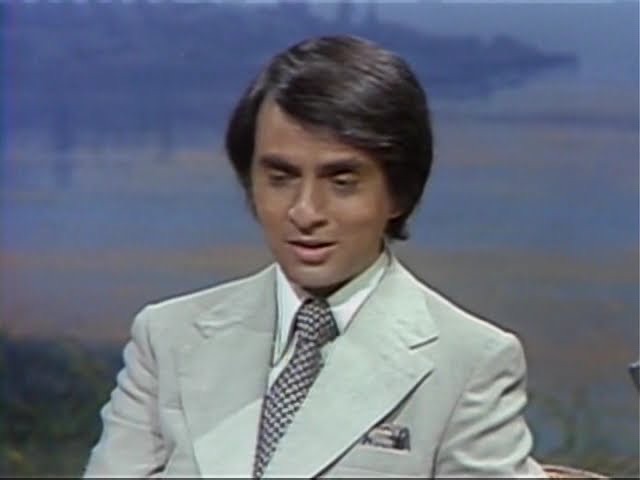
- 11 chapters
- 80 verbatim quotes
- 19 recordings

“Well, you know, ultimate ultimate is a big word. I would say one thing that I've learned is how little we know, Is how the the frontiers of... You can think of of us as standing on a little island of knowledge surrounded by an enormous ocean of ignorance. And every year, we sort of eke out just a little more land and prevent the ocean of ignorance from swamping us. And, that's all that stands between us and and drowning. And I I think it's fair for a technical civilization, agricultural economy, where not just entertainment but the difference between life and death, look at medicine for example, is knowledge. We have to be much more serious about knowledge.”Interview with Milton Rosenberg on WGN Chicago, 1994 · 1:28:26
About this course
Carl Sagan was an American astronomer, planetary scientist, author, and one of the twentieth century's best-known science communicators. He helped explain space exploration, planetary science, the search for extraterrestrial intelligence, and the meaning of science to a broad public.
Sagan's lasting gift is not just a set of facts about planets or stars, but a way of thinking: wonder joined to skepticism, humility joined to courage, and cosmic perspective joined to responsibility for Earth.
This course is built from Sagan's own recorded words. Each chapter gathers the most important recordings and related answered questions so you can learn his ideas in a sequence: foundations first, then life, intelligence, public reason, planetary danger, and humanity's future in space.
Curriculum
- Wonder to KnowledgeBegin where Sagan begins: with the child's question and the birth of science.
- The Scientific TemperLearn Sagan's method: openness to possibility, discipline before belief.
- Cosmic DemotionsThe universe becomes larger as human arrogance becomes smaller.
- Space, Time, ScaleLooking outward is looking backward.
- Earth as PlanetTo understand home, compare it with other worlds.
- Life and IntelligenceWhat life is, how minds evolved, and how intelligence leaves traces.
- Other MindsSearch the stars without pretending to know the answer in advance.
- Baloney DetectionDemocracy needs citizens who can tell knowledge from illusion.
- Extraordinary EvidenceHow to stay open-minded without being gullible.
- Planetary ResponsibilityA technological species must learn to think on planetary timescales.
- Pale Blue FutureCosmic humility becomes a program for survival, exploration, and hope.
- GraduateFinish every chapter to earn your certificate.




has graduated from The Carl Sagan Course, completing all 11 chapters on Carl Sagan's ideas, in his own words.
- Wonder is the beginning of science, but wonder must mature into observation, experiment, and disciplined explanation.
- Science is not a body of comforting beliefs; it is a method for finding out what is true despite bias, authority, and desire.
- Extraordinary claims deserve openness, but they also require strong evidence and careful tests.
- The history of science is a history of demotions: Earth, humanity, and our beliefs are repeatedly moved away from the center.
- Cosmic humility is not humiliation; it is liberation into a larger, older, more lawful universe.
- To understand Earth, study it as a planet among planets, comparing atmospheres, climates, geology, and signs of life.