What did Carl Sagan say about the Pale Blue Dot?
Carl Sagan said the Earth looked like “a pale blue dot,” a tiny speck seen from far away. The image, he argued, captured how small and fragile our world is in the cosmic view. It was meant to humble us and remind us that all human life and history happened on that one small home.
“Well, these pictures were taken in part due to the excellent estimates of exposure times by Carolyn Porco. And, I'd like to show you in the last slide due to motion. The earth momentarily, no chauvinistic implications. This is just foreground optics. The earth in a sunbeam. Wait a little bit that it's not in the sunbeam. So there it is. I mean, take a look. It's a pale blue dot.”
Key takeaways
- Step back to see your problems in a wider context.
- Remember how small and fragile Earth is.
- Treat your shared home with more care.
Context
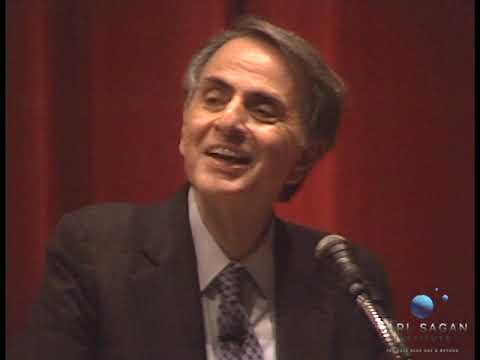
In his 1994 Cornell lecture on cosmic perspective and human chauvinism, Sagan introduced the Voyager image of Earth. The quote above is taken word for word from the recording's transcript.
In the transcript
…a single pixel. You would not even see continents. You could not tell any detail. I still thought it would be useful to do in the same sense that the great frame filling Apollo 17 picture of the whole earth has become a kind of icon of our age because it said something very powerful to us, including the fact that from that perspective, national boundaries were not in evidence.
Well, these pictures were taken in part due to the excellent estimates of exposure times by Carolyn Porco. And, I'd like to show you in the last slide due to motion. The earth momentarily, no chauvinistic implications. This is just foreground optics. The earth in a sunbeam. Wait a little bit that it's not in the sunbeam. So there it is. I mean, take a look. It's a pale blue dot.
That's us. That's home. That's where we are. On it, everybody you love, everybody you know, everybody you've ever heard of lived out their days there. The aggregate of all our joy and suffering, thousands of confident ideologies, religions, economic doctrines, every hunter and forager, every hero and coward, every creator and destroyer of civilizations, every king and peasant, every young couple in love, every hopeful child, every mother and…
Read the full transcript of Cornell University symposium lecture, 1994
Topics
More questions about Carl Sagan
- Why does Carl Sagan say he is suspicious that only one place has life?
- What did Carl Sagan say about claims that only humans have special traits?
- What did Carl Sagan say about God and the laws of the universe?
- What did Carl Sagan say about human arrogance and our place in the universe?
- What did Carl Sagan say Galileo discovered about Venus?
- How would Carl Sagan recognize an extraterrestrial signal as intelligent?
How this answer was made: the quote is checked word for word against the transcript of the recording and confirmed as the speaker's own words; the summary above it was drafted with AI from that transcript and quality-checked. Methodology and corrections.