Steve Jobs on Personal Computers: Simple, useful, and everywhere

What Jobs talks about
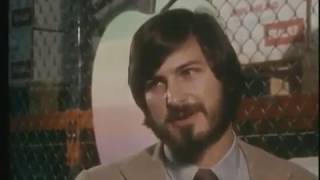
In this interview, Jobs explains the original Apple idea: a computer built because he and his friends couldn't afford to buy one, then realized many other people wanted the same thing. He describes Apple's approach as making computers less technical and more broadly useful.
He argues that personal computers should be practical tools, not just hobby projects. Jobs says Apple aimed at a wider audience, including homes, businesses, and education, because the same machine could serve all three.
The interview also captures his early vision of computing becoming commonplace. Jobs emphasizes ease of use, lower cost, and broad accessibility as the reasons personal computers would spread beyond specialists.
A narrator/interviewer sets the scene and asks the questions; Jobs answers in the interview segment.
In his words
“We started off building a computer because we couldn't afford to buy one.”
“We had the assumption very early on that even the hobbyists would like to deal with a slightly more sophisticated computer”
“And we found that there's a little hobbyist in all of us.”
“We foresee apples being used in homes, but we also foresee them being used in businesses and education.”
“If you don't like what it's doing, you can throw it out the window.”
Key points
- Apple started because Jobs and Wozniak built a computer they couldn't afford to buy.
- Their first real market signal came when friends wanted one too.
- Apple aimed beyond hobbyists to people who wanted a more sophisticated computer without assembly hassle.
- Jobs believed personal computers would be used in homes, businesses, and education.
- He pointed to Apple’s use in schools and at Apple itself as evidence of broader adoption.
- He framed the machine as simple and practical enough for ordinary users.
Full transcript
But first to millionaires and the people responsible for this plant on the Holly Hill Industrial Estate overlooking Cork City, the creators of the Apple personal computer. By personal, we mean low cost, simple to use, and with applications as simple as this one, a greeting, applications in the business setting as well as the home. A computer small enough, cheap enough, versatile enough so that every home could have one. The term factory scarcely applies here. It's spotlessly clean, and but for the chatter of visitors on opening day, the operation is busy but very quiet. The assembly line has been going for some weeks now, and already the target of a thousand units in the first month has been beaten by three days. The government see this factory as important, an industrial weather vain pointing to Ireland's economic future, microtechnology.
Holly Hill Industrial Estate can scarcely be compared to California's Silicon Valley, but there is the feeling that Apple Of Cork may become something of a Silicon Hill, creating employment in itself, but also perhaps showing that sophisticated industrial activity is an attractive proposition in Ireland. The story of Apple's success goes back only four years when this man, Steve Jobs, then 21 years old, with fellow inventor Steve Wozniak, designed their own computer named Apple because Steve just happens to like fruit, and they were stuck for a name. To meet the demand, the enterprise had to be commercialized. Enter Mike Markula. He's the man on the left, a self made millionaire of 30, bored with doing nothing and with cash to spare. The man on the right is Alec Rafter. He's Irish, and he's the boss of Apple Computer of Cork. It's appropriate that Apple should be in Ireland because even before they started manufacture here, Ireland had already the highest density of Apple use in Europe.
With Mike and Steve, I traced the steps that led Apple to set up manufacture in Cork. Well, we started off building a computer because we couldn't afford to buy one. So what happened was all our friends decided that they wanted one too. We were spending all our time helping them construct one. So this was the initial market indication that there might just be a group of people that wanted what we wanted. But it became very obvious within six to nine months after that that we were really on to something much more fundamental than just a small group of people's interests. And we proceeded to plan on that assumption, and it's turned out to be true. What was the ingredient, though, in your particular computer that would make it different from the other models that were being offered to hobbyists at the time. We had the assumption very early on that even the hobbyists would like to deal with a slightly more sophisticated computer and one in which they didn't have to spend their time putting together.
And so we structured our whole approach for really the... A much broader definition of the word hobbyist. And we found that there's a little hobbyist in all of us. The success of the whole Apple venture does depend on volume sales. Do you actually believe that every home is, within the short term, the next few years, going to have its own personal computer? Well, we base our theory on the fact that we make personal computers that can be used irrespective of location, and the home just happens to be one of the locations that the computers are used in. They're used quite extensively in education. Matter of fact, in Minnesota, one of the states in The United States, over 95% of the students that graduate from high school have hands on experience with an Apple. And we're seeing them used in many, many businesses. Matter of fact, we use apples here to control the production flow and do the forecasting and things like that.
So we foresee apples being used in homes, but we also foresee them being used in businesses and education. And there's an apple going up on the first space shuttle, as you may know, to control a biology experiment. Does it mean though that the people who are going to use these apples have to start learning how to handle computers, which to many people is a closed book at the moment? Does it mean that every housewife will ultimately be a programmer? Well, as you see from the apple, it weighs about 12 pounds. And one of the nice things about handling it is if you don't like what it's doing, you can throw it out the window. But
Transcribed from the audio by speech recognition (Deepgram). Timestamps link to the video above. Errors are possible.