Stephen Hawking on The Big Bang: the sound of the beginning of time

What Hawking talks about
Stephen Hawking gave this BBC interview in 2004, discussing his work on the Big Bang, singularities, time, the expansion of the universe, and aspects of his disability and public life.
Also known as: Hawking 2004 BBC; The Big Bang: the sound of the beginning of time.
This recording centers on Hawking’s scientific breakthrough around the Big Bang: he argues that the universe had a beginning, not a steady-state past, and that the leftover heat or radiation from that beginning should still be detectable.
He also explains how his work on singularities, time, and the expansion of the universe changed cosmology. The interview frames the science alongside his personal life, showing how persistence, curiosity, and collaboration shaped the discovery.
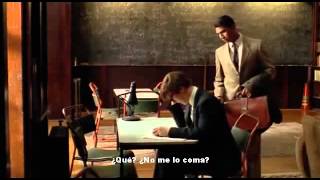
Hawking speaks throughout, alongside a dramatized interviewer and supporting characters.
In his words
“The sound or the story?”
“Time's not a universal quantity.”
“The thing about the idea of a Big Bang is that it's wrong, irrational, and wrong.”
Key points
- Hawking contrasts steady-state cosmology with the idea of a universe that began in a Big Bang.
- He argues that the Big Bang leaves behind fossil evidence: leftover heat/radiation.
- He explains singularities as places where matter, space, time, and everything else fold in on themselves.
- He emphasizes that time is not absolute and can behave differently depending on motion and gravity.
- He describes cosmology as asking the biggest questions: how we got here and where we are going.
- He presents scientific discovery as something requiring precision, tenacity, and courage.
Full transcript: Stephen Hawking, BBC interview on the Big Bang (2004)
(music) (music) (music) It has to be back to the beginning. Is that what he's doing? Yes. Good. Uh, one thing I have to know before we start. When did you meet him? Back then. In 1963. You're talking about. What did you make of him? We
didn't. We didn't meet him. He was in England. We were in New Jersey. Way too many. We didn't even know he existed. Did we know he existed? We had no idea who he was. Stephen Hawking. Who's he? 15 years ago. Bob, can you believe it? Time flies, huh? (music) There was no beginning of the universe, past, present, future. The universe has always existed, and it always will. Steven, it stays the same. David. What is
it? What is it? Okay. Wait. How long we got here? I don't want to be late. Honopenszius was late for his Nobel Prize. I don't think so. Are we filming now? Yes. I swear to you that this is the most profound thing you will hear in your entire life. The sound or the story? The sound or the story? What's the difference? There. There you are. There. Your mother
sent me to find you. New matter which is being created to replace old matter. This process has always existed and will continue forever. Nothing changes. Nothing has ever changed. It's my theory and I've given it a name. I've called it steady state. (music) Right. Right. Professor Roy. That's Hy. That's Hy. Hello.
Hello. Who are you? I'm Jane Wild. We haven't, have you? No. I'm a friend of Stevens. We met at another party and he invited me to this party. Isabelle, (music) hello. How are you? Fine. Good. You, um, still fine, thanks. I'm sorry. You're, um, your Oh, no. Thanks. Thank you very much. They're a terrible fiddle, aren't they?
Yes. Terrible. Thanks. (music) (music) Steven, it's a party. People might want to dance. Can't dance to Vagna. (music) (applause)
to Steven. (applause) Happy birthday. Should we go outside? What? (music) It makes me feel small. Very small. All that out there. Us here. Don't worry. Galileo was wrong. St. Orbins is absolutely the center of the universe. Galileo died 321 years ago today on your birthday. Changed the way we thought about
everything. People are frightened of change. My father and I used to come out here in the middle of the night and look at stars. Actually saw a star die once. Of course, it actually happened about 200,000 years ago. The news didn't reach St. Orin until 1956. Light's fast, but it isn't that fast. Sorry, physics. They're all so far away, but they don't seem it. I mean, you feel like you might stretch and reach and you might just touch them. You better hurry up with your stretching and reaching because they're getting further away. What? Galaxies are moving away from us. Closer ones at about 6 million miles an hour and the distant ones at about 200 million miles an hour. I believe in God.
Oh, sorry. I just wanted to say it. I don't know why. It's all right. You said you felt small. Does God make you feel less small? There's nothing wrong with feeling in science. Feeling matters. All the best ideas are felt and then argued about later. Einstein said he could feel in his little finger if an idea was right. So, you're in good company. And you like Vagner. Actually, no, I don't. I think he's what? Pompous and ridiculous. (music) Who do you like then? Rakmanov. What? Nothing. Brahms.
Steven, I didn't say anything. The Beatles. Who? Never mind. Jane. Yes. Please me. What? Love me. Too. (music) We should go in. I can't get out. Come on. I can't. Very funny. I can't get up, Jane. I'll go and get help. Hello,
Jane. Hello. Can you hear me? What's wrong with you? I can't get up. Well, give me your hand. Will it hurt? Truth. Yes. A little bit more. That's good. Now hold hold still. (music) This might be a little bit more
uncomfortable. How old are you, Steven? Uh, I'm 21. How old are you? I'm older than you. How much older? I'm 33. Oh, same age as him. Vanna Monroe in Something Hot. And what do you do? Oh, no. Well, let me guess. Um, insurance salesman or banking maybe. I'm a, I'm a cosmologist. Oh, good for you. Just started my
PhD. Or rather, I've just started to think about what my PhD might be. Now, this will take about 5 minutes. Sometimes it helps to talk about something completely different to take your mind off all this and then your time spent in space will pass more quickly. Time and space do not exist independently of each other. Is that so? All the universe really matter and energy in the universe warp and distort space time. (music)
Space time's curved. (music) Hello. No, no, we we don't know. Lots of tests. (music)
Yes. Yes. Goodbye. Who was it? The girl from the party. (music) Ah, the X-ray of your spine with the dye in shows that you don't have anything pressing on your spinal cord. That's good, isn't it? It's a process of elimination. (music) You were a team. I mean, you're both
getting the Nobel Prize this evening. I put them up for the job and they wouldn't let me in on the interview. So, I loitered around and when Bob and the interview committee came out doing their handshakes and thank you for coming and we'll let you know, I moved in. You gave him the job, right? You gave Bob the job, didn't you? There was this kind of embarrassed pause. So, I told him straight, Bob and I are going to walk down the corridor right here and right out that door right there. And if you don't want Bob to have the job that he was born to do, then you
Call it before we go through that door. Longest walk of my life. 62 paces. And we never look back. They won't tell me what they're thinking. Doctors don't. They don't know themselves yet. I'm a doctor, Isabelle. I know what they're like. You're a tropical disease expert, Dad. I know doctors. What? Isabelle, nothing.
I've arranged for you to have a private room. No. I'll stay on the ward like everyone else. (music) Sorry. Turn the keys down. (music)
So, have you applied for Oxford or Cambridge? They don't want me. I was thinking of Westfield. It's an old ladies' college on the Gerson model, I suppose. And it's quite scrapple. Let's play Scrabble. There's still that one down there. Leukemia. He's 12. Ladies, it was beautiful. I came out of
the woods and there it was. A perfect piece of equipment. The antenna, a great big horn, like a gramophone horn, lying on its side, the size of a house in the middle of a field on a hill 20m out New York City, picking up the hiss, pointing at the stars and picking up the hiss. And the first time I saw that horn, you know what? Well, they flew right out of her. Who? The pigeons. The 20ft horn had a couple of pigeons living inside it. Pigeons? Pigeons? What was it for, the 20-foot horn? Apart from pigeon nesting, we wanted to measure noise from the outer edges of the Milky Way. Arno built a cold load. What's that? Five imperial gallons of liquid helium. Do you know how much helium that is? It's a hell of
a quantity of helium. Gives you an unbelievably accurate reference against which you can measure the noise you receive. Arno is very precise. He makes these things better than anyone. Maybe it's the German in me. You're German? First six years of my life and a big chunk of my temperament. Bob made a great switch to connect the receiver alternately to the antenna and the cold load reference. Were you born in Germany? When? The 1940s, no, 1930s. Noise is heat. The higher the heat, the more intense the noise. You may want to ask, did we get noise? We got a lot of noise, which means a lot of heat. Far more than the Milky Way should have given us. That was
our work from then on in. Day after day, what's all this heat? What the hell is this hiss? It's a nice place, isn't it? D in the night. Poor lamb. (music)
I want to know what's happening to me. Usually, I would sit down with a patient and his family. Please. Motor neurone disease. What? What is it? What happens? Motor neurons in the brain which signal movement, they're dying. So the brain stops telling muscles to move. The signal's not sent. The muscles are not used. So they waste away slowly. How slowly? Muscle wastage causes immobility. How slowly? It's gradual paralysis
and and then what? The respiratory muscles, unlike most other muscles, work automatically. Breathing. Yes. They don't waste away so quickly. But do they do waste away? Yes. So what? I won't be able to breathe properly. And then I won't be able to breathe at all. I didn't like um, like drowning. What about the brain? I mean the brain itself untouched. The brain is left untouched. (music)
(music) (music) (music) (music)
He's young. That'll work in his favor. Frank, remember when he was about 8 years old and we were in the garden with the telescope and Steven said to me, "Where do stars come from?" I didn't know the answer. And you called him into bed and he wanted to know the answer to his question very badly. And I said not to worry, I'd find out for him. I never did.
You've never been a sentimental man, Frank. No. I don't think we can afford for you to start now. I looked it up. The younger you are when you get motor neurone disease, the quicker the deterioration. Being young is a bad thing, Isabelle. Two years probably, no more. (music) Then we must support him. Yes. You do it by carrying on. You do it by living
and carrying on. He's going back to Cambridge to his life. Do you know what Hy says? What? If you could drive a car straight upwards, you'd reach space in half an hour. How long to drive around the Milky Way? You multiply the diameter of the galaxy by the distance of one light year. Easy. The calculation. The car. She's been to India and back, remember. How long does it take to complete a PhD? Depends on the subject. With a fair wind. With a fair wind and a good brain two years. What's the name of your supervisor? Sharma. Dennis Sharma. 5,869,713.6 million
miles around the Milky Way. The heat we were receiving from out there should have been 2° colder than the cold lobe, the reference. But it was hotter, 3° hotter. Hotter than the Milky Way could produce, hotter than the sum of all the galaxies beyond. So we figured it had to be something closer to home. We had an idea. Was that you had the idea? I don't remember. We had a whole laundry list of ideas. Maybe it was me. Maybe it was you. You were a team. Maybe it was me. What was the idea? There was some high altitude bomb testing back in the 50s. Maybe it's the leftover radiation. Maybe our history is falling. But it would have diminished over time. And what we were getting totally constant. No diminishing. Back
to the laundry list. Well done. You had to be Sharma Dennis.
Yes. Uh, I don't know. S H A R M A. Uh, I think it's Italian. (music)
Dennis Chararma. Yes. Frank Hawk. Heat. Heat. (music) Hello, young man.
I know you. Steven Hawking. I I I applied for you to supervise my PhD. Too busy, was I? Yes, I think so. Brains, balls, and cash. I'm sorry. Physics in this country, it's a battlefield and a bloody one. You need brains, which ought to be enough, but it isn't 'cause you need cash to fund whatever your brain's working on. And to get cash out of anyone in this country, you need balls because they'll try and stop you. You'll see. You found a subject. Any ideas? I don't know yet. Well, when you do, remember this. You'll have to fight for what you believe in.
Tooth and nail, or the buggers will stop you. Physics means everything to him. I want him to be happy. Mr. Sharma, what can I do? I want you to set him a question that he can finish. Something easy enough for him to finish before he dies. Could you do that, please? My students and my science are everything to
me. I try to be true to both, which is why I can't do what you ask me, Dr. Hawking. I'm sorry. (music) Cosmology. The ghetto science. All speculation and no proof. Ghetto science. How did we get here? Where are we going? What is time? It asks all the big questions. Have you got a subject? You brought a big idea back with you. Uh, no. Plenty of time. Plenty of time. The greatest
achievement of physics in the 20th century. Uh, Rutherford, Oppenheimer, what have they given us? The atomic bomb. And what's the point in asking how we got here and where we're going, if Einstein and your mob have already got us ready for it? Blaming Einstein for that is like blaming Isaac Newton for plane crashes because he discovered gravity. Very clever. Very smart. But her smartness isn't the real world, is it? Cosmologists aren't interested in the real world. You see that girl? What about her? Steven's going to make her fall in love with it. Using only Einstein's theory of relativity. George Pound says it can't be done. I really don't think this is a good idea. The honour and integrity of
our entire subject is at stake here. All right. All right. Do it. I'm Gentonic and I think—Excuse me. Have you got the time, please? I, I make it half 7:00. What time do you make it? You already know the time. I know my time. Are you trying to be funny? Time's not a universal quantity. We used to think that it was. We used to think that it was just there marching on at the same pace for everyone everywhere. Like a railway track that stretched to infinity. Time was eternal. Now we know that it isn't. (music) Wow. You have to know this. It's incredibly important. Time's not a background
thing. It's not an absolute against which everything else is measured. It's dynamic. Dynamic. Active. Active. Wonderful. If, if you were to travel east very, very quickly. Out of sight. The Far East. The far, far east. Oh, completely out of sight. Yes. Completely out of sight. And I stayed here. Your time would slow down relative to mine. Like I'd get really, really slow if you went very, very fast. If I went very, very fast, I get really, really slow. Your
time would relative to mine. Totally out of sight. Time's very important. What star sign are you? What? I don't know. (music) You all right? Fine. (music) Yes, please. Thanks. Did you want another?
Who is that? Roger Penrose. Brilliant brain. He'd be a professor within 3 years. Sorry. Could I? The thing is, just then, um, I was thinking about mathematics and not beer. And sometimes when I'm thinking in a number of different dimensions, I can't come back very quickly to words and beer and whether I want more of it. It's because of the pictures in my head. I don't know how to make the words come. You see, Penrose? Yes,
(music) Please. All right. (music)
Poor orchestration, overly romantic. Wagner despised him. The feeling was mutual. What? Brahms despised Wagner. Well, you can't compare the two. For one thing, Steven. Yes. Hello. Hello. Are you all right? I'm fine. Fine. Fine. Denmark's a prison. Then is the world
one? A goodly one in which there are many confines, wards, and dungeons. Denmark being one of the worst. But we think not so, my lord. Why then is none to you? For there is nothing either good or bad, but thinking makes it so. To me it is a prison. Why then your ambition makes it one? Well, it is too narrow for your mind. Oh, God. I could be bounded in a nutshell and count myself a king of infinite space, were it not that I have bad dreams. What are you thinking? I was, uh, thinking about Einstein and
relativity. Oh, and stars. Oh. It's possible for a perfect star to collapse into nothingness. If it's a perfect sphere, then it can collapse and become infinitely dense. So dense that everything is pulled down into nothing. But the conditions have to be right. What conditions? If it is a perfect sphere, if place being very moving for evening's very beautiful, the conditions have to be ideal. It's possible for the pull of gravity to stop everything escaping. Everything and nothing. Oh no.
Wasn't that bad, was it? Oh, my bag. I left it in the theatre. Ah. Shall we? Oh, no. You can see a star. Look there. Can you see? Mhm. I found it. Hamlet doesn't act. That's his fatal flaw. If he acted, if he did something, sure to play. He'd save his life.
(music) Oh my God. (music) (music) (music)
There was Everybody wants Fred. I've been thinking about a subject for you. Faraday rotation. Don't worry. Mark's principle. Formulations I've seen are not well defined. They're my formulations. Action. The universe expands. As galaxies move apart, new galaxies are formed to fill the gaps left behind. The new replaces the old at just the right rate. Nothing changes. Wherever you are in the
universe, Andromeda, Mars, or Scarra, it always looks the same because it is the same. I want to do something significant. The universe is a steady state universe. It is very attractive. Steady state. Thank you. And reassuring. Yes. Maybe it's attractive because it's reassuring. Emotionally, it's far harder to conceive of a universe that started, a universe that hasn't always been around. Einstein. Look what he did when his work looked like he was predicting there was a beginning to the universe. He ran away from the prospect of a beginning. No, because he saw that a beginning would mean a breakdown of all the laws of science. How can science
Explain something that isn't there? That's the thing about the idea of a Big Bang. The thing about the idea of a Big Bang is that it's wrong, irrational, and wrong. It's my term, Big Bang. I made it up. Do you know why I called it that? Because it sounds like a cartoon. Big Bang theory is cartoon physics. Dennis agrees with me, don't you, Dennis? Lunch. The Pope is a Big Bang man because, before the Big Bang, there was nothing: no space, no time, no matter, no science, no rules, which leaves room for guess who? Lord God Almighty. Religion is the enemy of
science, young man. If Catholicism had its way, we'd all still be living on a flat Earth at the center of the universe, with hell down below and heaven just somewhere to the left of the moon. This is 1963. God is dead. Stay away from Big Bangs. Cartoons are bad for you. White dielectric material. I'm sorry. Lots of it inside the antenna horn. Had to be it. Had to be the cause of the hiss. White dielectric material. Yes. Pigeon [ __ ] all over the horn. You know what we did? Unbelievable. Unbelievable. What did you do? We posted them. The pigeons. We posted the pigeons. The people we worked for had internal mail in offices all over America. We posted the pigeons as far away as we
could send them. Did it work? They came home. They were homing pigeons. They weren't ready to leave. So, what did you do? He, he, uh... we had the pigeons shot. No, Bob had the pigeons shot. You killed the pigeons? A technician. A technician killed the pigeons. And then we cleared out all the white dielectric material from inside the horn on our hands and knees in our white lab coats, inside the horn, scraping away the white stuff. And the pigeons were innocent. The hiss was still there. The pigeon [ __ ] was not the hiss. Is that all right? Can I say that on television? What am I doing wrong?
Dennis. Yeah. Do you think I could have some more paper? Dennis has studied. You know what it is. It's Steven. And they're going to like each other. You watch. Another lunch of advanced theoretical physics. Hello. Hello. Tomatoes. Could you thin slices? Hello, Roger. Penrose. Yes, I know. Have you two met? Roto, help yourselves.
Mozart could go to sleep and wake up with whole symphonies in his head and no idea how they got there. Whole symphony in his head complete. How can that be? Music is temporal. How can you pack a whole symphony into just one moment? Well, maybe it's because music is a way of thinking that goes way beyond language. Maybe that's what genius is. Thinking without time. All roads lead to physics. Well, I think thought, um, mathematical thought can exist completely without words. I don't think thinking is verbal. In fact, I think words get in the way. I think you can do without words. (music)
Poets have always been obsessed with time. Thinking it, controlling it, stopping it. T.S. Eliot: "Time present and time past are both perhaps present in time future, and time future contained in time past." Rupert Brooke stands the church clock still at 10:03. Blake: "To see the world in a grain of sand, and heaven in a wild flower. Hold infinity in the palm of your hand, and eternity in an hour." Eminem. There was a young lady named Bright whose speed was faster than light. She set out one day in a relative way and returned on the previous night. It's unstable. Sorry. Go on. It's
unstable. You need a negative energy field in order to create the new matter, which makes it unstable. Cold steady state. It's a problem, isn't it? Isn't it? You like Hawking very much, don't you?
Will he have the time? What? Does he have enough time left to get what he's after? I hope so. (applause) A time-symmetric means theory of gravity. It's brilliant. Hilbert at its best. Did you start as his PhD student? Are you after my job? Did you? Are you?
No. Yes. He's a great scientist. His work on the production of helium inside stars is also worth it. Beautiful. And so is this. I do the checking. It should be refereed by a committee, but oil doesn't have time. Can I see? (music) (laughter) I have to go. Just give me a few more minutes. I have to go now. Leave it with me.
Okay, but don't what? Eat it. (music) Just leave it on my desk. (music)
Heat. Heat. Heat. Heat. (music)
(music) (music) Up early. Are you all
right? It's fine. You look like you've had a wild night. Something like that. So, the Royal Society this afternoon, you're giving a paper today. This you remember, Steven Hawking. (applause) I'm
just the whole point of this advance. And something you ask. (music) The new theory we have formulated differs in its global implications from the usual theory in that, whereas in the usual theory the negative sign of the constant of proportionality which
appears in the field equations is chosen arbitrarily, in the new theory there's no such ambiguity: the sign must be minus, and further the magnitude of g follows on from a determination of the mean density of matter, thereby enabling the cosmologist to know how hard he'll hit the ground if he falls off a cliff. Any questions? Did you want to say something? Young man, your calculation is
wrong. The advanced field diverges. The advanced field does not diverge. I'm afraid it does. It's all wrong. Would you like to tell us how you know this, young man? I worked it out. You worked it out during the lecture? No, I had a privileged early glimpse of the paper. Oh, put you up to that? What? That stunt in there. Oh, put you up to it, eh? Somebody's put you up to sabotaging me. It's just wrong, that's all. I had to say it, didn't I? The physics is wrong. Why did you show him the paper?
I hate them being shown to any booger. Science isn't theater. Needed to be said in that way. How long has it been since you started with me? You don't like the idea of me attacking steady state. You didn't answer my question. Because you're a steady state man yourself. Okay, I'll answer it for you. 12 months. So the idea of me attacking steady state, my father ran a cotton mill. When I was 21, I told him I
wanted to be a physicist. He hated the idea. He wanted me to take over the business from him. So he told me that I couldn't be a physicist unless I got a fellowship to pay for it. He thought I wouldn't get it. He thought I would buckle. I worked like a dog. What does this to do with me attacking steady state? I know what it's like to have obstacles in your path. I know what it's like to be told you can't do something. It's why I became a teacher. I would never ever stop a student of mine from pursuing something because I didn't agree with their opinion. Never. I know you can do more than make brilliant attacks on others. Do something all of your
own. Be original. The house run. (music) Maybe it's New York. Maybe the H is New
York. We said New York. How? Well, we figured that if any city in the world could give you 3° of hot radio noise, it must be the Big Apple. My family alone could probably make this much hiss. We were struggling to think what else it could be. You were guessing? How could we claim to be making very sensitive radio astronomy measurements with all that man-made stuff around? We pointed the antenna at New York City. All that energy spread out across the northern horizon, arcing from subway rails, hum from power lines, the radar amplifier at Kennedy Airport spewing out radio noise about a kilowatt. And I'm thinking just maybe, just maybe, this town, this town of all towns, might crank up three
degrees of hiss. You said you were from Germany. When did you leave Germany? Maybe we should stop filming. Okay. Came to America when I was 6 years old. We lived in a two-room apartment in the garment district. Me, my brother, and my parents, and the cockroaches in the kitchen. We were poor. That's why I became a physicist. Not to get rich, not to win the Nobel, to stop being poor. New York wasn't it. We pointed the 20-ft horn at the city and it gave us a reasonable amount, but not enough heat. Not enough. To win the Nobel Prize, you have to find something. Am I right? It's not about thinking or
theory. It's about discovery. But do you have to be looking for the thing that you find? Science can be slow work. It's hardly ever about Eureka moments in the bath. You need precision, tenacity, dedication, German talents. Your visitor, Mr. Hawking. He wouldn't be out of his sight, not once. Scared I might run a muck. I think rules rules rules. Um, Penrose lecture
London otherwise engaged. Steven, you all right? Fine. Fine. Oh, your two favorite words. Is it all right for me to have come? Fine. No, it's not your turn. What are you doing? It's in the rules. I've croaked you, so I go again. Can you keep doing that? Of course I
can. It's what you're supposed to do. Get your opponent's ball as far away from you as possible. And then what? What is what you do in croak? (laughter) Go on a Penrose lect at London. It's all right. Go now. (music)
work. Hey (music) everything on themselves. You all have big biceps in your right arm because you spend half your lives scrolling tons of chalk dust across miles of blackboard. I (music) Don't do that. I have something magic and
wonderful to tell you about. It's fast. It's rigorous. And you don't need big muscles. It's called topology. Pictures, not equations. And nothing moves faster than light. 186,000 m/s, light is the fastest, easily fast enough to overcome the gravity pull of say the sun or the earth and escape. The speed is high enough to get away from the gravity pulling it (applause) back. What if the
sun were more concentrated? What if the sun were collapsing? The density becomes huge. The gravity pool enormous. Now nothing can stop gravity pulling everything in. Even light. A singularity forms. What is a singularity? A singularity is a place where matter, life, (music) space, time, everything fold in on themselves and disappear. It's profound and total
nothingness. Everything in nothing. Up until now, all of you people with your big biceps and your big equations have always said, "Oh, my big equation is ending in a singularity. I must be wrong." It's what frightened Einstein. Singularities can't exist because the laws of science don't allow for them. Wrong. Singularities do exist. For perfect spheres, for idealized stars? No, for real stars. Real stars do it, too. Singularities are out there. There are places where science and rules break down. Where there is no matter, no space, nothing. Where everything,
including time, does not exist. And when a star collapses, a singularity is inevitable. (music) Topology doesn't bother with the messy stuff about particles and how they move. It's about how things connect. Big thinking. Big bold thinking. It takes you into places where the rules say you can't go. And it's fast. You say that it's fast. I've tried to be truthful with you. I'm
not going to stop now. There's nothing more we can do. There's no treatments to Sorry. They wash their hands of him. We've got to carry on, Frank. Carry on. Carry on. We have to do a lot more than carry on. Vitamin B, hydroxyabalamine, steroids. I haven't washed my hands of you. They're wrong. You understand? They're wrong. The lot of them.
Help. Well, you don't ever talk about his illness. He doesn't speak about it. We respect that. It's simple, really. What do you think of me? I mean, what do you think I should do? Sorry, that's not fair. Don't answer, George. You probably think I should take
myself off back to St. Orbins and look for a nice husband. I think it's terrific you don't talk about his illness. (music) Blue lights are picking up the fluorescence you get in washing powder. That's why their shirts are illuminated. Very strange. Dresses are new.
They haven't been washed, so they're not (music) fluorescent. There you go. You see, great scientist, I can tell you all about how washing batteries react under blue lights. One of the great questions of our time, whether time or dad does under blue lights. Do you want to dance? (music) I don't know what you should do. I know what you want. House, garden, children, work, a life together. The impossible.
(music) (applause) (music) I've been thinking about Galileo and what you said about him frightening people. Imagine what it must have felt like to be told that the sun didn't go around the earth. Horrible. Or that the
earth isn't flat. It is, isn't it? Flat. Jane, don't tell me it isn't flat. Oh no. Oh no. If If you looked me in the eye now and told me it isn't flat. I I don't know what I do. I'd be I'd be inconsolable. Totally desolate. Steven. Steven, did you have any idea what it might be? Did you think you knew? Or was it just guessing? Is that what you're trying to say? A Nobel Prize for guesswork. Is
that the story you're after? Let me tell you something. Are we still filming? Good. Good. In 1939, my mother and father put me on a train filled with Jewish children heading to England. Kindertransport. Are you okay? The Nazis were letting some children go. Not the adults, just some children. At the station, my mother looked into my face and said for me to look out for my little brother, not to let our suitcase out of my sight, and don't lose your name tag. Onopenzius here. You lose your name tag, you lose your name, and you lose everything. And she went. How old were you?
I was six. Did you see her again? I was six. My little brother was five. She didn't cry. She made like it was a normal thing. And not crying was part of that. Can you imagine how hard it must have been not to cry? To put your boys on a train like that and not to cry. I've hated suitcases ever since. He likes to unpack. My mother and my father got out. Six months later, we sailed for America together. England saved my
life. America gave me a brand new one. But I never, I never dreamed of this happening. We discovered this. We found this. We discovered this. What is it? (music) This clock, it was fine when I got it. Then I went to America and it started to run
backwards. Stops my students getting too complacent about the nature of time. I don't know why I came here. Music didn't finish it. He died before he finished it. But it's so perfect. Everything he's done before is so perfect. It's as if it doesn't end. You can hear it after it stops.
(music) Listen. Can you hear it? Can you hear? Heat. Heat. (music) (music)
(applause) (music) I'll see you in Cambridge. (music) I thought that was us. So, didn't I? She wasn't. No, it was them backwards now. We are having a time of it.
It is platform. Platform one. It's never straightforward here. You don't know what's going to happen next. Sometimes I tell my husband about it, but he doesn't listen. He just says it's platform one. It's the Cambridge platform. Of course, strange things are going to happen. It's the platform for Cambridge. Nobody else knows it's there apart from Cambridge time. Backwards. Backwards. Yes. You reverse time. Of course. You reverse the direction of time. Yes. Are you a Cambridge time? Yes. And I love you deeply and forever. Roger. Roger.
(music) Roger Penrose. Roger Penrose. Stop. You all right? What will it all look like? What? What if Einstein is right about what? Pencil and some paper. (music) Chalk, time-space diagram. Rock, time, sp time. You have to think about reversing the direction of time. Time going the other
way. What? What? What for? Go on. Don't stop. Go on. Now the present us. Here we are looking back through time. Light, dense matter in space, warping spacetime, causing the light rays, bending the light rays towards each other. Look, the past is pear-shaped. What are you saying? What if the whole of the universe were trapped in a region whose boundary shrinks to zero? Singularity, nothingness. Your theorem works for collapsing dying stars. It proves that a singularity must exist. What if it works for this? Could it work, Roger? What would it mean if it did? A collapse in reverse. An
explosion. Bye. (music) (music) Sorry, what? What are you saying?
(music) Ride it down. Why don't you ride it down? Sorry, mate. Trinity Hall. Oh, right. What's the matter with them? Have you heard of Bishop Usher? 17th century. He calculated the date of the
start of the universe. How? By adding up all the ages of people in the Old Testament. And how old is the universe? It started at some point in the night of the 22nd of October, 404 BC. So old. So old. Something I want to ask you. Where was I going when I saw you at the station? No. Steven, are you all right? Fine. The thing
is, I was wondering whether you consider marrying me. You probably want time to think about it. I love you. Does that mean you're about to say no? Time. Time to think. (music)
Adam. Hey. Hey, heat. Hey. Steven not.
(music)
(applause) (applause)
(music) Think about time going in the opposite direction. What? Singularities. A collapse everything into nothing. Yes. So, reverse the time. So, the collapse is an explosion. Nothing into everything. You're talking about stars. No, no, I'm not talking about stars. I'm talking about the beginning
of the universe. That Roger Penrose. Clever of me to find him. I told you you could help him. He helped himself. I think that's your other talent. What? Preposterous modesty. (music)
(applause) There you are. Where have you been? Dennis Sharma wants to see you. You seem very (music) serious. The first three chapters. Nothing special. The fourth
side. Oh, hello. D women aren't allowed. No, not allowed. Against the rules. I'll I'll go. Hello. Goodbye. I uh have to go and see the bursar at Keys. They've given me a fellowship. Are you coming? (music)
It's the same rule for everyone at Keys. No special treatment when it comes to housing. And not like all the rest. That's what they all say. You listen to me and you listen very carefully. This man cannot walk upstairs. His illness won't allow it and his illness will get worse. He needs housing with easy access. And you are going to find it for him. Because if you don't, all the newspapers will hear about how the bursar of this college treats a man of huge courage, brilliant mind, and the capacity to imagine faith like a a piece of nothing. Do you understand me? And he's going to be my husband. (music) What he's
done is to make Einstein work. He's made Einstein. There's a word that physicists like to use very occasionally. Beautiful. He's made Einstein beautiful. Yes. But what what has he done? Your son has opened up something which I thought we all thought was closed. Einstein appeared to be predicting it and then he turned away. There could have been a beginning. The universe may not always have been here. If you're right, which you're not,
there should be some leftover radiation from the Big Bang, and somebody should have heard it. But they haven't, have they? I wonder why that could be. Could it be because it isn't there? Where's the fossil, Hawking? Where's the fossil? We have to go on that. It connects. You understand? It goes right through da right through
childhood, right through cockroaches and suitcases and right through America and the American dream which I have lived. You understand me? This noise, this goddamn beautiful hiss. It connects. It's the sound of the beginning of (music) time. The leftover heat from the Big Bang. The 3° that hasn't cooled yet. (music) It's everywhere. It's all around us.
It's 15 billion years old. And we found it. That's our (music) discovery. We have to go get the prize, Arno. (music) What was there before the Big Bang? Whatever it was, it wasn't time or space or matter. There's room for God. Yes, in theory.
So, what now? I'm going to eat crumble and a huge number of chocolate truffles and fight very hard to get you to see how wonderful Vagna is and how Brahms is not so wonderful. I meant with work a theory of everything. I've been looking at the very big and now I want to look at the very small and see how one may unify gravity and quantum mechanics. How long might a theory of everything take? 20 years. No more than that. That fast. That fast. I believe in the
possible. I believe small though we are, insignificant though we may be, we can reach a full understanding of the universe. You were right when you said you felt small looking up at all that out out there. We are very very small but we are profoundly capable of very very big (music) things. Where are you going? Things to do. Things to do. (music)
Can you hear (music) me? Can you hear me? Can you hear me?
(music)
From YouTube captions, lightly punctuated for readability. Timestamps link to the video above. Errors are possible.
Cite this recording
Stephen Hawking, “BBC interview on the Big Bang (2004)”, Television and documentary interviews, 2004. Transcript and video: Thinkers Archive, https://thinkersarchive.com/stephen-hawking/big-bang-bbc-interview-2004/
Quoting a passage? Link to its exact moment: every timestamp above has its own anchor (for example https://thinkersarchive.com/stephen-hawking/big-bang-bbc-interview-2004/#t-166).