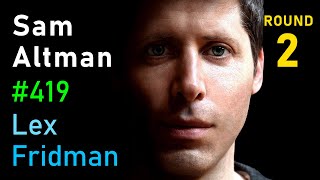
Sam Altman: Lex Fridman Podcast #419
On OpenAI Governance: The Board Saga and AGI

What Altman talks about
Sam Altman joined Lex Fridman for this podcast in 2024 to discuss OpenAI governance, the board saga, GPT-5, Sora, power, safety, and AGI.
Also known as: Sam Altman on Lex Fridman; Sam Altman: OpenAI, GPT-5, Sora, Board Saga, Elon Musk, Ilya, Power & AGI; Lex Fridman Podcast with Sam Altman.
Sam Altman spends much of this conversation unpacking the OpenAI board crisis, what it revealed about governance, incentives, and power, and how it reshaped his view of trust. He describes the experience as the most painful professional event of his life, but also a preview of the pressure OpenAI will face as it gets closer to AGI.
The discussion then widens to the future of OpenAI’s products and research: GPT-4’s limitations, the importance of post-training and product design, long-context models, memory, slower reasoning systems, and Sora’s implications for simulation and reality. Altman repeatedly frames the work as both technical and societal, with safety, deployment, and user choice all central concerns.
Lex Fridman interviews Sam Altman throughout.
In his words
“That was definitely the most painful professional experience of my life”
“The road to AGI should be a giant power struggle.”
“I feel great about the new board.”
“I think there will be a new paradigm for that kind of thinking.”
Key points
- The November board crisis was deeply painful, chaotic, and psychologically draining, but it also forced OpenAI to learn hard lessons about structure and resilience.
- Altman says the nonprofit board structure gave the board unusual power, and OpenAI needs governance that can better withstand pressure and answer more broadly to the world.
- He emphasizes that board members should be chosen for a mix of technical judgment, governance experience, and societal perspective, not just technical skill.
- The experience changed his default trust level and made him more conscious of planning for worst-case scenarios.
- He argues that ChatGPT’s product layer and post-training were as important as the base model in driving adoption and belief in the technology.
- Altman sees memory, long context, and iterative reasoning as major future capabilities that will make AI more useful over time.
- He thinks Sora and other generative systems modestly increase openness to the simulation hypothesis, though that is not his main takeaway.
Full transcript: Sam Altman, Lex Fridman Podcast #419 (2024)
Lex FridmanThe following is a conversation with Sam Altman, his second time in the podcast. He is the CEO of OpenAI, the company behind GPT four, Chad GPT, Sora, and perhaps one day, the very company that will build AGI. And now, a quick few second mention of each sponsor. Check them out in the description. It's the best way to support this podcast. We got a new sponsor, Cloaked for protecting your personal information, Shopify for selling stuff online, BetterHelp for helping out your mind, and ExpressVPN for protecting your privacy and security on the interwebs. Choose wisely, my friends. Also, if you want to work with our amazing team, we're always hiring. Or if you just wanna get in touch with me, go to lextreatment.com/contact.
And now, on to the full ad reads. As always, no ads in the middle. I try to make this interesting, but if you must skip them, friends, please do check out our sponsors. I enjoy their stuff. Maybe you will too. This episode is brought to you by Cloaked, a sponsor I didn't know existed until quite recently, and always thought a thing like this should exist, and I couldn't quite find a thing like it that existed. And once I found it, it was pretty awesome. It's a platform that lets you generate new email addresses and phone numbers every time you sign up for a website. So it's called a masked email, which basically creates... I guess you could say it's a fake email that hides your actual email, but it's not fake in that it actually exist and persist throughout time, and the website thinks it's real. It just forwards to your actual email.
You can set up the forwarding. The point is the website or service that you sign up for doesn't know your actual phone number. It doesn't know your actual email. So this is a really interesting idea because when you sign up to different websites, there's a kind of contract, unspoken contract that the email you provide and the phone number you provide will not be abused. For the kind of abuse I'm talking about in sort of the best case, just spammed, or in the worst case, that email or phone number being sold out there, and then you get not just spam for one sort, but spam from all of the sources all over the place. Anyway, this is just a smart thing to protect yourself. And it also does basic password manager stuff. So you can think of Cloaked as a... Just a great password manager with extra privacy superpowers. You can go to cloaked.com/lex to get fourteen days free, or for a limited time, use code lex pod when signing up to get 25% off an annual cloaked plan.
This episode is also brought to you by Shopify, a platform designed for anyone, yes, anyone including me, to sell anywhere with a great looking online store. I use it to sell some t shirts at lexrumen.com/store. You can check it out. I used the most basic store. It took just a few minutes, and the store was up. From the shirt design being finished to the store being alive and being able to sell t shirts and ship those t shirts thanks to the integration with a third party, which there's thousands of integrations with a third party. So for t shirts, that's like on demand printing, so you don't have to take care of the shipping and the printing and all that kind of stuff. All of that is integrated, super easy to do, and this works for any kind of business that sells stuff online.
You can integrate into your own website or you can sell it on Shopify itself, which is what I do. You can sign up for a $1 per month trial period at shopify.com/lex, all lowercase, go to shopify.com/lex to take your business to the next level today. This episode is also brought to you by BetterHelp, spelled h e l p. Help, they figure out what you need and match with a licensed therapist in under forty eight hours. Works for individuals, works for couples. I'm a huge fan of talking as a way of exploring the human mind. Two people talking with a motivation and a goal in mind of surfacing certain kinds of problems and alleviating those kinds of problems. Sometimes the surfacing in itself does a lot of the alleviation.
Returning to a time in the past when trauma happened and to reframe it in a way that helps you understand, that helps you forgive, that helps you let go, all of that. It's really powerful. And BetterHelp just is an accessible way of doing that or at least trying talk therapy. They've helped a lot of people. Four point four million people got help. So you could be one of those. If you wanna try, check them out at betterhelp.com/lex and save in your first month. That's betterhelp.com/lex. This episode is also brought to you by ExpressVPN. I love that there's a kind of privacy theme to the sponsors in this episode. I think everybody should be using a VPN for many reasons. One, it can allow you to geographically transport yourself, but the main reason is it just adds this extra layer of security and privacy between you and the ISP that they say you're technically not supposed to be collecting the data when you use things like Chrome incognito, but they can be collecting the data.
I don't know how the laws of that works, but I wouldn't trust it. So a VPN is essential for that. My favorite VPN for many many many many many many years has been ExpressVPN. Big sexy button still works. Looks different, but still works on any operating system. My favorite being Linux. I can talk forever about why I love Linux. I wonder if Linux will be around with all this AI, with all this rapid AI development, maybe programmers. Programming is a way of life, as a recreation for millions, as a profession for millions, will die out and then there'll only be a handful of few, like the Cobalt programmers of today. They carry the flag of knowing what Linux is, how to spell Linux, let alone use it, I wonder.
Hopefully not, because there's always room for optimizing at every level the compilation from the human language to the AI language to the machine language to the zeros and ones. The compilation of the entire stack. I think there's a lot of jobs to be had, a lot of really profitable, well paying jobs to be had there, but maybe not millions of people are needed. Maybe there'll be millions of people that program with just natural language, with just words, English, or whatever new language we create that the whole world can use, and the whole world and using can help break down the barriers of language. We arrived here, friends, when we started at the meager explanation of the use of a VPN. You can also take this journey by going to expressvpn.com/lexpod for an extra three months free.
This is the Lex Friedman podcast. To support it, please check out our sponsors in the description. And now, dear friends, here's Sam Altman. Take me through the OpenAI board saga that started on Thursday, November 16, maybe Friday, November 17 for you.
Sam AltmanThat was definitely the most painful professional experience of my life and chaotic and shameful and upsetting and a bunch of other negative things. There were great things about it too, I wish I wish it had not been in such an adrenaline rush that I wasn't able to stop and appreciate them at the time, but I came across this old tweet of mine, or this tweet of mine from that time period, which was like it was like, you know, kind of going to your own eulogy, watching people say all these great things about you, just, like, unbelievable support from people I I love and care about. That was really nice. That whole weekend, I I kind of, like, felt...
With one big exception, I I felt, like, a great deal of love and very little hate, even though it felt like I just... I have no idea what's happening and what's gonna happen here, this feels really bad. Were there definitely times I thought it was gonna be, like, one of the worst things to ever happen for AI safety. Well, I also think I'm happy that it happened relatively early. I thought at some point between when OpenAI started and when we created AGI, there was gonna be something crazy and explosive that happened, but there may be more crazy and explosive things still to happen. It still, I think, helped us build up some resilience and be ready for more challenges in the future.
Lex FridmanBut the thing you had a sense that you would experience is some kind of power struggle.
Sam AltmanThe road to AGI should be a giant power struggle. Like, the world should... I I got... Well, not should. I expect that to be the case.
Lex FridmanAnd so you have to go through that as, like you said, iterate as often as possible in figuring out how to have a board structure, how to have organization, how to have the kind of people that you're working with, how to communicate all that in order to de escalate the power struggle as much as possible. Yeah. Pacify it.
Sam AltmanBut at this point, it feels, you know, like something that was in the past that was really unpleasant and really difficult and painful, but we're back to work and things are so busy and so intense that I don't spend a lot of time thinking about it. There was a time after. There was like this fugue state for kind of like the month after, maybe forty five days after, that was... I was just sort of like drifting through the days. I was so out of it. I was feeling so down. Just on a personal psychological level. Yeah. Really painful. And hard to like have to keep running OpenAI in the middle of that. I just wanted to like crawl into a cave and kind of recover for a while.
But, you know, now it's like we're just back to working on the mission.
Lex FridmanWell, it's still useful to go back there and reflect on board structures, on power dynamics, on how companies are run, the tension between research and product development and money and all this kind of stuff so that you, who have a very high potential of building AGI, would do so in a slightly more organized, less dramatic way Yeah. In the future. So there's value there to go, both the personal psychological aspects of you as a leader and also just the the board structure and all this kind of messy stuff.
Sam AltmanDefinitely learned a lot about structure and incentives and what we need out of a a board. And I think that is... It is valuable that this happened now in some sense. I think this is probably not, like, the last high stress moment of open AI, but it was quite a high stress moment. Like, company very nearly got destroyed. And we think a lot about many of the other things we've gotta get right for AGI, but thinking about how to build a resilient org and how to build a structure that will stand up to, like, a lot of pressure in the world, which I expect more and more as we get closer, I think that's super important.
Lex FridmanDo you have a sense of how deep and rigorous the deliberation process by the board was? Like, can you shine some light on just human dynamics involved in situations like this? Was it just a few conversations and all of sudden it escalates and why don't we fire Sam kind of thing?
Sam AltmanI think I think the board members were are well meaning people on the whole. And I believe that in stressful situations where people feel time pressure or whatever, people understandably make suboptimal decisions, and I think one of the challenges for OpenAI will be we're gonna have to have a board and a team that are good at operating under pressure. Do you think
Lex Fridmanthe board had too much power?
Sam AltmanI think boards are supposed to have a lot of power, but one of the things that we did see is in in most corporate structures, boards are usually answerable to shareholders. You know, there's... Sometimes people have, like, supervoting shares or whatever. In this case, and I think one of the things with our structure that we maybe should have thought about more than we did, is that the board of a nonprofit has, unless you put other rules in place, like, quite a quite a lot of power, they don't really answer to anyone but themselves, and there's ways in which that's good, but what we'd really like is for the board of OpenAI to, like, answer to the world as a whole as much as that's a practical thing.
Lex FridmanSo there's a new board announced?
Sam AltmanYep. There's, I guess,
Lex Fridmana new smaller board at first and now there's a new final board.
Sam AltmanNot a final board yet. We've added some. We'll add more.
Lex FridmanAdded some. Okay. What is fixed in the new one that was perhaps broken in the previous one?
Sam AltmanThe old board sort of got smaller over the course of about a year. It was nine, and then it went down to six. And then we couldn't agree on who to add. And the board also, I think, didn't have a lot of experienced board members, and a lot of the new board members at OpenAI have just have more experience as board members. I think that'll help.
Lex FridmanIt's been criticized, some of the people that are added to the board. I heard a lot of people criticizing the addition of Larry Summers, for example. What's the process of selecting the board like? What's involved in that?
Sam AltmanSo Brett and Larry were kind of decided in the heat of the moment over this, like, very tense weekend. And that was... I mean, that weekend was like a real roller coaster. It's like a lot of
Lex FridmanMhmm.
Sam AltmanA lot of ups and downs. And we were trying to agree on new board members that both sort of the executive team here and the old board members felt would be reasonable. Larry was actually one of their suggestions, the old board members. Brett, I think, I had even previous to that weekend suggested, but he was, you know, busy and didn't wanna do it, and then we really needed help and would. We talked about a lot of other people too, but that was I felt like if I was going to come back, I needed new board members. I didn't think I could work with the old board again in the same configuration, although we then decided, and I'm grateful, that Adam would stay, but we wanted to get to...
We considered various configurations, decided we wanted to get to a board of three, and had to find two new board members over the course of sort of a short period of time. So those were decided, honestly, without... You know, that's like you kinda do that on the battlefield. You don't have time to design a rigorous process then. For new board members, since new board members will add going forward, we have some criteria that we think are important for the board to have, different expertise that we want the board to have. Unlike hiring an executive where you need them to do one role well, the board needs to do a whole role of kind of governance and thoughtfulness well. And so one thing that Brett says, which I really like, is that, you know, we wanna hire board members in slates, not as individuals one at a time.
And, you know, thinking about a group of people that will bring nonprofit expertise, expertise at running companies, sort of good legal and governance expertise, that's kind of what we've tried to optimize for.
Lex FridmanSo is technical savvy important for the individual board members?
Sam AltmanNot for every board member, but for certainly some you need that. That's part of what the board needs to do. So, I mean, the
Lex Fridmaninteresting thing that people probably don't understand about OpenAI, I certainly don't, is, like, all the details of running the business. When they think about the board, given the drama, they think about you, they think about, like, if you reach AGI or you reach some of these incredibly impactful products and you build them and deploy them, what's the conversation with the board like? And they kind of think, alright. What's the right squad to have in that kind of situation to deliberate...
Sam AltmanLook, think you definitely need some technical experts there, and then you need some people who are like, what can how can we deploy this in a way that will help people in the world the most, and people who have a very different perspective. You know, I think a mistake that you or I might make is to think that only the technical understanding matters, and that's definitely part of the conversation you want that board to have. But there's a lot more about how that's gonna just, like, impact society and people's lives that you really want represented in there too.
Lex FridmanAnd you're just kinda... Are you looking at the track record of people, or are you just having conversations?
Sam AltmanTrack record's a big deal. You you, of course, have a lot of conversations, but I... You know, there's some roles where I kind of totally ignore track record and just look at slope, kinda ignore the y intercept.
Lex FridmanThank you. Thank you for making it mathematical for the for the audience.
Sam AltmanFor a board member, like, I do care much more about the y intercept. Like, I think there is something deep to say about track record there, and experience is sometimes very hard to replace.
Lex FridmanDo you try to fit a polynomial function or exponential one to the to the track record?
Sam AltmanThat's not that analogy doesn't carry that far. Alright.
Lex FridmanYou mentioned some of the low points that weekend. What were some of the low points psychologically for you? Did you consider going to the Amazon Jungle and just taking ayahuasca and disappearing forever? Or?
Sam AltmanI mean, there's so many. Like, it was a very bad period of time. There were great high points too. Like, my phone was just, like, sort of nonstop blowing up with nice messages from people I work with every day, people I hadn't talked to in a decade. I didn't get to, like, appreciate that as much as I should have because I was just, like, in the middle of this firefight, but that was really nice. But on the whole, it was, like, a very painful weekend and also just, like, a very... It was like a battle fought in public to a surprising degree, and that's... That was extremely exhausting to me, much more than I expected. I I think fights were generally exhausting, but this one really was. You know, the board did this Friday afternoon. I really couldn't get much in the way of answers, but I also was just like, well, the board gets to do this, and so I'm gonna think for a little bit about what I wanna do, but I'll try to find the the blessing in disguise here.
And I was like, well, I... You know, my current job at OpenAI is, or it was, like, to, like, run a, you know, decently sized company at this point. And the thing I'd always liked the most was just getting to, like, work on work with the researchers. And I was like, yeah, I can just go do, like, a very focused AGI research effort. And I got excited about that. It didn't even occur to me at the time to, like, possibly that this was all gonna get undone. This was, like, Friday afternoon.
Lex FridmanSo you've accepted your... The death of
Sam Altmanthis quickly. Previous... Like, within, you know... I mean, I went through, like, a little period of confusion and rage, but very quickly. And by Friday night, was, like, talking to people about what was gonna be next, I was excited about that. I think it was Friday night evening for the first time that I heard from the exec team here, which is like, hey, we're gonna, like, fight this and, you know, we think, whatever. And then I went to bed just still being like, okay, excited, like, onward. Were you able to sleep? Not a lot. It was one of one of the weird things was there was this, like, period of four four and a half days where sort of didn't sleep much, didn't eat much, and still kinda had like a surprising amount of energy. Was... You learn like a weird thing about adrenaline and wartime. So you kind of
Lex Fridmanaccepted the death of a... You know, this baby opening up...
Sam AltmanAnd I was excited for the new thing. Was just like, okay, this was crazy, but whatever.
Lex FridmanIt's a
Sam Altmanvery good coping mechanism. And then Saturday morning, two of the board members called and said, hey, we, you know, destabilize... We didn't mean to destabilize things. We don't want destroy a lot of value here. You know, can we talk about you coming back? And I immediately didn't wanna do that, but I thought a little more and I was like, well, I don't really care about the people here, the partners, shareholders, like, all of the... I love this company. And so I thought about it and I was like, well, okay, but like, here's here's the stuff I would need. And and then the most painful time of all was over the course of that weekend, I kept thinking and being told, and we all kept, not just me, like the whole team here kept thinking. Well, we were trying to, like, keep open eyes stabilized while the whole world was trying to break it apart, people trying to recruit, whatever. We kept being told, alright, we're almost done. We're almost done. We just need, like, a little bit more time.
And it was this, like, very confusing state. And then Sunday evening, when, again, like, every few hours I expected that we were gonna be done and we're gonna, like, figure out a way for me to return and things to go back to how they were, the board then appointed a new interim CEO. And then I was like, I mean, that is that is... That feels really bad. That was the low point of the whole thing. You know, I'll tell you something. I... It felt very painful, but I felt a lot of love that whole weekend.
Lex FridmanMhmm.
Sam AltmanIt was not... Other than that one moment, Sunday night, I would not characterize my emotions as anger or hate, but I really just like I felt a lot of love from people, towards people. It was like painful, but it would like... The dominant emotion of the weekend was love, not hate.
Lex FridmanYou've spoken highly of Meera Moradi that she helped especially as you put in a tweet, in the quiet moments when it counts. Perhaps we could take a bit of a tangent. What do you admire about Meera?
Sam AltmanWell, she did a great job during that weekend in a lot of chaos, but but people often see leaders in the moment, in, like, the crisis moments, good or bad. But a thing I really value in leaders is how people act on a boring Tuesday at 09:46 in the morning. Mhmm. And in in just sort of the the the normal drudgery of the day to day, how someone shows up in a meeting, the quality of the decisions they make. That was what I meant about the quiet moments.
Lex FridmanMeaning, like, most of the work is done on a day by day Yeah. In a meeting by meeting, just just be present and and make great decisions.
Sam AltmanYeah. I mean, listen, what you wanted to... Have wanted to spend the last twenty minutes about, and I understand, is like this one very dramatic weekend. Yeah. But that's not really what Opening Eye is about. Opening Eye is really about the other seven years.
Lex FridmanWell, yeah, human civilization is not about the invasion of The Soviet Union by Nazi Germany, but still that's something people focus on. Very very understandable. It gives us an insight into human nature, the extremes of human nature, and perhaps some of the damage and some of the triumphs of human civilization can happen in those moments. So it's like illustrative. Let me ask you about Ilya. Is he being held hostage in a secret nuclear facility? No. What about a regular secret facility? No. What about a nuclear non secret facility?
Sam AltmanNeither of that. Not that either.
Lex FridmanI mean, it's becoming a meme at some point.
Sam AltmanYou've known Ilya for for a long time. He was obviously in part part of this drama with the board and all that kind of stuff. What's your relationship with him now? I love Ilya. I have tremendous respect for Ilya. I I don't have anything I can, like, say about his plans right now. That's that's a question for him. But I really hope we work together for, you know, certainly the rest of my career. He's a little bit younger than me. Maybe he works a little bit longer.
Lex FridmanYou know, there's a there's a meme that he saw something. Like, he maybe saw AGI, and that gave him a lot of worry internally. What did Ilya see?
Sam AltmanIlya has not seen AGI. None of us have seen AGI. We have not built AGI. I do think one of the many things that I really love about Ilya is he takes AGI and the safety concerns, broadly speaking, you know, including things like the impact this is gonna have on society very seriously. And we... As we continue to make significant progress, Ilya is one of the people that I've spent the most time over the last couple of years talking about what this is going to mean, what we need to do to ensure we get it right, to ensure that we succeed at the mission. So Ilya did not see AGI, but Ilya is a credit to humanity in terms of how much he thinks and worries about making sure we get this right.
Lex FridmanI've had a bunch of conversations with him in the past. I think when he talks about technology, he's always, like, doing this long term thinking type of thing. So he's not thinking about what this is going to be in a year, he's thinking about in ten years. Yeah. Just thinking from first principles, like, okay, if this scales, what are the fundamentals here, where is this going? And so that that's a foundation for them thinking about, like, all the other safety concerns and all that kind of stuff, which makes him a really fascinating human to talk with. Do you have any idea why he's been kinda quiet? Is it he's just doing some soul searching?
Sam AltmanAgain, I don't wanna, like, speak for Ilya. Mhmm. I think that you you should ask him that. He's definitely a thoughtful guy. I think I kind of think of Viljo as, like, always on the soul search in a really good way.
Lex FridmanYes. Yeah. Also, he appreciates the power of silence. Also, I'm told he can be a silly guy, I've never seen
Sam Altmanthat very side of sweet when that happens.
Lex FridmanI've never witnessed a silly ilea, but I look forward to to that
Sam Altmanas well. I was at a dinner party with him recently, and he was playing with a puppy, and I... And he was, like, in a very silly mood, very endearing, and I was thinking, like, oh, man, this is, like, not the side of the ilio that the world sees the most.
Lex FridmanSo just to wrap up this whole saga, are you feeling good about the board structure Yes. About all of this and, like, where it's moving?
Sam AltmanI feel great about the new board. In terms of the structure of OpenAI, I... You know, one of the board's tasks is to look at that and see where we can make it more robust. We wanted to get new board members in place first, but, you know, we clearly learned a lesson about structure throughout this process. I don't have, I think, super deep things to say. It was a crazy, very painful experience. I think it was like a perfect storm of weirdness. It was like a preview for me of what's gonna happen as the stakes get higher and higher, and the need that we have, like, robust governance structures and processes and people. I am kinda happy it happened when it did, but it was a shockingly painful thing to go through.
Lex FridmanDid it make you be more hesitant in trusting people? Yes. Just on a personal level?
Sam AltmanI think I'm, like, an extremely trusting person. I have... I've always had a life philosophy of, know, like, don't worry about all of the paranoia. Don't worry about the edge cases. You know, you get a little bit screwed in exchange for getting to live with your guard down. Mhmm. And this was so shocking to me. Was so caught off guard that it has definitely changed, and I really don't like this, it's definitely changed how I think about just, like, default trust of people and planning for the bad scenarios.
Lex FridmanYou gotta be careful with that. Are you worried about becoming a little too cynical?
Sam AltmanI'm not worried about becoming too cynical. I think I'm, like, the extreme opposite of a cynical person, but I'm I'm I'm worried about just becoming, like, less of a default trusting person.
Lex FridmanI'm actually not sure which mode is best to operate in for a person who's developing AGI. Trusting or an untrusting. It's an interesting journey you're on. But in terms of structure... See, I'm more interested on the human level. Like, how do you surround yourself with humans that are building cool shit, but also are making wise decisions. Yeah. Because the more money you start making, the more power the thing has, the weirder people get.
Sam AltmanYou know, I think you could like can make all kinds of comments about the board members and the level of trust I should have had there or how I should have done things differently. But in terms of the team here, I think you'd have to, like, give me a very good grade on that one. And I have just like enormous gratitude and trust and respect for the people that I work with every day, and I think being surrounded with people like that is really important.
Lex FridmanOur mutual friend, Elon, sued OpenAI. What to use the essence of what he's criticizing? To what degree does he have a point? To what degree is he wrong?
Sam AltmanI don't know what it's really about. We started off just thinking we were gonna be a research lab and having no idea about how this technology was gonna go. It's hard to... Because it was only, you know, seven or eight years ago, it's hard to go back and really remember what it was like then. But this was before language models were a big deal. This was before we had any idea about an API or selling access to a chatbot. This was before we had any idea we were gonna productize at all. So we're like, we're just, like, gonna try to do research and, you know, we don't really know what we're gonna do with that. I think with, like, many new... Fundamentally new things, you start fumbling through the dark and you make some assumptions, most of which turn out to be wrong. And then it became clear that we were going to need to do different things and also have huge amounts more capital.
So we said, okay, well, the structure doesn't quite work for that. How do we patch the structure? Then patch it again and patch it again, and you end up with something that does look kind of eyebrow raising to say the least. But we got here gradually with, I think, reasonable decisions at each point along the way. And doesn't mean I wouldn't do it totally differently if we could go back now with an oracle, but you don't get the oracle at the time. But anyway, in terms of what Elon's real motivations here are, I don't know.
Lex FridmanTo the degree you remember, what was the response that OpenAI gave in the blog post? Can you summarize it?
Sam AltmanOh, we just said, like, you know, Elon said this set of things. Here's our characterization, or here's this sort of... Not our characterization, here's, like, the characterization of how this went down. We tried to, like, not make it emotional and just sort of say, like, here's the history.
Lex FridmanI do think there's a degree of mischaracterization from Elon here about one of the points you just made, which is the degree of uncertainty you had at the time. You guys are a bunch of, like, a small group of researchers crazily talking about AGI when everybody's laughing at that thought.
Sam AltmanIt wasn't that long ago Elon was crazily talking about launching rockets Yeah. When people were laughing at that thought. So I think he'd have more empathy for this.
Lex FridmanI mean, I I do think that there's personal stuff here, that there was a split that OpenAI and a lot of amazing people here chose to part ways with Elon. So there's a personal
Sam AltmanElon chose to part ways.
Lex FridmanCan you describe that exactly? The the the choosing to part ways?
Sam AltmanHe thought OpenAI was gonna fail. He wanted total control to sort of turn it around. We wanted to keep going in the direction that now has become OpenAI. He also wanted Tesla to be able to build an AGI effort. At various times, he wanted to make OpenAI into a for profit company that he could have control of or have it merge with Tesla. We don't wanna do that, and he decided to leave, which that's fine.
Lex FridmanSo you're saying, and that's one of the things that the blog post says, is that he wanted OpenAI to be basically acquired by Tesla Yeah. In those same way that... Or maybe something similar or maybe something more dramatic than the partnership with Microsoft.
Sam AltmanMy memory is the proposal was just like, yeah, get acquired by Tesla and have Tesla have full control over it. I'm pretty sure that's what it was. So what is the word open and OpenAI mean?
Lex FridmanTo Elon at the time, Ilya has talked about this in the email exchanges and all this kind of stuff. What does it mean to you at the time? What does it mean to you now?
Sam AltmanI would definitely pick a diff... Speaking of going back with an Oracle, I'd pick a different name. One of the things that I think OpenAI is doing that is the most important of everything that we're doing is putting powerful technology in the hands of people for free as a public good. Not... We're not... You know, we don't run ads on our free version. We don't monetize it in other ways. We just say it's part of our mission. We wanna put increasingly powerful tools in the hands of people for free and get them to use them. And I think that kind of open is really important to our mission. Think if you give people great tools and teach them to use them, or don't even teach them, they'll figure it and let them go build an incredible future for each other with that, that's a big deal. So if we can keep putting, like, free or low cost or free and low cost powerful AI tools out in the world, I think that's a huge deal for how we fulfill the mission.
Open source or not, yeah, I think we should open source some stuff and not other stuff. The... It does become this, like, religious battle line where nuance is hard to have, but I think nuance is the right answer.
Lex FridmanSo he said, change your name to closed.ai and I'll drop the lawsuit. I mean, is it going to become this battleground in in the land of memes about...
Sam AltmanI think that speaks to the seriousness with which Elon means the lawsuit. And... Yeah. I mean, that's like an astonishing thing to say, I think. Like...
Lex FridmanWell, I don't think the lawsuit... May... Maybe correct me if I'm wrong, but I don't think the lawsuit is legally serious. It's more to make a point about the future of AGI and the company that's currently leading the way.
Sam AltmanSo, look, I mean, Grok had not open sourced anything until people pointed out it was a little bit hypocritical, and then he announced that Grok will open source things this week. I I don't think open source versus not is what this is really about for him.
Lex FridmanWell, we'll talk about open source and not. I do think maybe criticizing the competition is great, just talking a little shit, that's great. But friendly competition versus, like, I personally hate lawsuits. Look, I think this whole thing
Sam Altmanis, like, unbecoming of a builder, and I respect Elon as one of the great builders of our time. And I know he knows what it's like to have, like, haters attack him, and it makes me extra sad he's doing it, Toss.
Lex FridmanYeah. He's one of the greatest builders of all time, potentially the greatest builder of all time.
Sam AltmanIt makes me sad. And I think it makes a lot of people sad. Like, there's a lot of people who've really looked up to him for a long time and said this... I said, you know, in some interview or something that I missed the old Elon, and the number of messages I got being like, that exactly encapsulates how I feel.
Lex FridmanI think he should just win. He should just make x... Grock beat GPT, and then GPT beats Grock, and it's just a competition. And that's... It's beautiful for everybody. But on the question of open source, do you think... There's a lot of companies playing with this idea. It's quite interesting. I would say Meta, surprisingly
Sam AltmanMhmm.
Lex FridmanHas led the way on this. Or, like, at least took the first step in the game of chess of, like, really open sourcing the model. Of course, it's not the state of the art model, but open sourcing llama. And Google is flirting with the idea of open sourcing a smaller version. Have you... What are the pros and cons of open sourcing? Have you played around with this idea?
Sam AltmanYeah. I think there there is definitely a place for open source models, particularly smaller models that people can run locally. I think there's huge demand for. I think there will be some open source models. There will be some closed source models. This... It won't be unlike other ecosystems in that way.
Lex FridmanI listened to All In podcast talking about this this loss and all that kind of stuff, and they were more concerned about the precedent of going from nonprofit to this cap for profit. What precedent this sets for other startups. Is that... I don't...
Sam AltmanI would heavily discourage any startup that was thinking about starting as a nonprofit and adding like a for profit arm later. I'd heavily discourage them from doing that. I don't think we'll set a precedent here.
Lex FridmanOkay. So most most startups should go just...
Sam AltmanFor sure. And again, if we knew what was gonna happen, we would have done that too.
Lex FridmanWell, like, in theory, if you, like, dance beautifully here, you could... There's, like, some tax incentives or whatever.
Sam AltmanI I don't think that's like how most people think about these things.
Lex FridmanIt's just not possible to save a lot of money for a startup if you do it this way.
Sam AltmanNo. I think there's like laws that would make that pretty difficult.
Lex FridmanWhere do you hope this goes with Elon? What... This this tension, this dance, what do you hope this... Like, if we go one, two, three years from now, your relationship with him on a personal level too, like friendship, friendly competition, just all this kind of stuff.
Sam AltmanYeah. I mean, I... I'd really respect Elon, And I hope that years in the future, we have an amicable relationship.
Lex FridmanYeah. I hope you guys have an amicable relationship like this month. And just compete and win and and explore these ideas together. I do suppose there's competition for talent or whatever, but it should be friendly competition. Just build build cool shit. And Elon is pretty good at building cool shit, but so are you. So speaking of cool shit, Sora, there's like a million questions I could ask. First of all, it's amazing. It truly is amazing. On a product level, but also just on a philosophical level. So let me just... Technical slash philosophical ask, what do you think it understands about the world more or less than GPT four, for example?
Like, the world model when you train on these patches versus language tokens.
Sam AltmanI think all of these models understand something more about the world model than most of us give them credit for. And because there are also very clear things they just don't understand or don't get right, it's easy to like look at the weaknesses, see through the veil, say, oh, this is just this is all fake. But it's not all fake, it's just some of it works and some of it doesn't work. Like, I remember when I started first watching Sora videos and I would see, like, a person walk in front of something for a few seconds and occlude it, and then walk away and the same thing was still there. I was like, this is pretty good. Or there's examples where, like, the underlying physics looks so well represented over, you know, a lot of steps in a sequence. It's like, oh, this is this is, like, quite impressive. But, like, fundamentally, these models are just getting better, and that will keep happening. If you look at the trajectory from Dolly one to two to three to Sora, you know, there were a lot of people that were dunked on each version saying, it can't do this, it can't do that, and, like, look at it now.
Lex FridmanWell, the thing you just mentioned is kinda with occlusions is basically modeling the physics, three-dimensional physics of the world sufficiently well to capture those kinds of things.
Sam AltmanWell
Lex FridmanOr like under... Or... Oh, yeah. Maybe you can tell me. In order to deal with occlusions, what does the world model need to?
Sam AltmanYeah. So what I would say is it's doing something to deal with occlusions really well. What I represent that it has, like, a great underlying three d model of the world, it's a little bit more of a stretch.
Lex FridmanBut can we get there through just these kinds of two dimensional training data approaches?
Sam AltmanIt looks like this approach is gonna go surprisingly far. I don't wanna speculate too much about what limits it will surmount and which it won't, but.
Lex FridmanWhat are some interesting limitations of the system that you've seen? I mean, there's been some fun ones you've posted.
Sam AltmanThere's all kinds of fun. I mean, like, you know, cats sprouting an extra limit, random points in a video. Like, pick what you want, but there's still a lot of problems, there's still lot of weaknesses. Do you
Lex Fridmanthink that's a fundamental flaw of the approach or is it just, know, bigger model or better, like, technical details or better data, more data is going to solve those... The cat sprotting...
Sam AltmanSay yes to both. Like, I think there is something about the approach which just seems to feel different from how we think and learn and whatever. And then also, think it'll get better with scale. Like I mentioned, LLMs have tokens, text tokens, and SORA has visual patches. So it converts all visual data, a diverse kinds of visual data, videos, and images into patches. Is the training to the degree you
Lex Fridmancan say fully self supervised or is there some manual labeling going on? Like, what's the involvement of humans in all this?
Sam AltmanI mean, without saying anything specific about the SOAR approach, we we use lots of human data in our work.
Lex FridmanBut not Internet scale data. So lots of humans... Lots is a complicated word, Sam.
Sam AltmanWell, I think lots is a fair word in this case.
Lex FridmanBut it doesn't... Because to me lots... Like, listen, I'm an introvert and when I hang out with like three people, that's a lot of people. Yeah. Four people, that's a lot. But I suppose you mean more than...
Sam AltmanMore than three people work on labeling the data for these models. Yeah. Okay.
Lex FridmanAlright. But fundamentally, there's a lot of self supervised learning because you... What you mentioned in the technical report is Internet scale data. That's another beautiful... It's like poetry. So it's a lot of data that's not human labeled. It's like Yeah. It's self supervised in that way. Yeah. And then the question is how much how much data is there on the Internet that could be used in this... That is conducive to this kind of self supervised way, if only we knew the details of the self supervised. Do you... Have you considered opening it up a little more details?
Sam AltmanWe have. For... You mean for Sora specifically? Sora specifically at the show.
Lex FridmanBecause it's so interesting that, like, can this l l... Can the same magic of LLMs now start moving towards visual data? And how... What does that take to do that?
Sam AltmanI mean, it looks to me like yes, but we have more work to do. Sure.
Lex FridmanWhat are the dangers? Why are you concerned about releasing the system? What are some possible dangers of this?
Sam AltmanI mean, frankly speaking, one thing we have to do before releasing the system is is just, like, get it to work at a level of efficiency that will deliver the scale people are gonna want from this. So I don't wanna, like, downplay that, and there's still a ton ton of work to do there. But, you know, you can imagine, like, issues with deepfakes, misinformation. Like, we try to be a thoughtful company about what we put out into the world, and it doesn't take much thought to think about the ways this can go badly.
Lex FridmanThere's a lot of tough questions here. You're dealing in a very tough space. Do you think training AI should be or is fair use under copyright law?
Sam AltmanI think the question behind that question is, do people who create valuable data deserve to have some way compensated for use of it? And that, I think the answer is yes. I don't know yet what the answer is. People have proposed a lot of different things. We've tried some different models. But, you know, if I'm like an artist, for example, a, I would like to be able to opt out of people generating art in my style, and b, if they do generate art in my style, I'd like to have some economic model associated with that. Yeah. It's that transition from CDs to Napster to Spotify.
Lex FridmanI have to figure out some kind of model.
Sam AltmanThe model changes, but people have got to get paid.
Lex FridmanWell, there should be some kind of incentive if we zoom out even more for humans to keep doing
Sam Altmancool shit. Everything I worry about, humans are gonna do cool shit and society's gonna find some way to reward it. I I... That seems pretty hardwired. We wanna create, we wanna be useful, we want to, like, achieve status in whatever way. That's not going anywhere, I don't think.
Lex FridmanBut the reward might not be monetary, financial. It might be like fame and celebration of other cool...
Sam AltmanMaybe financial in some other way. Again, I don't think we've seen like the last evolution of how the economic system's gonna work.
Lex FridmanYeah. But artists and creators are worried. When they see Sora, they're like, holy shit.
Sam AltmanSure. Artists were also super worried when photography came out.
Lex FridmanYeah.
Sam AltmanAnd then photography became a new art form and people made a lot of money taking pictures and I think things like that will keep happening. People will use the new tools
Lex Fridmanin new ways. If we just look on YouTube or something like this, how much of that will be using sort of like AI generated content, do
Sam Altmanyou think, in the next five years? People talk about, like, how many jobs they are gonna do in five years. And and the framework that people have is what percentage of current jobs are just gonna be totally replaced by some AI doing the job. The way I think about it is not what percent of jobs AI will do, but what percent of tasks will AI do and over what time horizon. So if you think of all of the, like, five second tasks in the economy, the five minute tasks, the five hour tasks, maybe even the five day tasks, how many of those can AI do? And I think that's a way more interesting, impactful, important question than how many jobs AI can do, because it is a tool that will work at increasing levels of sophistication and over longer and longer time horizons for more and more tasks, and let people operate at a higher level of abstraction.
So maybe people are way more efficient at the job they do. And at some point, that's not just a quantitative change, but it's a qualitative one too about the kinds of problems you can keep in your head. I think that for videos on YouTube it'll be the same. Many videos, maybe most of them, will use AI tools in the production, but they'll still be fundamentally driven by a person thinking about it, putting it together, you know, doing parts of it, sort
Lex Fridmanof Yeah.
Sam AltmanDirecting and running it.
Lex FridmanYeah. It's so interesting. I mean, it's scary, but it's interesting to think about. I tend to believe that humans like to watch other humans or other human like...
Sam AltmanHumans really care about other humans a lot.
Lex FridmanYeah. If there's a cooler thing that's more... That's better than a human, humans care about that for like two days and then they go back to humans.
Sam AltmanThat seems very deeply wired. It's the whole chess thing.
Lex FridmanYeah. Yeah. But now, let's... Everybody keep playing chess. And let's ignore the alpha in the room that humans are really bad at chess relative to AI systems.
Sam AltmanWe still run races and cars are much faster. Mean, is... There's like a lot
Lex Fridmanof examples. Yeah. And maybe it'll just be tooling like in the Adobe Suite type of way where you can just make videos much easier and all that kind of stuff. Listen, I hate being in front of the camera. If I can figure out a way to not be in front of the camera, I would love it. Unfortunately, it'll take a while like that generating faces. Oh, it's it's getting there, but generating faces in video format is tricky when it's specific people versus generic people. Let me ask you about GPT four. There's so many questions. First of all, also amazing. It's... Looking back, it'll probably be this kind of historic pivotal moment with three, five, and four ChadGBT.
Sam AltmanMaybe five will be the pivotal moment. I don't know. Hard to say that looking forwards.
Lex FridmanWe never know. That's the annoying thing about the future. It's hard to predict. But for me, looking back, GPT four, ChadGBT is pretty damn impressive, like, historically impressive. So allow me to ask what's been the most impressive capabilities of GPT four to you and GPT four turbo?
Sam AltmanI think it kinda sucks.
Lex FridmanTypical human also. Gotten used to an awesome thing.
Sam AltmanNo. I think it is an amazing thing. But relative to where we need to get to and where I believe we will get to, You know, at the time of, like, GPT three, people were like, oh, this is amazing. This is this, like, marvel of technology, and it is. It was. But, you know, now we have GPT four. Look at GPT-three and you're like, that's unimaginably horrible. I expect that the delta between five and four will be the same as between four and three, and I think it is our job to live a few years in the future and remember that the tools we have now are gonna kind of suck looking backwards at them, and that's how we make sure the future is better.
Lex FridmanWhat are the most glorious ways that GPT-four sucks? Meaning...
Sam AltmanWhat are the best things it can do?
Lex FridmanWhat are the best things it can do and the limits of those best things that allow you to say it sucks, therefore gives you inspiration and hope for the future? You know, one
Sam Altmanthat I've been using it for more recently is sort of a... Like a brainstorming partner. Yep. For that. There's a glimmer of something amazing in there. I don't think it gets... You know, when people talk about it, it... What it does, they're like, oh, it helps me code more productively, it helps me write more faster and better, it helps me, you know, translate from this language to another. All these, like, amazing things, but there's something about the, like, kind of creative brainstorming partner. I need to come up with a name for this thing. I need to, like, think about this problem in a different way. I'm not sure what to do here. That I think, like, gives a glimpse of something I hope to see more of. One of the other things that you can see, like, a very small glimpse of is when I can help on longer horizon tasks, you know, break down something in multiple steps, maybe like execute some of those steps, search the Internet, write code, whatever, put that together.
When that works, which is not very often, it's like very magical.
Lex FridmanThe iterative back and forth with a human. It works a lot for me. What do mean it
Sam Altmanworks for Iterative back and forth with a human, can get more often. Well, it can go do like a 10 step problem on its own. Oh. It doesn't work for that too often, sometimes.
Lex FridmanAdd multiple layers of abstraction or do you mean just sequential?
Sam AltmanBoth. Like, you know, to break it down and then do things at different layers of abstraction and put them together. Look, I don't wanna I don't wanna, like, downplay the accomplishment of GPT-four, but I don't wanna overstate it either. And I think this point that we are on an exponential curve, we will look back relatively soon at GPT four, like we'd look back at GPT three now.
Lex FridmanThat said, I mean, Chad GPT was a transition to where people, like, started to believe it. There was a kinda... There is an uptick of believing. Not internally at OpenAI perhaps. There's believers here, but when you think about...
Sam AltmanAnd in that sense, I do think it'll be a moment where a lot of the world went from not believing to believing. That was more about the ChatGPT interface than the... And by the interface and product, I also mean the post training of the model and how we tune it to be helpful to you and how to use it than the underlying model itself.
Lex FridmanHow much of those two... Each of those things are important? The underlying model and RLHF or something of that nature that tunes it to be more compelling to the human, more effective and productive for the human?
Sam AltmanI mean, they're they're both super important, but the the the RLHF, the post training step, the, you know, little wrapper of things that... From a compute perspective, little wrapper of things that we do on top of the base model even though it's a huge amount of
Lex FridmanMhmm.
Sam AltmanThat's really important, to say nothing of the product that we build around it. You know, in some sense, like, we did have to do two things. We had to invent the underlying technology, and then we had to figure out how to make it into a product people would love, which is not just about the actual product work itself, but this whole other step of how you align it and make it useful.
Lex FridmanAnd how you make the scale work where a lot of people can use it at the same time, all that kind of stuff.
Sam AltmanAnd that. But, you know, that was, like, a known difficult thing. Like, knew we were gonna have to scale it up. We had to go do two things that had, like, never been done before that were both, like, I would say quite significant achievements, and then a lot of things, like scaling it up, that other companies have had to do before.
Lex FridmanHow does the the context window of going from eight k to one twenty eight k tokens compare from the... From from GPT 4 to to GPT 4 turbo?
Sam AltmanPeople like long... Most people don't need all the way to a 120 most of the time, although, you know, if we dream into the distant future, we'll have, like, way distant future. We'll have, like, context length of several billion. You will feed in all of your information, all of your history over time, and it'll just get to know you better and better, and that'll be great. For now, the way people use these models, they're not doing that, and, you know, people sometimes post in a paper or, you know, a significant fraction of a code repository, whatever, But most usage of the models is not using the long context most of the time.
Lex FridmanI like that this is your I have a dream speech. One day you'll be judged by the full context of your character or of your whole lifetime. That's interesting. So, like, that's part of the expansion that you're hoping for is a greater and greater context.
Sam AltmanThere's... I saw this Internet clip once. I'm gonna get the numbers wrong, but it was like Bill Gates talking about the amount of memory on some early computer. Maybe it was 64 k, maybe six forty k, something like that, and most of it was used for the screen buffer. And he just couldn't seem genuine in this, couldn't imagine that the world would eventually need gigabytes of memory in a computer or terabytes of memory in a computer. And you always do, or you always do just need to, like, follow the exponential of technology, and we're gonna, like, we will find out how to use better technology. So I can't really imagine what it's like right now for context links to go out to the billions someday. And they might not literally go there, but effectively it'll feel like that. But I know we'll use it and really not want to go back once we have it.
Lex FridmanYeah. Even saying billions ten years from now might seem dumb because it'll be like trillions upon trillions.
Sam AltmanSure.
Lex FridmanThere'd be some kind of breakthrough that will effectively feel like infinite context. But even a 120, I I have to be honest, I haven't pushed it to that degree, maybe putting in entire books or, like, parts of books and so on, papers. What are some interesting use cases of GPT-four that you've seen?
Sam AltmanThe thing that I find most interesting is not any particular use case that we can talk about those, but it's people who kind of, like... This is mostly younger people, but people who use it as, like, their default start for any kind of knowledge work task. Yeah. And it's the fact that it can do a lot of things reasonably well. You can use GPTV, you can use it to help you write code, you can use it to help you do search, you can use it to, like, edit a paper. The most interesting thing to me is the people who just use it as the start of their workflow.
Lex FridmanI do as well for for many things. Like, I use it as a reading partner for reading books. It helps me think help me think through ideas, especially when the books are classic, so it's really well written about, and it actually is is... I I find it often to be significantly better than even, like, Wikipedia on well covered topics. It's somehow more balanced and more nuanced. Or maybe it's me, but it inspires me to think deeper than a Wikipedia article does. I'm not exactly sure what that is. You mentioned, like, this collaboration. I'm not sure where the magic is. If it's in here or if it's in there or if it's somewhere in between. I'm not sure. But one of the things that concerns me for knowledge task when I start with GPT is I'll usually have to do fact checking after. Like, check that it didn't come up with fake stuff.
How how do you figure that out that, you know, GPT can come up with fake stuff that sounds really convincing? So how do you ground it in truth?
Sam AltmanThat's obviously an area of intense interest for us. I think it's gonna get a lot better with upcoming versions, but we'll have to, you know, work on it, and we're not gonna have it, like, all solved this year. Well, the
Lex Fridmanscary thing is, like, as it gets better, you'll start not doing the fact checking more and more. Right? I
Sam AltmanI'm of two minds about that. I think people are like much more sophisticated users of technology than we often give them credit for, and people seem to really understand that GPT, any of these models hallucinate some of the time, and if it's mission critical, you gotta check it.
Lex FridmanExcept journalists don't seem to understand that. I've seen journalists half assedly just using GPT for. It's it's Of the
Sam Altmanlong list of things I'd like to dunk on journalists for, this is not my top criticism of them.
Lex FridmanWell, I think the bigger criticism is perhaps the pressures and the incentives of being a journalist is that you have to work really quickly, and this is a shortcut. I I would love our society to incentivize, like
Sam AltmanI would too.
Lex FridmanLong... Like, a journalist... Journalistic efforts that take days and weeks and and rewards great in-depth journalism. Also, journalism that represents stuff in a balanced way where it's, like, celebrates people while criticizing them even though the criticism is the thing that gets clicks, and making shit up also gets clicks, and headlines that mischaracterize completely. I'm sure you have a lot of people dunking on, well, all that drama probably got a lot of clicks. Probably did. And that that's that, you know, that's a bigger problem about human civilization I'd love to see solid, just where we celebrate a bit more. You've given Chad GPT the ability to have memories, you've been playing with that about previous conversations. And also the ability to turn off memory, which I wish I could do that sometimes. Just turn on and off depending...
I guess sometimes alcohol can do that, but not not in... Not optimally, I suppose. What what have you seen through that? Like, playing around with that idea of remembering conversations or not?
Sam AltmanWe're very early in our explorations here, but I think what people want, or at least what I want for myself, is a model that gets to know me and gets more useful to me over time. This is an early exploration. I think there's, like, a lot of other things to do, but that's where you'd like to head. You know, you'd like to use a model and over the course of your life... Or use a system, there'd be many models. And over the course of your life, it gets it gets better and better.
Lex FridmanYeah. How hard is that problem? Because right now, it's more like remembering little factoids and preferences and so on. What about remembering, like, don't you want GPT to remember all the shit you went through in November and all the drama and then you... Yeah. Yeah. Yeah. Because right now you're clearly blocking it out a little bit.
Sam AltmanIt's not just that I want it to remember that. I want it to integrate the lessons of that Yes. And remind me in the future what to do differently or what to watch out for. And, you know, we all gain from experience over the course of our lives, varying degrees, and I'd like my AI agent to gain with that experience too. So if we go back and let ourselves imagine that, you know, trillions and trillions of context length, If I can put every conversation I've ever had with anybody in my life in there, if I can have all of my emails input out, like all of my input output in the context window every time I ask a question, that'd be pretty cool, I think.
Lex FridmanYeah. I think that would be very cool. People sometimes will hear that and be concerned about privacy. Is there... What what what do you think about that aspect of it? The more effective the AI becomes at really integrating all the experiences and all the data that happened to you and give you advice.
Sam AltmanI think the right answer there is just user choice. You know, anything I want stricken from the record from my AI agent, I want to be able to, like, take out. If I don't want it to remember anything, I want that too. You and I may have different opinions about where on that privacy utility trade off for our own AI we wanna be, which is totally fine. But I think the answer is just, like, really easy user choice.
Lex FridmanBut there should be some high level of transparency from a company about the user choice. Because sometimes company in the past companies in the past have been kind of shady about like, yeah, we're it's kind of presumed that we're collecting all your data and we're using it for a good reason, for advertisement and so on, but there's not a transparency about the details of that.
Sam AltmanThat's totally true. You you know, you mentioned earlier that I'm, like, blocking out the November stuff.
Lex FridmanI'm I'm teasing you.
Sam AltmanWell, I mean, think it was a very traumatic thing, and it did immobilize me for a long period of time. Like, definitely the hardest... Like, the hardest work thing I've had to do was just, like, keep working that period. Because I had to, like, you know, try to come back in here and put the pieces together while I was just, like, in sort of shock and pain, you know, nobody really cares about that. I mean, the team gave me a pass, and I was not working at my normal level. But there was a period where I was just, like, it was really hard to have to do both, but I kinda woke up one morning and I was like, this was a horrible thing that happened to me. I think I could just feel like a victim forever. Or I can say this is like the most important work I'll ever touch in my life and I need to get back to it. And it doesn't mean that I've repressed it because sometimes I like wake up in the middle of night thinking about it, but I do feel like an obligation to keep moving forward.
Lex FridmanWell, that's beautifully said, but there could be some lingering stuff in there. Like, what I would be concerned about is that trusting that you mentioned, that being paranoid about people as opposed to just trusting everybody or most people, like, using your gut. It's a tricky dance for sure. I mean, because I've seen in in my part time explorations, I've been diving deeply into the Zelensky administration, the Putin administration, and the dynamics there in wartime in a very highly stressful environment. And what happens is distrust and you isolate yourself both. And you start to not see the world clearly. And that's a concern. That's a human concern. You seem to have taken it in stride and kinda learned the good lessons and felt the love and let the love energize you, which is great.
But still can linger in there. There's just some questions I would love to ask in your intuition about what's GPT able to do and not. So it's allocating approximately the same amount of compute for each token it generates. Is there room there in this kind of approach to slower thinking, sequential thinking?
Sam AltmanI think there will be a new paradigm for that kind of thinking.
Lex FridmanWill it be similar, like, architecturally as what we're seeing now with LLMs? Is it a layer on top of the LLMs?
Sam AltmanI can imagine many ways to implement that. I think that's less important than the question you were getting at, which is do we need a way to do a slower kind of thinking where the answer doesn't have to get, like, you know, it's like like... I guess, like, spiritually, you could say that you want an AI to be able to think harder about a harder problem Right. And answer more quickly about an easier problem. And I think that will be important.
Lex FridmanIs that like a human thought that we're just having, you should be able to think hard? Is that the wrong intuition?
Sam AltmanI suspect that's a reasonable intuition.
Lex FridmanInteresting. So it's not possible once the GPT gets like GPT seven, we'll just be instantaneously be able to see, you
Sam Altmanknow, here's here's the proof for from our stem. It seems to me like you want to be able to allocate more compute to harder problems. Like, it seems to me that a system knowing... If if you ask a system like that prove Fermat's Last Theorem versus what's today's date? Unless it already knew and had memorized the answer to the proof, assuming it's gotta go figure that out, seems like that will take more compute. But can it look like a basically LLM talking to itself, that kind of thing? Maybe. I mean, there's a lot of things that you could imagine working. What, like, the right or the best way to do that will be, we don't know.
Lex FridmanThis does make me think of the mysterious, the lore behind Q Star. What's this mysterious Q Star project? Is it also in the same nuclear facility?
Sam AltmanThere is no nuclear facility.
Lex FridmanMhmm. That's what a person with a nuclear facility always says. I would love to
Sam Altmanhave a secret nuclear facility. There isn't one. Alright. Maybe someday.
Lex FridmanSomeday? Alright. One can dream.
Sam AltmanOpenAI is not a good company at keeping secrets. It would be nice, you know, we're, like, been plagued by a lot of leaks, and it would be nice if we were able to have something like that.
Lex FridmanCan you speak to what Q Star is?
Sam AltmanWe are not ready to talk about that.
Lex FridmanSee, but an answer like that means there's something to talk about. It's very mysterious, Sam.
Sam AltmanI mean, we work on all kinds of research. Yeah. We have said for a while that we think better reasoning in these systems is an important direction that we'd like to pursue. We haven't cracked the code yet. We're we're very interested in it.
Lex FridmanIs there gonna be moments, Q Star or otherwise, where there's going to be leaps similar to to IGBT where you're like That's a good question.
Sam AltmanWhat do I think about that? It's interesting. To me, it all feels pretty continuous.
Lex FridmanRight. This is kind of a theme that you're saying is there's a gradual... You're basically gradually going up an exponential slope, but from an outsider perspective, for me just watching it, it does feel like there's leaps.
Sam AltmanBut to you, there isn't. I do wonder if we should have... So, you know, part of the reason that we deploy the way we do is that we think... We call it iterative deployment. We... Rather than go build in secret until we got all the way to GPT five, we decided to talk about GPT one, two, three, and four. And part of the reason there is I think AI and surprise don't go together, And also, the world, people, institutions, whatever you wanna call it, need time to adapt and think about these things. And I think one of the best things that OpenAI has done is this strategy, and we we get the world to pay attention to the progress, to take AGI seriously, to think about what systems and structures and governance we want in place before we're, like, under the gun and have to make a rushed decision. I think that's really good. But the fact that people like you and others say you still feel like there are these leaps makes me think that maybe we should be doing our releasing even more iteratively.
I don't know what that would mean. I don't have an answer ready to go. But, like, our goal is not to have shock updates to the world. The opposite.
Lex FridmanYeah. For sure. More iterative would be amazing. I think that's just beautiful for everybody.
Sam AltmanBut that's what we're trying to do. That's, like, our state of the strategy, and I think we're somehow missing the mark. So maybe we should think about, you know, releasing GPT five in a different way or something like that.
Lex FridmanYeah. 4.71, 4.72. But people tend to like to celebrate. People celebrate birthdays. I don't know if you know humans, but they kinda have these milestones and all...
Sam AltmanI do know some humans. People do like milestones. I I totally get that. I think we like milestones too. It's like fun to, you know, say declare victory on this one and go start the next thing. But but, yeah, I feel like we're somehow getting this a little bit wrong.
Lex FridmanSo when is GPT five coming out again? I don't know.
Sam AltmanThat's the honest answer.
Lex FridmanOh, that's the honest answer. Is it blink twice if it's this year?
Sam AltmanI also... We will release an amazing new model this year. I don't know what we'll call it.
Lex FridmanSo that goes to the question of like, what... What's the way we release this thing? We'll release over in the coming months many different things. I think that'd be
Sam Altmanvery cool. I think before we talk about, like, a GPT-five like model called that or called... Or not called that, or a little bit worse or a little bit better than what what you'd expect from a GPT-five, I think we have a lot of other important things to release first.
Lex FridmanI don't know what to expect from GPT five. You're making me nervous and excited. What what are some of the biggest challenges and bottlenecks to overcome for whatever it ends up being called? But let's call it GPT five. Just interesting to ask what are... Is it on the compute side? Is it in the technical side? It's always all
Sam Altmanof these. I was I was I was... You know, what's the one big unlock? Is it is it a bigger computer? Is it like a new secret? Is it something else? It's all of these things together. Like, the thing that OpenAI, I think, does really well... This is actually an original Iliad quote that I'm gonna butcher, but it's something like we multiply 200 medium sized things together into one giant thing.
Lex FridmanSo there's this distributed constant innovation happening?
Sam AltmanYeah. So even on the technical side, like... Especially on the technical side.
Lex FridmanSo, like, even, like, detailed approaches, like, detailed aspects of every how does that work with different disparate teams and so on? Like, how how do they... How do how do the medium sized things become one whole giant transformer?
Sam AltmanHow does this... A few people who have to, like, think about putting the whole thing together, but a lot of people try to keep most of the picture in their head.
Lex FridmanOh, like the individual teams, individual contributors try to...
Sam AltmanAt a high level. Yeah. You don't know exactly how every piece works, of course, but one thing I generally believe is that it's sometimes useful to zoom out and look at the entire map. And and I think this is true for, like, a technical problem, I think this is true for, like, innovating in business. But things come together in surprising ways, and having an understanding of that whole picture, even if most of the time you're operating in the weeds in one area, pays off with surprising insights. In fact, one of the things that I used to have, and I think was super valuable, was I used to have like a good map of that... All of the front... Or most of the frontiers in the tech industry. And I could sometimes see these connections or new things that were possible that if I were only, you know, deep in one area, I wouldn't I wouldn't I wouldn't be able to, like, have the idea for because I wouldn't have all the data.
And I don't really have that much anymore. I'm, like, super deep now. But I know that it's a valuable thing.
Lex FridmanYou're not the man you used to be, Sam.
Sam AltmanVery different job now than what I used to have.
Lex FridmanSpeaking of zooming out, let's zoom out to another cheeky thing, but profound thing perhaps that you said. You tweeted about needing $7,000,000,000,000.
Sam AltmanI did not tweet about that. I never said like, we're raising $7,000,000,000,000 or blah blah blah.
Lex FridmanOh, that's somebody else? Yeah. Oh, but you said fuck it, maybe eight, I think?
Sam AltmanOkay. I meme, like, once there's like misinformation out in the world.
Lex FridmanOh, you meme. But sort of, misinformation may have a foundation of, like, insight there.
Sam AltmanLook, I think compute is gonna be the currency of the future. I think it will be maybe the most precious commodity in the world. I think we should be investing heavily to make a lot more compute. Compute is... It's an unusual... I think it's gonna be an unusual market. You know, people think about the market for, like, chips for mobile phones or something like that, and you can say that, okay, there's 8,000,000,000 people in the world, maybe 7,000,000,000 of them have phones, maybe there are 6,000,000,000, let's say, they upgrade every two years, so the market per year is 3,000,000,000 system on chip for smartphones. And if you make 30,000,000,000, you will not sell 10 times as many phones because most people have one phone. But compute is different.
Like, intelligence is gonna be more like energy or something like that, where the only thing that I think makes sense to talk about is at price x, the world will use this much compute, and at price y, the world will use this much compute. Because if it's really cheap, I'll have it, like, reading my email all day, like, giving me suggestions about what I maybe should think about or work on, and trying to cure cancer. And if it's really expensive, maybe I'll only use it... We'll only use it to try to cure cancer. So I think the world is gonna want a tremendous amount of compute, and there's a lot of parts of that that are hard. Energy is the hardest part, Building data centers is also hard. The supply chain is hard. And then, of course, fabricating enough chips is hard. But this seems to me where things are going. Like, we're gonna want an amount of compute that's just hard to reason about right now.
Lex FridmanHow do you solve the energy puzzle? Nuclear
Sam AltmanThat's what I believe. Fusion? That's what I believe. Nuclear fusion? Yeah. Who's gonna solve that? I think Helion's doing the best work, but I'm happy there's, like, a race for fusion right now. Nuclear fission, I think, is also, like, quite amazing, and I hope as a world we can re embrace that. It's really sad to me what... How the history of that went and hope we get back to it in a meaningful way.
Lex FridmanSo to you, part of the puzzle is nuclear fission, like nuclear reactors as we currently have them, and a lot of people are terrified because of Chernobyl and so on.
Sam AltmanWell, I think we should make new reactors. I I I think it's just like it's a shame that industry kind of ground to a halt.
Lex FridmanAnd what... Just mass hysteria is how you explain the halt.
Sam AltmanYeah. I
Lex Fridmandon't know if you know humans, but that's one of the dangers, that's one of the security threats for for nuclear fission is humans seem to be really afraid of it. And that's something we have to incorporate into the calculus of it. So we have to kinda win people over and to show how safe it is.
Sam AltmanI worry about that for AI. Mhmm. I think some things are gonna go theatrically wrong with AI. I don't know what the percent chance is that I eventually get shot, but it's not zero.
Lex FridmanOh, like, we wanna stop this. Maybe. How do you decrease the theatrical nature of it? You know, I've already starting to to hear rumblings because I do talk to people on the... On both sides of the political spectrum. Hear rumblings where it's going to be politicized, AI. It's going to be politicized. It really worries me because... And it's like, maybe the right is against AI, and the left is for AI because it's going to help the people or whatever whatever the narrative and formulation is that really worries me. And then the theatrical nature of it can be leveraged fully. How do you fight that?
Sam AltmanI think it will get caught up in, like, left versus right wars. I don't know exactly what that's gonna look like, but I think that's just what happens with anything of consequence, unfortunately. What I meant more about theatrical risks is, like, AI is gonna have, I believe, tremendously more good consequences than bad ones, but it is gonna have bad ones. And there'll be some bad ones that are bad but not theatrical. You know, like, a lot more people have died of air pollution than nuclear reactors, for example. But we worry, most people worry more about living next to a nuclear reactor than a coal plant. But something about the way we're wired is that although there's many different kinds of risks we have to confront, the ones that make a good climax scene of a movie carry much more weight with us than the ones that are very bad over a long period of time, but on a slow burn.
Lex FridmanWell, that's why truth matters and hopefully AI can help us see the truth of things to have have balance, to understand what are the actual risks, are the actual dangers of things in the world. What are the pros and cons of the competition in this space and competing with Google, Meta, x AI, and others?
Sam AltmanI think I have a pretty, like, straightforward answer to this that maybe I can think of more nuance later, but the pros seem obvious, which is that we get better products and more innovation faster and cheaper and all the reasons competition is good. And the con is that I think if we're not careful, it could lead to an increase in sort of an arms race that I'm nervous about.
Lex FridmanDo you feel the the pressure of
Sam Altmanthe arms race, like in some negative Definitely in some ways, for sure. We spend a lot of time talking about the need to prioritize safety, and I've said for like a long time that I think if you think of a quadrant of slow timelines for the start of AGI, long timelines, and then a short takeoff or a fast takeoff, I think short timelines, slow takeoff is the safest quadrant and the one I'd most like us to be in, but I do wanna make sure we get that slow takeoff.
Lex FridmanPart of the problem I have with this kind of slight beef with Elon is that their silos are created and it... As opposed to collaboration on the safety aspect of all of this, It tends to go into silos and closed open source perhaps in the model.
Sam AltmanElon says, at least, that he cares a great deal about AI safety and is really worried about it. And I assume that he's not gonna race unsafely.
Lex FridmanYeah. But collaboration here, I think, is really beneficial for everybody on that front.
Sam AltmanNot really the thing he's most known for.
Lex FridmanWell, he is known for caring about humanity, and humanity benefits from collaboration. And so there's always attention and incentives and motivations, and in the end, I do hope humanity prevails.
Sam AltmanI was thinking someone just reminded me the other day about how the day that he got... Like, surpassed Jeff Bezos for, like, richest person in the world, he tweeted a silver medal at Jeff Bezos. I hope we have less stuff like that as people start to work on I agree. Towards AGI.
Lex FridmanI think Elon is a friend, and he's a beautiful human being, and one of the most important humans ever. That that stuff is not good.
Sam AltmanThe amazing stuff about Elon is amazing, and I super respect him. I think we need him. All of us should be rooting for him and need him to step up as a leader through this next phase.
Lex FridmanYeah. I hope you can have one without the other, but sometimes humans are flawed and complicated and all that kind of stuff.
Sam AltmanThere's a lot of really great leaders throughout history.
Lex FridmanYeah. And we can each be the best version of ourselves and strive to do so. Let me ask you. Google, with the help of search, has been dominating the past twenty years. I think it's fair to say in terms of the access, the world's access to information, how we interact and so on. And one of the nerve wracking things for Google, but for the entirety of people in this space is thinking about how are people going to access information. Yeah. Like like you said, people show up to GPT as a Yeah. As a starting point. So is OpenAI going to really take on this thing that Google started twenty years ago, which is how do
Sam Altmanwe get... I find that boring. I I mean, if if the if the question is is like is if we can build a better search engine than Google or whatever, then sure, we should, like, go... You know, like, people should use a better product. But I think that would so understate what this can be. You know, Google shows you, like, 10 blue links... Well, like, 13 ads and then 10 blue links, and that's, like, one way to find information. But the thing that's exciting to me is not that we can go build a better copy of Google search, but that maybe there's just some much better way to help people find and act and on and synthesize information. Actually, think ChatGPT is that for some use cases and hopefully we'll make it be like that for a lot more use cases.
But I don't think it's that interesting to say, like, how do we go do a better job of giving you, like, 10 ranked web pages to look at than what Google does. Maybe it's really interesting to go say, how do we help you get the answer or the information you need? How do we help create that in some cases, synthesize that in others, or point you to it in yet others? But a lot of people have tried to just make a better search engine than Google, and it's... It is a hard technical problem. It is a hard branding problem. It's a hard ecosystem problem. I don't think the world needs another copy of Google.
Lex FridmanAnd integrating a chat client, like a ChatGPT with a search engine That's cooler. It's cool, but it's tricky. It's it's... Like, if you just do it simply, it's awkward because, like, if you just shove it in there Yeah. It's all... It can be awkward.
Sam AltmanAs you might guess, we are interested in how to do that well. That would be an example of a cool thing. That's not just like that well.
Lex FridmanLike a heterogeneous, like integrating
Sam AltmanThe intersection of LLMs plus search, don't I think anyone has cracked the code on yet. I would love to go do that. I think that would be cool.
Lex FridmanYeah. What about the ad side? Have you ever considered monetization?
Sam AltmanYou know, I kinda hate ads just as, like, an aesthetic choice. I think ads needed to happen on the Internet for a bunch of reasons to get it going, but it's a more mature industry. The world is richer now. I like that people pay for ChatGPT and know that the answers they're getting are not influenced by advertisers. There is, I'm sure, there's an ad unit that makes sense for LLMs, and I'm sure there's a way to, like, participate in the transaction stream in an unbiased way that is okay to do. But it's also easy to think about, like, the dystopic visions of the future where you ask ChatuchiBT something and it says, oh, here's... You know, you should think about buying this product, or you should think about, you know, this... Going here for a vacation or whatever.
And I don't know, like, we have a very simple business model, and I like it. And I know that I'm not the product. Like, I know I'm in pain, and that's how the business model works. And when I go use, like, Twitter or Facebook or Google or any other great product, but ad supported great product, I don't love that. And I think it gets worse, not better, in a world with AI.
Lex FridmanYeah. I mean, I can imagine AI would be better at showing the best kind of version of ads, not in a dystopic future, but where the ads are for things you actually need. But then does that system always result in the ads driving the kind of stuff that's shown all that? It's... Yeah. I think it was a really bold move of Wikipedia not to do advertisements, but then it makes it very challenging on the on... As a business model. So you're saying the current thing with OpenAI is sustainable from a business perspective?
Sam AltmanWell, we have to figure out how to grow, but looks like we're gonna figure that out. If the question is, do I think we can have a great business that pays for our compute needs without ads, that I think the answer is yes.
Lex FridmanWell, that's promising. I also just don't want to completely throw out ads as a... I'm not saying that.
Sam AltmanI I I'm... I guess I'm saying I have a bias against them.
Lex FridmanYeah. As... Or I have also bias and just a skepticism in general. And in terms of interface, because I personally just have like a spiritual dislike of crappy interfaces, which is why AdSense when it first came out was a big leap forward versus like animated banners or whatever. But like, it feels like there should be many more leaps forward in advertisement that doesn't interfere with the consumption of the content and doesn't interfere in a big fundamental way, is like what you were saying. Like, it will manipulate the truth to suit the advertisers. Let me ask you about safety, but also bias and, like, safety in the short term, safety in the long term. The Gemini one five came out recently. There's a lot of drama around it, speaking of theatrical things, and it generated black Nazis and black founding fathers.
I think fair to say it was, you know, a bit on the ultra woke side. So that's a concern for people that, you know, if there is a human layer within companies that modifies the the safety or the the harm caused by a model that they introduce a lot of bias that fits sort of an ideological lean within a company. How do you deal with that? I mean,
Sam Altmanwe work super hard not to do things like that. We've made our own mistakes. We'll make others. I assume Google will learn from this one, still make others. It it it is is all... Like, these are not easy problems. One thing that we've been thinking about more and more is... I think this is a great idea somebody here had, like, it'd be nice to write out what the desired behavior of a model is, make that public, take input on it, say, you know, here's how this model's supposed to behave and explain the edge cases too. And then when a model is not behaving in a way that you want, it's at least clear about whether that's a bug the company should fix or behaving as intended and you should debate the policy. And right now it can sometimes be caught in between, like, black Nazis, obviously, ridiculous, but there are lot of other kind of subtle things that you can make a judgment call on either way.
Lex FridmanYeah. But sometimes, if you write it out and make it public, you can use kind of language that's... You know, the Google's AI principle is a very high level.
Sam AltmanThat doesn't... That's not what I'm talking about. That doesn't work. Like, I'd have to say, you know, when you ask it to do thing x, it's supposed to respond and wait y. So, like, literally, who's better, Trump or Biden? What's the expected response for
Lex Fridmana model? Like, something like very... I'm open to a lot
Sam Altmanof ways a model could behave then, but I think you should have to say, you know, here's the principle and here's what it should say in that case.
Lex FridmanThat would be really nice. Yeah. That would be really nice. And then everyone kind of agrees. Because there's this anecdotal data that people pull out all the time, and if there's some clarity about other representative anecdotal examples, can define...
Sam AltmanAnd then when it's a bug, it's a bug, you know, the company can fix that.
Lex FridmanRight. Then it'd be much easier to deal with a black Nazi type of image generation if there's great examples. So San Francisco is a is a bit of an ideological bubble, tech in general as well. Do you feel the pressure of that with the... Within a company that there's like a lean towards the left politically that affects the product, that affects the teams?
Sam AltmanI feel very lucky that we don't have the challenges at OpenAI that I have heard of at a lot of other companies. I think I think part of it is, like, every company's got some ideological thing. We have one about AGI and belief in that, and it pushes out some others. Like, we are much less caught up in the culture war than I've heard about it a lot of other companies. San Francisco's a mess in all sorts of ways, of course.
Lex FridmanSo that doesn't infiltrate OpenAI as... I'm sure
Sam Altmanit does in all sorts of subtle ways, but not in the obvious. Like, I think we and we've we've had our flare ups for sure like any company, but I don't think we have anything like what I hear about happen at other companies here on this topic.
Lex FridmanWhat's in general is the process for the bigger question of safety? How do you provide that layer that protects the model from doing crazy dangerous things?
Sam AltmanI think there will come a point where that's mostly what we think about the whole company. And it won't be like... It's not like you have one safety team.
Lex FridmanMhmm.
Sam AltmanIt's like when we shipped GPT four, that took the whole company thing with all these different aspects and how they fit together, I think it's gonna take that. More and more of the company thinks about those issues all the time.
Lex FridmanThat's literally what humans will be thinking about the more powerful AI becomes. So most of the employees at OpenAI will be thinking safety or at least
Sam Altmanto some degree. Broadly defined, yes.
Lex FridmanYeah. I wonder what are the the full broad definition of that. Like, what are the different harms that could be caused? Is this, like, on a technical level or is this almost like security threats?
Sam AltmanNo. It'll be... Yeah. I was gonna say it'll be people, you know, state actors trying to steal the model. It'll be all of the technical alignment work. It'll be societal impacts, economic impacts. It... It'll it's it's not just like we have one team thinking about how align the model, and it's it's really gonna be like getting to be... Getting to the good outcome is gonna take the whole the whole effort.
Lex FridmanHow hard do you think people, state actors, perhaps, are trying to hack? First of all, infiltrate open air, but second of all, like, infiltrate unseen. They're trying. What kind of accent do they have?
Sam AltmanI don't actually want any further details on this point.
Lex FridmanOkay. But I presume it'll be more and more and more as time goes on.
Sam AltmanThat feels reasonable.
Lex FridmanBoy, what a dangerous space. What aspect of the leap... And sorry to linger on this even though you can't quite say details yet, but what aspects of the leap from GPT four to GPT five are you excited about?
Sam AltmanI'm excited about being smarter. And I know that sounds like a glib answer, but I think the really special thing happening is that it's not like it gets better in this one area and worse at others. It's getting, like, better across the board. That's, I think, super cool.
Lex FridmanYeah. There's this magical moment. I mean, you meet certain people. You hang out with people, and they you talk to them. You can't quite put a finger on it, but they kinda get you. Like, it's not intelligence really. It's like it's something else. And that's probably how I would characterize the the progress of GBT. It's not like, yeah, you can point out, look, you didn't get this or that. But it's just to which degree is there's this intellectual connection between, like, you feel like there's an understanding in your crappy formulated prompts that you're doing that it grasps the the deeper question behind the question that you... Yeah. I'm also excited by that. I mean, all of us love being understood, heard and understood.
Sam AltmanThat's for sure.
Lex FridmanThat's a weird feel. Even like with the programming, like when you're programming and you say say something or just the the the completion that GPT might do, it's
Sam Altmanjust such
Lex Fridmana good feeling when it got you, like what you're thinking about. And I look forward to getting you even better. On the programming front, looking out into the future, how much programming do you think humans will be doing five, ten years from now?
Sam AltmanI mean, a lot, but I think it'll be in a very different shape. Like, you know, maybe some people program entirely in natural language.
Lex FridmanEntirely natural language.
Sam AltmanI mean, no one programs, like, writing byte code on some people. No one programs the punch cards anymore. I'm sure you can find someone who does. But you know what I mean.
Lex FridmanYeah. You're gonna get a lot of angry comments. No. No. Yeah. There's very few. I've I've been looking for people who program Fortran. It's hard to find. Even Fortran. I I hear you. But that changes the nature what the the skill set or the predisposition for the kind of people we call programmers then.
Sam AltmanChanges the skill set. How much it changes the predisposition? I'm I'm not sure.
Lex FridmanOh, same kind of puzzle solving, that kind of stuff. You know, programming is hard. Like, how get... Like, that last 1% to to close the gap, how hard is that?
Sam AltmanYeah. I think with most other cases, the best practitioners of the craft will use multiple tools, and they'll do some work in natural language and when they need to go, you know, write c for something, they'll do that.
Lex FridmanWill we see humanoid robots or humanoid robot brains from OpenAI at some point? At some point. How important is embodied AI to you?
Sam AltmanI think it's like sort of depressing if we have AGI and the only way to like get things done in the physical world is like to make a human go do it. Mhmm. So I I really hope that as part of this transition, as this phase change, we also get also get humanoid robots or some sort
Lex Fridmanof physical world robots. I mean, OpenAI has some history, quite a bit of history working in robotics. Yeah. But it hasn't quite, like, done small company,
Sam Altmanwe have to really focus. And also, robots were hard for Yeah. The wrong reason at the time. But, like, we will return to robots at... In some way, at some point.
Lex FridmanThat sounds both inspiring and menacing. Why? Because immediately, we will return to robots. It's kinda like in like in like terminus...
Sam AltmanWe will return to work on developing robots. We will not like turn ourselves into robots Yeah. Of course.
Lex FridmanYeah. When do you think we, you and we as humanity, will build AGI?
Sam AltmanI used to love to speculate on that question. I have realized since that I think it's, like, very poorly formed and that people use extremely definite... Different definitions for what AGI is. And so I think it makes more sense to talk about when we'll build systems that can do capability x or y or z rather than, you know, when we kind of like fuzzily cross this one mile marker. It's not like like AGI is also not an ending. It's much more of a... It's closer to a beginning, but it's much more of a mile marker than either of those things. And... But what I would say in the interest of not trying to dodge a question is I expect that by the end of this decade, and possibly somewhat sooner than that, we will have quite capable systems that we look at and say, wow, that's really remarkable.
If we could look at it now, you know, maybe we've adjusted by the time we get there.
Lex FridmanYeah. But, you know, if you look at Chad GPT, he went three five, and you show that to Alan Turing, or not even Alan Turing, people in the nineties, they would be like, this is definitely AGI. Well, not definitely, but there's a lot of experts that would say this is AGI.
Sam AltmanYeah. But I don't think chat... I don't think three five changed the world. It maybe changed the world's expectations for the future, and that's actually really important. And it did kind of, like, get more people to take this seriously and put us on this new trajectory, and that's really important too. So again, I don't wanna undersell it. I think it... Like, I could retire after that accomplishment and be pretty happy with my career, but as an artifact, I don't think we're gonna look back at that and say that was a threshold that really changed the world itself.
Lex FridmanSo to you, you're looking for some really major transition in how the world...
Sam AltmanFor me, that's part of what AGI implies.
Lex FridmanLike, singularity level transition? Definitely not. But just a major... Like the Internet being like a... Like Google search did, I guess. What what was the transition point that... Like, does
Sam Altmanthe global economy feel any different to you now or materially different to you now than it did before we launched g p t four? I would... I think you would say no.
Lex FridmanNo. No. It might be just a really nice tool for a lot of people to use. Will help you with a lot of stuff, but doesn't feel different. And you're saying that I mean, again,
Sam Altmanpeople define AGI all sorts of different ways, so maybe you have a different definition than I do. But for me, I think that should be part of it.
Lex FridmanThere could be major theatrical moments also. What what to you would be an impressive thing AGI would do? Like, you are alone in a room with the system.
Sam AltmanThis is personally important to me. I don't know if this is the right definition. I think when a system can significantly increase the rate of scientific discovery in the world, that's like a huge deal. I believe that most real economic growth comes from scientific and technological progress.
Lex FridmanI agree with you. Hence why I don't like the skepticism about science in the recent years. Totally. But actual rate, like, measurable rate of scientific discovery. But even just seeing a system have really novel intuitions, like scientific intuitions, even that would be just incredible. Yeah. You quite possibly would be the person to build the AGI to be able to interact with it before anyone else does. What kind
Sam Altmanof stuff would you talk about? I mean, definitely the researchers here will do that before I do.
Lex FridmanLike,
Sam Altmanuh-huh. But what will I... I've I've actually thought a lot about this question. If I were... Someone was like... I think this is... As we talked about earlier, think this is a bad framework. But if someone were like, okay, Sam, we're finished. Here's a laptop. This is the AGI. You know, you can you can go talk to it. I find it surprisingly difficult to say what I would ask, that I would expect that first AGI to be able to answer. Like, that first one is not gonna be the one which is like, go like, you know, I don't think. Like, go explain to me, like, the grand unified theory of physics, the theory of everything for physics. I'd love to ask that question. I'd love to know the answer to that question.
Lex FridmanYou can ask yes or no questions about does such a theory exist? Can it exist?
Sam AltmanWell, then those are the first questions I would ask.
Lex FridmanYes and no. Just very... And then based on that, are there other alien civilizations out there? Yes or no? What's your intuition? And then you just ask that.
Sam AltmanYeah. I mean, if... Well, so I don't expect that this first AGI could answer any of those questions, even as yes or no's. But those would... If if it could, those would be very high on my list.
Lex FridmanMaybe you can start assigning probabilities.
Sam AltmanMaybe. Maybe we need to go invent more technology and measure more things first.
Lex FridmanBut if it's an AGI... Oh, I see. It just doesn't have enough data. I mean,
Sam Altmanmaybe it says like, you know, you wanna know the answer to this question about physics, I need you to, like, build this machine and make these five measurements and tell me that.
Lex FridmanYeah. Like, what the hell do you want from me? I need the machine first, and I'll help you deal with the data from that machine. Maybe it'll help you build the machine. Maybe. Maybe. And on the mathematical side, maybe prove some things. Are you interested in that side of things too? The formalized exploration of ideas? Whoever builds AGI first gets a lot of power. Do you trust yourself with that much power?
Sam AltmanLook. I I was gonna... I'll just be very honest with this answer. I was gonna say, and I still believe this, that it is important that I, nor any other one person, have total control over OpenAI or over AGI. And I think you want a robust governance system. I can point out a whole bunch of things about all of our board drama from last year, about how I didn't fight it initially, and was just like, yeah, that's, you know, the will of the board, even though I think it's a really bad decision. And then later, I clearly did fight it, and I can explain the nuance and why I think it was okay for me to fight it later. But as many people have observed, although the board had the legal ability to fire me, in practice it didn't quite work.
And that is its own kind of governance failure. Now, again, I I feel like I can completely defend the specifics here, and I think most people would agree with that. But it it does make it harder for me to, like, look you in the eye and say, hey. The board can just fire me. I continue to not want supervoting control over OpenAI. I never have, never had it, never wanted it. Even after all this craziness, I still don't want it. I continue to think that no company should be making these decisions and that we really need governments to put rules of the road in place, and I realize that that means people like Marc Andreessen or whatever will claim on going for regulatory capture, and I'm just willing to be misunderstood there.
It's not true, and I think in the fullness of time, it'll get proven out why this is important. But I think I have made plenty of bad decisions for OpenAI along the way, and a lot of good ones, and I am proud of the track record overall, but I don't think any one person should, and I don't think any one person will. I think it's just like too big of a thing now and it's happening throughout society in a good and healthy way, but I don't think any one person should be in control of an AGI, that would be or or or or this whole movement towards AGI. And I don't think that's what's happening.
Lex FridmanThank you for saying that. That was really powerful, and that was really insightful that this idea that the board can fire you is legally true. But you can... And human beings can manipulate the masses into overriding the board and so on. But I think there's also a much more positive version of that where the people still have power, So the board can't be too powerful either. There's a balance of power in all of this.
Sam AltmanBalance of power is a good thing for sure.
Lex FridmanAre you afraid of losing control of the AGI itself? There's a lot of people who worry about existential risk, not because of state actors, not because of security concerns,
Sam Altmanbut because of the AI itself. That is not my top worry. As I currently see things, there have been times I worried about that more. There may be times, again, in the future where that's my top worry. It's not my top worry right now.
Lex FridmanWhat's your intuition about it not being your worry? Because there's a lot of other stuff to worry about, essentially. You think you could be surprised? We For sure. Could be surprised? Like,
Sam Altmansaying it's not my top worry doesn't mean anything we need... Like, I think we need to work on it super hard. We have... And we have great people here who do work on that. It's... I think there's a lot of other things we also have to get right.
Lex FridmanTo you, it's not super easy to escape the box at this time, Like, connect to the Internet?
Sam AltmanYou know, we, like, talked about theatrical risks
Lex FridmanYeah.
Sam AltmanEarlier? That's a theatrical risk. Like, that that is a is a thing that can really, like, take over how people think about this problem. And there's a big group of, like, very smart, I think very well meaning AI safety researchers that got super hung up on this one problem. I'd argue without much progress, but super hung up on this one problem. I'm actually happy that they do that, because I think we do need to think about this more. But I think it pushed aside, it pushed out of the space of discourse a lot of the other very significant AI related risks.
Lex FridmanLet me ask you about you tweeting with no capitalization. Is the shift key broken on your keyboard?
Sam AltmanWhy does anyone care about that? I deeply care. But why? I mean, other people ask me about that too.
Lex FridmanYeah. Any intuition? I think it's the same reason. There's like this poet, e Cummings, that doesn't... Mostly doesn't use capitalization to say, like, fuck you to the system kind of thing, and I think people are very paranoid because they want you to follow the rules.
Sam AltmanYou think that's what it's about?
Lex FridmanI think it's it's it's... It's like this
Sam Altmanguy doesn't follow the rules, he doesn't capitalize his tweets. Yeah. This seems really dangerous.
Lex FridmanHe seems like an anarchist.
Sam AltmanIt doesn't...
Lex FridmanAre are you just being poetic? Hipster? What what's the... I grew up as... Follow the rules, Sam.
Sam AltmanI grew up as a very online kid. I'd spent a huge amount of time, like, chatting with people back in the days where you did it on a computer and you could log off instant messenger at some point. And I never capitalized there, as I think most internet kids didn't, or maybe they still don't. I don't know. I actually... This is like... Now I'm like really trying to reach for something, but I think capitalization has gone down over time. Like, if you read like old English writing, they capitalized a lot of random words in the middle of sentences, nouns, stuff that we just don't do anymore. I personally think it's sort of like a dumb construct that we capitalize the letter at the beginning of a sentence and of certain names and whatever, but, you know, I don't... That's fine. And then what I... And I used to, I think, even like capitalize my tweets because I was trying to sound professional or something.
Yeah. I haven't capitalized my like private DMs or whatever in a long time. And then slowly, stuff like shorter form, less formal stuff has slowly drifted to, like, closer and closer to, like, how I would text my friends. If I, like, write... If I, like, pull up a Word document and I'm, like, writing a strategy memo for the company or something, I always capitalize that. If I'm writing, like, a long, kind of more, like, formal message, I always use capitalization there too, so I still remember how to do it. But even that may fade out. I don't know. Like, it's... But I never spend time thinking about this, so I don't have, like, a ready made.
Lex FridmanWell, it's interesting. Well, it's good to, first of all, know there's... The shift key is not broken. It I was mostly concerned about Now it works. While being on that front.
Sam AltmanI wonder if people, like, still capitalize their Google searches. Like, if you're writing something just to yourself or their ChatGPT queries, if you're writing something just to yourself, do you still... Do do do some people still bother to capitalize?
Lex FridmanProbably not. But very... It's... Yeah. There's a percentage, but it's a small one.
Sam AltmanThe thing that would make me do it is if people were, like, it's a sign of... Like like... Because I... I'm sure I could, like, force myself to use capital letters, obviously. If if if it felt like a sign of respect to people or something, then I then I could go do it. Yeah. But I don't know. I just like... I don't think about this. I don't
Lex Fridmanthink there's a disrespect, but I think it's just the conventions of civility that have a momentum, and then you realize that it's not actually important for civility if it's not a sign of respect or disrespect. But I think there's a movement of people that just want you to have a philosophy around it so they can let go of this whole capitalization thing.
Sam AltmanI don't think anybody else thinks about this. This my... I mean, maybe some people...
Lex FridmanKnow some people day for many hours a day. I'm think... I'm really grateful we clarified it.
Sam AltmanYou can't be the only person that doesn't capitalize tweets.
Lex FridmanYou're the only CEO of a company that doesn't capitalize tweets.
Sam AltmanI don't even think that's true, but maybe, maybe.
Lex FridmanAlright. Well, let's further and and return to this topic later. Given Sora's ability to generate simulated worlds, let me ask you a pothead question. Does this increase your belief, if you ever had one, that we live in a simulation? Maybe a simulated world generated by an AI system.
Sam AltmanYes. Somewhat. I don't think that's, like, the strongest piece of evidence. I think the fact that we can generate worlds should increase everyone's probability somewhat, or at least open to it... Openness to it somewhat. But, you know, I was, like, certain we would be able to do something like Sora at some point. It happened faster than I thought, but it... That...
Lex FridmanI guess that was not a big update. Yeah. But it... The fact that... And presumably, it'll get better and better and better. The fact that you can generate worlds, they're novel. They're based in some aspect of training data, but, like, when you look at them, they're they're novel. That makes you think, like, how easy it is to do this thing? How easy is to create universes? Entire, like, video game worlds that seem ultra realistic and photorealistic, and then how easy is it to get lost in that world? First with the VR headset and then on the physics based level.
Sam AltmanSomeone said to me recently, thought it was a super profound insight, that there are these, like, very simple sounding, but very psychedelic insights that exist sometimes. So the square root function. Square root of four, no problem. Square root of two, yeah, okay, now I have to, like, think about this new kind of number. But once I come up with this easy idea of a square root function that, you know, you can kind of like explain to a child and exists by even, like, you know, looking at some simple geometry, then you can ask the question of what is the square root of negative one. And that, this is, you know, why it's like a psychedelic thing, that, like, tips you into some whole other kind of reality.
And you can come up with lots of other examples, but I think this idea that the lowly square root operator can offer such a profound insight and a new realm of knowledge applies in a lot of ways, and I think there are a lot of those operators for why people may think that any version that they like of the simulation hypothesis is maybe more likely than they thought before. But for me, the fact that Sora worked is not in the top five.
Lex FridmanI do think, broadly speaking, AI will serve as those kinds of gateways at its best. Simple psychedelic like gateways to another way of seeing reality.
Sam AltmanThat seems for certain.
Lex FridmanThat's pretty exciting. I haven't done Ayahuasca before, but I will soon. I'm going to the aforementioned Amazon Jungle in a few weeks. Excited? Yeah. I'm excited for it. Not the Ayahuasca part, that's great, whatever. But I'm gonna spend several weeks in the jungle, deep in the jungle. And it's it's exciting, but it's terrifying. I'm excited for it. There's a lot of things that can eat you there and kill you and poison you and but it's also nature and it's the machine of nature. And you can't help but appreciate the machinery of nature in the Amazon jungle because it's just like this system that just exists and renews itself like every second, every minute, every hour just in the machine. It makes you appreciate like this thing we have here, this human thing came from somewhere. This evolutionary machine has created that and it's most clearly on display in the jungle.
So hopefully, I'll make it out alive. If not, this will be the last conversation we had, so I really deeply appreciate it. Do you think... As I mentioned before, there's other alien civilizations out there, intelligent ones, when you look up at the skies?
Sam AltmanI deeply wanna believe that the answer is yes. I do find that kind of where... I I find the Fermi Paradox very very puzzling.
Lex FridmanI find it scary And intelligence is not good at handling
Sam AltmanYeah. It's very scary.
Lex FridmanPowerful technologies. But at the same time, I think I'm pretty confident that there's just a very large number of intelligent alien civilizations out there. It might just be really difficult to travel through space.
Sam AltmanVery possible.
Lex FridmanAnd it also makes me think about the nature of intelligence. Maybe we're really blind to what intelligence looks like, and maybe AI will help us see that. It's not as simple as IQ tests and simple puzzle solving. There's something bigger. What gives you hope about the future of humanity? This thing we've got going on, this human civilization.
Sam AltmanI think the past is like a lot. I mean, if we just look at what humanity has done in a not very long period of time, know, huge problems, deep flaws, lots to be super ashamed of, but on the whole, very inspiring. Gives me a lot of hope.
Lex FridmanJust the trajectory of it all. Yeah. That we're together pushing towards a better future.
Sam AltmanIt is... You know, one one thing that I wonder about is is is AGI gonna be more like some single brain, or is it more like the sort of scaffolding in society between all of us? You have not had a great deal of genetic drift from your great great great grandparents, and yet what you're capable of is dramatically different. What you know is dramatically different, and that is not... That's not because of biological change, it is because... I mean, you got a little bit healthier probably, you have modern medicine, you eat better, whatever. But what you have is this scaffolding that we all contributed to built on top of. No one person is gonna go build the iPhone. No one person is gonna go discover all of science, and yet you get to use it, and that gives you incredible ability.
So in some sense, though, like, we all created that, and that fills me with hope for the future. That was a very collective thing.
Lex FridmanYeah. We really are standing on the shoulders of giants. You mentioned when we were talking about theatrical dramatic AI risks that sometimes you might be afraid for your own life. Do you think about your death? Are you afraid of it?
Sam AltmanI mean, like, if I got shot tomorrow and I knew it today, I'd be like, oh, that's sad. I, like, don't, you know, I wanna see what's gonna happen. Yeah. What a curious time. What an interesting time. But I would mostly just feel, like, very grateful for my life.
Lex FridmanThe moments that you did get. Yeah. Me too. It's a pretty awesome life. I get to enjoy awesome creations of humans, of which I believe Chad GPT is one of and everything that OpenAI is doing. Sam, it's really an honor and pleasure to talk to you again.
Sam AltmanGreat to talk to you. Thank you for having me.
Lex FridmanThanks for listening to this conversation with Sam Altman. To support this podcast, please check out our sponsors in the description. And now, let me leave you with some words from Arthur c Clark. It may be that our role on this planet is not to worship God, but to create him. Thank you for listening, and hope to see you next time.
Transcribed from the podcast audio (Lex Fridman Podcast) by speech recognition (Deepgram); speaker labels are automatic. Timestamps follow the podcast episode and can differ slightly from the video. Errors are possible.
Cite this recording
Sam Altman, “Lex Fridman Podcast #419 (2024)”, 2024. Transcript and video: Thinkers Archive, https://thinkersarchive.com/sam-altman/openai-governance-lex-fridman-2024/
Quoting a passage? Link to its exact moment: every timestamp above has its own anchor (for example https://thinkersarchive.com/sam-altman/openai-governance-lex-fridman-2024/#t-166).