Why did Richard Feynman say the inverse-square law leads to an ellipse?
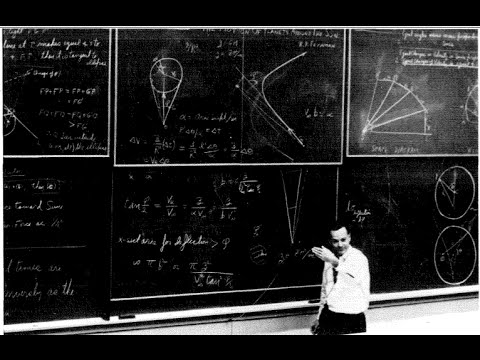
Feynman says the equal-areas result alone only tells you the force points toward the sun; it does not yet determine the orbit’s shape. To get the ellipse, he says you must use the inverse-square law, which he recasts as equal changes in velocity occurring in equal angles. From that, the rest of the geometric proof produces a circle in velocity space and then an ellipse in the orbit.
“All we've used so far is that the force is directed toward the center of the circle, toward the center of the sun. But it could be any force law whatsoever. So this law of equal areas only proves that the force is in the direction of the center. And therefore, no matter what you do, you'll never get the ellipse out of that because it could have been a different curve from a different force law. So we must insert the law inverse square somewhere. And the secret idea is that that's very simple to state. It means that equal change of velocity occur in equal angles. That's the inverse square law.”
Key takeaways
- Equal areas in equal times is not enough to determine the curve.
- Use the inverse-square law as a geometric statement about equal angle steps.
- A clean proof may require separating what each law actually gives you.
Context
In a 1964 Caltech lecture, Feynman is building a geometric proof of planetary motion under Newton’s inverse-square law. The quote above is taken word for word from the recording's transcript.
In the transcript
…in. Well, I don't know. This triangle is equal to that triangle. That's right. We've got that. We've got is this distance from this base. Mhm. To that point. That's right. That height. Yes. Has to be the same as that height. No. No. No. Because this length is not the same any longer as that length. But that's inversely. The velocities are inversely. I'll tell you why you can't.
All we've used so far is that the force is directed toward the center of the circle, toward the center of the sun. But it could be any force law whatsoever. So this law of equal areas only proves that the force is in the direction of the center. And therefore, no matter what you do, you'll never get the ellipse out of that because it could have been a different curve from a different force law. So we must insert the law inverse square somewhere. And the secret idea is that that's very simple to state. It means that equal change of velocity occur in equal angles. That's the inverse square law.
Areas law. No, the other way around. First, if you remember, I proved that the equal areas held by drawing those pictures. This one, that the areas were equal in equal times was the first thing I did. And I had no use whatever of the law of gravity yet except the force is toward the center. But you got the equal areas using the equal changes in velocity. No,…
Read the full transcript of Caltech freshman physics lecture, 1964
Topics
More questions about Richard Feynman
- What did Richard Feynman say about why magnets attract each other?
- What did Richard Feynman say about how far gravity extends?
- What did Richard Feynman say about quarks and gluons?
- How did Richard Feynman and Hans Bethe work together?
- Why did Richard Feynman choose gravitation as the example for his lecture?
- What did Richard Feynman say physics is really about?
All Richard Feynman answers · All Richard Feynman recordings
How this answer was made: the quote is checked word for word against the transcript of the recording and confirmed as the speaker's own words; the summary above it was drafted with AI from that transcript and quality-checked. Methodology and corrections.