Reid Hoffman on Social Media Responsibility
Reid Hoffman sees social media responsibility as the duty of powerful platforms to improve truth, trust, identity, and accountability while still building toward a more opportunity-rich future.
- Platforms are no longer scrappy outsiders; with power comes responsibility.
- The central problem is truth, trust, and discernment, not just addictive product features.
- He favors design solutions like identity, provenance, and accountability over simply rolling technology back.
- He remains optimistic about technology, but insists that optimism must be paired with active stewardship.
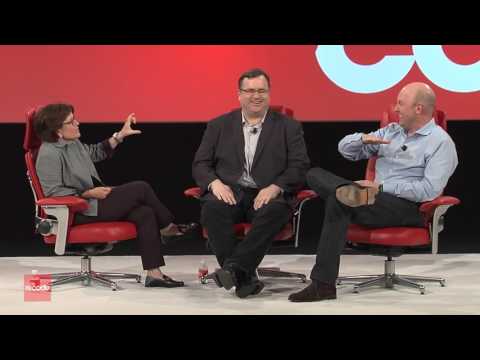
“And obviously, I am less focused at the moment on questions around autoplay or kind of equivalent, and I'm more focused on questions about like how do we get to discernment of truths and how do we get, like, you know, truth in the media, and what is this whole fake news and all, you know, facts and all that kind of stuff. And that is, I think, a much more deep issue that I'm focused on at the moment.”Code Conference panel interview, 2016 · 2:57
Platform power changes what social media companies owe the public
Hoffman’s basic shift is that major tech companies are no longer insurgents fighting incumbents; they have become incumbents themselves, and that changes their obligations. Once platforms shape how information moves and how people relate to one another, they cannot treat social consequences as someone else’s problem. He frames this as a power-and-responsibility issue: if a company helps structure public life, it has to step up to the responsibilities that come with that role.1
That also means social media responsibility is not just about avoiding scandal. It is about helping create the kind of society people actually want while continuing to invent the future, rather than pretending technology can stay politically neutral once it reaches massive scale.12
The core issue is truth and trust, not only engagement mechanics
Hoffman pushes attention toward a deeper problem than any single feature such as autoplay or other engagement tactics. His focus is on how societies maintain shared standards of truth, how people develop discernment, and how media ecosystems resist fake news and factual collapse. In his view, social media responsibility starts with rebuilding conditions under which people can tell what is true and what is not.3
He is especially clear that social media cannot drift into relativism. He rejects the idea that facts are simply tribal possessions and insists there is no legitimate category of made-up reality that should be accepted as equivalent to truth. That makes responsibility partly epistemic: platforms need to support a healthier information environment, not just maximize participation.43
“And obviously, I am less focused at the moment on questions around autoplay or kind of equivalent, and I'm more focused on questions about like how do we get to discernment of truths and how do we get, like, you know, truth in the media, and what is this whole fake news and all, you know, facts and all that kind of stuff. And that is, I think, a much more deep issue that I'm focused on at the moment.”Code Conference panel interview, 2016 · full transcript →
Responsibility should be built into identity, provenance, and accountability
Hoffman’s approach is usually to improve systems rather than retreat from them. On social media, that means addressing misinformation as a design problem: who is speaking, whether content has reliable provenance, and what accountability exists when information spreads at scale. His broader internet view emphasizes real identity and real relationships as foundational layers of a healthier online world.5
He also treats data quality as more important than raw volume. Information systems become more useful when they are semantically rich and tied to meaningful participation, not just flooded with undifferentiated content. That matters for responsibility because better context, better identity signals, and better structured data can help people navigate information more reliably.67
At the same time, he does not treat all information as equally sensitive. Responsible platform design has to distinguish among kinds of data and avoid ambushing users with uses they do not reasonably expect. That points to a practical ethic: more accountability and better data use, without collapsing everything into either total openness or total restriction.89
His answer is to steer technology forward, not reverse it
Hoffman is optimistic about technology, but he is not carefree about it. He expects major transitions to create pain, fear, and social disruption, yet he still thinks the right response is active guidance rather than nostalgia or stasis. In his framework, responsibility means taking the steering wheel and shaping systems toward better outcomes.1011
That is why he consistently argues for rolling forward rather than backward. The question is whether technology accelerates the right opportunities and builds toward the future, or whether it locks the future away. Social media responsibility therefore includes reforming harmful dynamics while preserving the internet’s ability to expand access, learning, and opportunity.132
Social media should widen opportunity, not deepen social despair
Hoffman does not separate platform responsibility from the broader social mood. He links public anger, zero-sum politics, and distrust to a lack of visible opportunity and a sense that people and their children are falling behind. That is one reason he resists purely punitive or restrictive responses: he thinks healthy technology should help people see pathways to progress.15
This also explains why he remains broadly positive about the internet. For people without elite schools, strong local networks, or rich informational environments, online platforms can still be a major upgrade. So the responsibility of social media is not only to reduce harms, but also to make good on its promise to spread knowledge, connection, and economic possibility more widely.15
Hoffman on social media responsibility, in his own words
“And obviously, I am less focused at the moment on questions around autoplay or kind of equivalent, and I'm more focused on questions about like how do we get to discernment of truths and how do we get, like, you know, truth in the media, and what is this whole fake news and all, you know, facts and all that kind of stuff. And that is, I think, a much more deep issue that I'm focused on at the moment.”
“I don't think there is any such thing as an alternative fact.”
Where to watch
 Reid Hoffman on Technology and Politics: Silicon Valley’s Responsibility2023 · 91 min · full transcriptBest single discussion of why powerful tech platforms now have incumbent-level social responsibilities around politics, trust, and misinformation.
 Reid Hoffman on Social Media Responsibility: Truth, Trust, and Jobs2016 · 49 min · full transcriptBest for Hoffman’s direct views on truth, trust, fake news, and what social media companies owe public discourse.
 Reid Hoffman on AI and Optimism: What Could Go Right2024 · 131 min · full transcriptBest for understanding his broader ethic of optimism with responsibility and why he prefers steering technology to stopping it.
 Reid Hoffman on Data and Web 3.0: The Future Is Soon and Stranger2011 · 57 min · full transcriptBest for his views on data sensitivity, user expectations, and the risks of overload and false certainty online.
 Reid Hoffman on Data and Web 3: Why Participation Matters2017 · 30 min · full transcriptBest for his thinking on real identity, real relationships, and semantically rich participation as building blocks for healthier platforms.
Questions people ask
- What did Reid Hoffman say about tech companies' responsibility after becoming incumbents?
- What did Reid Hoffman say is the deeper problem with social media and fake news?
- What did Reid Hoffman say is the real problem with jobs and politics?
- What did Reid Hoffman say about technology, opportunity, and the social responsibility of tech companies?
Sources
Every quote above, word for word from the transcripts. Numbers match the text.
“And so, you know, one of the things I've been saying over the last year has been that we need to kind of get to Spider-Man ethics, which is "With power comes responsibility." We're now in a position where we have the incumbency and power, and we need to step up to that responsibility, and we need to figure out what that right dialogue is for what is a society that we all want so that, in terms of inventing the future, there's a conversation about it. I think that's broadly, you know, what I think the Valley has learned. There's, you know, different differential levels along that curve, there's differential levels of response.”
“The key thing you have to look at is does it accelerate the right kind of opportunities and futures and innovation and build towards the future, or does it lock away the future?”
“And obviously, I am less focused at the moment on questions around autoplay or kind of equivalent, and I'm more focused on questions about like how do we get to discernment of truths and how do we get, like, you know, truth in the media, and what is this whole fake news and all, you know, facts and all that kind of stuff. And that is, I think, a much more deep issue that I'm focused on at the moment.”
“I don't think there is any such thing as an alternative fact.”
“…everyone's going to be online, everyone's going to have the real identity, everyone's going to have the real relationships…”
“…it's not just big data, it's semantically rich…”
“…you have to be members first…”
“Not all data is created equal.”
“It is sooner and stranger than we think.”
“I remain, you know, kind of optimistic but not utopian in the technological possibilities.”
“The future will be magical, transition will be very painful.”
“We should always roll forward the clock…”
“We don't have enough change. We don't have enough change. We don't have enough creation of new jobs. We don't have the creation of new opportunities, which is what, in my view, goes right back to the politics. It's what leads to zero-sum politics. The reason our politics is going sideways is not because there's too much change, because there's not enough change. Because people don't see a future. Because they don't see anything changing. And I think you see the zero-sum politics. You see that sense on both the left, right, with you on the Bernie lap and on the Trump right. I think that's the problem. The way through that is not to slow down. The way through that is to speed up, right? The way through that is more change, more growth, more opportunity, right? That's the path forward.”
How this guide was made: drafted with AI from the full transcripts of the recordings cited, then checked: every quotation must match a transcript word for word and be the speaker's own words, and an independent review gates accuracy. Methodology and corrections.
