What did Neil deGrasse Tyson say about blame, praise, and meritocracy?
Tyson says that if free will is an illusion, then blame and punishment make no sense, but praise and reward do not either. He extends that logic to meritocracy, criminal justice, and even hatred, which he compares to hating an earthquake. He admits the mindset is hard to live in continuously, but says it follows from his view of causation.
“And blame and punishment make no sense. Praise and reward make no sense. Meritocracies make no sense. Criminal justice makes no sense. Feeling like you have earned anything makes no sense. Hating somebody makes as little sense as hating an earthquake. All of that—that’s the only logical point you can get to. And I’ve been thinking this way since I was 14, and I can actually function this way about three minutes every other month because it’s incredibly hard.”
Key takeaways
- Question systems built on individual blame alone.
- Recognize that praise and merit can also rest on luck and circumstance.
- Apply the same causal thinking to both success and failure.
Context
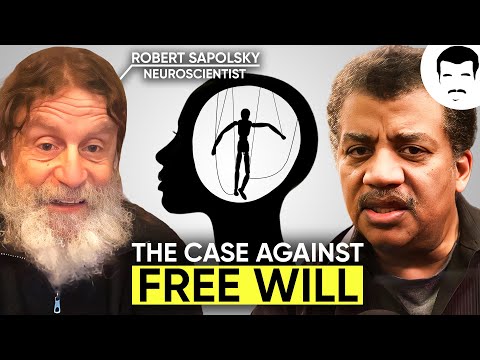
Still discussing the implications of Sapolsky’s free-will argument, Tyson pushes the logic into ethics and social judgment. The quote above is taken word for word from the recording's transcript.
In the transcript
…you're really going to test it, you've got to see if somebody's willing to feel compassionate about how Donald Trump became the person who he is, because it's the same issue there. I mean, if you really think this out, you mean being the best of the best, of the absolute best, how did this happen? I don't know. I believe God chose me. Wow, that's scary. That's really good.
And blame and punishment make no sense. Praise and reward make no sense. Meritocracies make no sense. Criminal justice makes no sense. Feeling like you have earned anything makes no sense. Hating somebody makes as little sense as hating an earthquake. All of that—that’s the only logical point you can get to. And I’ve been thinking this way since I was 14, and I can actually function this way about three minutes every other month because it’s incredibly hard.
Now, I subtracted respons—that the old days—that that was not the case. Right? Right, exactly. And when you and I—Chuck, you appeared to be too much of a young for this, but Neil, when we were both young, if—you know, when we were in elementary school—if you had kids sitting next to you who just were not learning how to read and they just weren’t paying attention, and you know…
Read the full transcript of StarTalk interview with Robert Sapolsky, 2021
Topics
What others said about philosophy
More questions about Neil deGrasse Tyson
- What did Neil deGrasse Tyson say about intelligence and our place in the universe?
- How does Neil deGrasse Tyson think people should handle new tasks at work?
- What did Neil deGrasse Tyson say about energy competition and oil?
- What did Neil deGrasse Tyson say about science and the economy?
- What did Neil deGrasse Tyson say about science denial?
- What did Neil deGrasse Tyson say about a black hole discovery that seemed impossible?
All Neil deGrasse Tyson answers · All Neil deGrasse Tyson recordings
How this answer was made: the quote is checked word for word against the transcript of the recording and confirmed as the speaker's own words; the summary above it was drafted with AI from that transcript and quality-checked. Methodology and corrections.