Think in Decades
Learn why Bezos separates short-term noise from long-term value.

“In the short run, the stock market is a voting machine. In the long run, it's a weighing machine.”Economic Club of Washington interview, 2018 · 0:54
The lesson
Bezos treats long-term thinking as a practical advantage, not a vague virtue. His view is that many important problems become solvable only when you extend the time horizon beyond the next quarter or even the next five years, which is why he urges institutions to think in ten-, fifteen-, and twenty-year spans instead of reacting to immediate pressure1. In this frame, short-term noise matters less than whether you are building something with real weight over time2.
That is why he resists letting markets define the work. He explicitly separates daily stock-price movement from the underlying value of a company and says leaders should not spend time managing to that daily signal23. If you anchor on long-term value instead, you can invest with more patience, avoid cosmetic decisions, and judge progress by whether the business is becoming stronger for customers.
For Bezos, the anchor for long-term thinking is not abstract growth but durable customer value. He repeatedly argues for customer obsession over competitor obsession, because competitors can distract you into imitation while customers keep revealing what still needs improvement456. A useful way to apply this is to ask what customers will still want ten years from now and build around those stable needs rather than around temporary industry fashion78.
This long view also changes how you place bets. Bezos emphasizes that big things usually begin small, so a Day 1 mindset means starting with modest beginnings while giving ideas enough time to compound910. It also means accepting that innovation can look wrong to outsiders for a while; if you are trying to invent, you must tolerate being misunderstood before the results are obvious11.
Finally, thinking in decades is tied to identity and decision quality. Bezos has made some of his biggest choices by projecting far into the future and asking what he would regret not attempting, which pushes him toward action on meaningful opportunities instead of safety in the present1314. His own example is that the longest-horizon projects can become the most important work, precisely because their payoff is too distant for short-term thinking to justify them15.
5 principles from Jeff Bezos
Ignore daily signals; build lasting value
Do not let volatile external feedback determine your priorities. Evaluate your work by whether it will matter and hold up over time, not by whether it wins a short-term popularity contest.
“In the short run, the stock market is a voting machine. In the long run, it's a weighing machine.”
Use stable customer needs as your time horizon
A long-term strategy gets clearer when you focus on what customers will continue to value for many years. Start from the customer and work backward instead of reacting to competitors or trends.
“…what's not going to change in the next 10 years…”
Start small and let compounding work
Big outcomes often begin with tiny teams, limited resources, and patient iteration. Protect early ideas long enough for capabilities, trust, and learning to accumulate.
“Day one. Everything I've ever done has started small.”
Expect long-term bets to be misunderstood
If you are inventing something genuinely new, outside observers may not understand it at first. Treat that friction as normal rather than as proof that the idea should be abandoned.
“…you have to be willing to be misunderstood…”
Choose with future regret in mind
When a decision is important and uncertain, imagine looking back on it decades from now. This helps you distinguish temporary fear from opportunities that are worth attempting.
“Most regrets, by the way, are acts of omission and not commission.”
Moments to watch
In his own words
The quotes behind the lesson, word for word from the transcripts. Numbers match the lesson above.
“Long term thinking is a giant lever. You can literally solve problems if you think long term that are impossible to solve if you think short term. And we aren't really good at thinking long term. As... You know, it's not really... You were kind of... You know, five years is a tough time frame for most institutions to think past. And we probably need to stretch that to ten years, and fifteen years, and twenty years, and twenty five years. And we'd do a better job for our children or our grandchildren if we could stretch those thinking horizons.”
“In the short run, the stock market is a voting machine. In the long run, it's a weighing machine.”
“Never spend any time thinking about the daily stock price. I don't.”
“…customer obsession as opposed to competitor obsession…”
“…customers are always dissatisfied. They always want more…”
“The number one thing that has made us successful by far is obsessive compulsive focus on the customer as opposed to obsession over the competitor. And I talk so often to other CEOs and some other CEOs and also founders and entrepreneurs. And I can tell that even though they're talking about customers, they're really focusing on competitors. And it is a huge advantage to any company if you can stay focused on your customer instead of your competitors. So then you have to identify who is your customer.”
“…what's not going to change in the next 10 years…”
“…start with the customer and work backwards…”
“Day one. Everything I've ever done has started small.”
“It's day one. Everything I've ever done has started small. Amazon started with a couple of people and, Blue Origin started with five people. And, the budget at Blue Origin was very, very small. Now the budget at Blue Origin approaches $1,000,000,000 a year. Next year, will be more than $1,000,000,000. So in Amazon, it literally was 10 people. Today, it's zero five million people, but you, it's hard to remember for you guys. But for me, it's like yesterday, I was driving the packages to the post office myself and, hoping one day we could afford a forklift. And so for me, I've seen small things get big and it's part of this day one mentality. I like treating things as if they're small. Amazon, even though it is a large company, I wanted to have the heart and spirit of a small one.”
“…you have to be willing to be misunderstood…”
“Most regrets, by the way, are acts of omission and not commission.”
“Was what I called—which only a nerd would call—a regret minimization framework. So I wanted to project myself forward to age 80 and say, okay, now I'm looking back on my life. I want to have minimized the number of regrets I have. And, you know, I knew that when I was 80 I was not going to regret having tried this. I was not going to regret having wanted, you know, trying to participate in this thing called the Internet, that I thought was going to be a really big deal. I knew that if I failed, I wouldn't.”
“But long term, the thing, if you take a really long run view, many decades, maybe even a couple of hundred years, I think the most important work that I'm doing, and I get increasing conviction on this with every passing year, is the work I'm doing at Blue Origin on space travel.”
Reflect
- What in your work gets too much attention because it is visible and immediate, even though it says little about long-term value?
- What are two customer needs in your field that are unlikely to change over the next ten years, and how would your priorities shift if you built around them?
- Which opportunity are you avoiding mainly because the payoff is distant or the path could be misunderstood, and how would it look through a regret-minimization lens?
Check your understanding
Go deeper
 Jeff Bezos on Leadership and Long-Term Thinking2018 · 71 min · full transcript
 Jeff Bezos on Leadership: Customer Obsession and Day One2018 · 56 min · full transcript
 Jeff Bezos on Customer-Centric Innovation: AWS, Flywheels, and Space2012 · 42 min · full transcript
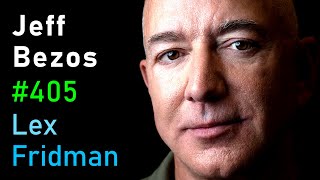 Jeff Bezos on Long-Term Thinking: Space, Decisions, and Mortality2023 · 132 min · full transcript
 Jeff Bezos on Regret Minimization: Why He Left Wall Street2001 · 48 min · full transcript
 Jeff Bezos on Customer Obsession: Leaning Into the Future2016 · 37 min · full transcript