Forecasting With Humility
Prepare for multiple outcomes instead of pretending to know the future.

“People prepare for possibilities and probabilities, not calling one course of action since I've never seen anyone call it. I want to point out the central banks 18 months ago were 100% dead wrong. Okay? So maybe there should be humility about financial forecasting. I—I would be quite cautious about what might happen next year.”FII Institute Board of Changemakers panel, World Economic Forum, 2023 · 17:32
The lesson
Dimon’s basic stance on forecasting is humility. He argues that leaders should prepare for a range of possibilities and probabilities instead of acting as if one future is certain, especially after major forecasters have recently been wrong1. That leads him to be cautious even when parts of the economy still look solid, because current strength does not remove the risk of a harder landing later23.
On rates and inflation, his focus is less on a single Fed move and more on the broader path of policy and prices. He downplays the importance of obsessing over a small rate change and emphasizes the bigger question: whether rates stay higher and whether inflation proves more persistent than markets expect43. He also warns that today’s environment could resemble more inflationary periods from the past, which is why he thinks people should be ready for both higher short-term and long-term rates and the recession risk that could follow5.
He connects that caution to deficits, geopolitics, and market complacency. Across these conversations, Dimon repeatedly points to war, the free Western world, and even nuclear risk as issues investors may be underweighting, while also arguing that fiscal deficits and other structural forces can keep the backdrop inflationary and unstable67. His point is not that disaster is certain, but that it is foolish to ignore serious risks simply because markets are calm or consensus expects a soft landing81.
At the same time, Dimon’s humility is not pessimism. He stays optimistic about long-run productive forces such as technology, science, and human resilience, while warning that the payoff rarely arrives on the timetable people expect91011. This is the practical balance of his approach: stay open to upside, but build plans that can survive unpleasant surprises.
That mindset also shapes how he thinks about positioning. He is skeptical of long-dated government bonds in this environment, reflecting his view that inflation and rate risks are not fully resolved and that the reward may not justify the exposure12. More broadly, his message is that good judgment comes from stress-testing assumptions, not from sounding certain.
4 principles from Jamie Dimon
Forecast in ranges, not certainties
Do not anchor your plan to one macro outcome. Build for several plausible paths, especially when recent expert consensus has already proved unreliable.
“People prepare for possibilities and probabilities, not calling one course of action since I've never seen anyone call it. I want to point out the central banks 18 months ago were 100% dead wrong. Okay? So maybe there should be humility about financial forecasting. I—I would be quite cautious about what might happen next year.”
Focus on the whole rate path
A small move in rates matters less than the larger direction of policy, inflation, and financing conditions. Ask what happens if rates stay higher for longer, not just what happens at the next meeting.
“I don't think it makes a piece of difference whether a rate goes up 25 basis points or more.”
Treat geopolitics and deficits as market risks
Political conflict, war, and fiscal imbalances are not side topics; they can shape inflation, confidence, and recession odds. Include them in business and investment scenarios even when markets seem relaxed.
“I just would put on your table the most serious thing facing mankind is nuclear proliferation.”
Stay optimistic without trusting the timeline
Long-run advances like AI can create major value, but the path will be uneven and slower than enthusiasts expect. Separate belief in the destination from confidence about the schedule.
“Will it in total pay off? Probably, just like the internet did.”
In his own words
The quotes behind the lesson, word for word from the transcripts. Numbers match the lesson above.
“People prepare for possibilities and probabilities, not calling one course of action since I've never seen anyone call it. I want to point out the central banks 18 months ago were 100% dead wrong. Okay? So maybe there should be humility about financial forecasting. I—I would be quite cautious about what might happen next year.”
“…the consumer's in pretty good shape right now…”
“I'm a little more worried that it may not be so soft and inflation may not quite go away…”
“I don't think it makes a piece of difference whether a rate goes up 25 basis points or more.”
“It looks a little bit more like the seventies to me…”
“I just would put on your table the most serious thing facing mankind is nuclear proliferation.”
“I would add to that the free Western world, 'cause that's what worries me the most…”
“I think you—you'd be foolish not to look at some of these things taking place today…”
“I am powerfully optimistic about how technology is going to be rapidly shape our world.”
“Will it in total pay off? Probably, just like the internet did.”
“Will it pay off the way you expect on the time table you expect? Definitely not.”
“Personally, no. I would not be a buyer.”
Reflect
- Where in your work are you acting as if one forecast is certain instead of preparing for multiple outcomes?
- If rates, inflation, or geopolitical tensions stayed worse for longer than expected, what part of your plan would break first?
- What opportunity do you believe in over the long run, and how would you pursue it more carefully if the timeline slips?
Check your understanding
Go deeper
 Jamie Dimon on Global Economy Outlook: Cautious on Rates, War, and Inflation2023 · 71 min · full transcript
 Jamie Dimon on Economy, AI & Risk: Bonds, Geopolitics and Leadership2024 · 61 min · full transcript
 Jamie Dimon on Recession Risk: Geopolitics, Rates, and Banking2023 · 68 min · full transcript
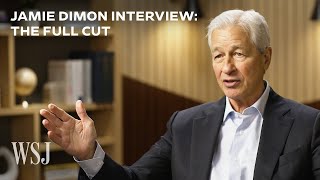 Jamie Dimon on Economy and Geopolitics: Inflation, War, and AI2021 · 38 min · full transcript
 Jamie Dimon on Global Growth And Banking: Trade, Tech, and Talent2018 · 18 min · full transcript