Credit and Distress
Why Marks favors contractual returns, downside control, and panic-created bargains.
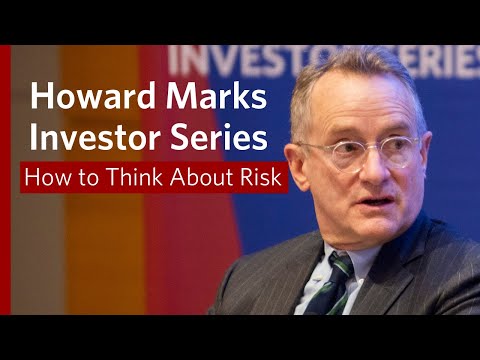
“If you're a stock owner, there is nothing contractual because the company brings in its revenues, pays off its suppliers, pays off its -- the tax authorities, pays off the pension fund, pays off the workers, pays off the bondholders, the holders of the preferred stock. And as a shareholder, you share in whatever's left. Maybe a big number, maybe a small number, could be a negative number. There is no contract. You have no right to anything other than your proportionate share of the residual, whatever it might be. So you have to understand the nature of the payoff table. And you know, I talked about the asymmetry. And what you want is a portfolio of stocks where you can make a lot under favorable circumstances but not lose much under negative circumstances.”Wharton School Investor Series conversation, 2021 · 1:24:43
The lesson
Marks’s case for credit starts with the shape of the payoff. In equities, the shareholder gets whatever is left after everyone else is paid, so the outcome is residual and highly uncertain; in credit, the return is more contractual and less dependent on extraordinary upside1. That fits his broader investing preference for controlled risk rather than reliance on a few huge winners23.
This is why downside control matters so much in credit. Marks argues that in lending, strong results can come simply from making loans that do not default, which means the job is often less about brilliance on the upside and more about avoiding permanent loss43. He also describes buying senior claims with a large cushion beneath them, so that a business can disappoint badly and the investor can still come out okay; that is value investing expressed through the capital structure and margin of safety56.
Distress appears when psychology swings from confidence to fear. Marks says cycles are driven by excesses and corrections, and in credit markets that often shows up as abundant lending followed by retrenchment when lenders become scared7. Because investor psychology tends to overshoot, markets can move from confidence to despair more dramatically than the underlying fundamentals alone would justify89.
When the credit window closes, businesses that depended on easy refinancing can suddenly face trouble, even if they were financeable only months earlier. That is when distressed debt and rescue financing opportunities emerge: not because the future is certain, but because forced selling, scarce capital, and extreme pessimism can push prices below reasonable estimates of value610. The edge comes from having capital and nerve when others do not, not from calling the exact turning point11.
So the practical stance is to prepare, not predict. Marks emphasizes that investors cannot know the future precisely, but they can understand where they are in the cycle, insist on price discipline, and be ready to act when bargains appear13. In credit and distress, that means building portfolios around contractual claims, conservative assumptions, and patience for the moments when panic creates unusually favorable terms14.
5 principles from Howard Marks
Prefer payoff structures you can understand
Credit appeals to Marks because its returns are more contractual than equities, where owners only receive the residual after everyone else is paid. When choosing investments, pay close attention to where you sit in the payoff stack and how much of the outcome depends on optimistic assumptions.
“If you're a stock owner, there is nothing contractual because the company brings in its revenues, pays off its suppliers, pays off its -- the tax authorities, pays off the pension fund, pays off the workers, pays off the bondholders, the holders of the preferred stock. And as a shareholder, you share in whatever's left. Maybe a big number, maybe a small number, could be a negative number. There is no contract. You have no right to anything other than your proportionate share of the residual, whatever it might be. So you have to understand the nature of the payoff table. And you know, I talked about the asymmetry. And what you want is a portfolio of stocks where you can make a lot under favorable circumstances but not lose much under negative circumstances.”
Win by avoiding losers
In credit, you do not need spectacular upside if the loans perform and avoid default. Apply this by focusing first on what could cause permanent loss and whether the structure gives you enough protection if things go wrong.
“…avoiding the losers is good enough.”
Use margin of safety through seniority and price
Marks describes buying senior debt at prices that still work even if the business value falls sharply. In practice, combine claim seniority with a cheap enough purchase price so that being somewhat wrong does not become fatal.
“And, given our predilection, we were buying the senior most debt of these companies. So, in order for the senior most debt holders to lose money, all the equity has to disappear. And all the junior classes of debt have to go unpaid. And if it gets bad enough, then the senior creditors start losing money. And we were buying the senior most debt of these companies at prices such that if these companies ended up being worth a third, or a quarter, or a fifth of what these great buyout firms had bought them for a year or two ago, we would be OK.”
Expect the credit window to close
Easy financing conditions do not last forever; cycles are shaped by excess and correction, and lender confidence can reverse abruptly. If a company or portfolio depends on refinancing, ask what happens when markets stop cooperating.
“I've been studying cycles for almost 60 years now, living through cycles. And I said to myself, just why do we have cycles? Why doesn't GDP, if the average growth in GDP is two, why isn't it always two? Why is it three or four or one or zero or minus one? Uh, and the answer is excesses and corrections. And then you go to a negative which is an excess and then it corrects back to the trend line. So, rather than thinking of cycles as, as ups and downs, which I think most people do, think of them as excesses and corrections, excesses and corrections.”
Buy distress when price is cheap, not when the bottom is obvious
Marks rejects waiting for certainty about the bottom because that certainty never arrives in time. The better discipline is to act when value is compelling and psychology is extreme, while accepting that prices may still fall after you buy.
“So I think one of the dumbest things you can do in the investment business is to say, I'm going to wait for the bottom, because logically and practically, you'll never know. And so the only basis for buying is that things are cheap. You can tell when things are cheap. You can't tell when the day has been reached that it's never going to go down anymore.”
In his own words
The quotes behind the lesson, word for word from the transcripts. Numbers match the lesson above.
“If you're a stock owner, there is nothing contractual because the company brings in its revenues, pays off its suppliers, pays off its -- the tax authorities, pays off the pension fund, pays off the workers, pays off the bondholders, the holders of the preferred stock. And as a shareholder, you share in whatever's left. Maybe a big number, maybe a small number, could be a negative number. There is no contract. You have no right to anything other than your proportionate share of the residual, whatever it might be. So you have to understand the nature of the payoff table. And you know, I talked about the asymmetry. And what you want is a portfolio of stocks where you can make a lot under favorable circumstances but not lose much under negative circumstances.”
“…the most important thing is controlling risk…”
“I just don't have to hit any losers. So Charlie Ellis took this idea to investing. Should you go for winners or should you try to avoid hitting losers? And that appealed to me. And, given my chicken nature, I said, well, I can win by not hitting losers. And so, now, Oaktree, my company, invests primarily in credit. You make a bunch of loans. If you can make a bunch of loans without having any that default, you'll get the return you were after. So that's a good formula in credit, or in fixed income, or in debt, or bonds, whatever you want to call it. It's not a good formula in venture capital or even in equities-- or maybe in real estate.”
“…avoiding the losers is good enough.”
“And, given our predilection, we were buying the senior most debt of these companies. So, in order for the senior most debt holders to lose money, all the equity has to disappear. And all the junior classes of debt have to go unpaid. And if it gets bad enough, then the senior creditors start losing money. And we were buying the senior most debt of these companies at prices such that if these companies ended up being worth a third, or a quarter, or a fifth of what these great buyout firms had bought them for a year or two ago, we would be OK.”
“There's only one intelligent form of investing, and that's to figure out what something's worth and try to buy it for less.”
“I've been studying cycles for almost 60 years now, living through cycles. And I said to myself, just why do we have cycles? Why doesn't GDP, if the average growth in GDP is two, why isn't it always two? Why is it three or four or one or zero or minus one? Uh, and the answer is excesses and corrections. And then you go to a negative which is an excess and then it corrects back to the trend line. So, rather than thinking of cycles as, as ups and downs, which I think most people do, think of them as excesses and corrections, excesses and corrections.”
“…psychology tends to go to excess…”
“…in real life, things fluctuate between pretty good and not so hot. But in the minds of investors, they go from flawless to hopeless.”
“It's not what you buy, it's what you pay that counts.”
“So I think one of the dumbest things you can do in the investment business is to say, I'm going to wait for the bottom, because logically and practically, you'll never know. And so the only basis for buying is that things are cheap. You can tell when things are cheap. You can't tell when the day has been reached that it's never going to go down anymore.”
“…we never know where we're going, but we're sure as hell ought to know where we are…”
“So we want to take advantage of cycles. We believe there will be cycles. We don't know when, right? This is really the fact of life that we accept we live within. We fashion our behavior to meet. The market is not an accommodating machine. Peter Bernstein once told me it will not give you high returns because you need them, and it will not give you a cycle because you have a lot of money.”
Reflect
- Where in your work or investing do you currently rely on upside going right, rather than structuring things so losses are limited even if conditions worsen?
- Think of a company, project, or personal plan that depends on refinancing or continued outside support. What happens if that support suddenly disappears?
- How would your decisions change if you stopped trying to identify the exact bottom and focused instead on whether the odds and price were good enough?
Check your understanding
Go deeper
 Howard Marks on Cycles and Risk: Prepare, Don’t Predict2026 · 103 min · full transcript
 Howard Marks on Risk Control: Avoiding Losers and Buying Cheap2024 · 41 min · full transcript
 Howard Marks on Market Cycles: Credit Windows and Opportunity2017 · 15 min · full transcript
 Howard Marks on Investing Cycles: Emotion, Value, and Patience2018 · 55 min · full transcript
 Howard Marks on Market Cycles: Risk, Probabilities, and Timing2012 · 24 min · full transcript