Elon Musk on Government Waste
Musk sees government waste as a systems problem: weak controls, broken feedback loops, and bureaucracy that spends without real accountability.
- He treats government waste as a structural failure, not just a few bad programs.
- His main fix is direct visibility into payment systems and tighter financial controls.
- He argues bureaucracy weakens democracy when elected leaders cannot steer spending.
- He links overspending to national solvency risk and inflation.
- He says the problem is broad, with waste from incompetence and some fraud mixed in.

Government waste is, in Musk’s view, deeper and broader than most people think
Musk’s basic position is that federal waste is not a marginal issue around the edges of government. He presents it as a large operating problem embedded in the way agencies function, with more disorder and leakage than outsiders assume.1
He describes the problem as pervasive rather than isolated to one office or one budget line. That is why he talks about many possible targets for cuts and controls, instead of a single villain or single reform.2
“It is worse than I expected…”Verdict Ep. 214, 2025 · full transcript →
The real leverage is in the payment systems, not in speeches or reports
A central part of Musk’s argument is that you cannot understand waste from high-level summaries alone. He says reform requires access to the actual computer systems and payment flows that move money through government.3
This is why he focuses on things like missing codes, unreconciled payments, unused licenses, duplicate cards, and accounts that keep paying after they should have stopped. His point is that waste survives when the machinery of spending is opaque and weakly monitored.4
He frames this as a controls problem: if money can leave without clear categorization, explanation, or enforcement of do-not-pay rules, the system is inviting abuse and error.4
“I call a Magic Money computer any computer which can just…”Verdict Ep. 214, 2025 · full transcript →
Waste persists because bureaucracy has weak feedback and weak accountability
Musk connects waste to a larger constitutional and managerial point. He argues that when permanent bureaucracy effectively decides how government operates, voters lose the ability to influence outcomes through elected leaders.56
In his framing, the key reform is to close the feedback loop between the public, elected officials, and the agencies that spend money. Without that loop, bad spending habits can continue even when voters want change.6
This is why he talks about government waste as more than an accounting issue. For him it is also a democracy issue, because spending decisions become insulated from normal political correction.56
He sees overspending as economically dangerous, not merely inefficient
Musk does not present waste as a technical cleanup project alone. He argues that continued overspending threatens the country’s financial stability and raises the cost of living through inflation.7
That is why he treats spending discipline as urgent. In his view, sensible spending belongs alongside other basic state functions like secure borders and safe cities, because the government cannot perform well if its finances are uncontrolled.8
His broad economic claim is straightforward: if overspending is not fixed, the public pays through weaker finances and higher prices.7
His practical standard is simple: add visibility, enforce rules, and stop blank-check spending
Across these discussions, Musk’s standard for good government is not abstract. He wants more insight into how systems work, clearer rules, and real enforcement against improper payments.4
That logic shows up even outside spending. He often argues that having some oversight and transparency is better than running important systems blindly. Applied to government waste, that means seeing where money goes, making responsibility clear, and shutting down pathways that keep paying without proper checks.3
So his larger message on government waste is that reform starts with operational truth: find the actual money flows, expose the failures, and restore accountability before the damage compounds.16

“It's like just a massive number of blank checks just flying out the building.”Oval Office remarks with President Trump, 2025 · full transcript →
Musk on government waste, in his own words
“It is worse than I expected…”
“I call a Magic Money computer any computer which can just…”
“It's like just a massive number of blank checks just flying out the building.”
Where to watch
 Elon Musk on Government Waste: Fraud, Bureaucracy, and DOGE2025 · 191 min · full transcriptBest full statement of his case that federal spending is opaque, wasteful, and in need of DOGE-style accountability.
 Elon Musk on Government Waste and Fraud: The Matrix of Spending2025 · 32 min · full transcriptBest for understanding his systems view: payment databases, weak controls, and where waste hides.
 Elon Musk on Government Waste & Bureaucracy: Close the Feedback Loop2025 · 30 min · full transcriptBest for his argument that waste is tied to bureaucracy and broken democratic feedback loops.
 Elon Musk on Border Security and Government Spending: Trump Live Conversation2024 · 178 min · full transcriptBest for his macroeconomic claim that government overspending drives inflation and falling living standards.
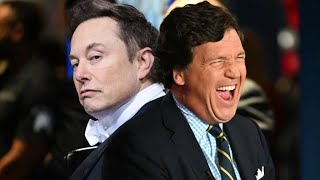 Elon Musk on AI Safety and Free Speech: We Need Insight, Not Nothing2023 · 96 min · full transcriptUseful for the broader principle behind his approach: some oversight and transparency are better than operating blindly.
Questions people ask
Sources
Every quote above, word for word from the transcripts. Numbers match the text.
“It is worse than I expected…”
“…the walls, the roof, and the floor are all targets…”
“I call a Magic Money computer any computer which can just…”
“It's like just a massive number of blank checks just flying out the building.”
“…if the bureaucracy is in charge, and then, then what meaning does democracy actually have…”
“So it's incredibly important that we close that feedback loop…”
“If you solve government overspending, you solve inflation…”
“We've got to have safe cities. We've got to have secure borders. We've got to have sensible spending.”
How this guide was made: drafted with AI from the full transcripts of the recordings cited, then checked: every quotation must match a transcript word for word and be the speaker's own words, and an independent review gates accuracy. Methodology and corrections.