Elon Musk on SpaceX & Rockets
Musk sees SpaceX as the practical effort to make humanity multiplanetary by driving launch costs down through rapid, full rocket reusability and operational scale.
- The main breakthrough is a rapidly and fully reusable orbital rocket.
- The real barrier to Mars is not desire but the cost of access to space.
- Starship matters because it is meant to carry large numbers of people and cargo, not just fly symbolic missions.
- SpaceX’s deeper purpose is to make life sustainably multi-planetary while the opportunity exists.
- Rocket progress depends on first-principles engineering and relentless simplification of design and manufacturing.
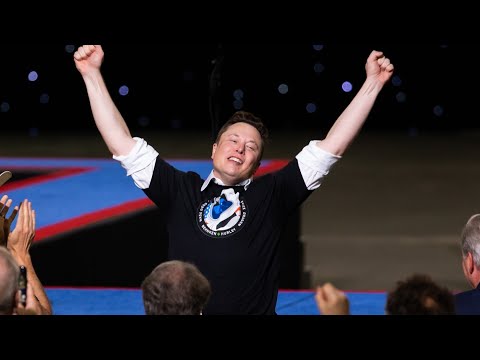
“We must make life sustainably multi-planetary…”NASA / SpaceX Demo-2 post-launch press conference, Kennedy Space Center, 2020 · 26:08
SpaceX is about making humanity multiplanetary
Musk frames SpaceX as more than a launch company. In his view, the point is to help humanity become a spacefaring, multi-planet species, with Mars as the first serious destination for a self-sustaining civilization.12
He gives two kinds of reasons for this goal. One is resilience: spreading life beyond Earth reduces the risk that consciousness ends with a single-planet failure. The other is inspiration: the future should include ambitious projects that pull people forward.345
That is why he talks less about planting flags and more about building a civilization on Mars. For him, success means a durable city with the capacity to keep growing, not a few prestige missions.678
“We must make life sustainably multi-planetary…”NASA / SpaceX Demo-2 post-launch press conference, Kennedy Space Center, 2020 · full transcript →
Reusability is the economic breakthrough that changes everything
Musk’s core idea about rockets is simple: space access stays limited until rockets can be reused quickly and completely. He treats reusability as the decisive breakthrough because expendable rockets throw away most of the value on every flight.91011
He explains the economics in blunt terms. If major rocket hardware is lost after each mission, launch remains inherently expensive; if that hardware flies again and again, cost can fall dramatically. That is why booster recovery, fairing recovery, and eventually full system reuse are central rather than optional.1211
He often compares the goal to aviation. Space travel becomes transformative only when rockets operate more like aircraft: returned, inspected, refueled, and flown again at high cadence.1314
The hardest part of rocketry is physics plus operations
Musk insists that rocket development starts with physics, not convention. His first-principles view is that you ask what the laws of nature allow, then work backward from there instead of assuming current industry practice is the limit.15
That matters especially in orbit, where the real challenge is speed. He points out that orbital flight is counterintuitive because vehicles are moving sideways around Earth at extreme velocity, so recovery is not mainly about altitude but about managing enormous horizontal energy during return.16
He also emphasizes that building one impressive machine is not enough. Progress depends on deleting unnecessary parts and processes, finding simpler designs, and solving manufacturing bottlenecks, because the prototype is only the beginning.1718

“The thing that's little little sort of counterintuitive is that the space station is actually zooming around the Earth at 17,000 miles an hour.”Recode Code Conference interview, 2016 · full transcript →
Starship is the system meant to make Mars practical
Musk presents Starship as the vehicle architecture that could turn the multiplanetary goal into an actual transport system. Its job is not merely to reach orbit, but to do so in a way that scales to many flights, heavy payloads, and eventually large numbers of people.106
In his account, that requires several linked ideas at once: full reusability, rapid reuse, and orbital refilling. Orbital refilling matters because missions to the Moon, Mars, and beyond need much more energy than a single launch can efficiently provide if the ship is also expected to land and be reused.910
He also talks about Starship as a manufacturing project as much as a design project. The challenge is not just inventing engines and vehicles, but building them reliably at scale and turning the whole system into repeatable infrastructure.1920
Progress comes from proof, iteration, and making spaceflight routine
Musk’s tone on rockets mixes ambition with operational realism. He celebrates big milestones, but he repeatedly stresses that a single successful event is not the end state; the real test is whether missions can be repeated safely and become normal.2122
That is why Falcon landings, Falcon Heavy, Crew Dragon, and Starship all fit the same pattern in his thinking. Each one is a proof point that increases confidence in a larger architecture whose real value appears only when it becomes routine and scalable.232425
He also believes visible progress matters culturally. Dramatic launches and recoveries do engineering work, but they also create public excitement and support for a future in which exploration expands again.262728
“…we need to bring them back safely, and we need to repeat these missions and have this be a regular occurrence…”NASA / SpaceX Demo-2 post-launch press conference, Kennedy Space Center, 2020 · full transcript →
Musk on spacex & rockets, in his own words
“…reusability, I think, is absolutely fundamental to a breakthrough in access to orbit and beyond…”
“…the fundamental issue is actually the cost of access to space…”
“We must make life sustainably multi-planetary…”
Where to watch
 Elon Musk on Starship and Mars: Making Life Multiplanetary2022 · 123 min · full transcriptBest single overview of why Starship exists, why reusability is the key breakthrough, and how it connects to Mars.
 Elon Musk on Starship and Mars: Making Space Travel Reusable2019 · 122 min · full transcriptMost detailed explanation of Starship as a reusable transport system, including the air-travel analogy and orbital refueling.
 Elon Musk on Mars Colonization: Making Humans Multiplanetary2016 · 96 min · full transcriptBest for understanding Musk’s Mars strategy as a city-building and cost-reduction problem, not just a mission plan.
 Elon Musk on SpaceX, Tesla and AI: Mars, autonomy, and risk2016 · 84 min · full transcriptClear, accessible explanation of why orbital recovery is hard and why reusing rocket hardware matters economically.
 Elon Musk on SpaceX Reusability and Mars: Making Space Accessible2017 · 56 min · full transcriptStrong summary of why reusability changes access to orbit and how SpaceX sees itself as transportation infrastructure.
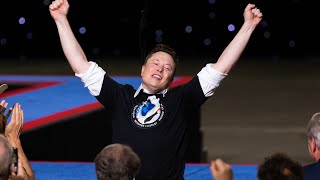 Elon Musk on Crew Dragon Launch: We’ve Made History Again2020 · 56 min · full transcriptShows how Musk connects near-term crew missions to the longer arc of regular human spaceflight and Mars.
Questions people ask
Sources
Every quote above, word for word from the transcripts. Numbers match the text.
“…become a spacefaring civilization and a multi-planet species…”
“We must make life sustainably multi-planetary…”
“…we should become a multi-planet civilization while that window is open…”
“Well, I think the thing about Mars is that I think it's important for us to take the set of actions that are most likely to continue consciousness into the future? What increases the probability of consciousness of of of continuing into the future? I think we should not take it for granted that consciousness will continue because we have not encountered any aliens. Where are the aliens? This is the Fermi Paradox. This is one of the most important questions. How come we've not found any aliens? There's people out there who think we've found aliens. Trust me. I would know. We have not. Okay. People ask me, you've to Area 51. Okay. Please. SpaceX actually has Area 59. It's even better. Eight better than 51. Among So the set of actions we can take that are likely to increase the scope and scale of consciousness such that we are better able to understand the nature of the universe, one of those actions is to become a multi planet species or ensure that life is multi planetary.”
“…life can't just be about solving problems.”
“I think what really matters is being able to transport large numbers of people and, ultimately, millions of tons of cargo to Mars.”
“…the fastest path to a self-sustaining city on Mars…”
“…this is hopefully the first step on a journey towards a civilization on Mars…”
“…the essential technology, the the holy grail breakthrough that's needed is a a rapid and completely reusable rocket system.”
“…the critical breakthrough that's necessary is a rapidly reusable orbital rocket…”
“…reusability, I think, is absolutely fundamental to a breakthrough in access to orbit and beyond…”
“Imagine there was a pallet of cash that was vomiting through the atmosphere…”
“…make space travel like air travel…”
“…the fundamental issue is actually the cost of access to space…”
“…physics is law and everything else is a recommendation.”
“The thing that's little little sort of counterintuitive is that the space station is actually zooming around the Earth at 17,000 miles an hour.”
“Everyone's wrong. No matter who you are, everyone's wrong some of the time. So make your requirements less dumb, then try very hard to delete the part or process. This is actually very important. If you're not occasionally adding things back in, you are not deleting enough. Right. The the bias tends to be very strongly towards in... Let's add this part of process step in case we need it. But you can you can basically make in case arguments for so many things. And for a rocket that is trying to achieve... Try to be the first fully reusable rocket. There's never been a fully reusable rocket. People don't understand. Like, this is, like, the holy grail of rocketry. Okay? And so you really need... You you have to run at tight margins because if you don't run tight margins, you're gonna get nothing to orbit.”
“I'm actually a chief engineer of SpaceX. So the... You know, I've signed off on pretty much all the design decisions. You know, so if if there's something that goes wrong with that vehicle, it's it's fundamentally my fault. You know? So, so I'm really just thinking about all the things that... Like, so so when I see the rocket, I see all the things that could go wrong and the things that could be better and the same with the Dragon spacecraft. It's, like, bad people say, oh, this is a spacecraft or a rocket, that's... This looks really cool. I'm like... I've I've, a readout of, this is the... These are these are the risks. These are the problems.”
“We're gonna get it done.”
“In the short term, Mars is really about getting a spaceship built. We're we're making good progress on this, on the on the ship and the booster, codenamed PFR. What is this tan for again? Well, it's like sort of a roar shy, yes, an acronym form. And it is very big, and I gave a presentation on this at the International Astronautical Congress in Australia last year. And that design is evolving rapidly. We're actually building that. That should, but that ship right now. The I think right now that like the biggest thing. That would be helpful is just general support and encouragement and a good goodwill. I think once we build it, there will be. Well, it will have a a point of proof, something that the companies and countries can then go and do, like they currently don't think it's possible. So if we show them that it is, then I think they will fill up their game, and they will build interplanetary transport vehicles as well.”
“…we need to bring them back safely, and we need to repeat these missions and have this be a regular occurrence…”
“I think we are entering a new era of space exploration…”
“I didn't really think this would work…”
“We want a new space race. Space races were exciting…”
“It's been 18 years working towards this goal…”
“…it looks so ridiculous and impossible, and you can tell it's real because it looks so fake…”
“I kind of like the absurdity of that…”
“I think this is something that should really get people, I mean right at the heart of anyone who has any spurt of exploration…”
How this guide was made: drafted with AI from the full transcripts of the recordings cited, then checked: every quotation must match a transcript word for word and be the speaker's own words, and an independent review gates accuracy. Methodology and corrections.


