Elon Musk on Starship and Mars: Making Life Multiplanetary

What Musk talks about
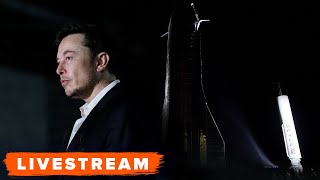
Elon Musk gave this Starship update presentation at SpaceX Starbase on February 10, 2022, outlining how rapid rocket reusability could enable Mars settlement, followed by a Q&A hosted by Tim Dodd of Everyday Astronaut.
Also known as: SpaceX Starship Update Event; Starbase update presentation; Starship update.
Musk frames Starship as the key to making life multiplanetary, arguing that a rapidly and fully reusable rocket is the essential breakthrough for reaching Mars and building a self-sustaining city there. He says the goal is both practical life insurance for civilization and an inspiring future for humanity.
He also walks through the technical case for Starship: orbital refilling, the heat shield, Super Heavy, Raptor 2, launch tower design, and the logic behind Starbase as a launch site. Throughout, he emphasizes how difficult the engineering is, while expressing confidence that SpaceX will get there.
The Q&A covers FAA review, launch cadence, point-to-point cargo transport, NASA’s lunar lander mission, and production scaling. Musk repeatedly returns to the idea that high flight rate and rapid reusability will transform space access and unlock missions to the Moon and Mars.
Musk speaks alongside a host/moderator, launch control narration, and audience Q&A from journalists and local attendees.
In his words
“Why make life multiplanetary?”
“Life can't just be about solving problems.”
“We need to seize the opportunity and do it as quickly as possible.”
“The essential technology, the the holy grail breakthrough that's needed is a a rapid and completely reusable rocket system.”
Key points
- Starship’s purpose is to make life multiplanetary and eventually help spread life beyond Earth.
- He gives two reasons for Mars: as a backup for life and as an inspiring, ambitious goal.
- Full and rapid reusability is the crucial technical breakthrough for cheap space access.
- Orbital refilling is essential for Mars missions and will require reliable docking and propellant transfer.
- Super Heavy and Starship are meant to deliver unprecedented mass to orbit and to Mars.
- Musk says Raptor 2 is simpler, more powerful, and cheaper than Raptor 1, but chamber cooling remains a major challenge.
- He says SpaceX expects a high production rate and sees little conflict between rapid reusability and NASA’s lunar schedule.
Full transcript: Elon Musk, Starship update presentation (2022)
Presenter / narrationFour and a half minutes. We are heading off to the LOX tank. We are beginning to flip to horizontal. And the white cloud, the plume you were seeing was intentional. There's a liquid oxygen dump. We've now transitioned to horizontal and beginning the subsonic test portion of the flight we check out the aft and the forward flaps to hold the vehicle stability as we descend back to the landing pad. We're down beneath one and a half kilometers. We're preparing to restart two engines, flip the vehicle vertical, and transition to one engine for the landing burn.
Countdown / control audioThree two one.
Control audioOne kilometer altitude.
Presenter / narrationJust past one minute in the flight. We're through two kilometers altitude. All three Raptor engines continuing to burn. Next major event in about one minute is we will turn off the first of the three Raptor engines. Just past two plus four minutes in the flight. We've got the views back from the Raptor engines. AT plus four minute thirty four seconds. While we are working
Presenter / control audioto regain video, it looks like we've got
Presenter / narrationa shot looking back at the flaps on Starship. We're in the horizontal defense to set phase now. We're passing six kilometers. A reminder, phase that's coming up as
Presenter / control audiowe get ready for landing, we
Presenter / narrationwill light three Raptor engines, flip the vehicle from horizontal to vertical. If things look good, we will shut down one Raptor engine and then possibly a second one and land on a single engine.
Launch control audioAnd we have ignition.
Presenter / narrationAnd Starbase flight control has confirmed. As you can see on the live video, we are down. The Starship has landed. We're going through the safing sequence in the flight computer right now. We'll be back in a moment. Four and a half minutes.
We are heading off to the LOX tank. We are beginning to flip the horizontal. And the white cloud, the plume you were seeing was intentional. There is a liquid oxygen dump. We've now transitioned to horizontal and beginning the subsonic test portion of the flight we check out the aft and the forward flaps to hold the vehicle stability as we descend back to the landing pad. We're down beneath one and a half kilometers. We're preparing to restart two engines, flip the vehicle vertical, and transition to one engine for the lightning burn.
Countdown / control audioThree two one. Ignition.
Control audioOne kilometer altitude.
Presenter / narrationJust past one minute in the flight. We're through two kilometers altitude. All three Raptor engines continuing to burn. Next major event in about one minute is we will turn off the first of the three Raptor engines. Just past two plus four minutes in the flight. We've got views back from the Raptor engines. In t plus four minute thirty four seconds. While we are working
Presenter / control audioto regain video, it looks
Presenter / narrationlike we've got a shot looking back at the flaps on Starship. We're in the horizontal descent to set phase now. We're passing six kilometers. A reminder, phase that's coming up as
Presenter / control audiowe get ready for landing, we
Presenter / narrationwill light three Raptor engines with the vehicle from horizontal to vertical. If things look good, we will shut down one Raptor engine and then possibly a second one and land on a single engine.
Launch control audioAnd we have ignition.
Presenter / narrationAnd Starbase flight control has confirmed. As you can see on the live video, we are down. The Starship has landed. We're going through the safing sequence in the flight computer right now. We'll be back in a moment. Four and a half minutes.
We are heading off to the LOX tank. We are beginning to flip the horizontal. And the white cloud, the plume you were seeing was intentional. There is a liquid oxygen dump. We've now transitioned to horizontal and beginning the subsonic test portion of the flight we check out the aft and the forward flaps to hold the vehicle stability as we descend back to the landing pad. We're down beneath one and a half kilometers. We're preparing to restart two engines, flip the vehicle vertical, and transition to one engine for the landing burn.
Countdown / control audioThree two
Control audioOne kilometer altitude.
Presenter / narrationJust past one minute in the flight. We're through two kilometers altitude. All three Raptor engines continuing to burn. Next major event, about one minute, is we will turn off the first of those three Raptor engines. Just past t plus four minutes in the flight.
Presenter / control audioWe've got the
Presenter / narrationviews back from the Raptor engines. In t plus four minute thirty four seconds. While we are working to
Presenter / control audioregain video, it looks like
Presenter / narrationwe've got a shot looking back at the flaps on Starship. We're in the horizontal descent descent phase now. We're passing six kilometers. A reminder, phase that's coming up
Presenter / control audioas we get ready for landing, we
Presenter / narrationwill light three Raptor engines, flip the vehicle from horizontal to vertical. If things look good, we will shut down one Raptor engine and then possibly a second one and land on a single engine.
Launch control audioAnd we have ignition.
Elon MuskHey. Alright. Welcome. Welcome. Welcome. Welcome. Welcome. Welcome to Starbase. So it's been, almost two years since our last update, and a lot has happened since then. By the way, I'm getting, a strange audio feedback. I don't know if... Do I sound okay to you guys? Okay. Great. So it's been two years, since we had our first, mark one rocket, and a lot has happened since then. We had to go through the progress, but I'm just, incredibly proud of the SpaceX team and, all the support that we received from Cameron County, from Brownsville, from, South Padre.
And if... I I know some of you in the audience, so thank you very much for your support. So, before we jump into the details of what, what's happened over the past two years, I think it's worth just, talking a bit about this. Like, like, why why are we doing this? You know, this, I mean, pretty epic, but but but what's the what's the sort of the sort of deep meaning behind this? Like, why build a giant reusable rocket? Why make life multiplanetary? And I think this is just an incredibly important thing for the future of life itself.
So... And there's there's there's there's both a... I I call it the the sort of the the the defensive reason or the life insurance reason. That... That's that's one part of it, which is that there's always some chance that something could go wrong on earth. You know, dinosaurs are not around anymore. So, you know, we could... There could be some calamity that we... Where we do ourselves in or there's just a... There's a natural disaster. Now I'm I'm naturally an optimist. So I I think the the probability of that is low, but it is not zero. And, and eventually, the sun will expand. It might take a few hundred million years, so don't hold your breath. But eventually, the sun will expand and destroy all life.
So for those who really care about not just the humans, but all the life on Earth, it is very important... Essential that over the long term that we become a multi planet species and ultimately even go beyond the solar system and bring life with us. And, you know, we we are life stewards, life's guardians that, you know, the the the creatures that we love cannot... They can't build spaceships, but we can, and we can bring them with us. And I think that's pretty important, you know, for for those that that care about the environment and and and care about all the creatures on Earth. So it's like the the the... I would say, like, the defensive or the life insurance reason for life collectively. But there's also, an inspiring reason, which is that life can't just be about solving problems. They have to be things that inspire you, that that move your heart, that make you glad to be...
When you wake up in the morning, you're excited about the future. And going out there and being a multi planet species and being a space sparing civilization and making science fiction, not fiction forever, I think that's one of those things. You know? I think we we we... That's just... It... That's what fires me up the most is, like, let's go out there and find out what this universe is all about. You know, are there other species out there? Maybe. You know, hopefully, that it's... I mean, we we... I I... We wanna go find out what the heck's going on. What is going on? I mean, where... You know, how do we get here? What's the meaning of life? 42. But what... Yeah. But what's the question? And, you know, if we go out there and we explore the the galaxy, ultimately, then we can find out some of these questions.
And it would just be very exciting to do that, and something we can all look forward to. And and even, you know, whether somebody chooses to go or not, I think, you know, vicariously, can all go there just like with Apollo where, you know, only a handful of people went to the moon. But in a sense, we all went there. Humanity went there. And, so even if somebody doesn't choose to go themselves, I think vicariously through through others, they they they will go, they will understand, they will experience the universe. And, I think that's incredibly fundamental to an exciting future, and that's that's why we're doing this. Yeah, now one of the rebuttals we'll sometimes hear is, like, sure, but what about all the problems on Earth?
And I completely agree that the vast majority of resources should be dedicated to solving problems on Earth. Absolutely. I'd say, like, more than 99% of our resources should be, oriented towards solving problems on Earth. It's... But it's... So it's important to note that, like, NASA's annual budget, it is only, point three per... Point 36% of the federal budget. And in fact, of the national GDP, it's less than a tenth of a percentage point. So it's like we're we're we're, you know, we're only spending point 1% of our resources on space. I think I think we... That's okay. You know, like, we... We'll be fine. You know? So just to, you know, just to make sure people don't think like, well, is he suggesting that we just spend everything on space? No. I'm suggesting, like, maybe half a percent or something like that.
We'll be okay. So... And then I think, you know, given the... This establishing security for life itself and and having an exciting future and inspiring, you know, kids, about about the future, I think it's it's it's worth it, basically. Yeah. So... Well, how do we do this? How do we, make life multi planetary? How do... What... What's the first step? And, the essential technology, the the holy grail breakthrough that's needed is a a rapid and completely reusable rocket system. So this has never been accomplished before. And a lot of people for the longest time thought this was not possible.
Now with Falcon nine, we've been able to show that, you can have reuse of a boost stage and reuse of a fairing. So with Falcon nine, we've demonstrated a lot of reuse of the boost stage and of the ferrying. We've had, over 100, reflights of of the fairing over... It's it's... I mean, of of the booster, I'm not sure of the fairing number, but it's a lot. And and that... That's a that's a big step in the right direction. With Starship, we're aiming for full and rapid reusability. So, you know, we obviously need to accomplish that. That's not, done yet. But but the success is one of the possible outcomes, which I always think is, when embarking on an endeavor, success should be at least one of the possible outcomes.
And this... For this design, I... That that is the case. So the... And we're aiming for rapid reusability, which is why the the booster is is going to take off and then fly back to the launch tower and, aspirationally, get, land on the arms, which, does sound insane, or, as, Borale would say, audacious. And... But I I... You know, if if if it does come in too fast and shear off the arms, then I guess it will be a farewell to arms. Sorry. Because the dad jokes, you know, I just have to warn you, they're only gonna get worse.
So, yeah. So, here, I'd really just like to congratulate the the SpaceX team, and and also, thank NASA, the FAA, the Space Force, and and everyone and and all of our customers that have have helped us get to this point. It's insanely hard to, get a rocket to orbit. Insanely difficult. I have huge respect for anyone who's who's gotten a rocket to orbit. It's it's so hard. And we've had a 144 successful launches, 106 landings. Yeah. I mean, I've... These days, I have to look on the Internet and say, how many landings have we had? I'll have to ask the Internet. 83 flight flight proven launches.
And although I have to say, still have, like, like, launch PTSD every time the the rocket takes off. Like, You know? I I just see all the ways that it could fail. Like... But, you know? And and then this this year, we're we're actually, aiming to have around 50 launches. So it's about a a launch per week on average. And, yeah. So it's hell of a year we got ahead of us. And it it... I... In terms of mass to orbit, if you look at, like, tonnage to orbit, the the... This this bar chart that we'll show here really illustrates how profound a rapidly reusable rocket, especially a big one, is what what effect that has on total tonnage to orbit.
So the the total mass to orbit to date of Earth is is around 15,000 tons, maybe 15, 16,000 tons. And the mass per Starship after a year, just one year of launching, if it launches three times a day, would be equal to all the mass of... To orbit of Earth to date. That's that's just one Starship launching three times a day for for a year. Now if you have, 10 Starships ish, then and we'll have more than that. Our goal is to be making at least one stack per month and then ultimately, potentially a ship every three days.
There'll be more ships than there are boosters because the the booster actually, even though it's gigantic, will come back in about six minutes. Excitement guaranteed. So it only takes about two minutes on ascent and then about four minutes to return. So, you'll know soon. The the the ship, has to complete at least one orbit around Earth and sometimes, maybe three orbits or or more, and each orbit is ninety minutes. So the ship, is probably, you know, reusable about every, six six to eight hours. That's, that's why we say sort of three times a day for the ship. And in theory, the the booster is capable of being, reused every hour. So the the the propellant pumps are designed to fill the rocket in, about half an hour.
So the... This really is designed for rapid reusability. So with... If you can do roughly a million tons to Earth orbit, that's comfortably over a 100,000 tons to the surface of Mars, maybe a 150,000 tons depending on how good the landing system is. So now you can only go to Mars every two years. So... And and I think maybe roughly you need about a million tons on Mars to have a a self sustaining city. The the critical threshold, I think, for Mars is to, have a city that is self sustaining. It's gonna be incredibly difficult to make a self sustaining city because if it's missing any ingredient any ingredient at all, however minor that ingredient is, then if the ships from Earth stop coming for any reason, the city will die out.
So the the the the critical threshold to pass one of the most important great filters for any species is to have have the the the other planet no longer dependent on on the original planet. So I don't know exactly what that tonnage is, but I suspect it is, at least, if one tries to get the right order of magnitude, about a million tons. Hopefully, it's not more than that. Starship is capable of doing that. It's capable of getting getting a million tons to the surface of Mars and creating a self sustaining city. And I think we should try to do that as soon as we can. The window of opportunity may be open for a long time, and I hope it is, but it may also be open for a short time.
And this is the first point in the four and a half billion year history of Earth that it has been possible. I mean, let that sink in. Or if there's a sink, let it in. Still knocking at the door. I mean, it's a sentient sink. Let's face it. Later, I mean, I mean... Four and a half billion years. Been a while. This is the first time it's been possible. We need to seize the opportunity and do it as quickly as possible. I mean, to be frank, civilization is feeling a little fragile these days. And like I said, I'm an optimist, but I think we got to protect the downside here and and and try to build that suit on Mars as soon as possible and secure the future of life.
And it's gonna be an incredibly exciting adventure. Now the the the sales pitch for for for going to Mars is that, it's gonna be cramped, dangerous, difficult, very hard work. You might die. And that's the sales pitch. I hope you like it. So far from being some sort of escape hatch, it will be extremely difficult and dangerous and and tough. Mars Mars is a fixer upper of a planet, and so it's it's gonna take some work to make it make it easy to live there. But one day we could make Mars a planet like Earth, and I think we should.
So just some facts about Starship. And these these numbers will evolve over time. So, the heights of the ship is about 50 meters, 164 feet. The nine meter or 30 foot diameter... Well, you can just see it, basically. It's got about 1,200 tons of of propellant on the the ship, and thrust is about 1,500 tons. Now these numbers will, you know, will probably add more propellant over time, increased thrust. Diameter will will stay the same. It's a huge, huge pain to change diameter. So that that'll tend to stay the same, but it'll probably get a little bit longer. And we're expecting a payload capacity of 100 to 150 tons depending on which orbit. So to a Starlink orbit, roughly 100 tons.
Over time, I think we can probably get the orbit for orbital refilling, the payload to an orbit for orbital refilling to about 200 tons, which is gonna be very important for getting to Mars. So for getting to Mars, you you you also need the orbital refilling. Just like you have aerial refueling, the rockets will need orbital refilling. It's actually mostly oxygen. There's 3.5 tons of oxygen for every one ton of fuel. So that's why it's refilling, not refueling. Heat shield. So this is the world's largest heat shield, and this is... We actually make this at at our little factory in in Florida near Cape Canaveral. We call it the bakery.
And, we're actually using a lot of techniques that are, used for roofing tiles. So we we need to have a heat shield that, is capable of resisting extreme heat, but also is not, crazy expensive. And our heat shield team has done done amazing work in creating, the world's largest heat shield and one that is reusable, but also robust and low cost. So it's not a it's not a crazy money heat shield. And, yeah, we need need good heat shield technology for, entering from orbit. Orbital orbital refilling. We were gonna do an animation of this, but it, looked a bit wrong. It is a fluid transfer. Yeah, play a little Barry White, you know.
So that... That's one of the technologies that is necessary for getting to Mars. So the ship would get to orbit with with payload. And and then and then in orbit, we'd refill the tanks so it would have enough propellant to to get to Mars. Mars is far. So now now this is essentially docking in orbit. And and I... With Dragon docking with the space station, this is a technology that we've... That SpaceX has become quite good at. We've done, think at this point, a couple dozen, dockings with the space station, and it's it's actually way harder to dock with the space station than to dock with yourself. So this is, you know, it it is a thing we need to to to solve for Starship, and I'm confident that we can do this because we've done a lot of orbital docking already with Dragon.
But this is going to be an important thing to demonstrate. Won't be necessary in the near term for Starlink launches, but it will be necessary for Mars and the moon. So let's see. Super... The Super Heavy booster. So it it was 70 meters, but then, there was an extra half barrel section that the team deleted and totally accidentally at 69 meters. It's also booster four and ship 20. I mean, this is a pure coincidence. I... Those numbers won't leave me alone. I... It's just, I hope it's good luck. So propellant capacity is like around 3,400 tons.
I think this like these it will probably it will increase over time, probably get to 3,006 maybe 3,800 tons. Thrust is around 7,600 tons. That'll probably increase too over time. Just to put this into perspective though, the Saturn V was 7,500,000 pounds of thrust and Starship is 17. So it's more than twice the thrust of a Saturn five, which was quite... That was... That's the largest rocket ever to get to orbit. It's worth noting. Super Heavy is is the the largest flying object of any kind or will be. It's... Yeah. Very big. You can see it right there. The the... That booster has 29 engines.
The the next booster, we actually increased the engine count to 33. We've kind of bounced around on engine count. But, because I think at one point, we had, like, 37 engines and they went to 29. We finally settled on 33 engines, which is about actually the most number of engines you can actually fit under that booster without like expanding the diameter. Yeah. And then this this tower, this this tower from from design to construction was, thirteen months. So it's quite an quite an epic structure. It's it's really worth emphasizing that the whole launch system, which is basically stage zero, is, I'd say, as complex and difficult as either the booster or the ship.
So I I really wanna emphasize that this is, and it's it's a very difficult thing that requires a lot of hardcore engineering. And, it's really, like I said, the tower and the launch system, which I call stage zero, is just as important as stage one and stage two. I mean, this is really some some wild stuff here. In fact, I mean, hard to believe it's real except, you know, it's right there. So... Yeah. Then rafter development, rafter one was 185 tons of thrust. Rafter two is two thirty tons of thrust. And I think over time, we can get that to probably two fifty tons.
So that's, and it's also significantly simplified. So you can see the difference between v one and v two. This... The the v two is this... You know, V1 looks like kind of like a Christmas tree spaghetti pile. A lot of lot of fiddly bits. And V2 is greatly simplified while also increasing thrust at the same time. So it's... It actually, Raptor two costs about half as much as Raptor one despite having much more thrust, and I think just generally being, a much easier engine to build, and a more robust engine. So, very excited about Raptor version two, and it's it's only gonna get better from here. So, yeah, so Raptor two is pretty sick.
And we've actually... The the peak thrust that we've operated Raptor two at this point is 247 tons. And so I'm confident that with some improvements, we can get to a two fifty ton operating point and continue to simplify and sort of robustify the engine. So it's it's really... It's a spectacular, piece of engineering, extremely difficult to make and and succeed. This is... Engine has been mind bogglingly difficult, but it is, one of the essential keys to, I mean, it is it is essential, obviously, to to making, Starship work. It'll it'll be the first, full flow stage combustion engine to to get to orbit. Yeah.
Kinda need that need that ISP and thrust to wait. So so why why Starbase? A lot of people like like to say, like, why Starbase? Why why here? And we we kinda needed a a confluence of factors. The... Getting to orbit, you wanna launch eastward so that you have, help from Earth's rotation. So the closer you are to the Equator, the more of a sort of a boost from Earth rotation that you get. So you wanna be as south as possible, and launch eastward. And then, you know, it's always possible that, something goes wrong. And and so you wanna have a good clear area. You want, several miles around the launch sites to be, unpopulated or at least clearable.
And that doesn't actually leave a lot of options. It's basically here and Cape Canaveral or Cape Kennedy is where are the two possibilities. And then because we have had a lot of launches going out of the Cape, we didn't want to disrupt the Cape, activity, the operational launches, with, sort of the advanced R and D of Starship. So it was important to decouple the operational launches from the the R and D launches. And and that's why that's why we're at this location. And once again, just like to thank, you know, Cameron County and Brownsville South Padre Padre and and the remaining residents of Boca Chica Village. Where I live, by the way, it's my primary residence, it's that little village over there.
So... And it's it's been great. It's been great being here and, yeah, like, appreciate the support of the community. Yes, anyway, thank you. So I think we've got a video to show what we hope will happen, with launch. We have some upcoming, Starship missions. Orbital flight is really just the beginning. So we're we're going to have, a number of Starlink missions that will launch Starlink satellite version two.
But even more exciting than that is the the NASA, human spaceflight mission. We're incredibly honored to... That that NASA selected Starship to, take astronauts back to the moon for the first time in in half a century, which is kinda mind blowing. So I just like to say, like, we're we're... SpaceX is just deeply honored and appreciative that that NASA would would, choose us for for this, incredibly important mission, and, we'll get it done. And then there's also the dear moon mission, which is gonna take artists around the moon.
And that's Usaku Miyazawa, and he... He's, I'm gonna gonna select, I think, a dozen artists and, and and do a loop around the moon, which will be very exciting. And there's gonna be some, future announcements that I think people will be pretty fired up about. So, anyway, super exciting future ahead with, this, there'll probably be a few bumps in the road, you know, but, we wanna iron those out with satellite missions and test missions and and and get to a high flight rate and and then have something that's extremely reliable, for for human spaceflight. So... Yeah. Alright.
Let's make this real. Any questions? Just make this real. Far away. Anyone... I I can't see you, so you probably just have to yell it out or something.
Audience member / journalistHi, Iman.
Elon MuskYes. There's there's six raptors on Starship, currently three, with the vacuum nozzle, three sea level... Sorry?
Audio / control cueCheck. Check.
Elon MuskAnd I think... If I would say, like, we'll probably end up adding another three vacuum engines to kinda, you know, fill in the gaps and stretch the ship, I think, is gonna make a lot of sense. You'll have to yell, unfortunately, because I keep... We we are we are building a a launch site, a Starship, launch launch tower at, 39 A at, Cape Kennedy. And, we are also building a Starship production facility at at The Cape. So we'll have production facility and launch site here and a production facility and launch site at The Cape as well. It's important to have redundancy. Hi, Yvonne.
Audience member / journalistIt's Irene Clautz with Aviation Week over here.
Elon MuskI've got lights in my eyes, so unfortunately, I can't see. I'm blinded. So I'll tell... Well, I can hear where the speaker is coming from.
Audience member / journalistOkay. You should... I believe you're you're expecting to hear in a couple weeks about the possible finding of no significant impact from the FAA. Have you gotten any indications if that's gonna come through? And what is your time frame for, the orbital flight test? Thanks.
Elon MuskWell, we don't have don't have a ton of insight into the... Where things stand with the FAA. We have gotten sort of a a rough indication that there there may be an approval, in March, but that... That's all we know.
Audience member / journalistSo, hi, Elon. Marcus Harvey. Can you talk about, the point to point capability? Where... Is there a possibility between here and, Cape Canaveral?
Elon MuskOh, well, yeah. I guess, technically, yes. So, I mean, depending on how good things get with Starship, there are some scenarios where, it might actually be the lowest cost means of transporting cargo long distances. So the interesting thing is that the capital efficiency a rocket is much better than the capital efficiency of a plane for long distance flights. So if you... Now this would really be more for, you know, if you're going like, I don't know, a quarter or a third or halfway around the world, where, you know, if if if you went from, I don't know, say, here to Singapore or something, like, that's a long flight.
So, I mean, I don't know how long that is. I'm not sure you can even go there nonstop, but it's probably, like, twenty hours plus. And but in in a in a rocket, it would be, less than an hour, so, like, forty five minutes or thereabouts. So, that means you... You'd you'd be able to use the rocket 20 times more often than than an aircraft. So it's 20 times the capital efficiency. So provided the propellant cost is, you know, competitive with with aircraft, and bear in mind, like I was saying, like, there's three and a half tons of of of liquid oxygen for every one ton of fuel. So, and and liquid oxygen is basically just, the cost of electricity. And, yeah, because it's in the air, basically.
So there there is a scenario where it's economically compelling to do long distance cargo and and people transport with Starship. That'd be very cool. And I think that that'd be great for getting a lot of... A high flight rate and, you know, a business case for supporting a lot of Starships, operating. Basically, nothing's faster than, you know, an ICEVM. We
Host / moderatorgot a question right here, Elon. Right in the middle. Right here. Right. Hands up. Hands up in the I
Elon Muskmean, it's... I I literally have lights in my eyes, and I... It's pitch dark in front
Host / moderatorof me.
CNBC reporterIt is. It's fine. Hi, Ion. Michael Sheets with CNBC. You opened this presentation by addressing a little bit of the criticism that's been aimed at space travel being seen as maybe a pet project or not really valuable to folks who have problems here on Earth. I was wondering if you get a little more into the specifics on comparison, not just the US government spending that's happening on space travel versus other things, but maybe in terms of SpaceX itself, how you and private investment on a dollar value compares to the taxpayer funded projects or contracts that SpaceX has won over the years?
Elon MuskWell, I think, you know, the objectively, the, the cost efficiency of SpaceX is the best in history, I think, for any rocket development. And we are talking about a rocket that's more than twice the mass and thrust of a Saturn V and also designed to be fully reusable, which is obviously also much better for from an environmental standpoint to have a fully reusable rocket, for a development cost that is, I don't know, between 510% of Saturn five. So that's pretty good. Because we need to make it work. So it's not work yet, but it's, it will work. Might be a few bumps along the road, but it'll work.
I feel, at this point, highly confident that we'll get to orbit this year. That's... You know, we're making a lot of rockets, making a lot of engines. We're we're close to achieving, one raft... A raft or two, every day production rate. So sort of seven a week, which is is tough for a complex engine. And, I think by the end of this year, we'll be able to produce a ship and a booster per month. So this is this is, I don't know, at least an order of magnitude, maybe maybe two orders of magnitude, more efficient than anything in the past. Yeah.
So
Audience member / journalistHey, Elon. This is for Cooper Cluster. Just wondering what does SpaceX's plan and timeline look like if the FAA ultimately decide to do a deeper environmental review of Starbase? And then one other thing, you might be able to give us an updated figure on what it costs to Starship and what it would cost to customer to buy a flight on one? Thanks.
Elon MuskYes. I mean, I am optimistic that we will get approval. I think they're... Objectively, I think this is not, something that will be harmful to the environment. We've obviously, flown, the ship several times, and done multiple landings and take off landings. We fired the engines a lot. So, I think the reality is that it would not have a significant impact. Now, of course, doesn't mean things don't get, delayed from a regulatory standpoint. And we are in a litigious society, and so there's always sort of lawsuits from someone's lawsuit city. So, now we do have the alternative of The Cape, and we actually applied for environmental approval for launch from The Cape a few years ago and received it.
So we actually are approved from an environmental standpoint to launch from 39A. So I guess our worst case scenario is that we would, I don't know, be delayed for six to eight months, to build up the Cape launch tower and launch from there. From a cost standpoint, the costs will, improve significantly over time. So, because it will take us a moment to achieve, full reusability and full and rapid reusability, we'll probably lose a few vehicles along the way. You know, with Falcon nine, I think it took us 14 or 15 attempts to successfully land the first booster.
I don't think it'll take us that many with Starship because we have that experience, but it's certainly not a sure thing that it'll work the first time. I mean, from a cost standpoint, I mean, it's a 100 ton capability to orbit. On a marginal cost to launch basis, you know, that doesn't count fixed costs, which obviously have to be covered. It it may be as little as a few million dollars per flight, maybe even as low as a million dollars per flight. So this is crazy... These are crazy low numbers, by space standards. Crazy low. Now we we do have to cover fixed costs. So, depending on what our launch rate is, have to divide the fixed cost by the number of launches.
So the more launches that that happen, the lower the total cost of fully considered cost per flight would be. But I'm highly confident it would be less than $10,000,000, all in over... You know, if you say, like, fast forward, like, two or three years from now, I I think it's highly likely to be everything included less less than $10,000,000 of flight for a 100 ton to orbit capability. And 100 tons to a useful orbit, not to a low orbit. To to a low orbit, it'd be a 150 tons. So this this is ridiculously good by... Compared to everything else. And and it should be because, you know, if you think of, like, if if this was a... If if if aircraft were not reusable, how much would an air ticket cost?
I mean, you know, it's like, you know, for... I don't know what, you know, a $7.87 or triple 7 goes for these days. I don't know. A few $100,000,000. The... If you if you have to spend, you know, $200,000,000 every flight, it would be very expensive to fly somewhere. And you need two of them for, you know, another one for the return trip. So, you know, it would obviously be absurd. So if you can imagine if we're in a world where aircraft were expendable and then someone came along with a reusable aircraft, it'd be an absolutely profound game changer. That's what that's what needs to happen for life to become multiplanetary, and that's that's what this... This design, I'm confident, is is capable of that. It's just a question of how long it will take to refine that and have it really dialed.
Audience member / journalistHi.
Elon MuskHi.
Host / moderatorSorry.
Audience member / journalistThis is Andrea Leinfelder with the Houston Chronicle. I wanted to know when and how do you plan to test, Starship refueling in space? And also aside from NASA, Dear Moon, and Starlink, can you elaborate on the potential customer base for Starship? Thank you.
Elon MuskI apologize. I actually was... I zoned out for a second. I was thinking about something. Could you say that question again? Sorry.
Audience member / journalistWhen and
Elon MuskWe have some mic issues.
Audience member / journalistOkay. When and how do you plan to test Starship refueling in space? And aside from NASA, Dear Moon, and Starlink, can you elaborate on potential customers for Starship? Thank you.
Elon MuskI think orbital refilling, and I I want to emphasize it is refilling, not refueling because it's three and a half times as much oxygen than fuel. So we mostly are carrying oxygen up there. Optimistically, towards the end of next year, I think, I'd be surprised if it's longer than two years for, doing the refilling. And there there are a lot of of additional customers that will want to use Starship. I don't want to steal their thunder. That's... They're they're going to make their announcements. And so... But I I think this will get a lot of use, a lot of attention. It's it's, like I said, it's it... You know, once we make this work, it's an utterly profound breakthrough in access to Orbit.
And when you have an utterly profound breakthrough, the use cases will be hard to imagine. I mean, you know, when when when aircraft first came along, they were... Aircraft were viewed as toys. Like, they were like a a novelty, not a means of transport. They were like, oh, look. We can fly like a bird briefly for... Briefly and dangerously for a few minutes. You know, no... Nobody at the time, at least I think very few people at the time, thought that there would be a global aircraft industry with airports throughout the world carrying people to every part of of of Earth in ridiculously short periods of time.
You know, when the when when the Wright brothers first took off, I mean, most people were just riding horses. So you're like, you know, like riding a horse, see this crazy device, looks like witchcraft. And they would not have imagined that there would be, aircraft flying, you know, tens of thousands of aircraft flying to every corner of the world. So I I think we made... This this really could be an extremely profound situation, and and we really can't even imagine all the use cases at this point.
Audio / control cueHi, Elon. This is Steve Clark with the Brownsville Herald. Thank you for the presentation.
Elon MuskYou're welcome.
Audio / control cueSo if the FAA does come back and say we need an EIS, does Starbase bounce back from that at some point? I
Elon MuskYeah. I mean, it it would it would obviously set us back for quite some time because an EIS takes a lot longer than, an EA. So we would we would have to shift our priorities to, Cape Kennedy.
Audio / control cueOkay. And long term, what do you envision for Starbase? Like a spaceport with flights coming and going and Starship manufacturing, or what is the future role of Starbase?
Elon MuskThe future role of Starbase, I think, it's it's well suited to be kind of like our, advanced r and d location. So it's like where we would try out, new designs and new versions of the rocket. And and and then I think probably Cape Kennedy would be our sort of main operational, launch site. And then, I don't know, over time, I think there's gonna be... We'll have floating spaceports like ocean spaceports. We got these two converted oil rigs that are going to be turned into orbital launch sites, and they can be moved around the world. So, you know, that that... I think there could be quite a few of those. You know, I think about, like...
If if I think about, like, what would really work for long distance travel. Because the rocket is quite loud, you wanna be, you know, I don't know, 20 miles away from a major city or 30 miles away from a major city just so so you don't, you know, you're not not, you know, disturbing people too much. So I think, probably most of the launch sites long term will be, kind of ocean or seas, space ports. So, like, maybe maybe located, like, 20 miles, 30 miles offshore. And this would allow, Starship to connect, any cities that are, on the ocean or on on the sea and and and have a high flight rate, but with...
Without disturbing people too much. You know, I think people are willing to, you know, have have something that's loud occasionally. But if you wanna have it, frequently, then it it it probably needs to be off... Offshore.
Speaker 15Hello, Elon. I'm, Cam Gerlach with the SpaceX Reddit community. So you've talked a lot about how Raptor two is crucially important for for Starship development and for the future of Starship. So I'm curious what what general improvements have you made with Raptor two to ensure it's not only more efficient and more powerful, but but also but also much easier easier to to produce and less expensive as well and faster? And and how do you how do you plan to continue to iterate further on the design in the future?
Elon MuskSo Raptor two is an almost complete redesign relative to Raptor one. So basically everything from the tub machinery to the chamber nozzle, the electronics, Basically, everything has been been redesigned. You can see the the difference over there, the Raptor one versus Raptor two. The... You know, a lot of the changes were deleting things. We deleted a lot, consolidated a lot. The rotating machinery, especially the inducers of the turbo pumps are a lot more robust. We converted a bunch of flanges to welds, and we're actually over time, we'll convert even more flanges to welds.
I hate flanges, You know, especially if you've got a high pressure and a cryogenic fluid or or super hot gas, flanges and seals are a nightmare. And so, you know, we've parts of that engine that are, you know, sort of seven, 800 bar, you know, less or 11, 12,000 PSI, which is nutty. And and so just, going to welded joints in... Instead of flanges was pretty helpful. The, preburner controllers have been consolidated into a sort of unified box as opposed to being kind of, like, all over the engine. So... And we're we're getting close to the point where I think Raptor will not need shrouds.
So shrouds are a huge pain in the ass, like, basically putting a whole shield around the engine, especially for the gimbaling engines, where it's got to kind of, like, have, like, a sort of a, you know, eyeball seal, like it's like rotating in a circle with a hot gas seal. So with a bit more deletion and integration, I think we... The engine, will be sort of flameproof, more or less, and we can get rid of the shrouds, which would be a big mass savings. Yes. So a lot more could go on. We're we're also operating at a higher chamber pressure. I think I think we could probably operate... I think over time, we can operate it at three thirty bar sustained in the main chamber.
And, with... Without having the, the the preburner pressures be too high, by essentially not... By losing less pressure. There's like a whole pressure ladder going from the the the tow pumps and preburners to the the main chamber. And by getting rid of a bunch of the tow points, we we can, have less pressure loss, and so the the pumps can, effectively produce, more pressure in the main chamber, due to less loss in the secondary systems. Do you have any any... I have specific questions? Or
Control audioSorry. Yeah. Chris Guthart with NASA Spaceflight. Can you talk a little bit about the abort modes that are available for ship if there were ever to be a problem during the climb to orbit? What what would be available to the crew in that regard? And also on that same level, the life support systems for ship, where do those stand? And what are the challenges that you're finding with just the sheer volume in Starship for that? Thank you.
Elon MuskSo, Starship will not have, an independent abort system, but I think something that would make sense is to have the thruster weight of the ship, be enough that, it could do a a a... It it could take off from, the booster even if the booster has a failure at the pad level. So if you can get the the thrust weight of the ship at sea level above one, then even if there is something goes wrong with the booster, the ship can essentially fly away from the booster. And so that's something that, I think would be important for for carrying people and and also for high value cargo to have the ship, have thrust weight greater than one even at sea level. And then the...
There's there's... Like I said, that would be like the nine engine version. And and then even if you lost one engine, I think you should still be able to, do an abort. So I think for crewed missions, we would essentially, maybe detank the ship to some degree so that you'd have kind of a launch abort capability with the ship even if you lost an engine. That... That'd be my recommendation. From a life support standpoint, we would have a sort of a sort of a renewable... Like, for for long... You know, we we we could scale up, the life support system in Dragon. That would certainly be an option. And and that would work for, missions that are, say, a week or or two weeks.
That that that would be fine. For missions to to Mars, you... You'd want a life support system that, is renewable. So it's recycling recycling everything in a a closed loop system with close to zero lost mass. So that would be, a more advanced system, because you'd have to convert the CO two back into o two, and kind of recycle, you know, poop and urine and stuff. Yeah. So that... That's a harder problem, but it's not it's not an immediate problem. We can certainly scale up Dragon for any kind of, missions that are, you know, a few weeks long.
Speaker 16Hi, Elon. Eric Berger with Ars Technica. Thanks for taking some questions. I'm wondering if you do get that approval from the FAA in March. I know that there's really no way of knowing. But could you talk a little bit about the hardware readiness, sort of where you are technically? The launch towers is pretty incredible. But sort of the rocket, the ground systems, software, like if you were to get some kind of approval from the FAA in March, you know, would you be looking at, you know, how quickly could the hardware be ready to go?
Elon MuskYeah. I I mean, I think we're, close to having the hardware ready to go. So right now, I think we're tracking to have the regulatory approval and hardware readiness around the same time. Yeah. Yeah, So, around to say, you know, hopefully, you know, basically a couple months for for both. Yeah.
Speaker 17Hi. Seth Krakowski with spacexport.com. You mentioned launching from the sea. Could you give us a update on the current status of using Phobos and Deimos for Starship operations?
Elon MuskYeah. So Phobos and Deimos thus far have been a relatively low priority. Needed to make the launch site here, work. This has been quite a difficult endeavor. So we deprioritized the FOBUS and AMOS. And just last month, we we started to, we're going to take, one of them and and and build at least a catch tower on it. So, and ultimately, we will ultimately meaning like, I don't know, later this year, build a full launch capability on one of the platforms. So I think, hopefully, by the end of this year, we we will have, a launch capability at Cape Kennedy at thirty nine a and, on one of the the the ocean platforms as well.
Countdown / control audioHi, Ellen. This is Adam Caledona with CBS four and NBC twenty three here in the Rio Grande Valley. This is more of a community based question. This past week, several BISD students, community leaders, and community members got together to ask you a question and to show their gratitude. Not sure if you got that message yet, but they were saying thank you, Elon. And they wanted to know if you would be able to attend their Child Days festivities here in Brownsville. So on behalf of them, will you be attending Child Days?
Elon MuskIt sounds like fun. So, like, when when is it?
Countdown / control audioBelieve it starts on the nineteenth through the twenty fifth. So you have several days to attend Sombrero Festival, Charro Days parades, enjoy some great food.
Audience member / journalistWill Will we see you there? I will be there.
Elon MuskAlright.
Audience member / journalistThat's gonna be hard to follow-up. Hey, Elana. Tim Dodd, the everyday astronaut here. Okay. So a little bit more Raptor two talk again. Where are you at as far as production? How many do you have? You know, you... You know, are they... How are they handling, you know, testing? Are they more cantankerous, less cantankerous? You know, just give us a little more rundown, like, on where you're actually at. Is that a bottleneck for the next booster as well? I... We assume the next booster is going to require
Elon MuskYeah.
Audience member / journalistYou know, Raptor two. So kinda where you at with, with the production and the and the testing so far?
Elon MuskWell, I mean, right now, of of any technical problem, I'm spending the most time personally on on a Raptor two. Like, really, they're they're, like, the two things that occupy the most number of mental cycles are Raptor two and Tesla full self driving. So the the only remaining issue that we're aware of is melting the chamber. So that thing really wants to melt. You know? It's got, like, on the order of a gigawatt of of heat, so it's pretty hot. Like, a gigawatt is like what a nuclear power plant produces, so it really is desperately trying to melt at any point in time. So we've got, you know, we're flowing an immense amount of of of cryogenic fuel to cool the chamber and the channels.
We have, head end, film cooling. We've got, throat film cooling, and we're just trying to get the, exact sort of balance between, head end film cooling and, throat film cooling, to not melt the chamber. I think we're pretty close. But we have we have a couple engines in the stand that that have, I think, seven or eight hundred seconds of operation and several start cycles. So it's looking positive, but that's the remaining issue is melting the chamber. But But in meantime, we're scaling up old production to get to one a day or better. So apart from melted chambers, we're doing well.
We've got a lot of pumps, a lot of electronics, a lot of pre runner controllers. So just not melting the chamber, which is very difficult, is the kind of the last remaining challenge. But I think we're very close to solving that. And then production system has a lot of momentum. Like I said, we're really... Like next week, we'll probably make at least five or six Raptor 2s, for example. And I think we'll be at at a seven a week or or better by next month. But these those are crazy these are crazy numbers for rocket engines, by the way. Yeah.
Audience member / journalistHi, Elon. Robert Perlman with space.com and Collect Space. You mentioned the NASA contract for the human landing system. At one point, do you envision splintering off development of Starship for HLS? Or how are you gonna balance the timelines of rapid reusability versus NASA's own schedule when they're ready
Elon Muskto go to the moon? I I don't think there's really a conflict there. We're gonna be making a lot of ships, a lot of boosters, obviously, lot of engines. Yeah. It's kinda interesting. Like, the with the booster with 33 engines and the ship with nine engines, there's 42. Here we go again. And that was a totally total coincidence. So, you know, adding legs to land on the moon, I I... We do not think is like a... That's... That can be done pretty quickly. So I'd...
Yeah. I don't really see any conflict between the... Achieving rapid reusability and and getting to the moon. Yeah. A high production rate solves many ills. So we're aiming for a high production rate.
Audience member / journalistLauren Gresh with The Verge. I'm wondering if you can clarify the number of launches that you plan to conduct in order to do these refillings. I know a lot of numbers have been thrown around, so I'm wondering if you have landed on a final number. And how quickly do you plan to launch those missions back to back to refuel the vehicle to get to the moon? Thanks.
Elon MuskYeah. So the missions would would happen pretty fast for refilling the the vehicles, to minimize boil off of the cryogenic propellants. So, now for the for the vehicle going to the moon, we're... Have some installation as to minimize boil off. But we'd probably be launching, I don't know, probably every few hours aspirationally. So... Yeah.
Control audioHi, Elon. Kevin Haymeyer from Space Eccentric on YouTube and Rumble. My... Thank you. My viewers are really hungry to know anything about the interior design for crewed Starship. You have HLS. You have Dear Moon. And last we heard, maybe a year or two ago, you were looking to hire Tesla employees to design the interior for Starship. How's that going?
Elon MuskWell, we we we have... We aren't focusing a lot on the interior quite yet. I mean, that will be important down the road, but, our focus right now is just getting to orbit and proving out return of the booster and return of the ship. Yeah. It's it's fundamentally very difficult to build a fully reusable rocket given the strength of Earth's gravity and the density of our atmosphere. Like, there's no... You you can't have a lot of mass margin. So our focus is solving that rapid reusability. Like I said, we'll have a high production rate, so we're not dependent on we're not dependent on full reusability, but really that's the breakthrough that's fundamentally important to change the course of human civilization to become a multi planet species.
Host / moderatorIoann, this will be the last question for you. Evening, Ioann. Bob Duncan. I'm a local resident.
Elon MuskShoot. We're cutting out of the mic.
Host / moderatorAre we cutting out? Is that better? Hi. Good evening. My name is Bob Duncan. I'm a local resident here here in the area. And first off, thank you for a very cool evening. So this has been a lot of fun for us. As the local resident, it's been exciting to watch the amazing progress that SpaceX has made here in Boca Chica. And I was just curious. We're standing on the southern tip of the state of Texas. We're a few 100 yards from your residence. Could you just speak to what, if anything, has been appealing or advantageous about operating in the state of Texas versus other parts of the country? Thank you.
Elon MuskWell, I I think we've... You know, the... Well well, I mean, we've had a lot of support from the the community and, you know, you know, something that just happens over time with societies is that kind of rules and regulations build up. And they they build up, you know, more in some places than others. And they didn't... You know, I think Texas has the the right amount of rules and regulations.
Presenter / control audioYeah.
Elon MuskSo, well, thank you all for coming. I hope you've enjoyed the evening. And, I think we we might be able to get you closer to the rocket if you'd like. And so we'll we'll get you as close as possible while still being safe. And, yeah, feel free to to, you know, take pictures, have a good time. And, yeah, let... Let's go like hell to have an exciting future. Thank you.
Transcribed from the audio by speech recognition (Deepgram); speaker labels are automatic. Timestamps link to the video above. Errors are possible.
Cite this recording
Elon Musk, “Starship update presentation (2022)”, SpaceX Starbase, Everyday Astronaut hosted, February 10, 2022. Transcript and video: Thinkers Archive, https://thinkersarchive.com/elon-musk/starship-mars-starbase-update-2022/
Quoting a passage? Link to its exact moment: every timestamp above has its own anchor (for example https://thinkersarchive.com/elon-musk/starship-mars-starbase-update-2022/#t-464).