Charlie Munger on Common Sense: Thinking Across Disciplines

What Munger talks about
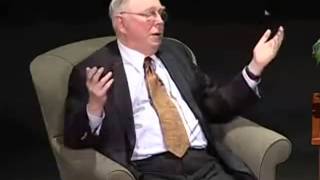
Charlie Munger gave this DuBridge Distinguished Visitor Lecture at Caltech in 2008 on common sense, multidisciplinary thinking, and using mental models to avoid error and improve judgment.
Also known as: DuBridge Distinguished Visitor Lecture at Caltech; Caltech 2008 DuBridge Distinguished Lecture; DuBridge Distinguished Lecture in Beckman Auditorium.
Charlie Munger argues that the key to doing well in life is not narrow brilliance but broad, practical judgment. He defines common sense as uncommon sense: the ability to move across human territory without making big mistakes.
He explains how he uses inversion, mental models, Occam’s Razor, and cross-disciplinary thinking to avoid folly, spot false precision, and solve real-world problems. He repeatedly contrasts genuine understanding with academic and Wall Street overcomplication.
The talk ranges from psychology and social science to investing, accounting, education, and risk. Munger’s core point is that combining ideas from many fields produces better judgment than staying trapped inside one discipline.
A Caltech host introduces the event, Tom Tombrello interviews Munger and asks questions, and audience members ask final questions.
In his words
“Common sense, which isn't common”
“Humility means that you know the edge of your own competency”
“You are a disaster if you don't know the edge of your own competency.”
“You should take the high road in life because it's less crowded”
Key points
- Common sense means knowing the edge of your own competence.
- Inversion is a powerful way to solve problems by asking what to avoid.
- Big ideas from multiple disciplines create better judgment than narrow specialization alone.
- Occam’s Razor helps, but messy social problems often require multiple causes, not one simple explanation.
- False precision in economics, accounting, and finance can hide major risks and common-mode failures.
- Education should teach people to synthesize across fields, not just repeat received wisdom.
- Caltech’s culture of practical intelligence and broad competence is held up as an ideal.
Full transcript: Charlie Munger, Caltech DuBridge Distinguished Visitor Lecture (2008)
Good evening. Um, Jean L. Shamu, the President of Caltech, it is my pleasure to welcome all of you tonight for the Lee Dubridge Distinguished Lecture, which, by the way, is not really a lecture—no data slides, no PowerPoint presentations, no jargon. Rather, the format for the evening and really for all of the Dubridge lectures is a conversation between a distinguished lecturer and his or her interviewer of choice. Dr. Dubridge was the second...
President of Caltech, and he held the position for some 22 years. He was a very successful president that most university presidents would aspire to be. He was especially effective at communicating with everyone—students, faculty, trustees, large donors, small donors, the chairman of General Motors, and even the President of the country. I think his talent was linked to the fact that he enjoyed talking to people about science and technology, to talk about the value of basic research and how scientific solutions can help address society's...
problems, as well as the impact of science and technology on everyday life. He believed in getting a diverse group of people together to discuss those issues. Tonight's presentation is a good example of what he would have enjoyed seeing on the stage of Beckman Auditorium. Before I introduce our two guests, I would like to thank the person who made this event possible, Mr. Peter Koffman. Peter is a CEO of Glenair, and he edited the book for Charlie Almanac. He's a good fan of Charlie Munger, and it is Peter who suggested to him that it would be a...
good idea for Charlie to give a Dubridge lecture. Then Peter took a very active role in the organization of the lecture and the activities surrounding it. Peter, thank you. We are fortunate to have as a 2008 Dubridge lecturer what I would call a rock star of the financial world: Mr. Charlie Munger. For years, Charlie has been half of a financial partnership that is apparently a force which cannot be stopped in a world of investments. He and his good friend Warren...
Buffett have always meant quite the team, but as you will find out, and many of you know, they also handle solo acts extremely well. Witnessing Charlie on stage at the annual shareholders meeting of Wesco Financial last year was, for me, a truly energizing and exciting experience—and one I would recommend to all of you. It's an event not to be missed. Charlie is like Warren Buffett, an Omaha boy born and bred. He attended the University of Michigan and, yes, Caltech, because before serving in the US Air Force as a meteorologist, he then entered Harvard Law School, graduating in 1948 with a...
Juris Doctor. Munger went on to found a Los Angeles law firm, Munger, Tolles & Olson in 1962, but left the law practice three years later to concentrate on managing investments, something that clearly he has done amazingly well ever since. He's known for his opinions, his philosophy, and his wit. In fact, the Caltech bookstore is outdoors selling several books about those topics—and I hope you will take the time to purchase a number of those. Given the scope of his keen and broad interest in almost everything, we knew that whoever interviewed him would have to be intellectually quick and...
quick enough to keep up with his unusual—his unusual ability at storytelling. Fortunately, Charlie chose Caltech's own outspoken division chairman and physicist, Tom Tombrello. Tom, who heads up our Division of Physics, Mathematics, and Astronomy, is the William Kenan Jr. Professor of Physics as well as Caltech Technology Assessment Officer, a member of our faculty since 1961. Tom not only knows his way around Caltech but also knows very well how to handle his division—a freethinking physicist, mathematicians, astronomers, and astrophysicists. He is known at Caltech for his brilliant mind, his wit, and let's...
say, strong opinions. We will see tonight whether Tom has met his match. Tom, please join (applause) us. And now it is my great pleasure and honor to welcome our 2008 Dubridge Distinguished Lecturer, Mr. Charlie. Thank you, thank...
(applause) You should I go first? Charlie: Sure. Well, I hate to add to my president's introduction, but he left out some very important things about tonight's lecture. As you might know, Charlie Munger was born on January 1st, 1924, and any of you who are familiar with the Asian...
calendar meant that was right at the tail end of the Year of the Pig. Now, it's well known that people born in the Year of the Pig are characterized by virility and fertility. Well, eight children—I guess they got that right. But I decided I needed more information, so this being a modern world, I went to the web and found the world's expert on pigs. Her name is Charlotte, and she had two things to say about...
Charlie: One was terrific and the other was humble. Now, what is this humble thing? I remember reading Jim Collins' bestseller on business stressing that leaders in business should have humility. Frank Wells at Disney always said humility is the essence of life. Even President Suaro, among his three maxims, one was "Don't be arrogant." But if two people have a right to a call on infallibility, it's Charlie and Warren, so...
I guess the first question is: Do you two manage to keep each other from becoming infallible? Well, we have a lot of fun together, and our work is not really work for that reason. And yes, we take each other down a little bit and promptly, but we do it in a collegial fashion. We've never had a serious argument in all these years. And, of course, it's like an old married couple—after a while, you know, one grunt and two...
Twitches, and you've conveyed your whole conclusion on the subject, and that's the way it works. And in terms of, uh, humility, I've frequently said that when they pass that out, I didn't get my full share. And that was a serious problem when I was young, and I've only cured it partly by becoming very rich and generous. It takes both to overcome a defect like that. So the young people in the room don't copy this. If you're not willing to pay the price, well, I—and I—I don't, but that if—
Humility means that you know the edge of your own competency, yes, and you aren't arrogantly stepping over the boundary. I'm very good at that. But within my area of competency, my best friend would not adore me for my humility. Yeah. Well, I'd redefine humility as knowing what you don't know. Yes. Well, both Warren and I are very good at that. One of these guys at the Berkshire meeting from one of the foreign publications said, "Why do a couple of guys in a little place in Omaha do so much better than all these powerful minds and great institutions?" And I said, "Well, I think Warren and I know the edge of our—
Competency better than other people do, and that's humility in the umbrella sense, and that is a very important thing to know. I say over and over again, it's not a competency if you don't know the edge of it. You are a disaster if you don't know the edge of your own competency. Warren frequently says, "I'd rather deal with a guy with an IQ of 130 who thinks it's 125 than a guy with an IQ of 180 that thinks it's 200." That second guy will kill you. And so it is very important to know the edge of your own—
Competency. I thought I would speak tonight a little bit on my favorite subject just as a talk, and after that, just take questions from Tom of any kind he wants to answer. What I'd like to talk about briefly is—table—you think I'm kidding—and the topic I'd like to talk about briefly is common sense, which isn't common. Yes. (laughter) See, and what people mean when they say a man has common sense is uncommon sense.
And usually, usually they don't mean that the man has a narrow little activity he's good at, like knitting sweaters, and he sticks to that. What they mean is a man that can operate over a pretty broad range of human territory without making any big boners. And that is a very important thing to be good at. And the question is how you get it. I was very lucky in my own life because every place I looked at the pen, there was a guy that was better than I was. And my father, one of my father's best friends, was a great surgeon with a vast mechanical ability, and I knew what this man did with his mechanical—
Abilities and inventing all these spreaders and things. He used to do his operation that I would never be as good as he was. And everywhere I looked, there was somebody like that, and there was all this folly out there. And I suddenly realized, like, I just just avoid all the folly, you know. Maybe I can get an advantage without having to be really good at anything. And I get doing that all my life, and it works so well that I—I—I enjoy sharing it with people like you. It really works to tackle much of life by inversion, where you just twist the thing around backwards and answer it that way. I have to give problems to my—
Children. And once when I had all of them together, I said, "Well, there's an activity in America, there's a one-on-one tournament, and the national champion became the national champion on two separate occasions 65 years apart. Name the activity." And seven of my children could not remotely do it. The eighth is a PhD physicist, and he did it very quickly. And what he did was he just turned it around. He says, "It can be athletic." And he realized that no, no 85-year-old was ever going to win an athletic thing with the neurological other deteriorations that—
Are so evident tonight on the stage. And so I said, "Well, it couldn't be chess." He's a chess player. And he realized that no 85-year-old was ever going to be the US chess champion. He knows what a chess tournament is like. But that led him to checkers, a game that you could almost master with enough experience. And of course, that was the correct answer. It took him about 15 seconds. All kinds of problems like that that look so difficult, if you turn them around, they—they—they are quickly solved. And so this process that I've gone through life doing of identifying folly and trying to avoid it has worked—
Wonderfully for me. Another trick that I got very early was that I led big ideas that had a lot of instructive power, and I liked them so well that I didn't mind when they were in somebody else's territory. I just went in and took the ideas. So I paid no attention to the territorial boundaries of academic disciplines, and I just grabbed all the big, big activity ideas that I could, and then I used them in daily activity to solve problems and amuse myself and do self-education and so forth. Well, that—
Makes me a collector. I'm a collector of inanity, and I've cataloged the inanities and structures in my head, and it's been a wonderful thing to do. If you stop to think about it, how many unhappy collectors do you know? Whether they collect silver or mistresses or—you know, by and large, collectors are happy. And collecting inanities is just wonderful. If you collect stamps the way I once did, I soon had a US stamp collection I couldn't afford to add a stamp to. Well, what fun is collecting when you can't afford the next stamp? When you're collecting inanities, there's—
Never a shortage, and there's all this low-hanging fruit. We had one this morning with the governor of New York—that was pretty expensive fruit. Well, but and so when you—this is just a wonderful activity and it's amused me and instructed me all my life. And another, another thing that I got into when I did that,
was to be very interested in seeing how these ideas interplayed together. There's not big academic reward or worldly reward for integrating one discipline for a strange discipline, but a strange discipline that's not your own. So if you do it in your head, you're in a territory without much competition. I always say you should take the high road in life because it's less crowded, and this is a less crowded mental road in life and it really works. And of course, when you do that, you get into issues where ideas are in conflict.
And of course it demands synthesis. Well, a lot of people, when they see a demand for synthesis, just synthesis immediately retreat into whatever orthodoxy they came from. That's not there. If there's two big powerful ideas and there's a terrible tension between them and synthesis is demanded, I look it up if I can, and if I can't look it up, I try and figure it out, and if I have a poor approximation, I use that for a few years until it gets better. I got this, I had another idea that was very useful. I always liked Occam's Razor now.
That is a wonderful way to think. You can argue that Einstein's whole career was just a marvelous demonstration of Occam's Razor, and E equals mc^2 is a pretty damn simple idea, but think of the power of it. And then Einstein developed—some people say a corollary, a counter corollary to Occam's Razor. This may be apocryphal because I've never seen it in any original source I trusted, but I've seen Einstein quoted with this observation over and over again: "Everything should be made as simple as possible, but no more simple." Well, if Einstein didn't say it, he
should have said it because this is a very sound idea. I later developed a supplement to that corollary, and my supplement to Einstein's corollary was that about Occam's Razor was: in messy social science, if the result you're observing is a lapalooza, look for a confluence of multiple causes, multiple forces operating in the same direction. I got to that idea when I was trying to explain to myself how the
Moonies were able to get some student to come out for a weekend in the country, and at the end of the weekend the guy was a brainwashed zombie who was the slave of some megalomaniac nutcase for the rest of his poultry life. And this is obviously a lapalooza result. And so I looked in academia for an easy, correct answer to this, and of course, I didn't find it. I finally stumbled across a popular book done by some psychiatrist founded by the Rockefellers, who had studied the last work of Pavlov. And Pavlov had had these dogs in these cages, and when the Lenrad flood came in 1920, it went right up to the dogs' noses and they damn near
drowned and died but didn't. And the stress was perfectly horrible and they'd all been conditioned to have these dog personalities, and when the waters receded, the personalities had reversed. Well, Pavlov being a great scientist, spent the rest of his life giving nervous breakdowns to dogs and trying to reverse those breakdowns. And this is not pretty reading, but it was very instructive. And I realized that the Mooney methods and the involvement of stress was clearly part of it. I also realized that the psychiatrist did not have an adequate explanation. Well, finally, I stumbled into psychology, in which I'd never taken a
course. And so I just bought the three main textbooks in Psych 101 in the country, and I rippled through them quickly, and you know I could pick up the 20 main ideas in social psychology very easily. And when I used them as a routine system, I could see that the Moonies were using about six of these things in combination with the Pavlovian stress, and just as the dogs' brains snapped in the Lenin Grug plug, the Moonies have a term in their conversion method called causing the target to snap—same damn idea. And I found that very interesting. And because
I'd reached a conclusion—a very unpopular, unpolitically correct conclusion that I've just given you—because it gets into religion; conversion is a tough subject. But anyway, it satisfied me, and so I expanded it into this corollary of looking for a confluence of causes when you see a lapalooza result in social science. And that has been enormously helpful to me because I find that a lot of social scientists have a weird mania where they twist everything into whatever little concept they started with. Again, it's that old saying: to a man with a hammer,
every problem looks pretty much like a nail. And I have worked hard to avoid that problem. And of course, if you grab the big ideas in all the disciplines, by definition you're a man with multiple tools, so you're less likely to commit the inanities of the people who twist every problem into being a nail. Well, anyway, there were a series of tricks like that that I used as I went through life, and it was amazing how many times I'd find something that I could easily solve with my little bag of mental tricks that had missed other people who
were eminent in their field. I could go right into their territory sometimes and see more clearly than the professional denison how his conclusions fit into the bigger picture. Again, this is a very dangerous attitude to have in ordinary social discourse, but it's a very good way to invest money. And at any rate, that's the kind of a peculiar man you have here tonight. And of course, I idolized Ben Franklin because I identify with him. Of course, he was so much more talented than I am, it's
Just a joke to make the comparison, but at least he was a totally self-educated man that wandered over a vast amount of territory and was pretty, pretty competent over the full range. And, uh, a lot of Franklin's knowledge was psychological too. He was a great observer of human nature, and so, uh, there are implications, of course, in this attitude of mine in academia, and the implication is very simple: social science in America is very poorly taught, and the people who are the Dennis and the people that they teach are way
more incompetent than they need to be. The solution is to get all these social scientists, or the ones that have the capacity to do it at least, so that they are comfortable across the boundaries of disciplines and see where the ideas conflict. Let me give you a simple example. If you went around Caltech and asked people, "Where do the laws of chemistry not apply?" practically everybody would say, "Well, they don't work in a hot plasma." No big deal. But if you ask a bunch of people that have taken the main course in economics and have gone on to
business school in America, and you say, "Well, you're selling something which is measured in units and you want to sell more units. Do you raise the price or lower the price? Well, we've seen supply and demand. You lower the price." Then you say, "Tell me the occasions on which if you want to sell more units you raise the price." Now this is an intelligent group; you've been through social science. I'm giving you some time. Will anybody who has the right answer raise his hand? Yeah, luxury goods. That's what. About one in 50 comes up with the idea
of luxury goods: that the price is sort of a signal that it's high quality, and if it's not a signal of high quality, it's a way of bragging to your friends that you have both discrimination and money. But the interesting one, other interesting example, is the one that happened to my Caltech-educated friend Bill Ballhouse, who was CEO of Beckman Instruments Company, founded by another eminent Caltech professor. And Ballhouse had in his business collection a company that made some complex gizmo that they sold for a
lower price than the other two gizmos in the market, and yet it was much better, and it had lousy figures. And Ballhouse took one look at it, and he realized that it was a gizmo where, if it failed, it imposed enormous costs on the owner of the gizmo. And he recognized that the price being low was sending the signal wrong—in reverse: this can't be very good. So he raised the price enormously, and sold way more units, and of course the profits went up in a truly dramatic way. So these idiots that can't answer the question are leaving a
lot of money on the table that a man like Ballhouse knows how to get, and the world is just full of opportunities like that for people who get the main points and go across. But of course, that's not the main answer to the question; that's just the Ballhouse byway. The main answer to the question is very simple: suppose you raised the price and use the money to bribe the other purchasing agent. Well, you can laugh because it's so obvious once somebody points it out, but who was raising his hand over that one, after all the fancy education you've had? And so the kissing cousin of that direct
bribery of the other guy's purchasing agent—that's the way title insurance is sold in America. That's the way load mutual funds are sold in America. That's the way a certain amount of defense contracting has been done or attempted to be done. It's just a huge important part of capitalistic life—that business of raising the price and using the money to enhance sales. And of course, there are legitimate ways to do it too, like legitimate information through advertising or otherwise, but there's a lot of illegitimate use of increased price to increase sales. And that's a big part of the capitalist condition. And if you don't have a brain that automatically has these things pop into
it, you haven't really assimilated social science correctly. What good does it do to be able to pass a test, parting back to the professor what he told you? Well, that'll get you an academic label, but it won't get you the many millions of dollars Ballhouse made by raising the price, and it won't get you really fabulous investment results in life if it takes some imagination, if you don't see how all these things work and how they interplay. And of course, the way to get that competency, like any other competency, is to adopt the necessary elements and
practice using it over a considerable period of time and a considerable area of complexity. And, uh, now get to a really interesting question. Question: can we fix the social sciences so they aren't such total horse's asses? And the answer is yes. Is it likely to happen? The answer is no. It will happen eventually because, well, here I'm going to lose my humility.
I had a guy in the Harvard Law view ahead of me. He said to me once in the course of an argument, he said, "Charlie, think about it for a while and you'll agree with me because you're smart and I'm right." Great! Or, "Well, the liberal arts are going to come to the Munger system in due course because they're smart and I'm right." It can be done better, but it can't be done better with a crazy reward system that allows people to be as silly as they are in many departments. I always
Like the story of PJ O'Rourke who said, you know, he says the last communist dictator of Albania was a pure communist and he finally threw out the Russian Embassy because they'd lost the pure faith. Then he kicked out the Chinese Communists because they'd lost the pure faith. And I said, finally, he was only comfortable with two places in the world: one was the Communist dictator of North Korea and the other was the English Department at Yale. Well, you think I'm kidding, but there is a lot of extreme craziness in some of the liberal arts.
And they select people who share their craziness, and it is not necessary that academia tolerate forever this lack of multi, multidisciplinary competence. It's not that hard. If some aging, untrained fat old man can do it, you know, surely the young brilliant liberal arts people can do it. It will take a different incentive and a different system. It might even be that a place,
like Caltech could do it, but they'd have to get a rather unusual person to do it for them. Oh, that's all right. Now, I'll turn it over to... Well, I actually, I'd like to comment on your last thing because there's this old story, which is a reincarnation story, which if you are a very moral economist and you die, you get to come back as a physicist, but if you are a very immoral economist, you get to come back as a
sociologist. And the story actually has some truth to it because we're talking about the degree of linearity. Physics, for the most part, most parts is a linear subject: cause and effect don't get intertwined. Whereas my wife's father invented something in sociology which shows the intrinsic nonlinearity, extreme nonlinearity, of the social sciences and that was the self-fulfilling prophecy. Yes, indeed it was invented by Robert King Merton, and what it says basically is if Charlie were to say something about the state of the economy
tonight, by God, by tomorrow morning, the reporters who are here would have it in the newspapers, and something might actually happen to the economy. Whereas if I said something about the economy, in fact, exactly the same thing as Charlie, everybody would say, "Ho ho, what does he know?" And so that shows the powerful nonlinearity that exists in the social sciences. The problem partly is they're extremely complex, and the fact we haven't come to grips with them means we haven't dealt with that nonlinearity appropriately. Comment: I think you can do it without
the fancy math better than they're doing it now. Ah, we, we, we agree completely. Now, I want to cite the example of another great Caltech man. When I was at Caltech, right across the court was Thomas Hunt Morgan. Mhm. And I always thought the faint odor that I smelled was his damn fruit fly. And later I started paying the research expenses of an ecologist, Garrett Hardin, whom I really liked, and he had trained here, here at Caltech under Thomas Hunt Morgan. And he told me something about Morgan that
really fascinated me. He said that in that day when they didn't have computers and when the main calculating device was the Frieden calculator, everybody in Caltech had endless Frieden calculators except Morgan, and he pretty well banned the Frieden calculator from the biology department. And when they said, "Why are you doing this?" He said, "I'm like a gold miner in 1849, and I can walk along the banks of the river and I can use organized common sense and pick up these enormous nuggets of pure gold. And as long as I can do that, I'm going to use my scant resources to pick up all this gold, and I'm not going to revert to any placer mining, you know, sifting the
statistics for faint traces of something." And I love that because that's what I've done with my life. I just picked up the obvious things that was around the riverbank with organized common sense, and I'm glad to quick claim that placer mining to people who like a lot of boring gravel sifting. So, I, I, I think that a lot of the people who are trying to fix the social sciences will make it worse by going into these very involved computations because they get into math very soon that they can't handle, and they're walking right by great
boulders of gold on their way to this nonproductive math. This is not an intelligent way to go with the problem. Yeah, well, that's something you've said, talked about earlier: this attempt at false precision, terrible. Warren and I always say, "But we whites can better be roughly right than precisely wrong." Right? We see over and over again people who know how to use these calculators, computers now, and there's a big complicated problem with multiple inputs; some of it can be carefully measured and some can't. So it's just horribly overweighting everything
that can be measured. This is truly asinine. But you're in the insurance business, so I'm going to be a professor and tell a story about derivatives. Twenty years ago, I decided, my wife and I decided to build a house on a tropical island, and yet hurricanes, you know, being a Caltech professor, that's a risk I didn't want. So I constructed a financial instrument which was: build a house and buy an insurance policy. A hurricane did come, damaged the
house severely, and now more out of blind dumb luck than skill, I cashed the check from the insurance company about two weeks before the insurance company went belly up because the insurance company had only insured houses on this island and therefore I hadn't constructed a hedge at all. No, of course not. I had constructed a common mode failure. And so the real question in society right now, whether we talk about bundled mortgages or any of the other
If hedge funds is whether the risks are really independent and you can determine them, or whether somehow there's these common mode failures that take down both systems at once. These same people who are trying to ruin the social sciences by taking it into this extreme hopeless complexity of math that won't work, are alive and well on Wall Street and creating securities, etc., and they've done the same thing there. They have created things so complicated that nobody can understand them, and
therefore, they take shortcuts. They don't try. They rot on the rating agencies. There are grown men who looked at a bunch of collateralized debt obligations, all of which were rated Triple A, AAA, by rating agencies, and they all yielded 60 basis points more than normal AAA pieces of paper. Well, anybody with a grain of sense would see danger flags flying. I mean, the hurricane concept would come quickly to your mind. But what these people saw was a marvelous opportunity to get a lot of money for themselves by lying and
cheating. They bought all these AAAs, they leveraged four or five times over, and then they told their investors they were getting alpha. They weren't getting alpha. They were taking a hurricane risk and telling the people they deserved extra pay because they were delivering alpha. Well, they were delivering extra profits as long as there was no hurricane, no financial heavy wind. This is a deeply immoral way to create financial instruments. It's a deeply immoral way to run an investment operation, and of course it's attracted more and more people from eminent places like MIT. People go into this derivative
trading, you know, 'cause it's hard to raise in Standard Oil inventing better oil refineries. It takes time and there's competition and so on. And besides, when you're all done, nobody's ever going to hand you $180 million. And so these people do go into this activity and they create this hopeless mess of super, super complexity. Then they get trading systems which their accountants bless, and they punch these buttons. And if they've agreed to buy something eight years in the future from A for 100 million and sell at eight years in the future to B for 105 million, they punch the button and
both obligations disappear, and it shows a $5 million profit receivable from, from, from the second guy. Well, just because you can punch a button on a computer and show a $5 million profit doesn't mean you have a $5 million profit. What you have is a disastrous closing risk if the market goes horribly against you. Is the guy who's lost heavily the 100 million bet going to be like the hurricane insurer on my friend's island? And the answer is yes, in many cases he's going to be like the hurricane insurer on the—we're just seeing that stuff unfold, and you can't watch it unfold without feeling the way I feel
about a lot of the liberal arts professors. The people who did this are despicable. The accountants that bless the accounting have despicably failed in their own profession. If I make loans for many years, nice little 75% mortgage loans on decent houses to hardworking plumbers, and I have a wonderful low bad debt risk, and then I suddenly decide I want to report a lot of extra income, so I have somebody recruit a bunch of bums from Skid Row, and, you know, charlatans are just out of
the penitentiary, and I have them agree to pay these very high interest rates on 100% loans, and so forth, and I say to my accountants, AC crew, all this interest these people have agreed to pay me as income. They haven't agreed to pay it to me yet, but in due course it's due, and the way you'll do that is just assume that my bad debt experience on this new class of loans will be like the one I formerly made, well, as I've described. But nobody in his right mind would have an accounting that ACUR the interest on the new loans. But in America the accountants bless that stuff, and they would say you would make my life too difficult if I had to do anything but look back and count the old bad debt experience and
just extrapolate it into the new type of loans. This is not a modest fault. This is a significant fault in our common civilization. The professionals have horribly failed us, and the academics that have allowed these professionals to prosper without appropriate criticism, they have failed us too. And the regulators were insight of the example, have 200 regulators in Washington. They have two companies in Washington, and their whole job is to watch these two companies for unendurable future
troubles: Fannie Mae and Freddie Mac. Two hundred people in office, that's all they have to do. They ended up with, I don't know, $30 billion worth of miscalculated earnings, and it just was totally insane. It was a Mad Hatter's tea party. I mean, all these people have horribly failed us with the most elementary common sense. Nobody ever said, "Look, this is too difficult," at least for the kind of people you have doing it, and yet it was obvious it was too difficult for the kind of people. And the guy who headed Freddie Mac was a PhD economist and burr has a subsidiary and it was headed by a PhD
psychologist. And the only thing he improved in his tenure was the wine seller, the corporate wine seller. And when the money finally ran short and this chief financial officer said, "We're running short of money for the wine seller," he said, "Take it out of the depreciation reserves." Well, the depreciation reserves are a liability account. PhD in psychology? I mean, I don't invent these stories. One of the best—if you're a collector of inanities, you can top anybody always with a true story. Well, the problem we academics have
Is we almost always solve problems, uh, we think we can solve, as opposed to problems that are real problems. I'll give you a quote, which you may not know, and that's from Fisher Black, uh, Prof. of Black Sholes. Uh, he was a professor at Tufts, and he decided late in his career to take a very nice job at Goldman Sachs, and then he said something very wise that I think you'll like, which was he said, "Market efficiency looked a lot different from the banks of the Charles than it did from the banks of the Hudson." There was another Nobel Prize
winner at Stanford and he looked at the investment success of Berkshire Hathaway and he said, "It's luck." He said, "It's, you know, if enough monkeys are flipping coins, some guy will win two or three times in a row," and there's a name for this in academia — it's sigmas. So we were a one Sigma event, and then we were a two Sigma event, and then we were a three Sigma — we get to three sigmas, this is really unlikely. Yes, he got to six sigmas of luck to explain Berkshire Hathaway at that time. The audience was laughing so hard that he stopped doing it, but that was the only thing that stopped
him. He would be at nine sigmas by now, which would happen about once in the history of the universe. Yes, we can't let you get away from an educational institution without talking about, uh, education. Caltech is a small manufacturing operation. We take raw material that we get from the high schools and we turn it into a product. Now, I'd like to say we don't make Chevrolets at Caltech; we make Formula Ones, but we are dependent on the quality
of what comes in because we have to work with it and what we work with is, come what comes out of the educational system in the United States. And I have some opinions, but I would hear your opinions about what's happened to one of the best lower-level educational systems in the world over the last, say, 40 years. Well, of course, the educational system failed horribly in the central parts of the big cities, and the price that our civilization will pay for that failure is really huge, and, and
of course, it has multiple causes. Of course, it's going to be harder to raise schools when the more competent people flee to the suburbs and the Central City gets lower and lower average quality because all the successful people are leaving. The same thing happened in Germany when they partitioned Germany. There was a period when anybody could get out, and five million of the most competent people in East Germany went West. Well, now what's left is the worst 17 million out of 22, and they've got a communist system. Well, of course, they get an awful result if you cull all the best people out and turn the rest into
Communists. It's not going to create a wonderful result. I mean, imagine arranging so that Germans are no damn good. I mean, this is really hard to do, but, uh, but so something like that happened and it was a huge mistake, and what he's complaining, by the way, about are marvelous people. It's just that they're not Tom Tombrello because how many of those are there? But Caltech gets marvelous people and the average quality of the entering freshman at Caltech is simply marvelous, and the average quality of the institution in terms of the way the
professors, the administration, and everything behaves is wonderful, and the asininity around Caltech is way low for a human institution. And if any of us had no friends or family left and we were thinking, "What are we going to do with our worldly goods when we have to part with them?" I don't know about you, but I wouldn't have a better candidate than Caltech. I'd have way more confidence in it than I would have in, say, an elite R1 Ivy League school. I think they're pretty good too, but I think Caltech would be more
reliably sensible and more reliably ethical than the other places. And so, Caltech is a very remarkable place, and you shouldn't judge the world by Caltech. Uh, this is way better than normal, and they have to understand where the man's coming from. Most of our students volunteered to come here. Charlie was drafted sent here, so he was not a volunteer, he was a draftee, and he learned to be a weatherman. So if you think he knows which way the wind is blowing, he has a degree in it. By the way, that's an interesting
subject because I was going to do this. I looked at the ordinary meteorological text, like meteorology 101, as now taught in America, and I compared it to what I knew after getting what was then a graduate degree at Caltech, and you can't believe how much they figured out in those 60 years. I mean, it is just—it's just—it's just unbelievable how much better it is. And, of course, they've got better measurements and better—they got moving diagrams, the physics is better. You think
we would have known everything about the phase changes of water by the time I was at Caltech. There's a lot we didn't know. How can they not know the phase changes of water? Tom will know. But it's—it's—it's weird the way water behaves. In every little change of phase it interacts differently with radiation, right? We've learned a lot of stuff. There's a—oh, on your Ben Franklin story, I was listening to the Saturday noon broadcast of the Metropolitan Opera. How many of you listened last week? Yeah. Lucha de
LaMore, but in the last part of the opera, there's a very eerie piece from the, uh, orchestra. You know what instrument it was? The glass harmonica invented by Benjamin Franklin. So there was a man who really understood all sorts of things, from bifocals to very interesting musical instruments. Self-taught, he played four different musical instruments. This is just a casual — this wasn't — he had a broad range indeed. He sang pretty well too. I—
I'd say if anybody saved this country by getting the French to come in and help us with the British at Yorktown, it was Franklin. Yeah, well, I noticed a dinner that he was gazing at us from the wall of the library. I know you're a fan of Jared Diamond. Jared Diamond gave the commencement address at Caltech last year, and a few years ago, he wrote a very interesting book called Collapse, which has, among many other examples, two that I find very interesting. One is, of course, the collapse of the Viking colony in
Greenland. As the weather got cold again, the Eskimos who came in from the north, of course, didn't notice it. They were eating seafood. The Vikings were eating sheep and cattle, and when those disappeared with the colder weather, they starved to death. The other was Easter Island, where they got into a mad race to create some artificial economy of building the great stone heads and, of course, destroyed the ecology of the island and ultimately themselves. I thought that can never happen now. So I have to tell a story from about 30 years ago when I was
consulting still at Los Alamos, and a friend of mine worked in something called X Division, where they made things called formula nuclear bombs. And we were having a conversation about the competition, and this conversation went on for a while, and he kept saying, you know, we've got to keep ahead of these guys; they are really giving us a bad time and we can't keep up with them. And, you know, after a little while, I said, you know, this doesn't sound like the Soviet Union. He said, Soviet Union? Those guys don't build anything we care about. We're talking about Livermore. And so there we were in a mad race, using up the country's
treasure in a wild attempt to keep up with ourselves, building the equivalent of stone heads. So are we doing anything like that? Do you see in our society, Charlie, are we building stone heads or competing with ourselves when the real competition is doing something else? Well, sure, but you go into the really fundamental tensions of multidisciplinarity. Every biologist thinks a little like Paul Ehrlich—you know, they think, my God, the carrying capacity of the land, you excel it, tragedy's
coming. And every economist thinks we've had compound interest at 3 or 4% for 300 years, and who's to say we can't do it for 500 years more, and they just each live in their little world. And nobody thinks that these ideas, in the end, have to synthesize in the real world. And, of course, from neither side are they very good at the synthesis. Every ecologist underestimates the power of the ideas of the economists, and every economist tends to believe that any troubles from carrying capacity are
almost non-existent. I once heard an economist say that the supply of coal was infinite, and I said, how did it become infinite? And he said, well, not quite infinite. But I am not inventing these stories; they're in my collection of inanities. As I say, if you just join my collecting council, you can have all the fun I've had all my life, and you'll never run short of material. No, I think Jared Diamond is, to me, very interesting. I think Guns, Germs, and Steel was one of the great books
written, but the main point was wrong. Jared really believes that the people in New Guinea were just like a bunch of literate Jews in Berlin in 1890, except that they were warrior clans and were illiterate. But that's a delusion. The genetic evolution continues to work after you get a civilization, and man's breeding patterns will reinforce—it will reinforce and accelerate and change, but the genetic evolution doesn't go
away, and it's really stepped up. That's why all these dogs are so different than—they're all descendants of the wolf. I mean, what can you do to change nature when you start breeding with some selectivity? And so anyway, I can understand why he was wrong on that, because he lives in academia, and it's not politically correct to accept there could ever be any genetic difference between individuals. If you say, have you noticed that Zulus are taller than pygmies, they just look at you like you spat in the
fireplace. That's a social error, but they don't say that—they're exactly the same height. They just look at you with detestation. But the truth of the matter is that there are part of the problem with the United States is that we are now competing with some people who have some considerable genetic advantages over us. They're called Chinese. I don't know why the Chinese, mired in a Malthusian trap and under an idiotic system of government, got a genetic mix that was so good on capitalism—at capitalism when it was
unleashed. That's a very interesting question. But some kind of selective breeding happened over there. I see my friends adopt these Chinese girls who were utterly discarded from the remote hinterland, and what one of my granddaughters—well, I'm now seeing a sample. What's so great? I say, I'm not like this idiot professor at Stanford who, you know, says six sigmas of luck. There's a reason why these girls are working out so well, in many cases way better than the people had their own children. And there is—we are starting to
Have a very major competition with a group of people who on average have some genetic advantage over us. I have to like it if the Chinese displace the Mongers, some of whom are here tonight. My attitude is bon voyage, but it happens over and over over in this country. When my grandfather came,
at the end of the 19th century, 13 years old, with a 9-year-old brother by themselves, illiterate, impoverished. I'm sure the people in the U.S. despaired that these Sicilians were coming into the country and it was going to be the downfall of the place. Of course, maybe it was, but they did survive and they did bring their parents and their younger siblings over, over, over. And so each generation seems to have absolute despair at the people coming in, but they save us. I call this the
vampire economy that the U.S. lives on: the fresh blood of immigrants, and each group gets replaced by another group. Yeah, but I think we could safely take in a whole lot of Sicilians and we'd get about the standard number of Tombrello. But if we try that with a Chinese, we'll get way above a standard. Of course you got it. This is now that Qing blood has run thin, we need to be replaced by something better. No, I don't say it in a tough blood; I just say that I don't think we'd
get more physicists out of Sicily than (laughter) we, which reminds me of one of my favorite true stories. When Shockley was on his craziest, when he tried to recruit all these Nobel laureates to donate their sperm so that the next generation could have the advantage of all the selective breeding, and he came to, I think it was Mueller, a famous Nobel laureate, and Mueller said to him, well, he says, "You're barking up the wrong tree." He says, "What my sperm has given America is two guitar players. If you want to have Nobel laureates, you better look among the immigrant illiterate tailors." Well, that's
(laughter) um, on that note, I would like to thank Tom and Charlie for a very entertaining first part to our program. Well, thank you for the first (applause) part, and now we would like to allow some time for some of you to ask questions. There are a number of microphones which are in the aisles here and you should come to them and mention who you are and ask only one question,
very briefly, and from Charlie. Charlie, I have to tell you we do—I have to say that we have at Caltech a large number of physical scientists, life scientists, engineers. We also have a few social scientists. There may be a few questions here from our social scientists. Go ahead. Hi, Mr. Brire, shareholder from New York. Usually at the West Coast media ask you a business-related question. We're not at a West Coast meeting, not a business meeting, so let me ask you a political question. Last night I was at the dinner in Omaha that Warren hosted for the DNC, raising money for the Democratic Party, and there he gave a very—I'm very sorry to hear that.
Well, I'm going to ask you to elaborate on that actually, because he gave a very total story about how he was the son of a far right-wing Republican Congressman, grew up, you know, hearing about Godless Communists, etc., etc., and so at some point in his youth sort of sat down and very calmly and rationally, in the way he described it, much like investing, I think, thought about, you know, laid out his worldview, what he thought was important, etc., and made a rational unemotional decision that, you know what, the Democratic Party is right for me. And so I asked him afterward, I said, do you think this administration might tip Charlie over to our side? And he sort of laughed and said, "Well, maybe, but if I were to ask him about it, he never come over."
So I figured I'd ask you about it, and I'm not going to be so rude as to ask you who you're voting for. Might Hillary or Barack be able to count on your vote this November? But rather, to a bigger question, about how did two such like-minded people who in your early comments have never really disagreed on anything, can communicate so well and finish each other's sentences and so forth, end up into political parties that can't seem to agree on anything? And sort of more broadly, if you could maybe tell us your similar story to what Warren did. Did you become a Republican because you sat down calmly and unemotionally and thought about the issues, and/or was it something like most people? I think it's one question, okay, one question and one
Well, Whitney, I think that if you're a really intelligent person, you have to hold your nose in reviewing either party, yes, and just exactly which one gives you the most offense can vary between intelligent people. And Warren and I get along so well because he's not a normal Democrat and I'm not a normal Republican. Go ahead, Aon. You—I’ve read a couple of things, speeches, that you recommend books occasionally. I'm wondering if
there are—you've mentioned that it's important to study across many disciplines, but there are a couple of books, three or four on your mind that you'd recommend, ones you've recently read or ones that would help in what you've talked. I'm going to duck that here because I've got a crowd of cult members at the Berkshire Hathaway meeting coming, and that's where I'll do that one. Okay, next. Okay, I have a general, very, a very specific question. I trust that you're not a, shall I say, a
Skeptic on the issue of, uh, climate change and, and global warming, and the, uh, impact of human activity on raising the temperature of the Earth. Uh, specifically, uh, what do you feel is the responsibility of corporations, if any, to deal with that issue within investments you hold, as opposed to maybe making, uh, charitable contributions to deal with this specifically? For example, Pacific Corp is owned by Burkshire Hathaway. Uh, it is proposing several coal-burning power plants in the, in the, uh, Southwest, and also there's a question of dams on the Klamath River in, in Northwestern California. Do you believe
that, uh, Pacific Corp has a social responsibility to address this issue of global warming, or do you believe it's better off if the corporations maximize their income and then set up foundations to remediate social problems? Yeah, well, I'm not going to speak for Pacific Corp, which has its own executives that are more expert in these areas, and it's their responsibility under the Burkshire system, which involves delegation just short of abdication. But on global warming, uh, I can give you an easy answer. Do I think there's some global warming
caused by increased concentration of carbon dioxide? Yes. Do I think it's nearly as big a problem as Al Gore thinks it is? No. And, and I think some of the solutions that are proposed by these True Believers that are so excited about global warming, uh, have created some of the biggest asinine entities of all. And the worst of the asinine entities that makes me grieve for my, my fellow citizens is trying to turn corn into motor
fuel. This is, this is one of the world's stupidest ideas, and it involves partly something you would agree with in figuring the cost of the corn: they don't count anything for the topsoil that's lost with every corn crop, which any ecologist would care about terribly. So the whole thing is just asinine. It shows how this True Believer stuff, which gets onto a cult-like mania, can cause terrible failures of cognition, like turning corn into motor
fuel. I mean, it is really crazy, and, and it's a disgrace. It's not, it's, it's, it's, it's really awful. And so, we want to beware getting too influenced by these people who obsess on this one issue. It is going to be very, very hard, I think. We have a reason for not using up the petrochemicals, the, uh, uh, petrol of the earth, and that is they're so useful to man for reasons other than keeping warm and running engines for transportation. And when they're gone, I don't know what Tom Tom Brella's solution is, but I'll bet
it's not very reliable, and I agree. And so, I think we've got a good reason for doing this, and you've got a very good, sufficient reason to reach out for a fairly stupid reason with a lot of McGinnis. It's really not very smart, and you ought to be ashamed of yourself. Next, go ahead. Hi, my name is Cecilia U. I'm an undergraduate here at Caltech, and when I heard you talk about the Space Race, it kind of reminded me of, um, the recent 50 years in space celebration and one of the best speeches I've ever heard given by an
astrophysicist named, uh, Dr. Joe Tyson. He mentioned that the Apollo race actually created one of the greatest impetuses in America for, uh, social or for scientific advancement and the advancement in education. So when you called it, um, a race of head building, big head building, I wonder if it's about time that America had another such big head building race to create another impetus to study science and especially in the public education system. Tom, I think she wants you to answer. Well, I'll be happy to, but I'm
probably even more opinionated than Charlie. Be hard. I think the great adventure of our time has been to explore the reaches of the solar system with robots, that the robots can go there. They're not affected by radiation, they're not affected, and they last forever. Voyager was launched before you were born, and it's still out there exploring the edge of the solar system. There are lots of places that our machines can go and tell us what the adventure is, and we don't have to send men to, to, to do it. Frankly, I, I think it's, uh, a bit like, uh, building those stone heads on Easter
Island. You can see why I asked for Tom Tom Brella to be here; it diffuses the natural antagonism. Go ahead. David Winters. Um, negative, you've got a negative lopolo effect in financial markets today, Charlie. Any thoughts on how this plays out? Well, when it's this bad, uh, I think there will be some reaction and some change in practice and some change in laws. And if we don't get changes in laws, they'll change the labels. When they reinvent CDOs, they'll
have some different name. They have poisoned that name permanently, and, uh, but I think the lessons are just unbelievably important. An advanced civilization did not need this much mess. We didn't need this much lying. We did not need this much crazy envy-driven, uh, pursuit of, uh, unreasonable gains with no conceivable social contribution. This was not a pretty scene. And, uh, and yet it was something like the South Sea
bubble as long as it was going on when nobody wanted anybody to criticize the party. And, and no, so I think there will be changes. Do I anticipate great wisdom from our legislative class? I hope not. Well, they gave us the problem in the first place. I mean, they were peeled. Let's take the simple little subject of margin requirements. In the '20s, we had had a great mess caused by 90% loans against stock and rampant speculation and so on, so they passed tough rules giving the Federal Reserve the right to control margins, which they did for a long time, and the banks had to apply. There was none of this crazy credit when I was
Young, if you wanted to buy securities frequently, you had to put up 50%, sometimes 75%, sometimes 100% of the price of the security. Fade in, fade out. The class that was going to make money out of running derivative exchanges and all kinds of things, option exchanges, wanted the equivalent of a new gambling parlor where they could be the crier. And so they talked up a lot of free market economic ideas and said, after all, liquid markets, capitalism, we have to. And they created derivative markets, which totally
obsoleted the margin requirements that had been part of the American regulatory scene. Human nature needs margin requirements just as it needs restrictions on selling heroin to 14-year-olds, and our legislative class, item by item, repealed all that stuff. And once it started making money, they just multiplied it, and then they got into systems where the clearance is a huge problem. And we're starting to see that now in some of these obligations where you can have the contract, but the contract can't clear.
The other guy is not good for it. The procedures are not proper. It's like his insurance company that insured against hurricanes until it came to the island where they wrote the insurance. It's like what I call the accounting for BUR's derivative book. It's a new class of asset entitled "good until reached for." By the way, it was $400 million that the accountants blessed, but when we reached for it, it just went to mist. I don't think that you should have a lot of assets on your books that are in the category "good until reached for." Anyway, this thing just morphed into this diseased
outcome, and so it's hard to predict what the legislative reaction will be. I think we've created such a vested interest now in all the people that profit from this stuff that I don't think we're going back to margin requirements, and I don't think we're going to rid ourselves of all these stock option exchanges. We never needed them. Warren went and testified before Congress that we didn't need this stuff. He was a solitary voice, one man on there saying, "What do we need option exchanges for?" But it didn't work then, and I don't think it'll work now.
It's really quite sad what happened. You would like to feel that, as T.S. Eliot said, "The thoughts of men are widened with the process of the suns." Why do we have to repeat the same old FEs over and over again in a thin disguise? But evidently, we do. My friend Garrett Hardin, a wonderful man, another Caltech-trained man, used to say, "If Aristotle were alive, he would be a very grumpy old man because you would have seen the same damn mistakes made over and over and over again." And that may be some of the problem with me. Next question. It happens quicker.
You don't even have to die to get in this condition. Hi, my name is Brett Hinov. I wanted to know what you think the most important career or academic experience a young person could get today would be to become a great investor in the future. Well, I think it helps to have a generalized competency in dealing with words and numbers and quantities and concepts. And, of course, it helps to practice with that competency. And then, if you collect follies the way I do and stay away from the follies, when you're as old as I am, you'll be
a rich old man. Okay, next one. Good evening, Mr. Munger, Professor Tomell, and by the way, I'd rather be (applause). My name is Dennis Armani. I graduated from Caltech three years ago, and now I'm a proud employee of Glenair. Peter Kaufman is my boss's boss's boss. So my question to you this evening is that when I started Caltech in 2000, got my Ph.D., and now work, it went from never really hearing about China to
now the United States has to pack up its bags and just say, "We're done." Why is it such that whenever the United States, or why is it so easy to write off such a great country all of a sudden? Oh, I'm not writing off the country. I'm not saying necessarily you, but it seems like the world in general just says, "No, no, no." I'm just recognizing reality that a new competitive force has come into the game that's hard to handle. You don't write off the country. If you're a very good golfer, and Tiger Woods comes along, you know, I mean, this is a very talented collection of people. And if they keep going, the competition is going to be very tough. Berkshire goes out of its way
not to compete with these people head on. Next question. Now, if you think you can handle it, all I can say is anybody smart enough to graduate from Caltech with a Ph.D. and go to work for Glenair does not need any help from me. You have it made, and you don't have to worry about China either. Good. Yeah. Um, hi Mr. Munger. My name is James Lynn. Um, I remember reading a long time ago, like, you know, Warren Buffett, you and Buffett were—I’m not into like
macroeconomic issues like um, but Mr. Buffett, I read recently, he's been like investing in the Brazilian real and, you know, basically, um, long foreign exchange, foreign currencies. Um, so what's—I want to see what's your outlook on the US dollar and interaction with, you know, the economy and how bad it can get, and how bad can this stock market get? Yeah, well, you know, averaged out, Berkshire has not made its progress in life by making wonderful macroeconomic predictions. We figured out how some things were very likely to do way better than other things, and we got into those.
Things occasionally in recent years, Warren has kept out of other mischief by doing things like buying the Brazilian reel, and he's done it very intelligently. He's made a few billion dollars, but it's a sideshow. You know, when the markets are scarce for our kind of activity, Warren has to do something, and he's so used to a few billion dollars coming over the transom every year that he sometimes stretches a little if it's easy enough, okay? But I can't help you with a simple solution to getting rich.
With soft white hands. Next question. Hi, my name is Helen Lee. I'm a Caltech undergrad here, and as Caltech undergraduate education goes, we learn things from math and physics to chemistry, biology—all the sciences that you can imagine. But we don't get a lot of insight into, you know, business and investing. And as sort of a new investor, my question is: what, in your opinion, is the best piece of advice for a new investor or for current investors? Well, I think it's very useful.
To get the capitalist perspective, namely, how do you make this thing work for the people that own it? Because the reality will make more sense when you go at it with that perspective. So even if you don't intend to get rich, you want that perspective because you'll understand the reality you're dealing with better. So I think you mentally want to make yourself an investor as part of the proper training of your mind, and since you have to do it anyway to improve your mind, you may as well get rich while you're doing it. And so if you underspend your income while you're alive and keep learning and collect all the.
Bonehead experience mistakes other people made and avoid them and so on, I would confidently predict that you'll do just fine. But there's no one book or one idea or something that's going to do it. The one idea that people use is the one that Ben Graham borrowed from engineering, which is the concept of a margin of safety. In other words, factoring in all the probabilities, you want a bonus probability—you want a margin of safety in what you're doing. And that's a very good concept when you're designing a bridge, and it's a very good concept.
When you're making an investment. You want something that will handle some mischances from life and still do well. And so if there were one concept why Ben Graham would have said that's the concept, but it's easier to state than it is to work it out case by case. Tom, I interrupted you to throw out an AER-like concept: the things you're learning should be connected to one another, and that's part of your job. You're learning a bunch of separate things at Caltech; try to figure out how they're connected to one another. And that may mean reading a lot of other stuff, but it's all of a piece; it's not a bunch of separate compartmentalized.
Things, and I believe I've lifted that from Charlie. Yeah, but all this stuff is really quite obvious and yet most people don't really know it in a way where they can use it, which is a very interesting educational problem. Next question. Question? Hi, hi Charlie, welcome to Caltech. My name is John Lee. I'm the president of the Caltech Fangon Club, and Fangon is a MZE in China which is persecuted by the Communist Party. Now, I came from China, so the strategy you were talking about, raising price to.
Pay to bribe the purchasing is very commonly practiced right now in China, so it's nothing new. And that is not unknown in the United States either. Actually, I think they are also buying American presidents. I know that in 1998, when I went to the Chinese Consulate, they were giving us such instruction to pay for the American president candidates. Anyhow, I think big money or economic growth in the country with morality going down is very dangerous for this society, for this world.
As which has been verified in the Second World War. And I think right now many people have paid attention to the human rights abuses in China. As you may know, the Communist culture is totally different from traditional Chinese culture, and the Communist Party is using their power to persecute all kinds of people and supporting you. Please can you please state your question? My question is: right now many people like Steven Spielberg are putting pressure on the Olympics, but some of the big American.
Company are still sponsoring this Olympics without paying attention to the human rights abuses. What do you think? Question: What is your question? Do you think about this? Should the company... Should they sponsor? Question: State your question. Yeah, should this international company sponsor this Olympic Games, which still have human rights abuses? Thank you. Well, my answer would be yes. I figure that China is a nuclear power. We have to get along with China whether.
We like it or not. There would be nothing much more asinine than creating a lot of needless tension with the nuclear power, and particularly one which is improving decade by decade from its worst condition. So this idea that I think getting along with China and sharing in their pride with their Olympics is a very good idea. The human condition being what it is. Thank you. We are running out of time, so I'm going to allow maybe two or three more questions, and I'm sorry for the many of you who would like to ask additional.
Questions, so go ahead. Hi, Mr. Munger. My name is Greg Ragy. This is my first time seeing you in person, and it's a real pleasure. I was pleased to hear you speak about common sense and the lalloa effect and your latticework of mental models. I wonder if you could give us a specific example of how you integrated these ideas to recognize a great investment. That would be of great help to those of us trying to understand and replicate your success. Well, some of the ideas were so simple we noticed that in city after city the monopoly newspaper made more money every.
Year, and in some cities, there were still two newspapers, and one was slowly dying. And so, we bought the one that was sure to win. Does it strike you as a complicated idea? It's the new newspaper. And one time, we did that with the Washington Post. We made a billion dollars with 10 million. So a lot of these things are perfectly obvious, and you just have to train yourself to—you have to develop the knack of using the knowledge you have next. It's a knack you have to work at. It won't—it won't come.
In just over the transom, because you'd like to have it. Hi, I'm Chris Canelli, and I'm a freshman here at Caltech. And I was wondering, what do you say in your—what you can see into the future? What are the biggest issue and maybe its runner-up for what is going to be the dominant concerns in the future? Some people say like China's rise is a big issue or environmental collapse. What, in your mind, are those big issues? Well, the issues that could do us in. Of course, there's a big nuclear war, the successful mass use of pathogens.
These would be very, very serious things to put it mildly. And of course, something could happen that we don't anticipate. I would not predict that environmental collapse is going to be the big killer of human beings. Man is a very clever creature, and when things get tough, we can do all kinds of things. The guy spoke about global warming: if we want to change the temperature of the earth, once you're talking about trillions of dollars, we can change the reflectivity of the earth. Thirty percent of the
solar radiation just bounces back. And we have things like mirrors. The difference in reflectivity between a really good snowfield and a black body is the difference between 95% and zero in terms of reflectivity. And so, there's a lot of potential. And the guy who I remember first suggesting changing the reflectivity of the earth was John Von Neumann, probably some people would say the greatest mathematician of the last 100 years, but certainly he was up there. And so, I think all kinds of things we can do to
the shortage—I see is it all gets back to energy. You got enough energy, you can do practically anything. And of course, Caltech is way ahead on that. They've examined all the options, and they're all for using the sun better. That's the correct answer. And I think man will be clever enough to do it. And if he doesn't like the temperature of the earth, I think man will be clever enough to change it. So, I—I'm not—I don't have the environmental terror a lot of people have. And that's from a man that gets very nervous on the way we treat cows. I do not like the fact that the average dairy
cow in the United States is kept pregnant by artificial insemination 270 days a year. I suspect that that many hormones in the milk is not a good idea. I don't know whether it is or not. You know, I know enough to raise my eyebrows. So, I think there are all kinds of things that we will learn to change. And by the way, that may be one of them. But so, I think man will be clever enough to avoid the worst of the environmental troubles. Whether man will avoid the other troubles, I'm way more negative. I think the folly of man is up
to some pretty extreme things. Imagine Adolf Hitler taking over a civilized country like Germany, and he could have won. I mean, to some extent, we were quite lucky in that war. When I went into the army in January of 1943, a year after Pearl Harbor, I was drilling in the mud with wooden guns. I mean, we were very lucky that we had all these oceans, and that we broke their codes, and we had this wonderful science. And that Hitler kicked out all the brilliant Jews—we just had a—we just had
a lot of good fortune. And the next time, we may not be so lucky. So, I would argue that the next time, we should be wiser. Okay, next question. Good evening, Mr. Munger. My name is Mike McGowan. I live in Pasadena. I'm a Wesco and a Berkshire shareholder. The fellow about one ahead of me asked my question, and you answered it. So, I'm going to kind of rephrase it. You've spent a really interesting life looking for the truth in a number of situations and then have acted upon it, whereas other folks in Wall Street and in academia and in other cultures seem to, even if they see the truth, they
don't follow it. They find it easier or what have you to follow their fellows. In doing this, what is it that you've done that you could suggest or that seems to be a model for these guys, kind of discarding the opinions of their fellows and pursuing something that would really be, as you said, developing the knack for this? I think to some extent, I was naturally disrespectful of the received wisdom, and I wanted to figure it out better. And I think to some extent that was an inherited disposition. And I turned what many people would regard that horrible (music) lemon into a lemonade. But I don't
know. I think you can make that kind of lemonade out of my kind of lemon. I don't know if you can do it without marshmallows. Okay, next question. Good evening, Charlie. Yeah, welcome to Caltech, Beckman Auditorium. I'm Jay Whitcraft from Sierra Madre, and I bring greetings from a fraternity brother and classmate of mine, Peter Munger, who I believe is a cousin of yours back in Philadelphia. My question is, I'm in the Sierra Madre Foundation, and we have a...
Problem: It's a small town, 11,000 people, 3 and 2 square miles, and we're trying to keep our budget together. And because of a cutback in taxes that we used to get from the state, uh, we're hurting for money. And I wondered if you have any suggestions as to how our city could help us, uh, or how our foundation could help the city, uh, do better with our budget. Well, lots of luck fixing the reactions of politicians and government to deal responsibly with financial problems. This is a—
big—this is a big order, uh, and I think you'd have way better chance of doing it in Sierra Madre than we do in Los Angeles. Uh, it's almost in the nature of things that the politicians will make all kinds of promises and do all kinds of things to please the voters and sort of put off the obligations until tomorrow. And so they're constantly building up a great load of future obligations, and they're constantly posturing for votes. It's distinguished from really trying to get the right answers, and, of course, this causes problems. And it's no fun to suddenly—
have to chop activities out of your accustomed, um, you know, lifestyle. And, you know, I solved the problem for myself in my own way, and I'm afraid I'm going to have to leave you with the problems of Sierra Madre. Final, final question: Uh, you upheld Benjamin Franklin repeatedly for his ability to master many disciplines, uh, and you spoke a lot about the inanities in social sciences and Wall Street. Um, I'm exactly half your age, and just—
in my lifetime, I've noticed a big shift, uh, in the incentive structures and everything, uh, from university admission to youth sports, as well as the workplace, in rewarding specialization. Uh, do you think that there is any alternative way that you can think of to reward multidisciplinary success as opposed to the very high degrees of specialization that seem to be what gain people's status and financial reward? Well, of course, we should have high degrees of specialization. And if you get a nice little cancer in some ghastly place, you will not want a guy that really understands PR. You know, I, me, and—
and, and, but of course it's my argument that you can be quite competent in your specialized field and also have the common sense over a broad area if you work at it appropriately. Let's take the case of Newton. More than half of the powerful creative period in Newton's life was totally wasted on alchemy and theology. And in the remaining half, he managed to create quite a distinction in his chosen profession. He had power to burn. Now let's assume you're not Newton, you're just a good guy who's going to be—
a good mechanical engineer. You know, don't you think you can get a general competency, just as you might be a good engineer and also play golf? There's plenty of time to do it without ruining your specialized competency. All you have to have is the will and the technique, and, and, uh, and every hour you delay in doing it, it's just—you're just increasing the chances that you'll remain in the shallows. Now, most people are happy in the—
shallows. After all, there's always somebody that's in a shallower place. Thank you. Yeah, I would like to thank all of you for joining us this evening. I believe it was an exciting discussion, and I, I enjoyed it very much myself. I'm sure you did. Uh, before we leave for the evening, I would like to present Charlie with a very small token of our—token of our—
appreciation for his presentation today. Thank you. And, uh, as you leave the auditorium, you will be offered the possibility of not purchasing but of taking one of those DVDs, thanks to the generosity of Peter Koffman. And it is an interesting DVD. It's a two-hour show on science. There are very few of those. It was made by a number of PBS affiliates. It's being shown all over the country on PBS stations. And what is even more exciting: it's two hours on science, and it—
is entirely done at Caltech and JPL. And I really encourage you to get one of those. I think we have enough for, let's say, one per family or one per small group. Please make sure you get one before you leave and join me again in thanking Charlie Munger and Tom Tomell for the event.
From YouTube captions, lightly punctuated for readability. Timestamps link to the video above. Errors are possible.
Cite this recording
Charlie Munger, “Caltech DuBridge Distinguished Visitor Lecture (2008)”, 2008. Transcript and video: Thinkers Archive, https://thinkersarchive.com/charlie-munger/common-sense-caltech-2008/
Quoting a passage? Link to its exact moment: every timestamp above has its own anchor (for example https://thinkersarchive.com/charlie-munger/common-sense-caltech-2008/#t-162).