What did Bill Gates say about why he left Harvard to start Microsoft?
Bill Gates said the timing felt urgent because he and his cofounders thought they had to start then or miss the opportunity. He added that an extra year probably would not have changed the course of history, but the software opening was still worth acting on quickly. At the time, most companies were focused on hardware, not software, so the idea of software companies was still unusual.
“No. It turns out that the urgency we felt that if we hadn't started in 1979, if we'd waited and started in 1980 or even 1981 because of the way we thought about the problem, because we, you know, we're so software oriented and thought... And and most companies weren't focused on software. People did software sort of a a side deal because they had to, but the hardware was what you paid all the money for. The software just came free. So the idea of software companies wasn't around all that much. So we, in fact, although we felt like we had to do it that day, an extra year would have would have been okay. Yeah. It wouldn't have changed the the course of history to to hang out another year.”
Key takeaways
- Move fast when a rare opportunity appears.
- Timing can matter even if history does not hinge on one year.
- Look for markets that others are overlooking.
Context
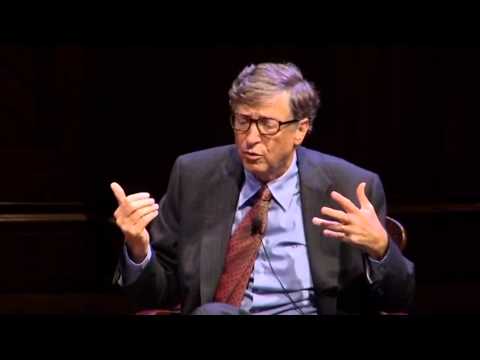
In a Harvard Q&A about his years at Harvard, Microsoft, and philanthropy, Gates was asked why he left school to start the company. The quote above is taken word for word from the recording's transcript.
Topics
What others said about personal story
More questions about Bill Gates
- What did Bill Gates say about measuring better teaching?
- Why did Bill Gates choose global health for his philanthropy?
- What did Bill Gates say about polio eradication and vaccines?
- Why did Bill Gates say the Gates Foundation should spend down instead of lasting forever?
- Why did Bill Gates say he would not have left software to become a lawyer or mathematician?
- What did Bill Gates say about choosing a career with the biggest impact?
How this answer was made: the quote is checked word for word against the transcript of the recording and confirmed as the speaker's own words; the summary above it was drafted with AI from that transcript and quality-checked. Methodology and corrections.