Arnold Schwarzenegger on Purpose and Service: Be Useful

What Schwarzenegger talks about
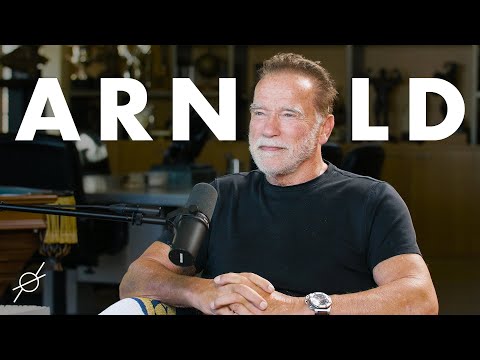
Arnold Schwarzenegger spoke in this Rich Roll Podcast interview in 2023 about purpose, service, adversity, self-improvement, and his public advocacy on democracy, prejudice, and the war in Ukraine.
Also known as: Arnold Schwarzenegger Is The Influencer We Need Right Now; Rich Roll Podcast.
Arnold Schwarzenegger reflects on how he went from chasing personal success to focusing on being useful to other people. He says his life evolved from “me” to “we,” and that giving back became the most fulfilling part of his later career. He argues that people get stronger by facing hardship rather than avoiding it, and that failure, adversity, and discipline are essential to growth. He also describes how his work in bodybuilding, film, politics, and advocacy all flowed from curiosity, vision, and a willingness to learn from others.
He connects that philosophy to his public work on social media, where he speaks out on issues like January 6, the war in Ukraine, prejudice, and democracy. Across the conversation, he emphasizes that people can change every day if they build a vision and commit to improving themselves.
Rich Roll interviews Schwarzenegger throughout, with Arnold answering at length and reflecting on his life and philosophy.
In his words
“Every, every day is an opportunity of change”
“We need to get stronger. We need to get tougher.”
“Adversity breeds character, their strength”
“The more I built myself and the bigger I became, the more I can give back”
“Without a vision, there is just nowhere to go.”
Key points
- Success in bodybuilding, film, and politics was built on vision, discipline, and relentless work.
- He says he never truly felt “arrived,” which helped keep his ego grounded.
- Adversity, suffering, and failure are necessary for character and strength.
- He rejects victimhood and urges people to take responsibility and work on themselves.
- His later-life mission is service: using his platform to help people improve their lives.
- He learned to be open-minded by listening to mentors, experts, and people outside his own field.
- He sees his public advocacy as organic—speaking up when he feels responsibility, not chasing influence.
Full transcript: Arnold Schwarzenegger, Rich Roll Podcast interview (2023)
This is simply to make people better and to make them recognize that they don't have to get stuck where they are, but they can change because every, every day is an opportunity of change. It's a big one today because my guest is Arnold Schwarzenegger. Hasta la vista, baby. This conversation, which Arnold graciously hosted in his office/slash museum of spectacular artifacts collected over the course of his storied life, covers the principles he leveraged to stratospheric success in three distinct careers: bodybuilding, movie stardom, and politics, all of which are eloquently distilled in
his new book, The Useful Arnold. He also shares his thoughts on confidence, ego, and ambition. We need to get stronger. We need to get tougher. We have to be willing to go through hardship, through suffering, through pain. We talk about his commitment to the environment, his relationship with James Cameron, and also this very interesting fourth act that he now finds himself in, which is all about service, giving back, being a voice of positivity, and leveraging his influence for the betterment of others. This one was quite the thrill, so please enjoy Arnold as perhaps you have never before
seen or heard him. When I think about your life and your journey, this young person who knew early and often that he belonged in America, had a vision for it, visualized it, architected that vision into goals that you pursued and achieved relentlessly to the point where you surpass anybody's expectations of your capabilities and reach the absolute pinnacle of success in three separate prominent sectors of society, and this
makes you, on some level, like this iconic generational emblem or example of the American Dream. So I'm interested in your relationship with your own ambition and how you've been able to maintain a grounded ego because you're very much a person of the people. You like staying connected with people. You're all about people. But for a different version of Arnold, that ego could have run rampant and imploded your life. So it could have. Yeah, you're absolutely right. It could have. The only thing is that I think maybe what helped me was that I never really felt that I have arrived, to be honest with you.
Not in bodybuilding, not in — I mean, I pretend and I do the big spiel, right? And I'm the greatest. I do all of that, yes. But I mean, in reality, I feel like when I work, for instance, in the movie, I really don't feel like it's any different than being a plumber. And I go to work, they put all the schmutes on and the makeup, and I'm sitting there like an idiot at five in the morning so that I'm ready at eight o'clock, and then they go out and you do your work, do your scenes, then you go and have your lunch, and you know, it's like the same. It's like going to Brook
yeah, and then going back home. I don't see myself as a star. I just see myself as a broker. And so when people can say, "You're so nice, you eat with the crew," I feel like I'm the crew. I'm just one of them, right? We are all trying to make a good movie, and so it's like I never really feel out there. Kind of like even when I was governor, it no matter where — yes, I have my moments where I feel like, "I always, man, that just shows how great I am," and stuff like that. But the reality settles
in. By the way, I put myself back in the place, and even when I have— I remember I have to make myself kind of feel like I'm Mr. Olympia. But when I look in the mirror, I see so many flaws. Yeah. You say that in the documentary. You're very self-critical. So many flaws. The delts are never big enough, the thighs are— you know, how am I gonna fake my way through here? You know? So that's the way I talk to myself. But then when I go out, it says, "Oh, I'm going to show them today and the best part in the world that has ever seen." Blah. I don't understand. But I mean, the reality of it is I
just always kind of felt, you know, fortunate that I'm in this situation, but I don't get like a big head because of it. Yeah. I don't know if, in his private moments, Muhammad Ali thought, "Yeah, I'm not as good as I say." Like, I think he really believed that. So it's interesting to hear you say, or to be honest about vulnerabilities or insecurities. I think that's surprising. Well, I think that even more, Muhammad Ali, I'm sure that he had his own moments of reality because he lost, you know, and I know that when he lost, he
knew why he lost. And, but you know, he was like— he was a showman. Yeah. And Muhammad Ali was just an extraordinary showman that had so much joy in his sport, which is extremely important: to find joy in all of the torch and hard training, and also to be able to kind of entertain people in that way and to have a mind that can remember all this stuff. I mean, his poetry and all the stuff that he did, he never made a mistake. It's not like he bumbled away, and always he tripped or something like that, you know? None of that. So it was just great, and he had a great vision, and he always saw himself like
you know that he was done injustice. And, I think that motivated him to eventually get the upper hand of all of that. And I hung out with him a lot in the '70s. I traveled around the United States with him. We went into various different TV studios, did interviews there. You know, he was always there first, going out there and doing his interview and all this. We always talked about it, hung out with the same people a lot of times. He invited me to different events. He just was really, really good. When I think about those quiet moments where you're questioning yourself or you have those insecurities, you know.
Where does that come from? I mean, you grew up in challenging circumstances, um, without running water, without a working toilet in your home, a father with PTSD who was abusive and drank too much. These experiences obviously were formative and made you who you are, and I know you have a lot of gratitude for them. But what's the other side of that? What is the pain point like when you look back on that? What is your relationship with that past?
When you're not, you know, on a microphone and there's cameras, I, you know, a lot of things we don't choose. I mean, I don't choose how I feel. I happen to be fortunate that I don't have one ounce of negative thinking about my past. Not one else, and I don't know why. You know, it's just not there. Yeah, I just, I just have, you know, I remember the tough times, but I also remember very clearly the sweet times, the gentle times that my father showed.
That my mother showed. You know, how wonderful they were and how supportive they were in the schools and the sports field with everything, even though they were not kind of like the American parents. It's so different. My parents have never, ever watched me on a soccer game, never ever watched me in a basketball game or track and field, shot-put championships, traveling, throwing championships, anything like this that we did in school, never ever because no one did. There were no parents hanging around and saying, "Oh, let's watch our kids," like we do over here. Yeah, and the documentary, there's the one where they actually do show up at that one bodybuilding
competition, and you were confused. Well, they showed up because my friend Freddie Groseel, that I met very early on, invited them, and he was a very respected kind of a man in town, and, um, they did it for him. I think because, because, you know, because he invited them, and so they took it seriously. Oh, this must be something special. And then when they saw me up down the stage, I mean, it's just like they couldn't believe it, you know? Even though I have to say my mother sold for me my bathing suit because I found some things that was just too big and I wanted to have it all
cut down. So she was sewing with the sewing machine the day before the competition. I told her, "I'm gonna go in the competition and I need a small bathing suit," and so she was sewing it, and I was trying it on for her, and it was doing the fitting and all that stuff. So it was very sweet of her. I mean, how many mothers did that? But I mean, so there's that side, but they just—it was not the style then to go into, uh, watch kids. The only competition that my parents ever watched was that one competition in Graz, and then one competition in Essendon, Germany, when I won Mr. Olympia for the third time. And then right after them, my father passed away. So I was fortunate that you
saw that. There's this resistance or just refusal on your part to in any way be a victim. And we're in a culture right now where we're victimhood. We have a different relationship with victimhood. I'm sure that drives you insane, and this book is really speaking to that on some level, like positivity as an antidote for the lack of agency that a lot of people feel, or the indulgence with an identity around victimhood as powerlessness, right? And this is all about calling people to action, to take responsibility
for their lives and giving them tools and a roadmap. It's, it's straightforward advice in this book, right? But it's very direct, and because it's from you, it's so palpable. So I guess what I'm asking is, you know, how do you think about the way that our culture now, uh, thinks about mental health, uh, and our relationship with this idea of powerlessness? I think that in general, I think what the book is trying to do is to say to people you need to work
on yourself. If you just try to be pampered, and if you're trying to be soft, and if you're trying to be the victim, then also you're not going to go anywhere. We need to get stronger. We need to get balls here. We need to get tougher. We need to not be afraid of failure. We got to go into the work. We got to face adversity. Adversity breeds character, their strength, and fighting and resistance does not only make the muscle grow but it also makes your head grow, makes you a stronger person. We have to be willing to go through hardship,
through suffering, through pain, through crying periods, all of that stuff. Don't shy away from any of that because it just makes you stronger. And I think the day a lot of times our youth is so into kind of, oh, let's make them feel good, oh no, let's be more sensitive. Well, I totally agree with you to be sensitive about things, but I mean, there's also a sweet spot. Can we go too far? You know, it's like when someone says, "Well, today I just need to sleep in," I said, "Yeah, you don't need to sleep in. This country was not built on sleeping in, so let's get up in the morning and let's get on that bike and let's do some exercise and don't even think about it.
Don't look at the email or anything like this. Let's just get going. Boom, boom, boom, let's get going." That's the building. And so that's the idea is just not to be overly soft and overly kind of like sensitive and everyone is in the victim kind of a thing. I just don't buy into that. But you have to understand that every person has to be approached also differently. It's like the mind is just like the body. I cannot give you exactly the same training routine that I had because your body is different. You're a much leaner person. You need kind of to do maybe Melissa reps and what this—you have to have a different diet if you want to bulk up and all this. So I have to be aware of that, that even within my
Family, one of my daughters had to be approached differently than my other daughter, one son had to be approached differently than the other son. So you have to be sensitive about those kinds of things. But overall, it was discipline in the house. You don't turn out that light, I will unscrew this light bulb and you will be going in the dark room with the age of three, and you'll be scared, so you better start learning the turn of the little slides. You have someone else make you bad, okay? I'm gonna take the mattress and throw it on the balcony, and then you carry it upstairs and you make your own bed again. So this is the way my kids screw up, you know, and it was like there was crying there or when I burned their shoes. When she left, my daughter left her shoes for the third time in front of
the fireplace. I said the third time it goes in fire. The third time, it did go in the fire right in front of him. She was crying the whole night. Yeah, those things happen, but now she does the same to her daughter, and now she says that was great that you did that. You see what I'm saying? So now, now my kids were crying on the ski slopes: I don't want to go in; I want to go outside; there will be hot chocolate, you know, the usual Kindergarten Cop kind of a thing. Hot chocolate, they said; we're gonna ski four runs and then there's a hot chocolate. There's enough after the first run. Yeah? But I'm called to say so am I, so what?
So what? So now, let's go be cold and then go skiing. I said, the more we ski the bumps and the more we ski the powder, the warmer we get, and the more we warm up, it says, let's get going. And so now, the day when they come up to Sun Valley with their friends, to get up after the dinner with the wine glasses, they want the toast, Daddy, because he made us good skiers and that's why we're here today, that's why we enjoy skiing with all of you. You know how to do that in others, but you know it’s not easy. I'm not a psychologist, I'm not an
expert with this, but one thing I know for sure, I can help anyone to go and be a little bit better, right? And I think that's what we want to ask. We cannot ask everyone to be a genius, that's asking everyone to be the world's strongest man in order stuff, but to be better, because when you're better, when you get better, then you feel good. When we improve, we feel good. When we have accomplished something, we feel good, and that then rubs off on everything. That was beautifully put, and it's sort of an example of this new role that you've matured into as this social media influencer. And when I think about the other three chapters of your life, they're very much a product of having this vision,
adhering to it, blinding out everything as you worked your way towards actualizing that vision. But this feels a little bit different. It doesn't feel as much a product of a goal that you've set for yourself as much as this thing that occurred or is a byproduct of who you are and all of the things that you've done over the course of your life. You find yourself with this enormous platform, and you think to yourself, how can I utilize this, leverage this for good, to be useful,
to be of service? As Governor, you're doing that as an elected representative of the citizens of California, but this presents a new opportunity to connect with people directly. So I'm curious about your relationship to social media and this new kind of role that you've shouldered around being a voice of actionable, you know, positive things that people can do to improve their lives. I have really no goal in the—how does that feel arena? How does that feel though, like you're doing it
for the act of doing it, it's just for other people as opposed to being—it's just sometimes there's something in us that is so powerful that you have to communicate it. You know, I remember when, when, when January 6th happened, it just stayed on me, stayed with me, the thought and the thought and the thoughts, and it didn't go away. They just started writing things down, what was going through my mind, and it was writing and writing, and then
sitting in the jacuzzi, and some other idea came into my mind, and then I wrote it down when I got out, and then I was sitting there, and then so it was just, it was just, you know, they finally, you know, told my guys I said, look, I think that we—I feel like I should speak up about that. I said maybe it's my responsibility, maybe not. I said, but I feel like it is. I said because I'm a Republican, and I think it is important for people to know that my president is Biden. There were no shenanigans with that election. There was no corruption with this
election. There was no one stealing and walking out with suitcases of votes, and there's election. None of this is true. These are lies. And so the more I thought about it, the more I felt like I should say something. And so we put together a speech that was not thinking more about like being an influencer or any of those kinds of things. You know, I was just saying I want to talk to the American people, that it became what it became. I had no idea that it was covered live for the whole speech on CNN. I know that they're gonna do that, that it was covered all over the world like that, that even the world.
Cared about January 6th. I did not know, you know, so those things, we don't know. That always said, you know, five and a half, six billion people have become aware of this speech. Isaiah was, oh my God, this is like wild. So then I realized also, at the same time, that there was a need for that, obviously, to say that. And so, you know, so then those things come up every so often when I see, you know, with a certain prejudice growing and people walking around with Nazi flags and stuff like that. Yeah, maybe I should say, you know,
say something about that, because so it also has to be tied together organically with me. And so, with that, I said to myself, okay, I think my dad went through that with the Nazi period. I can speak with authority here: where did they take him, what misery did he go through because of that, how there are no winners ever amongst the haters and there's always just losers, and also just the pernicious nature of bad information and, yeah, exactly what that can reap. Yeah. So anyway, so then I was motivated about that, and I'm in the Ukrainian War. The Russians unprovoked
attack Ukraine. I felt like, you know, I should speak up because I love Russia and I've been there many times and I really care for the Russian people, what has happened here. Right? Amid corporate Jeff, wonderful man, and he has realized that they have gone in the wrong direction there and wanted to straighten it out. Couldn't do it. But in any case, so I felt kind of like, you know, the weightlifters that I met from Russia and the people that I met when we opened up Planet Hollywood in Moscow with wonderful people and partners we had there, all of this kind of citizens. You know, this is not
Russia; I mean, this is Putin. And so let's just talk about that here. You know, so that this is what I was trying to accomplish. There's a bust of Lenin over here in the corner of your office. Can you tell the story of how that ended up here? Yes. Um, in the early '90s, when communism fell, I saw a piece in the New York Times where they ripped down a statue of Lenin, and that was going on all over the country in government buildings where they
ripped down Stalin and Lenin and this and that and various different leaders and kind of saying, okay, this past didn't work for us. Look what happened and we want to, you know, kind of reorganize here. And so it was just peace in the New York Times: how to tear down the statue. So I said to myself, I would like to have one of those. This is history of them, there's a revolution kind of and them tearing down statues, and cooperative saying, you know, this is the time not for change. And so I got in touch with my weightlifting friends in Russia, in Moscow, and I said, Guys,
you're tearing down all the sculptures. He says, this is different and we have to go in a different direction. Yeah, I said, put them in. What are you going to do with the sculptures? Well, we're gonna go there and throw them in a dump somewhere and now and just to melt them. I said, I said don't melt them. I said, you know, save one for me. You want one? Yeah. So I said, I think this would be, said in unbelievable history to have a sculpture did you guys tore down for me to keep that. It's unbelievable. I think it will be fantastic. I would like to have it. Okay, let me look into it.
So how I feel later, it's the Arnold's Classic Bodybuilding Championships in Columbus, Ohio, and the Russians come every year with the weightlifting team and the bodybuilders and so on. And the next thing I know is that we are having now to sell up the afterparty at the after competition party, big celebration with thousands of people in the hall. And they roll out this table that was on wheels with a covered sculpture. I didn't even know what was in it, the new nervous sculpture. It's covered, could have been a cake from somewhere. He's forgotten about the sculpture thing.
It didn't connect the dots at all at that point. So the next thing I know is they pulled it, the guy goes up there, gives a speech, and pours off, and there's Lenin. And I was like so shocked. It's pretty unbelievable. Where? What was the statue? Where was it? It was in Saint Petersburg at the Department of Agriculture, I think it was, taught? Wow. And, um, so anyway, so we then shipped it home to Los Angeles and it was out and met by my swimming pool. It was now the sculpture of Lenin. And my wife says, Why are we having Lenin here? I say, I love it. I think it's funny. I
think they have Lenin here. And so I had it there for a while, and then the following year, the same guy now rolls out the same table again, and now he pulls off this cover, and it was Stalin. So now it looked smaller, was not exactly the same size but a little smaller, but now it's Stalin, not in here though. The story goes away the following year after that it was Khrushchev. And then it was on drop off, and it went on and on and on like that. Putin, uh, I have a sculpture of Putin
that's part of my Russian collection. Where do you keep all of these? Every single leader that was leading the Soviet Union, I have in my collection. So I had them all over the swimming pool, and every one of my kind of like natural things about the fence was there. There was a column, so I put them on top of the column. So then eventually, my wife went nuts. Yeah. What is this? Female, especially it was a little bit over there, but now I have it in storage. And, but in any case, so then I decided, okay, I'm gonna bring this one in here, uh, because it's really great to have him in the office and to remember then, then I found this great.
Painting that's in the background of Lenin, yeah, uh, there was, I think, in the end or something like that. Um, so anyway, so I thought it was a great story. But in addition, you talked about using your social media platform to talk about January 6 and Ukraine, etc. But you also use it to speak to ordinary people and to empower them and talk about the things that you talk about in this book. And what's interesting about this role that you have as sort of a motivational, uh, you know, self-help guru, for lack of a—I hate that word—but on some level like a source of inspiration for people is that on paper you're very
unrelatable. Like, you've achieved things that are very difficult for the average person to understand or connect with emotionally. And yet, what you're sharing, in the way that you're sharing it, is so authentic. It really resonates and has connected with people all over the world. Like, it's really powerful what you're doing. So I guess that gets to what we were talking about earlier about the fact that you really are some, you know, you ride your bike around this neighborhood, you go to Gold's, you're happy to talk to everyone. You could easily retreat to your home and live a quiet, private life or insulate yourself, you know, with
um, you know, the fancy people that you know and the resources that you have, etc. But you've made a very different choice in how to use your energy, your experience, your wisdom in a way where you're sharing it freely with people. People are responding to it, and there's something really beautiful about that. You know, there's a lot of things that we can take responsibility for and there's a lot of things we can't. I mean, I don't make that choice. It just—it makes me happy to be with people. I'm a people person. So I don't say, you know, I should go to the public gym. I
think it's cooler than staying at home. And yet, during COVID, I stayed at home and trained in a gym at home. But I was in pain. I was in agony. I need people. I need to be out with the people I like to train with—the people. I'm a company queen, yeah. You know, that's what they call me, because I just love being with company. I don't like to go to football games by myself. I don't like to go for dinner by myself. I don't like to work by myself. I don't like to go to the gym and work out by myself. I just love people, doing it with people, and having a good time. So that's just me. So what you see is me is totally organic. Nothing is programmed or anything like that. I just
I just, I'm really happy that I can live the life that I really want to live, you know. That they go to the gym and I want to go to the gym. Or at my back, when I want to ride it, I ride it to the beach. It's through all of the thousands and thousands of people on the boardwalk in Venice with all the tourists there, and I ride my bike through it down to the Venice Beach with the weightlifting platforms and all that stuff. So I just go and go to the regular restaurant to eat with, uh, all the people there at the restaurant where I always eat every morning. And, um, you know, I just—I just love that. Yeah, I hate
when someone makes a reservation for me and they go, let's say, to The Palm restaurant. They walk in, and they say, "We have a table in the corner." Yeah, "We have a table for you. We reserved it in the corner." I say, "I don't want to be in the corner. I said I was sent in the corner when I was in school." You know, "You're going to the corner. You kneel in the corner as if a punishment." I said, "I don't want to be punished. I feel like I'm being punished there, going in the corner." I say, "I want to sit right there in the middle of your oldest people." They said, "What's wrong with that table right over there? If you want to sit right there." And I said, "Yeah." I said, "Well, there's a lot of people walking in here and it's okay. I can handle it when someone comes over to my table and talk to them." So that's that. I just—it makes you have
energy. Yeah. Yeah. A lot has been said and has been written about the three acts. You have these three acts of your career. You're now in this fourth act, which is super interesting, and I want to talk to you about. Um, but I have a different sort of perspective on it, particularly after reading the book and watching the Netflix series, which is, to me, it feels less like three separate acts now and a fourth and more like this evolution, a gradual evolution over time of this person who went from a very kind of, through, through sheer force of will and
discipline and hard work and all these things that you—you all these principles that you—you elucidate in the book of being very self-oriented and sort of self, you know, uh, it's a selfish pursuit, you know, to pursue goals at that level, right? On some level, it's sort of self-reflective, your mirror was your thing, to then kind of grow into this person who's really all about service, like breaking the mirror. Mirror going from, like, me to we. It's all one to me. It's all one big arc, and the book is called Be Useful, but really it's a call to service. You're basically saying the best way to improve your life to
Feel good about who you are and to find purpose, meaning, and fulfillment is to find ways to give back. So it's not a question. It's more just a reflection. I don't know, how does that land for you? Yeah, I know. You're absolutely right. But one should not forget that when you start out, you don't have much to give back. So you first have to build yourself, and it became clear to me that the more I built myself and the bigger I became, the more I can give back. So when I, um, became Mr. Olympia seven, six times and um
the Special Olympics called me and said, "Could you come and uh train our special Olympians?" And now kids that are intellectually challenged, they don't have the best coordination, they have problems doing sports a lot of times, and they'd like to do a study on what effect weight training would have. Well, I was called to do that because I was Mr. Olympia. That was somebody—I was the number one authority in bodybuilding. That's why I was calm. And so if I wouldn't have had that, I wouldn't have been able to inspire those young kids. There were 10 kids there, and we did this study for three days and that trained
them and all kinds of great things happened. They got motivated, and that's what launched then with the International Special Olympic Committee the idea. When and then eventually met my mother-in-law, uh, Eunice Kennedy Shriver, who created Special Olympics. I told her about that experience that happened before I met her, and um, I told her I said that I tried to understand kids and they were really into this powerlifting and they loved it, especially when they gave them the confidence that they can do it. First, there were some of them that were scared and they were screaming and they were kind of really worried about the weight over their head and all this stuff. I said, but then eventually we stripped away that fear and we could see the
breakthrough and all this. I think it could be very popular. She says, "Why don't you do it in Baltimore? We have a meet coming up. Let's try it in Baltimore." So we did it and it was a huge success. We did it in Washington, huge success. We did it in Miami, huge success. Then they adopted it in the next meeting internationally. Then it became an international phenomenon. So I all of a sudden became now—not something that I was bargaining for or, or, or shooting for or there was never my goal—but became then the national coach, the world coach for Special and a big strength training with that. For me to go around now the country and the world to promote Special Olympics, not just powerlifting but of course you
know, being a celebrity eventually. Every day, instead of doing movies, notice I started traveling around to just start talking about equal opportunities. I started talking about issues about—"We got to get the special Olympians also the right to have a job, the right to have health care, the right to have a place to stay in the live," and there's equal rights, basically equal rights that they don't have. People are prejudiced, so I start talking about those issues. That even while the streams did they ever think about—that's what I would do in my life. But I was able to do that because I was a star in movies then, and and in bodybuilding and so on. So I think the more I gained of, uh, you know, building myself, the more I was able to give back
in a bigger way. Right by the time I was—I—I campaigned for President Bush in 1988, uh, you know, and I talked to him on ethos too about training and about the President's Council of Fitness and about "We got to get our kids to get back into schools, back to training and exercising every day." And he appointed me to be the chairman of the President's Council of Fitness. So now I'm going around over 50 states promoting health and fitness in our public schools. So this is like one thing to the next happened, and that's why I mentioned in my book that everything that I've done, uh, up under that point—and I heard Sergeant Shriver
my father-in-law talk at Yale University at a commencement speech. He said to the students, "Break that mirror that you always look at. Break that mirror that makes you always look at yourself, and he will be able to look beyond that mirror and to see the millions of people that need your help." You heard me right. That need your help. Have you ever thought about going out and helping? And asking himself, "That's exactly what's happening to me." So this was a long answer, but you were right when he said it was an evolution. So it starts out with me, me, me. And then slowly it becomes not just me, me but we, we, right? And so this is what happened to
me. And then as with everything, I have an addictive personality. I started getting addicted to it, to give something back. And it made me feel good, and I felt so rich and so good about myself that I was able to have this impact and to help kids—to get them, you know, in schools, to, to exercise, special Olympians to train and to do powerlifting and to live 500 pounds, which they never dreamed of lifting; and and to, to go around and start after school programs. Then eventually run for governor. Yeah, the seeds were there all along though because it was your dad who said, "Be useful," way back in the beginning. It was
my dad that said, "Be useful." And it was a guy that I—I grew up with that later on in when I was 15 years old, we met that helped us with bodybuilding and with weightlifting, Freddie Grossel that I talked about. It became then a very famous politician in Austria and he happened to love kids. And to him, this was the greatest investment. So even in his political career, he specialized in building, you know, the sports facilities for kids and everything for kids. Kids. And he paid a lot of attention to us, the other son also, and he invited me over this house for training and he always talked about, you know, giving back.
He talked about getting smart. Just remember, Arnold, don't just train your body but train also your mind. Remember what Plato said: in a sound mind, a sound body. I always talked about that. I wanted to run around with books underneath your arms and then dumbbells and bubbles and all of this stuff. So all of this influence that I had as a young kid was helpful, but especially my father always saying, "Be useful." But that gentleman, I mean, he was an incredible mentor to you, uh, and he was the guy who impressed upon you the importance of developing your mindset, of cultivating curiosity, of asking.
Questions and listening, which bring you... you know, that brings me back to this whole podcasting thing, right? Like, for me, I've been doing this 11 years. It is an expression of everything you talk about in the latter part of the book about making the world your classroom, about seeking out and spending time with people who inspire you that you can learn from, and learning the practice of not just engaging with them but listening, learning. So this has been an incredible experience for me: to continue that curiosity and that education into my life. And it's really how you approach everything that you do, like the fact that you.
Actively sought out so many interesting, compelling people that you could learn from and treated the world as your classroom and you continue to do that. I mean, we're in your office. You look around; there's pictures of you with, like, all these people. We're hearing stories that, you know, about, uh, you know what you've learned from this person, and you're this sort of Forrest Gump character that always finds himself, you know, at the right place at the right time with the most fascinating individual and a great story to boot from that. So maybe talk a little bit about how you, how you, you know, really made that a priority and a fundamental part of who you are. I think that one of the things that you learn in sports is that if you just get.
Stuck in your own training routine and not learn from other people that you would never become a champion, and, uh, so open-mindedness was very important to me. And so I think, like I said in my book, I learned a lot of my lessons from sports. And to me, that kind of, like, and having people like a Freddie Grossel, uh, that mentor that talked about open-mindedness and learning from others and, uh, where you start as you get older you start thinking about all of those things because you become wiser first. It doesn't mean anything when he told me that this is what the Nazis did. Arnold, they.
Took my brother's head and they smashed it in with a stone. They stoned him to death, and I was lucky to be able to escape and blah, blah, blah. So you hear that, it didn't mean anything. You know, uh, I said, that's really sad. But then it's those kinds of stories, as you grow up, yeah, and as you get older, they mean something to you. And all of a sudden, you find yourself fighting for inclusion and against prejudice and you ask yourself, when does that come from? He said, it comes from stories like that, you know, that you remember from way back when people tell.
You those kind of things. So to me, it was always kind of like learning new things and, uh, being able to, uh, the boy become a celebrity, to be able to use that celebrity power for something positive, for something good. And so to me, it was, I learned the more I opened up my mind, the better it was. There was a guy by the name of Vince Gironda, you maybe have heard of him since you're a fitness fanatic yourself, uh, that he had a gym over in the valley — Vince's gym — and I saw him doing an exercise, a triceps exercise, and I looked at him, I said, what are you doing? I just said, this is for the.
Outside tricep that splits the one head from the other end, so that's it. This looks like a kind of a Mickey Mouse exercise, Jesus Christ, and it doesn't look like some heavy lift of some sort. And he says, we'll just try it. So I said to myself, well, the way you try it, the way I tried it in those days was I would do an exercise 4 sets of 20 reps. So I was lying there on the bench on my back, digging this dumbbell and going like this 20 times and take it over to this side, do the same thing over here, same to this arm: back and forth, back and forth like this. The next day, this muscle here was just jumping all over the place.
So I realized he was absolutely correct. I never, ever thought of that. There's actually a specific muscle. We always know about sculpting your body, that you, you add my chest or more serratus muscles, I'll say, maybe obliques or some biceps, but then you can actually dissect it to a specific part of the three muscles. That's why it's called triceps—the three muscles there—and one separates the bicep from the tricep and makes it appear not that measurement-wise it's bigger but makes it appear much larger. So I was doing that, and that exists from that point on. And it just—it was, I said to myself, I wouldn't have listened to him, I would have never learned that exercise. But I listened to.
Him. I first said them, brushed it off. I said, Mickey Mouse exercise, let's just try it before we kind of like come to the conclusion, and she wouldn't have said. So you learn from those kind of experiences. He did. Then apply this rule with everything. And so that's why I was always, uh, rather more hungry for more information, more hungry for listening rather than talking, setting aside bias and judgment and replacing it with curiosity and basically, uh, trying it yourself, right? Like being an experimenter, being open. Yeah, exactly. Yeah. And so imagine, I talk at great lengths. I was in the book about.
How the capital Sacramento. Even though it was a place that I thought the people that worked there had no quality because they ran, they stayed into the ground by 2003, and we were bankrupt and there were huge deficits—30, 40 billion dollar deficit and all of that stuff—and everything, they had blackouts and everyone was unhappy. But when I got there, I realized that there's a lot of things that I can learn because there are so many issues, policy issues, I'm not aware of. And so it actually became kind of the...
greatest University for me. Every day I was learning. Imagine you're sitting there and always said that the nurses come in, the nurse's union, and they talk about the patient-nurses ratio. I've never even heard of that. I said, "What are they talking about?" So they were explaining that it's right now six to one, but, you know, one nurse cannot take care of six patients, especially if you have to lift the patient because they just had surgery and you have to lift them and help them up to get to the bathroom, and there's one nurse alone cannot do that except you have a powerlifting champion as a nurse or something like that. That's not the case in every hospital. So they...
were explaining that. And all of a sudden, they said, "Oh my God, this is like—I never thought about that. That is really interesting and fascinating things." So if the budget, uh, we should actually do something about that. The next meeting, an hour later, the prison guards come in and they talk about the overtime, that they're tired because they don't have enough, you know, people working in these prisons, and that the system is meant for a hundred thousand prisoners, but at that point we had 170,000 prisoners, so we are overcrowded, overloaded. I had no idea about that. So I learned, and then after the meeting...
I got my briefings of what could—what are the options that we can do about it. And then the teachers came, and then law enforcement came, and said, "All day long, every day was a learning experience." So to me, the things that I learned in Sacramento were just staggering. And so I just felt like not only was I happy that I was able to serve 40 million people and be a public servant, be the governor, but also I became aware of how complicated issues are and how complicated they can be, and how much thinking it takes, and how much listening that it takes to bring all the different ideas together to come up with a good conclusion to those kinds of...
issues and problems. Yeah, I mean, I think that was surprising for a lot of people. There was a sensibility that you're great in front of the camera, you know how to, you know, get out in front and shake hands and smile and do all of that kind of upfront stuff to win the governorship. But governing is a different job altogether. What happens when Arnold's sitting in the chair behind the desk and actually has to do the work and get wonky with the policy stuff? How does that, you know, how's that going to work with this action star who's an adrenaline junkie, etc., and the fact that you actually embraced that and were enthusiastic about what you were learning every single day about how things actually work and then trying to...
identify solutions was unexpected for a lot of people. And I think kind of reflecting on that, thinking about like, what is it that makes Arnold different, special? There's lots of answers to that question, to that question, but I think one kind of frame that makes sense to me is this interesting combination of two different Arnolds. On the one hand, you are—and you say this in the book—very much like Julius and twins, you have this wide-eyed, almost childlike sense of awe and wonder where the world is just overflowing with possibility and people are good and anything is possible.
But you pair that—I think the talent is where you pair that with this doer who understands having a vision, understands setting goals, work ethic, discipline, reps, like all the practical aspects of translating the dream into reality. And most people fall—it's on a spectrum—but most people kind of fall, you know, far on one side of either of those two things. And somehow you find, you found a way to like marry those. And I think that's what is so potent and unique. Well, interestingly enough, even my wife—she knew me really well—she said after I won...
she says, "Now I'm starting to get concerned." Yeah, because you would come home and say, "I can't believe what I learned." Yeah, but I mean, it's like, I said, "What are you concerned about being one?" She says, "What?" She says that, that seems to me is more up your alley. You found an enemy, you go after him with vengeance like you're doing bodybuilding and then acting and all this kind of stuff. I said, "And you go after them and it's like a competition, so I get that." So you were really good at that and you could shift gears into politics and you could paint this perfect picture of California when you run it and all that stuff. So I said, "But now you have to do policy."
Politics is now being put aside, and if they do policy. So I don't know how many hours you can actually sit there and listen to this most boring stuff that is really subtle stuff that maybe it's not your personality. And so she was questioning it. And so as time went on, she said to me, she said, "I can't believe that you actually like this stuff because I don't even like it." She said to me, "I don't even like it, Jesus, but there you sit there for hours and hours and then you have follow-up questions, then you meet people at night after hours still to learn more about it." She says, "I don't understand it." I said, "I somehow, you know, I, I just love the idea of solving those problems and trying to figure out."
Why is it that in Austria, everyone is insured, and in California, the richest state in the Union, not everyone is insured? What's going on here? I mean, can we not create a system that is similar to the one in Austria but with the private sector involved and not the government running the whole thing? There must be a way. So we started going on and started tackling this very complicated issue. Out of nowhere, no one asked me to do that. Just trying to figure out, how do we create health care in California for everyone? Be the first state kind of like.
Along with Massachusetts, that has health care reform and where everyone is insured. So, it's just, it's just my curiosity was just there, and I asked myself questions about education. Why is it that our education is slipping? Why are there kids not testing as well? Why is their reading ability less than it was 10 years ago? So, you get it, you get interest in it because only when you understand it, and only when you hear the various different opinions, something from the way right to the way left, you need to hear others. That's why I never looked at anyone as the enemy when I was governor. I looked at the Democrats just like partners, as I did with the Republicans. Did they agree with me sometimes? They.
Disagree with me other times and stuff like that. But I always felt kind of, we have to all work together because together we can figure out the sweet spot. You know, he says this, he says this. Let's figure out the sweet spot where we can, you know, have something of both of those sides come together here. And so that's the way I try to solve the problems. And, uh, I got fascinated by all these details. Your governorship was really defined by your ability to reach across the aisle and consensus build with both parties. This, this, you know, sort of allergy to being a party hack and instead, you know, hiring a chief of staff who was a Democrat, and appointing a diversity of judges, and doing all the things that you did.
Leads me to wonder. I mean, it's really a, it's really a question around leadership and problem solving because right now in 2023, it feels pretty divided. People are more interested in bickering with each other than solving problems. Reaching across the aisle is seen as a weakness, and as a result, problems don't get solved. So when you look out upon the world, California, the nation, what are you seeing right now in terms of the leadership that we have? The.
Leadership that we deserve, that perhaps we're lacking. First of all, let me tell you that I did not experience any of that whenever I went to Washington. I mean, they all talk about it. But every president after Clinton—Clinton put 1.3 billion dollars into the 21st Century Money, which is for after-school programs, and after that, every president wanted to take it out of the budget. So, since I was like the kind of the big deal in the after-school.
Program movement, they asked me, the National After School Program Association asked me to go and help them lobby in Washington. So we went back there to lobby the Bush Administration, and everyone's talking about that. Is you're going to bring them together? They fight over that. You know the Republicans want to take it out and the Democrats want to keep it in, and blah, blah, blah. Notice if—and I asked them—I said, I found friends in Californians—and they said, can you help me bring three Senators together from the Democrats and three from the Republicans and talk about after-school programs? I want to just talk to them, have a meeting. And they did. And the same was in the house.
They got, from, you know, Congress people, men and women, they got together, a whole bunch of them—Democrats and Republicans intermixed with them. I presented my case, told them how important it is to keep these after-school programs, why it was wise, showed them the statistics and the studies that when they said for every dollar we spent on an after-school program, we saved three to six dollars down the line, and blah, blah, blah. They all shook hands that when the bill comes up and when the debate comes up, that they will fight and they would tell their colleagues to also fight to keep it in the budget. I walked away and I said, the first place.
That is supposed to be so split and that they're fighting all the time, I didn't see that fight, not in the Senate, not in the House. We then went back in the Obama Administration. He wanted to take out the money. We went back again because he gained a team together—totally different people now—again, Democrats and Republicans, work together, and we kept it in. So every single time a president, every time I went back there, I did not see that the Democrats and the Republicans didn't want to work together. I begged them to work together for the sake of the.
Kids. I said, I'm a Republican. I said, but this has nothing to do with Republican, Democrats, Democratic kids and Republican kids. I said, yes, the Republicans say that this is like the government is babysitting and all this stuff. I understand that. I totally agree with you. I said, but when it comes to being out on the streets and, uh, being in reality, it doesn't work that way because 80 percent of the kids come from homes where both parents are working. So therefore, there couldn't be anyone at home. I just said, let's—and they both, right eyes did they—the first time they really heard about someone talking passionately about it, and they voted for it and it kept it in the budget. And even still, the day.
It's in a budget. Um, so all is well in Washington. So, no, I'm just saying it needs an approach where you don't villainize. I didn't go in there to villainize the Democrats as a Republican. I say we Republicans here, the setting we have to answer to that. But you guys are always voting now on this. So no, it was not that approach. So it's the approach that you have to take, and I'm talking about, and you ask about leadership, it needs the kind of leadership that has the energy to not worry so much about the specific policy but to first bring the team together. This is what someone has to do in Washington to those members.
Rally them together. Yes, there will be different ways of thinking and all this stuff, but you got to rally it and again, says, here's why and make the case of where America needs to go and what we need to accomplish—from immigration reform to health care reform, to getting rid of the debt, getting rid of the deficit that we have, and to solve and to build infrastructure in order to talk about this. They added, and to have a strong military they can stand up to the Chinese and to the Russians and do the whole world. And that, that only can do with Democrats and Republicans together. We cannot do it alone. Republicans cannot do it alone. Then you have a total up where this is some executive order like they've
done, and then Biden runs off with his executive orders, which the next president wipes out again. It's bogus. The only thing that sticks is if Democrats and Republicans come together and they meet in the middle and that the answer to the people rather than the special interests. And so you need someone that rallies them up, and that's what I'm talking about. That's what it needs. Because I was back there with my friend Kevin McCarthy. He asked me to talk to his environmentalists. Now, of course, you will laugh because they're Republicans and say, "Where are the environmentalists?" Well, there are. They maybe don't buy into this climate change.
So we don't talk about climate change to these guys. You talk to them about pollution because no one can deny pollution. Every Republican they've talked to said, "You love pollution?" And said, "No, are you kidding me?" I said, "You want to fight pollution?" Of course, we want to get rid of pollution. I said, "But then we have to get rid of oil and all of this stuff and just build nuclear plants and more renewable energies." Yeah, I'm important with that. So it's the way you approach it. You have to find a way in, you have to communicate effectively, you have to understand the needs and desires of the people that you're trying to build consensus with. And the after-school program context, it meant approaching Republicans with an economic argument that this is going to
save money, and the Democrats with the idea that it's important, you know, from a democratic sensibility to have government involved in supporting these youths. In the environmental context, what you're saying is you can't go with some muddled trope that is not going to connect with those people. You have to find something that they care about, address that, and craft your narrative and your argument around that strategically so that you can build that consensus and that team comes, comes together to actually solve a problem. That's what you're saying. And there's people, that's supposed to be the smart people. They don't get it. They keep asking back to sell, sell.
They're telling this story. That's what it is: it's communicating. Because we're in California, we accomplished all of those environmental laws because we communicated with the people the right way when we said to the people, when it's a hot date, don't put the thermostat down at 68, put it on 74. And that they were helpful during my administration, there was no blackout. The blackouts were in the previous administration of the blackouts. So we communicated with the people; they were on our side. And we said to them, I said, and we have to build renewable. We have now 19 renewable. By the time I'm finished, I'm gonna have 50 renewable. Was no one saying no or anything like this because they realized that there would be anywhere we need to go.
And when the oil companies and the coal companies tried to derail us, we fought them with the help of the American Lung Association to show that the people of California, what happens if you keep using oil— that the kids in the Central Valley and all over California are getting asthma at the age of three and they're very, very sick, and they're dying. Is that what we wanted to do with our kids? And they said, "Oh my God, I didn't know that." Instead of talking about climate change 20 years from now or something like that, it's you and I believe in it, but the majority of people don't understand what it means. So therefore, let's talk about pollution, like Ronald Reagan. Ronald
Reagan established the Air Resources Board in California that actually makes every law that we pass become a reality. So if I say there is a law that is 50 reduction of fossil fuels, they make it happen. So we said 25 in 10 years, they made it happen. So this is what Ronald Reagan established under the auspices of we got to fight pollution. He didn't talk about climate change, you know. So this is why I say it is just that we have to sell, we have to communicate, we have to include people, we have to bring them in, we have to explain it to them and often and not everyone talking in a different direction. And, and you know Biden's does its speeches the day I want to talk about climate.
I said, but wouldn't it be much better? Today, I want to talk with you about how we can get rid of pollution. Hit the nail on the head. He knows this is what I'm talking about. I think that's when we talk about leadership. That's what we need in Washington now: just to bring people together, communicate the right way, not step on someone's toe and make them scream. No. Just let's figure out things that we can do together. I mean, I went to Sacramento. The first thing we did was try to figure out what we could do together, and then we worried about the more difficult stuff—being in different directions and stuff like that. I want to talk a little bit about your
passion for the environment. I imagine that James Cameron has been part of that journey for you. One of the interesting aspects of this journey that you're on is that you have come out and advocated for people to eat less meat, to have a more plant-based oriented lifestyle. You were involved with The Game Changers movie. So, I'm curious, and I'm sure the bodybuilding community had an interesting reaction to that. I've been plant-based for 16 years at this point, and I'm friends with a lot of the people
in that movie and very much a part of that movement. So, I'm curious around how you got involved in that film and what your diet looks like now. Well, I got involved because of James Cameron, yeah, and the other people that were involved. They asked me if I wanted to talk about it because they knew that I had mentioned it through James Cameron in the past—that I've cut back on my meat intake because, in the medical profession, it's very clear that you can get away with this for so long and then eventually it starts backfiring. And so, they thought
that I'm at an age now where I should just cut back because my cholesterol level should come down a little bit, and blood pressure and all that. And that's exactly what I did. You know, so I started cutting out. So my diet is pretty much—if I put the percentage on it—then I'm pretty good at that. I would say around 70 percent I cut down my meat intake, and the other 30 percent is on it because, every so often, once a month maybe, I make a steak at home when we watch the UFC fights. It somehow fits together with all the meat on the screen, yeah, even though there are a lot of UFC
fighters out there that are also vegetable-based. But, in any case, so it somehow fits together, and I like to do it. It's just the process also to actually barbecue, so this is why I said 30 not, and 70 cut down. Yeah, yeah, yeah. But Jim had a big impact on you. Jim had a big impact on me because he not only confirmed what I told him about health-wise—how much better it is health-wise—but he confirmed that. But he also said, “And don't forget, Arnold, that 25 or 28 percent
of all the pollution comes from raising livestock, and it's as if we just cut that out, we would have much less pollution.” So, from an environmental point of view, it's better, and from a personal point of view, health-wise, it's healthier for your body and it's healthier for you, for our Earth. And that was his message. And so Jim has never, that I'm aware of, ever said anything to me about anything that wasn't true. When I was governor, and we usually went on our motorcycle rides,
and we were sitting over there at the Rock Store, and he said, “He says, someone needs to bring out the reverse metering.” He says, “Pay attention to that.” I found out when I went to Sacramento, yeshu, enough, that if someone puts solar on their building, let's say a huge warehouse, and you produce so much electricity because of all this solar that you covered the whole top of the warehouse, that you have spare electricity that you want to send back to the grid so other people can use it, and you get paid for it or get credit for it from the power companies, that the power companies just don't
want that. They don't like that. No, they want to produce their own, which means more fossil fuels and more damage to our Earth. So I then started fighting and started really working in that direction so that they do accept reverse metering. So it's things like that that no one would even know what Jim Cameron is talking about, and I've immediately picked up on it. But it just shows to you also how smart he is—especially with the technological things and technology and with little details—and he reads a lot and is just so experienced. So
you know, he was always a great guy to talk to, and I always learned from him a lot. I mean, the other day—oh, what, the other day? The other month, he came to me and he said, “And I had this stomach problem, and the doctor says just don't eat for a few days,” and I said, “Okay,” so is there the need for a few days? So, yeah. The normal wisdom would tell us we run out of energy. He says, “Would you believe that they had more energy on the set?” He says, “And as soon as they ate my first meal,” he says, “my energy dropped.” He says, “Of course, eventually we have to eat. We can't live...”
Without food, he says, but the bottom line is that eating lunch when you're on a set does not make you become more energetic. It robs you of energy because the blood rushes, you get tired. And he says that's why we have French hours on a set, which means you can eat throughout the day, but there was no more lunch break because this is a waste of two hours of people's performance. And he's right, it's absolutely right. When I don't eat in the morning, I go to the gym, I work out, and I don't have breakfast and everything. Like this comes 12 o'clock, 1 o'clock, when I do something, I'm us.
I'm so energetic, but as soon as you eat at nine o'clock after my workout and after my bike ride, I go home and I sit down and I start reading something. Like this, I kind of like doze off, right? This is amazing. So he again, he was right. So I just think that so many things that he has taught me and told me. Jim was always right. Well, to say he's a detail-oriented person is to understate it, you know? He's somebody who meets you in that place where nothing is going to get in the way of basically achieving your goal at the level that you aspire.
To achieve it, right? Right. But most people are not wired that way. No. You know, you're walking the Earth with a certain sort of default operating system that other people lack, which maybe makes it easier for you to accomplish your goals but also perhaps might be frustrating because it's hard not to like want people to kind of be operating on your level. And now you have this book where you're sharing like, here's how I did it. Here's what you can learn from my experience. Here are the principles that kind of created the playing field for me to do all of these things. What is the process from your perspective of trying to get people to grab onto these things and take.
Responsibility? Because you can't, willingness, you can't engender willingness in another person, right? They either, they either like want to achieve a goal or they don't. And you can give them all the tools and say, do this, but what you can't do is actually instigate them into action. Or maybe you can. Then how do you think about that? No, no, you can. I know what you're saying, but it is interesting how sometimes people listen to you in an interview, or they talk to you in person, and there's something you say, maybe not even intentional, where they say that's what triggered something in me.
That I want to go now and set the goal for myself and do X, Y, and Z. So it can be the hardest thing. I myself get motivated a lot of times when I watch something, big coincidence, or watch a documentary or hear something. It triggers something, and then it motivates you to go in a certain direction. So I think to disregard that would be a mistake. I think that we have to do everything that we can. And since I by accident fell into this thing here, becoming a motivational speaker, because yeah, ten years ago it was an accident, totally accident. Yeah, 10 years ago when.
I was doing, or more than that, 15 years ago when I was doing a commencement speech at USC, and they talked about DMA just to motivate the kids when they graduate. Here's my six points, six rules to success. From that point on, people kept asking me to finally do a book. Why don't you do a book? Why don't you do a book? And I just said, I'm not, this is not the business I'm in. But then all of a sudden, I got in the speaker circuit. Yeah, you know, the presidents, usually on.
Or ex-presidents, I should say. And all of a sudden, I'm traveling around and I'm doing speeches with Clinton somewhere in Africa, and then yeah, and with various different leaders. And everyone is asking me to do a motivational speech, not to talk about policy, not about the environment, not about the governorship or anything, or about bodybuilding. No, a motivational speech. They want to have the six rules, so the seven rules, so the ten rules, whatever it takes. They want to know that. They always say this: look, we're having five thousand people from real estate there, pumped them up, we got together and get more sales and power. And so that's obviously, and I fell into this groove of, of kind.
Of where people say, you know, this is so motivational, what you're saying. This is so great. This is exactly what we needed. Through a book. And then finally I did the book. Hmm. What is your relationship with it like in terms of how it makes you feel, like compared to being the biggest movie star in the world, compared to being Governor, compared to, you know, winning all those titles as a bodybuilder? You spoke earlier about how you can become addicted to that feeling that you get when you're helping somebody else, right? And this is a very palpable, powerful way of you reaching out to people directly and having that impact on them. Does it feel different than what it felt like when.
You were Governor or when you were, you know, doing the big movies? Is it the same, like the gratification that you get from it all? I think it all feels good, yeah. You know, but I mean, it's also a big change. I'm a different person sitting here today than I was when I was 20 years old and won my first Mr. Universe contest. Can you imagine? So to me, that was the most important thing in my life. This was like unbelievable. But then came the day where I stood on that stage and then won Mr. Olympia, even a bigger title than Mr. Universe. I didn't mean anything, I said.
That these guys that I just beat, they would be much happier with the title than I am. So, I'm out of here, and that was it. I quit, and I went into acting. So then all of a sudden, that becomes the most important thing: to go in the ring, a big box office, to have a successful movie, to go from action to comedian, from comedy to action, and it isn't that, into all those kind of things. That becomes the most important thing. But then in 2003, when I finished my promotion for Pump 4, for Terminator 3, and they had the recall election here, I said to myself, this is what I should do. I should run for governor.
What the hell is this? Isn't this the same thing? Am I going to go now for Terminator 4 and 16 and 20, and Conan 14 or something? Yeah, that's what life is about. And there must be more than that. So all of a sudden, is that looking for the, in a, to what they're called, the PPD, right? The big and bigger, better deal? And decides I started looking for something more spicy, that's more risky, and that is bigger for me, and to me as him as a policy. That's something that is a new challenge that could be really great, and I stepped into that arena. So we changed, and we changed. And so what was one time to me the most important thing and the most exciting thing?
You know, the days not. And so this is now exciting to be able to motivate people to be better and, um, to go and to fight for the environment and to, uh, you know, promote, uh, democracy and, uh, to terminate gerrymandering and the oldest kind of issues in the do, to run the Schwarzenegger Institute and to make students, you know, kind of learn firsthand of what it's about to become a leader and all that stuff at the University. So those are the kind of things the day that means something to me. So it, it's an evolution as I get older and as I get wiser and as I get
Better and smarter and all of that stuff. Things change. I want to be conscious of your time. I gotta let you go. But perhaps, thank God. Yeah, yeah. I'm gonna get you out of here. Are you bored? No, no. I want to give you a little, like, last last opportunity for a little schmei, you know, like what is it that you want people to get out of this book? What do you think is holding people back the most? How are you messaging these people, lighting a fire under their ass, trying to get them pumped up and on a new better trajectory? You know, this is simply to make people better and to make them recognize that they don't have to
Get stuck where they are, but they can change because every, every day is an opportunity of change. And so I want them to look at this book and just say, maybe there's something in that that will motivate me to change and to get better, to improve myself. And I have to get stuck in this. I can shoot for big course. I want people to be aware of it: that you don't have to shoot for little goals, but you can shoot for big cores, that it is just as difficult to shoot for a little goal than to shoot for a big goal. And I want them to know that they shouldn't be afraid of failure, that this comes naturally in life. There will be failure, and there will be successes. The important thing is that we learn from that, but not to be frozen and to be the fear. That I want them to know that they
Have to create a vision of where they want to go. Without a vision, there is just nowhere to go. You use, it's, it's just the way it is in life. You were just wander around without a mission, without the joy of chasing something, how much fun it is to chase something. So I want them to learn those basic lessons that make you just more successful and better. Hmm, you're speaking my language. Thank you for that. Uh, that was beautifully put. You're an international treasurer. It, uh, meant a lot to me for you to spend time today, so I thank you for that. Thank you. Appreciate it. Keep up all your athletic activities. Yeah, it's like amazing.
The guy that can at any given time walk from my office over to the beach and swim to Hawaii. I wish. How many people can do that? I wish. I mean, that's, that's unbelievable. Anyway, um, you did a great job. Yeah, thank you. Keep up the good work. Okay, appreciate it. Be useful. Available everywhere. It's going to be impossible to avoid you, I think probably in coming weeks. Uh, so it's going to be, uh, the book is going to be everywhere. It's going to be it. Thank you. I loved it, and I appreciate you. Thank you. Cheers. It was fun writing. Thanks. Thank you. (music) That's it for today. Thank you for listening. I truly hope you enjoyed the
Conversation. To learn more about today's guest, including links and resources related to everything discussed today, visit the episode page at richroll.com where you can find the entire podcast archive, as well as podcast merch, my books Finding Ultra, Voicing Change, and The Plant Power Way, as well as the Plant Power Meal Planner at meals.richroll.com. If you'd like to support the podcast, the easiest and most impactful thing you can do is to subscribe to the show on Apple Podcasts, on Spotify, and on YouTube, and leave a review and/or comment. Supporting the sponsors who support the show is also important and appreciated.
And sharing the show or your favorite episode with friends or on social media is, of course, awesome and very helpful. And finally, for podcast updates, special offers on books, the meal planner, and other subjects, please subscribe to our newsletter, which you can find on the footer of any page at ritual.com. Today's show was produced and engineered by Jason Camiolo with additional audio engineering by Kale Curtis. The video edition of the podcast was created by Blake Curtis, with assistance by our creative director Dan Drake. Portraits by Davey Greenberg, graphic and social media assets courtesy of Daniel Solis. Thank you, Georgia Whaley, for copywriting and website management, and of course, our
theme music was created by Tyler Pyatt, Trapper Pyatt, and Harry Mathis. Appreciate the love, love the support. See you back here soon. Peace, plants. (music) Thank you. (music)
From YouTube captions, lightly punctuated for readability. Timestamps link to the video above. Errors are possible.
Cite this recording
Arnold Schwarzenegger, “Rich Roll Podcast interview (2023)”, Podcasts and video interviews, 2023. Transcript and video: Thinkers Archive, https://thinkersarchive.com/arnold-schwarzenegger/purpose-service-rich-roll-2023/
Quoting a passage? Link to its exact moment: every timestamp above has its own anchor (for example https://thinkersarchive.com/arnold-schwarzenegger/purpose-service-rich-roll-2023/#t-130).