Tony Robbins on Happiness and Mastery: Decide to Be Happy

What Robbins talks about
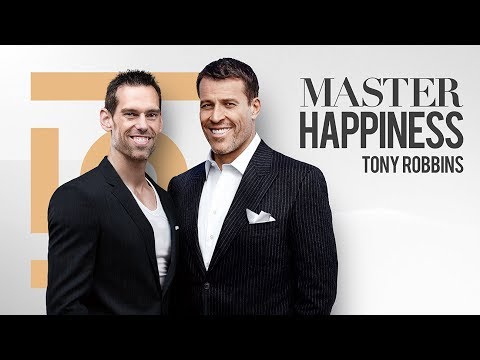
Tony Robbins gave this interview on Inside Quest in 2014 about happiness, mastery, and how progress, appreciation, and conscious decisions shape fulfillment.
Also known as: Inside Quest #40; Master Happiness; Decide to Be Happy.
Tony Robbins argues that happiness is not a reward that arrives later, but a state you create through progress, appreciation, and conscious decision-making. He says people suffer when they trade immediate experience for future expectations.
He also connects happiness to mastery: in work, money, relationships, health, and time, dabbling leads to frustration while deep commitment creates fulfillment. His answer is both philosophical and practical: change your state, choose a better focus, and keep growing.
The interview also shows how Robbins applies these ideas in his own life and work, from modeling great performers to preparing deeply so he can help others with more precision and impact.
An Inside Quest host frames the episode and interviews Robbins; Robbins speaks throughout the main conversation.
In his words
“Progress equals happiness.”
“I'm unstoppable because I decided I am.”
“Master money instead of being mastered by it”
“Trade your expectations for appreciation”
Key points
- Progress, not possession, is what creates lasting happiness.
- Happiness is a decision and a practiced state, not something the outside world gives you.
- People often confuse motion with achievement; mastery requires going deep, not dabbling.
- Money is a tool and an actuator: it magnifies who you already are.
- Fulfillment comes from adding value, camaraderie, and meaningful contribution.
- Robbins emphasizes modeling successful people and extracting the common patterns that work.
- Preparation matters because it lets you improvise effectively and serve at a higher level.
Full transcript: Tony Robbins, Inside Quest interview on happiness (2014)
Hey everyone, this is an episode of Inside Quest that's really unlike anything we've ever done. So, wanted to give you a little bit of context. The team here had the distinct honor of being invited to film our episode of Tony Robbins at Tony Robbins' house in Florida, which was an incredible day for all of us to be welcomed into his home and really get an intimate look with him, which was something that I don't think any of us expected and ended up creating a really fantastic episode. Hope you guys enjoy watching it as much as we did making it. It was a lot of fun. Hey everyone, welcome to a very special episode of Inside Quest. If you're a longtime viewer of the show, you know that my goal is to help people out of the Matrix, and as someone who used to be trapped myself, I know escape comes from cultivating an empowering mindset.
Changing my way of thinking and acting changed everything about my life. It impacted me so positively that I'm driven by a deep desire to help others do the same. Inside Quest is my way of continuing my own education and introducing you all to the types of people and ideas that set me free and ultimately help my partners and me build a billion-dollar business. I don't say that to brag. In truth, I don't believe that there's anything fundamentally different or special about me. The key to my success has simply been an obsessive drive to develop and actuate my potential. The world is full of amazing examples of people with that same obsession of what can happen when you stop making excuses, turn your shoulds into musts, and take a real hard look at the often surprising motivators that
drive human behavior. Sitting next to me is one of those people who helped me develop an empowering mindset, though he didn't know it until recently as we're meeting face to face today for the first time. And while I very much doubt this man needs an introduction, going over the list of his accomplishments is worth doing because it's a powerful reminder of just how much is truly possible in life. So buckle up, here we go. Tony Robbins burst onto the scene of personal improvement in the '80s and has since gone on to establish himself as the literal giant in a world of human peak performance. His instructional course, Personal Power, sold more than 40 million copies worldwide, and the live events that he has been putting on for more than 30 years in over 100 countries are
unparalleled in scope and impact. He's created five award-winning infomercials that have aired every 30 minutes, 24 hours a day somewhere in North America for over 25 years. He's written three best-selling books, consulted or advised a litany of the world's most powerful and talented people, including three U.S. presidents, Bill Clinton among them; Margaret Thatcher; Nelson Mandela; Mother Teresa; Mikhail Gorbachev; Princess Diana; multiple branches of the U.S. military; and countless athletes and celebrities, including Serena Williams, Andre Agassi, Leonardo DiCaprio, and Oprah. Over the years, he has also become a powerful business consultant, advising some of the biggest names in the corporate world. His work and words have appeared in Time, Newsweek, Forbes, Fortune, Life, GQ, Vanity
Fair, BusinessWeek, and Success magazine, just to name a few. Additionally, he's been interviewed by just about every television network there is, and as if that wasn't enough, at one time or another, he has directly run 12 companies and indirectly run 12 more. If you attributed all of the revenue of the entire Tony Robbins family of companies to one company, it would be in the Fortune 500. But what really makes him interesting to me especially is that despite his astronomical level of success, what this former homeless man—yes, was once homeless—has done in business pales in comparison to his philanthropic efforts. The Anthony Robbins Foundation programs are in use in more than 2,000 schools, 700 prisons,
and 100,000 health and human service organizations. And through his foundation, Tony feeds millions on an annual basis. Tony is so passionate about feeding the hungry that even before his most recent bestselling book, Money: Master the Game, was published, he'd already committed all of the profits to feeding those in need, aiming at feeding upwards of 100 million people in a single year. Incredible. I hope you're as excited as I am to spend time with a man Accenture named as one of the top 50 business intellectuals in the world, Harvard Business Press called one of the top 100 business gurus, Supreme Court Justice Byron White called one of the world's outstanding humanitarians, and Oprah Winfrey said is simply
Supreme, Tony Robbins. Tony, thank you so much for being here. That was quite an introduction for you. First of all, there's no universe in which you have sympathy for me. I watched you for 12 hours grab people's attention in one of the most profound ways I have ever seen you, clock-like a marathon worth of walking, right during your seminar. I do 18 to 20 miles the first day, and the third day I do 26 to 27 miles, so it's kind of an ultramarathon weekend. But you're not just running like, if you were just running like “okay,” but the level of enthusiasm that you approach things with is absolutely astonishing, and you've talked a lot about how you do that, why you do that, and all that, so I won't ask you to repeat that. But what I want you to know, something that I know you must know deep in your soul, dude, it's really
effective, and when I sit back and I break down, because one of the things I want to go really deep into today is why what you do is so effective, right? So, in my own life, you honestly, like, you have changed the course of my life. It forced me to do the hard work and all that, but you've codified such a huge swath of the human experience and presented that to people and said, “Look, you do with it what you will. Some of you are going to do nothing. Some of you will be completely changed.” That's up to you. But for the people that it changes, like, understanding that the mind-body connection is so powerful and making people move and setting the example by moving around is truly incredible, so thank you. Well, thank you, thank you for sharing your story. I was so thrilled to hear about you and your partners.
Connecting over this in the very, very beginning, and look what you've built. I mean, you have to be so incredibly proud. It's crazy. Yes, we, we are very proud. And I think for the first time in our past company, it really was profit-centric, right? We made a PCT with each other that we would do whatever was most profitable, even if that meant missing an anniversary or not taking vacation. And I didn't take a vacation for six years, only to succeed and yet come up emotionally unfulfilled, which is hilarious because we were so aware of your works and it was one of the first things that we bonded over. To still fall into that trap really shows me how many people fall. But what's more important is you got out. Look where you are now. I mean, the level of fulfillment you have and your business goes way beyond the size of the business or the scope or the growth you have—that sense of adding value, that sense of deep meaning. I mean...
That's what keeps me going. People say, you know, how do you, why do you still do this? You know, I remember, I met years ago, I met Norman Vincent Peale, who was the original positive thinking minister, right? And I met him when he was 92 years old and, and I met him backstage and had this conversation with him and it was really great. And I said, I said, Norman, I said, why are you still doing these seminars in '92? And he said, Tony, there's still a few negative people out there. But if you feel so filled up, as you know, when what you do adds so much value to people's lives, it lights them up. I mean, what are you going to compare that with? You can't compare that with money. But if you run your business right and you add that much value, you do well financially as well. And then you have a combination of all those benefits. Yeah, it's really interesting. You talk about, you know, money as a marker for all those human needs that we have that...
...we're trying to meet. And ironically, most of them are not financial in nature. Exactly. But acknowledging, and this is one of the things I find so powerful in your work, is you acknowledge the uncomfortable truth that other people aren't necessarily going to want to touch on. So you say, look, money is powerful. Money can be used, and if you find significance based on contribution and it brings you money, that really can be powerful because money is an actuator, right? It does something, allows you to do, makes you more of what you are. If you're mean, you got more to be mean with. If you're, you know, giving as you are and your team is, you're going to have more to give with. So I think it just magnifies; it doesn't change anybody. But it magnifies it. And I think most of us have so much emotion tied up around money because we associate emotions that are more important to us, like freedom, to that or...
...security. And when you get to it, also people don't like to compare around that area. So what I try to do in this latest work I did with my book *Money: Master the Game* was to show people how to master money instead of being mastered by it, because you either master it or it masters you. And trying to pretend it doesn't matter in the world we live in doesn't make sense. The real secret is find a way to add more value to other people than any other human being in your industry, in your category. And if you do that, you won't have to worry about money whatsoever. It's so fascinating to me. And I'm, I'm grateful. Right? One of the things you say, which I have used in my life to great effect: you want to change your life, figure out how your worst day was your best day. Yeah. And I remember at our old company, I really had my worst day, and I was in such a dark emotional place of thinking...
I fought all this way for money and now I have it and I'm completely empty. And there was something almost worse about that. It sure is, 'cause you, you thought you had Nirvana and you got there and it was hell, right? You know, reframing that and saying, okay, but what, what did that force me to do? Right? What that forced me to do was really answer a truthful question for me, which is, what was my primary driver? Yeah. And for, in business and for me, my primary driver in business is camaraderie. And once I, 'cause I'm, I have partners and I have partners for a reason. And these are guys that I believe in and I love, honestly. And I can tell them that I love them, and we talk openly about emotion. And, you know, I mean, look, we do it like, knowing, "Okay, this may be a little weird, we're business guys talking emotion," but it's like, it's your family. Yes. Yes.
If you're going to have a long-ting relationship, you have to say, like, how did that make me feel? Right? That didn't make me feel good, or dude, this was amazing. Like, I love this. So once we were able to be honest on that level and be humans and, will you share—you were sharing with me before we got in camera—you shared the story. I thought it was really fascinating. You actually quit. Right. When did you share that? Yeah, I hit rock bottom emotionally. I went to my wife, and who's sitting there and is the love of my life, and I said, "Look, I can't keep doing this." And I had made her a promise. So her dad was very successful, and he looked me in the eye when I told him that I was going to ask his daughter to marry me, and he said, "Don't." Uh, like, basically, "How are you going to take care of my daughter?" And I said, "Sir, you're looking at a wildly ambitious man. I know."
That I don't have anything right now. At the time, I was destitute. Uh, I don't have anything right now, but one day I'm going to be a wealthy man. I'm going to take care of your daughter. And he has always been very kind to me but made it very clear that, "Hey, you could wait. No need to rush into marriage." But we did end up getting married, and, um, and so I promised her at that time, "Look, I'm going to make you wealthy." So here we had hit this point where all of this chasing after money had really left me empty, and I was willing to turn away and walk away from it all. And she said—I will never forget these words, and they changed my life—she said, "I bet on you." And that gives me the chills every time I think about it. And you talk about, you know, those moments that you really hold on to and you can really put yourself back in that moment. I can put myself back in that moment like right
now. I have the chills every time I get scared or worried about failing at something. I just remember her, at my lowest moment, telling me that she bet on me. And there was, in that T-C-I-D agreement, that it's okay if you fail, right? I know that you're going to get back up, you're going to keep going, you keep trying, and your relentlessness is what I bet on. And that was a beautiful gift. So I go in, and I say, "Guys, I can't do this anymore. I quit." And you gave back your stock. I gave back my stock. I said, "Look, I don't believe anybody who doesn't cross the finish line should get something." So I metaphorically pushed it across the table and walked out the door. And I've actually never told the story in this much detail. Uh, they called me, as I—so they were dumbfounded. They were like, "What just happened? I am pulling into my
house," and they call me and they say, "Will you come back? Come out to dinner with us?" So I go out to dinner and they said something which was a beautiful gift. They said, "Look, we could do this without you, but we don't want to." And it was like, "Man, I've already walked out. You've got everything back. Like, at this point, you could just let me go, go right, take it for yourself and run off and do it. There's enough smart guys in the world; you'd find somebody." And, and knowing that they could do it without me but they didn't want to was such a rad gift, and that like drew me back in. It really made me feel connected, and I thought, this moment, this camaraderie, is the truest thing that I'm after. Yeah. And so we said, okay. This—and they admitted they had felt the same for a long time; they were unfulfilled as well even though they were making a ton of money, sure. So they're like, "Let's do something
different." So we said, "Okay, what would happen if we built a company solely around delivering value to people? What would that look like?" And honestly, we didn't know. Like, are we committing financial suicide? Like, we're going to take everything that we've just built. We sold our company and we put it all into this protein bar company. Everybody told us we were crazy, and uh, we knew that we might fail. And we said, "Look, what would we do if we would that we could love every day even if we were failing? Because if we don't know if it's going to work, we might as well at least do something we'd love." And so Quest was the answer. And because we make every decision based on what we love, we've gotten into just really interesting stuff. And I really believe that the customers can feel that we're being totally—you have a special brand that goes beyond your products. It's a
lifestyle. It's a way of communicating. It's a way of thinking about life. And it's part of why you do these interviews too, right? It's all about extraordinary quality of life we have. We're in the same business, yes, and you're doing it from the nutrition side, but I see you also taking all that you've learned and then sharing with other people to empower them at any level they can be empowered. I mean, I feel like you're a brother on the path. Thank you, man. That certainly means a lot. So tell me, yes. When I—the thing that I think has made you so effective is not necessarily the thing you're most famous for because it happens offscreen, but it is the thing I am utterly obsessed with in you, Tony. And that is modeling. How did you—how did you model the financial industry? How did you model pistol shooting, which is an amazing story of somebody who does not know how
to shoot pistols and yet teaches the best marksman in the world how to do it faster? I mean, it's like utterly insane. But it showed me that you can take anything and figure out what the commonalities are in the best people and then pull that into your own system. It really started with my very first teacher, who was a man named Jim Rohn, and he was a personal development speaker, and he had this three and a half hour seminar he would do that I went to when I was 17 years old. I was already reading books. I was obsessed with wanting answers. I want to know what makes the difference in the quality of people's lives, not because I was intellectually interested but because I grew up in a really tough environment. I had four different fathers. There was a lot of, uh, my mom was a great human being who loved me dearly, but she, you know, abused both alcohol and prescription drugs, so she
Was very physically abusive, and I was, believe it or not, 51 in high school. I was a little guy, so I got, you know, beat out of me pretty regularly for things that I didn't do anything to do with. And so, it made me try to figure out what made her work, what makes life work. Made me more of a practical psychologist, and the modeling concept came because Jim Rohn used to have this phrase. He said, "Success leaves clues." He said, "If there's anything you want in your life, don't assume that somebody has some special gift. They may have a gift, but they probably developed it most of it. And if you sow the same seeds, you'll reap the same reward. So figure out what this person's doing different than anyone else and do that." He used to have a funny way of describing. He used to say, "Tony, find out what poor people read and don't read it," because he said that's the fabric they're trying to...
...build their mind from. Find out somebody who's successful, wealthy, not just financially wealthy, but somebody who's rich emotionally and spiritually and physically and financially, and find out how do they live their life differently. What are the things they believe? What are some of the daily disciplines that they're a part of? And so, really early on, I got obsessive about wanting to have all the answers, so I said, "I'm going to read a book a day," because I figured, you know, a person takes 10, 15 years of their life, they pour two, three, four years into this book, and you absorb in a few hours, literally a decade's worth of life experience, and I'm compressing time. So, I didn't read a book a day, but I read 700 books in the area of human development, psychology, physiology, all in my first real seven years of reading, right? My youth, in high school, I was Mr. Solution. You have a problem, I have a solution...
...especially if you're a girl. I was especially motivated. I could really help you with your boyfriend. But seriously, so out of that, I started developing this modeling concept, and then I learned neuro-linguistic programming, or NLP, and gestalt therapy and Ericksonian hypnosis, and I learned all these tools. But along the way, John Grinder, who was the co-founder of NLP, said—I said to him, "NLP isn't all these patterns. You can teach a dog patterns. They're beautiful patterns, don't get me wrong, how to overcome a phobia, how to do those things." I learned how to do all that, but I was bored with that. I wanted to—I wanted to go deeper. I want to figure out how you change the whole person, not just their fear in this one area or get them to perform at a different level. And so, I said to him, "Really, your skill, NLP, is really modeling." He said, "Tony, no one's...
...ever said that before." I said, "You went out, and you figured out the best patterns from the best therapists in the world, and you modeled those patterns, and you integrated them with other tools, and now anyone can do them, right? Not just the great person." And so, it kind of started with that for me. And then, you know, I became partners with John in a very short period of time. It was kind of—people were upset about it because I'd only been involved in NLP for less than four months, and people had been involved for 10 years, wanted to be his partner. So, it's kind of controversial. But part of what I did was I said, "I want to go and do things that people think are impossible. I want to take somebody who's in a coma and get them out. You know, I want to, you know, I want to take on the U.S. Army and say, 'Show us anything you can do, and I'll cut the training time in half and increase the competency.'" And so, John agreed, and the first big project I got...
...was the pistol shooting program. I went to this General and said, "I can cut the training time in half on anything." I didn't know pistol shooting, and I said—he goes, "You know, you're crazy." I said, "No, I'm expensive." We kind of negotiated. And so, the first thing he picks is this four-day pistol shooting program that they had worked on for, you know, almost 75 years, and he says to me, "Go do this, you know, right now. We have a third of the people that never qualify, right?" And I said, "Okay." And I—I thought I'd pull it off because John was my partner, he was in the Special Forces. We'd figured out the day I'm supposed to go, this is the great gift that John gave me, the day I'm supposed to go with him down to Langley, Virginia, and go underground and the secret area and work with all these different guys and kind of figure out how to model them. I figure I'm going to learn from John. He's the best model in the world. He calls me up...
...from a pay telephone in San Jose and says, "I'm getting on a plane. I got to go to Germany. It's an emergency. You're on your own, brother," and he hangs up. Oh. So now I've never shot a gun before in my life. I look like I'm 13. I was 24 years old, right? But I look like a little kid of such a young face. And I go meet these guys who've been shooting 24 years, or one guy was the best shooter in the armed forces as a whole, one was the best in the Army, and one was the best instructor. And so, they walked in and said, "Where's the instructor?" And I'm wearing jeans and a t-shirt, right? And I go, "I'm him." They go, "Where's the instructor?" And I said, "No, I'm him." They go, "How long have you been shooting?" I said, "Well, I never shot before, but this will be interesting," right? So, these guys look like I'm completely insane. I—I don't even shoot a gun to model, you know, I'm going...
To extract from you what works, and I didn't know what I was doing, but I acted as if. I just, like I said, "Okay, how would I do this?" Well, everything we do externally starts with something internal, right? We have an internal process, a visualization. We have internal dialogue we say, and if you use one dialogue or one visualization or one way of using your body, you're going to feel and behave differently than use another. So I got all three of them up there, and I said, "Here's what I want you to do: take the gun, take the bullets out." You first of all—they made me shoot a gun. They go, "Let's see you shoot." So they took a .45 caliber pistol. I had never used one before, and I didn't know how to kick, and I shot the thing, and it went up in the ceiling because, you know, the ricochet off it didn't build confidence. But I, eventually, I said, "Look, take your gun out," and I had him start practicing. "I stop! What are you doing? What are you doing?" And, a long story short, over a period of maybe three or four hours, I figured.
There were a lot of things idiosyncratic, unique to them, but there were some universals. And one of the most important universals that they all did, they weren't even aware of it—it wasn't subconscious—was when they took the target, like I saw the target 30 yards away and it looked forever away, they mentally bring the target closer, and when it's closer, you feel more certain, and when you feel more certain, you fire more effectively. Every single one did it. None of them were consciously aware of it. Once I understood that, I didn't just take new people and train them mentally to bring it closer. The first time I had people shooting a gun, they practiced everything perfectly just like the best guys in the world, and the first time they shot it, the target was where you are, and I'm right here. Boom! Right through the middle. Wow! I got this thing down versus me shooting the bullet in the ceiling, and then you lose all your confidence. So we do that like 20 times, and I take it 10 feet, and then 20 feet.
You know, then 30 yards, and it qualified 100% of the people. Wow! And we did it in a day and a half, not four days. Tripled the number of people playing at the expert level, and the colonel reported the general it was the first breakthrough in pistol shooting since World War I. So that led to code breaking, and that led to me then doing it in business, and then, you know, in more modern times, four, five years ago, I guess—in 2008 when I saw everybody losing, you know, tons of people losing, losing their homes, losing half of their net worth overnight. It wasn't like a statistic to me because I grew up really poor. I know what that feels like, and I thought somebody was going to do something, and when, 2010, two years later, nothing had changed, and the same people that basically destroyed the financial system, we punished them by putting them in charge of the recovery and giving them all our money. It was just
mind-boggling. There's a great documentary if your audience hasn't seen it, the one, an Academy Award called Inside Job. And I watched that film in 2010, and I got—you either get depressed or angry, because it shows you exactly how they destroyed our economy, shows that they're still in charge, they got no penalty. And so you're either like, "But there's no solution." So you're either pissed off or you're depressed because like, "What are you going to do?" I got pissed off, and I said I have one thing. I have access. I've been coaching a man named Paul Tudor Jones for 22 years now. And Paul is one of the top 10 financial traders in the history of the world. He's not lost money in 22 years, and nobody on Earth in his category can say that. So, and I coach him literally every day. He emails me, and then I go see him in person about every 90 days. So 22 years.
Of that, I've learned a little bit, you know. I know more about finance than most people ever dream of, and I got to go to George Soros. I got to deal with all the people he dealt with to help turn him around years ago when he was having trouble. So I thought, what if I interviewed 50 of the smartest financial people on Earth, not people from the lucky sperm club who inherited it, but people that started with nothing and found a way to add value and became multi-billionaires, and people in the financial area specifically? And so I set my sight on some people like John Paulson who had not done an interview in 10 years, and I got people that people have not been able to reach or get interviews with ever, and I got them to tell me things they've never told anyone. And then I put it in this 700-page book, because I didn't write the book to just write a book. I wanted to take anybody if
they were somebody who was totally just starting the journey, you know. Let's say, have a kid coming out of college who has student debt or a baby boomer who's late in life and not knowing what to do, or incredibly successful business person. I wanted whoever they were to be able to follow the universal steps that take them from where they are to where they want to be financially. And I was able to do it because I got it from the best. It's like there's not a word in that book that's my opinion when it comes to financial advice. It comes from Ray Dalio, the largest hedge fund in the world, 160 billion. A big hedge fund is 15 billion. When I was coaching him, when I was talking to him, he got a phone call from the premier of China who was asking for some coaching on some decisions they're making for China's currency, right? It was just—this is the kind of guy, you know, you look around and you
Go Carl Icahn. Carl Icahn, he agrees to do this interview with me. Carl Icahn is the most successful investor in history. Most people think it's Warren Buffett. Warren Buffett, since 1968, has had a compounded return of 20%. It's mindboggling. Wow. But Carl Icahn is 31% since 1968. But he's kind of an intense guy, so no, he doesn't get all the accolades, right? He sent out one tweet two years ago about Apple saying it was undervalued, and Apple went up $17 billion in 2 hours from one tweet. He was on the cover of Time Magazine; they called him the master of the universe. So I show up to interview him. This kind of gives you a taste and a feel of what modeling's like. I'd say I want a 45-minute interview. I had to work hard to get those interviews. I got him by referrals, you know, I worked one guy, got
such results, he referred me to the next. But I get there and Carl says, "Uh, no video crew." I was like, "What do you mean? You agreed to this." He goes, "No video crew." I said, "Okay, well audio team coming?" He goes, "No audio." I said, "No audio?" He goes, "Bring a pen and paper, kid. You got 10 minutes." My average interview is three and a half hours, right? 'Cause once I got in, 45 minutes I dug in deep and, you know, people saw it was real, they went for it, but 3 hours later, you know, I had Carl. So everything I do is either I have a problem I need to solve inside of myself, and I know if I can solve this for myself, whether it's something in your body or your relationship or your finance or your business, I can help millions of other people because once you figure out the pathway to power, once you figure out the pattern of effectiveness, the model, you can teach that model other people and they can
adapt it in ways that make it uniquely their own. But the foundation is there. And so whether it be money or relationship or your body, those models are there. And so my life is really about that process of modeling. Now I know how to take that and put it in an experience like you experienced it, you know, Unleash the Power Within, where people won't sit for a three-hour movie that somebody spent $300 million on. And I take them for 50 hours, five Z in a weekend, and people like Usher says, "Tony, I'm like, I love you, but I can't sit for, you know, more than three hours," and four days later he's screaming on his chair. Or Oprah said, "You know, Tony, literally cannot sit anywhere for more than 2 hours, please don't be offended," and 12 hours later she's standing in her chair screaming into a camera. This is one of the greatest experiences of my life. So I know how to, what I call E-COB it. I know that people want the information, but they'd rather
be entertained. So I entertain them first at a level where they're laughing, crying, moving, where time disappears because it's so incredibly entertaining. But then I also educate them with something that really changes their life: a tool, a strategy, an insight, a system. And then I get them to do something while they're there, which is empower them. So I call E-cubing. And that capacity to take 10,000 people and have them wired out of their mind, no matter who they are, if sophisticated financial trader or a young child, that's another skill set I have. But the modeling skill set, I think, is more valuable. Yes, I will definitely agree with you on that. It's absolutely incredible. And to take it another step, so you studied the brain, obviously? Yes. I've spent a lot of time studying the brain. Studying the brain led me to magic, 'cause magic is just an exploitation of
neurological things that we do: blind spots, things like that. And the thing that makes magic so beautiful is it isn't the sleight of hand—it's how much time it takes to learn sleight of hand. And the thing I don't think people really appreciate in magic, and the thing that I don't think people know about you at least not to the level that I need them to understand, because it will set them free, Tony, is the greatest magic tricks ever were the ones that you looked at and said, "It is either real magic," meaning you've bent the laws of physics somehow, some way, or you planned this so far in advance that no human would ever plan that far in advance. And of course, what's the answer? You planned that far in advance, right? So you get guys like, if
you've ever seen they pop the basketball stuff: you go to the basketball manufacturer and you say, "Hey, I need a basketball," and you just put the card inside the basketball, and you go to the team and you make sure that the ball gets there. But no one would think that. You go to the basketball manufacturer, like they just—they can't imagine. And there's this really famous story in magic of this guy that walks in and sees the mayor of his town, his coat is in a T.A., so he has a card to the coat that, just in case if he ever comes across this guy in a situation, he can UNO A, and if he doesn't, no harm, no foul, right? It's just planning ahead. When I was reading, I've read every word of that mega book, which is worth every single word of money—Master of the Game. Yes, it truly, truly, truly everyone should read that book. Otherwise, money really will take
control of you. But there was one part in it that it was like, "Whoa, whoa, whoa, whoa, whoa, stop, say that again," where you prepare for 18 hours for one of these interviews. That's correct. And that's when it became magic for me. That's when I realized modeling for this guy is an inhuman amount of work. My—if people ask my wife all the time, "What's something about Tony that nobody knows?" and she says the level he prepares. So that was Ray Dalio. I know I got a chance to be with literally the Da Vinci of investing. Most average people never heard his name, but you have to have, 10 years ago, you have a 5 billion net worth and you had to give him 100 million to start with for him to talk to you today. He won't talk to you and take your money how much money you have. He's he's closed...
His fund out, he won't—he won't do a dime more. So to do that, I couldn't—I couldn't consciously walk in and just say, "Okay, I've read everything that's available." I had to watch every video; there's only a few out there. I had to read every piece. I had to, like, tear it apart and see if I could understand his entire structure of investing so that when I was there, I could ask questions no one else was asked before. And as a result, he actually shared with me he's averaged a 23% return for 21 straight years: billions and billions and billions of dollars. Smartest man, one of the smartest men alive in that area. And because I understood so much, we could pitch and catch. You know, most people, they can just throw the ball. Right? But I need—I want to be able to throw the ball and have you throw it to me and throw it right back to you, right? That's where we
get something that's really exciting. And because I prepared at that level, he was saying to me afterwards, he goes, "You know this better than anybody I know." And he opened up more. And you talked to me in more detail. And in the end, he actually gave me a strategy that I said to him, "I said, look, I said Ray, I said you're one of the most generous men I know. I said you've just given me this incredible strategy," but the strategy was like explaining why most people lose money and here's how he's made money in every market, right? Pretty complex strategy. And I said, "The strategy is great, but it's kind of like you told me, you want to build a chocolate cake, get some chocolate, you know, get some sugar. You didn't tell me the amounts. I mean, the amounts are everything, right? Get the right amounts." And he goes, "Tony, I can't give you that. That's my secret sauce." And I said, "Ray, you can give it to me." He goes
"I can't." He goes, "That's my—that's why I get, you know, that's why, you know, I get the money I do." I said, "No, you don't. You haven't taken money for 10 years. I said you're going to give away half your net worth anyway. I said you just got done telling me the average guy's never going to do this. Help me out, give me your secret sauce." Right? And I got him laughing, and he goes, "Well, Tony, it's kind of complex." I said, "I'm good at taking complex and making it simple." He goes, "Well, I use leverage." I said, "Create one without leverage so the average guy could do it," right? And then I got this chill down the back of my spine when he said, "Well, it wouldn't be perfect." I said, "Your idea not perfect is better than anybody else on Earth. I said tell me." And then I took out a pen. I said, "Tell me the numbers," right? He looked at me, goes, "Well, let's try this," and he starts to lay this thing out. So when I'm done, I can feel vibration in my body like I got something nobody's got that I can give to the world that would be extraordinary.
And I go—he goes, "Go test that." He goes, "Don't—when people talk about testing, they look back 5 years or 10 years." He said, "But the past doesn't equal the future that way." But if you were to test something over 75 years, the entire modern time of history, that's what you should test, that formula. Back-test it for 75 years, come back and tell me what you get. 85% of the time, it's for 75 years. Think of how much the world has changed in the last 10 years or 20 years. 85% of the time, it makes money. The 15% of the time it didn't, the maximum drawdown in 75 years was not 20%, like you've seen, or 30 or 40, you've seen in the marketplace over the years: 3.9%. Average loss is 1.7; average gain is 10%. So if you could go to Vegas and you
could be right 85% of the time, and when you lost, only lose, you know, 1%, 1.7%, how you—you'd be—you'd be investing a little bit; you'd be gambling a little bit, right? So he gave that to me. So I got those types of things because I was so prepared. And so when I go to do an audience, a big audience like I do my Date With Destiny seminar, people do 20 pages of homework. And I read all that. For a couple thousand people, I won't remember their faces, I won't remember—it’s in my brain. When somebody stands up, something inside me recognizes the pattern or recognizes this is the pattern that multiple people in the room need to deal with. And my brain clicks in and makes it happen. So I believe, you know, garbage in, garbage out. As simplistic as it is, that if you keep putting unbelievable quality amount in, when it's time for you to cash that spiritual,
emotional, physical, financial, business check, it ain't going to bounce because you've been making deposits and you have plenty to give. You're not—you're not just winging it to see what happens. So I'm intense about that. But I also love it because it just—I'm always growing too because I'm always learning more than I need to teach anybody else. Yeah, that's—that's—it's one of those things that like I want to make sure people are hearing what you're saying because the level of preparation allows you to go off script, right? So if you're going to be doing—the pitching and catching, it's not possible if you're having to, like, sort of process what they're doing in real time. You have to walk in with just that wealth of knowledge. And it's not just people—you use it to great effect with people, that's very, very clear—but it isn't just people, it's anything that you're
Trying to be great at right to, to go in and just put an in. It's about not being an effing dabbler. I can't stand it. We live in a culture where most people are dabblers today, because today it, if you ask me, what does it take to be happy and give it? You one word: progress. Progress equals happiness. When you're making progress in your body, even if you're not there yet, you feel good. You achieve your goal and you just sit around, you're not happy. We got to grow. We got to make progress. It's easy to make progress in the beginning of something, in the beginning of a relationship. Who doesn't have a good time, right? In the beginning of starting a business, if you love what you're doing, of course you're going to have a great time in the beginning ending. It's easy. A job, it's fun in the beginning. It's novelty. It's new. Mastery is when you've
worked, you know, in the beginning, learning a sport, how fast do you learn tennis? I mean, just like zooms up here. You didn't know anything. You thought love, you know, was an emotion. You find out it's a score. You know, you go like this. But then you hit this plateau, and most people hit that plateau. They go, wrong job, wrong relationship, wrong business, 'cause it's not instantly fulfilling them. But the people that go, "I'm going to fight through and go deep. I'm going to find a way to break through. I'm going to find a way to learn and know more about this than any human alive so that I can help as many human beings as possible," and it won't be [ __ ] it's CU. I've lived it. There is a power in Mastery. And how many people do you know are really committed to Mastery today? Most people dabble in a million things, they master nothing, and they wonder why they're unfulfilled, 'cause they're running for the sugar, the next thing that feels good, good, instead of getting past what
doesn't feel good and getting to where you own something that's really—that's what my life's about. And I think in people's lives, there's only maybe half dozen, seven, eight categories that really matter. Most people, you know, they major in minor things. They focus on stuff that doesn't matter. They know more about this celebrity going in and out of rehab than they do about their own personal development. But I look at and say, if you look at your body, where you're starting without that, everything else is out the door. You don't want to be richest man in the graveyard. That's not going to do it. If there is energy, if there's vitality, if there's strength, it's going to show up in your relationship. It's going to show up in your business, show up in your life. That's—now you've got to master. You can't dabble. It's too important. Emotions are everything. I mean, you got a ton of money, you got everybody loves you, and
your primary emotions are pissed off and frustrated, then your life's pissed off and frustrated. Doesn't matter if you got a billion dollars or a million people loving you, your life is not great. Relationships, intimate relationships especially, it's where the most juice in life comes from. It's where the most pain comes from. Most people, it's worth mastering instead of dabbling. You know, really looking at what are you going to do with your time and mastering your time instead of having a checklist you cross it all off. You can mistake movement for achievement. I want to squeeze out of that time what matters, that creates value for me and for everyone I care about and love. What about your career or your business and the mastery of that—that of dabbling? Most, most businesses are dabblers. It's why they don't make it. Ninety-six percent, you know, any 10-year period of time, 4% make it. That doesn't even mean they're profitable and
it does not mean they're enjoying themselves, right? Or they're getting anybody else to feel good, really mastering money so that it's not a question in your life. You can do and be and give and share as much as you want. You're not stressed about it. You live in a place of abundance. And then spiritually, really, I think—I don't tell people what to believe spiritually, but I believe that ultimately whatever you believe, you got to live it and it should lead to growing and giving. If you're growing, you feel alive. If you're giving, you feel ten times more alive. And I think if someone can celebrate and give in that spiritual state. So to me, those are the areas I look at mastering. You know, business for sure but it's the areas of life that matter most. And most of where we spend our time doesn't make people feel fulfilled. That's why the average person is not fit and healthy, the
average person is not in a relationship where they have tremendous passion. You know, I'm not a dummy. I'm not a positive thinker. I know the truth. The average person is not successful in business. The average person is not earning what they want to earn. But you know what? Very few people have those things, but a few do. A few are happy, fulfilled, spiritually alive, financially strong, their business is growing, they have passionate love affairs. And I'm obsessed with finding the few who do and find out what they do different and teaching to everybody, learning it for myself and teaching everybody else. All right, so you've told people then what they need to do roughly, how, a little bit of chocolate, a little bit of sugar. Now let's talk metrics. It's another thing that people don't push you on, but I know you do this in your seminars, certainly in the one-on-ones is
You give people metrics by which the year—um, the final thing that, not now, but in a minute, we will get to the thing I really want to ask you, okay? But to do that, we need—it's going to be metrics driven. So what are—and let's make it hard—in the psychological emotional category, what are the three most important metrics people need to judge their progress by? Well, in the psychological realm, um, everyone's going to measure themselves differently because everyone values things differently. Some people value success or significance. Some people value love more. Some value just basic levels of certainty. Um, so when I look at the specific metrics, I really look at metrics of what are the things that need
to be measured to know if your life is going to work or not. So I look at it as our whole lives are guided moment to moment by the state. R in learning how to change your state—not [ __ ], not fake—but to go from pissed off, frustrated, freaked out to back in your center or creative or determined or something that's going to move you forward. It's going to create a better quality of life for you and others. That's a critical skill set. So moment to moment, our life's controlled by our states. You know, if you're in an angry state, you're going to respond differently than if you're feeling playful. But what controls those states long term is your model of the world, your worldview. And I look at that as having as a metric three things that I look at. I look to see first, what are the targets you're after? The target is—everybody has the—everyone has
different goals and dreams and desires. But as I travel around the world to 100 countries, I started going holy [ __ ] I'm seeing the same problems. What's underneath it? I began to see that there are these same six human needs that we all have. The same needs. We all have a need for certainty—that we can avoid pain and we can have some pleasure, some comfort. We all need uncertainty; we need variety or we feel dead inside. If you're totally certain, you're bored. If you have total variety, you're like, freak out. And it's not a balance; it's learning which of these you need more as a person. Everyone's developed a different set of values in that area. Um, need of the need for significance—to feel unique, special, important. The need to feel love. The need to grow. And the need to contribute. Some people value certainty at the top of their list. That's the center of their target. I don't want to do anything
unless I know it's going to work. I don't want to do anything unless it's the same. If you change anything, they freak out. If certainty is the number one thing on your list, everyone has the same needs, but if it's number one, I know how your life's going to be. I can predict the direction of your life and therefore the destination to some extent. If you're driven by love first, you want certainty too, but love is higher. You're going to behave very differently than if you're driven by significance. I have to be the one. Your experience in business was trying to be significant by making enough money and being successful enough that you would feel what you really want, which is that feeling of love, what you call, uh, uh, not what would you call it—camaraderie? Thank you, camaraderie. So that feeling of—it’s really love. It's a friendship. It's camaraderie. It's
that component. That's what really drives you. And so you figure how to organize your life where that's the driving force. And now look what you've done: you've flourished, and everyone around you is flourishing. So I look to see which of those needs are the top two on your list because they control your life. The two that most people have—90% of the planet—if you said, of all these needs, which one do you really focus on most day-to-day? Everybody wants love, but what do you focus on? Most people focus on being significant. We live in a Facebook world where people fake their life, put new filters, make it look different than it really is, tell stories that you know are totally full of it to make themselves look good because we live in this kind of false world where significance is more important than love, right? And it separates us. And the other one that we see most often is certainty. People want
to be certain before they can do something. You couldn't have started a business like you had if you were absolutely certain before you started. You can never build a business with that. You can never build a great relationship because if it's based on certainty, then everybody's got to stay the same and never change, which means you're never going to grow, which means you're going to be miserable, right? So my metrics are—I want to find out what's driving you, and I want to see—is it healthy or unhealthy? You can have two people be driven by significance though and do it with a different set of rules. That's the second piece. I measure the beliefs or rules of how to fill that target. So, Osama bin Laden: certainty driven, love driven, contribution driven, significance driven. Not hard to figure out on a zero to 10, he was a 10 for significance. He was the… whatever. I'm making the number up. I
think he was like the 27th child of his father, 22nd child. Most people don't know that. Totally insignificant, not skilled, took his dad's money, went over to Afghanistan, and suddenly because he had money, he became significant and he started—he wasn't even part of that movement at that stage. It shaped him. So what does he do? He's going to figure out his model of the world is, "I'm significant if I destroy you." Right on that same day of 9/11, there were men and women in the fire department, police department, that were also driven by significance and contribution, and they went into that building knowing they were likely going to die to save a stranger. Both people driven have a significant life: one is by taking life, one is by giving their own life. So once you understand the metrics using your
Language of what's driving you, and then the rules or beliefs of what does it take for you to feel loved. It's different for everybody. What does it take for you to feel certain? Some people need a billion dollars. Some people just need to trust God. Okay, but if your goal is, let's say they come to you and they say, um, maybe my primary driver wasn't growth before, but now I know it's not. Um, that's a more important need to focus on. It's the need of the spirit. Um, what metric would you tell them to look at? Like, how do they know? Am I growing? Am I making progress? What do they use as a check and balance? You have two different pieces. Maybe it should chunk up to 30,000 ft. Here's my mission: help people have an extraordinary, magnificent life. Yeah. Now what does that look like? Life on their
terms. So your terms are completely different. So your metrics might be, I want to do this in my business, I want to do this in my body. You be that way. Somebody else might be, I want to be happy no matter what happens. That's my metric. I want to literally be honest that when I start to feel any form of suffering, I kill it like a dead bug and I crush it and I'm back into a beautiful state. But you've said if you can't measure it, you're not going to get any better at it. So how do you measure toe? But you can measure that. You can say, how often am I, like, for example, happy state 0 to 10, where are you? If I said right now, how much enthusiasm is in your body 0 to 10? Right now, what would you say? 10. 10. So you can measure and say, I'm not going to drop below an eight in my life unless I'm freaking sleeping or I'm deciding I'm going to rest. This is where I want to play my game. So it's different
for everybody. But I want, I want to be more clear about something. An extraordinary life is life on your terms. And there's two parts. Part one to have an extraordinary life is mastering the skill of the science of achievement. How do I take what I envision and make it real? And how do I do that quicker, faster, better, easier? The ability to manifest what you come up with and make it real, like you've done with your company. That's a skill set. I spend an unbelievable amount of time helping people do it faster, quicker, better, showing them the shortcuts, teaching them the strategies, modeling what works. You can save yourself a decade. But I would submit to you that having done this for 38 years with, you know, 50 million people at this stage, I can tell
you that the science of achievement—there are a lot of people that are damn good at that and they still don't have an extraordinary life. They have an extraordinary life. You see it as extraordinary, but I get the phone call from the multi-billionaire who tells me he wants to do this thing in his business. But what he really find out is he's miserable as hell, and he's hoping somehow I'm going to rub off on him on that side too. And so I give him what he asks for—the change in his business—but I also give him what he needs, which is the change inside of him. So the second skill is the art of fulfillment. If you want an extraordinary life, you can't just achieve. You got to be fulfilled. As simplistic as that sounds, but it's an art. It's not a science. Sure, it's a science to making money. Come on, any age, any color, any background, any gender: if you do these things, you'll have an abundance of money. You do these things, you're going to have too much month at the end of the money. You're going to
have financial stress. Right? Body—everyone's biochemically different. But you and I both know there's fundamental rules, laws. There's a science to the body. You violate that science, you're going to have disease, you're going to have low energy. You align with that, you're going to have an abundance of energy. It's going to affect everything in your life. It's a science. Fulfillment is not like that. Fulfillment is as different as our human beings. You want to know what God or the universe likes? Look at the jungle. Look at the forest. It's diverse, right? So most people think, "Well, I want to get that," because they've been modeling somebody else, and that might work on how to achieve something. It'll never work for what'll fulfill you. How many people you know like, you got what you thought you wanted, and you weren't fulfilled? And that—I always tell people, success
without fulfillment is the ultimate failure. The ultimate failure. 'Cause if you go at something and you fail and you're an achiever, you don't fail. You go, "I learned something. I'll just try something else. I'm going to still get there." But when you succeed and you're not happy, you're technically screwed. It's just like, what are you going to do? So, a perfect example of this—I mentioned in the seminar, you were there—because it hit me about a what, about a year and a month ago, we lost what I consider a national treasure, Robin Williams. And I asked people, how many you love Robin Williams? Everybody was racing all around the world, right? He made people laugh. People were touched by him. So how good was he at the science of achievement? I mean, he wanted to be a great comedian, make the whole world laugh. He did. He wanted to have his own TV show. He did. He wanted the number one show. He did. Did it. He wanted to make movies. He did. He wanted
To have an Academy Award for not being funny, dramatic, and he did it right, did it. He said he wanted a beautiful family. He achieved everything, and he hung himself. That's crazy. And I know recently someone's saying, "Well, you know, he had dementia, he had drug abuse, he had alcohol abuse most of his life," 'cause he made everybody happy but himself. That's the ultimate failure. So if I had no other message to offer your viewers, and you let me give it to them right now, I'll tell you what I believe. I believe our lives are controlled by one force: decisions. I certainly believe in a force greater than myself. Call it God if you will, grace, whatever you want to call it, the universe. But I also believe it gives us choices, and the decisions we make
control us much more than the conditions we meet. It's not the conditions, it's your decisions. Decisions what to believe, decisions what to do, decisions what to give. I say to people, think about, you know, look back 10 years ago, 5 years ago, 15 years ago, and think of a decision you made that if you would have made a different decision, you'd have a totally different life today. Better or worse, I don't know, but totally different. In your case, if you'd stayed doing what you're doing, you have a lot of money and still been miserable, right? You know, and probably your great lady over here would be feeling miserable because she loves you so much, and she'd be feeling your misery, wanting to figure out what to do. But you made that decision, right? The most important decision you can make above any on the face of the earth is deciding that no matter what happens in your life,
no matter what happens, you're going to live in a beautiful state. What the hell does that mean? It means that you're not going to suffer. It means a beautiful state is that you're going to be happy. And but that's only one, or you're going to feel creative, or you're going to be passionate, or you're going to be in awe of something, or you're going to feel love. Any state that's a beautiful state is really the core essence of who you are without fear, right? All of our suffering as human beings—I deal with people all the time—I mentioned you off camera, two people I coached yesterday: one’s a presidential candidate and the other one is a rap superstar, right? Both in the same day and without naming any names, people that have everything about
your point of view—most people's point of view—they have the fame and they have the love and millions of people love them, and they have great economics, financial freedom, and they have homes, and they have, they have, they have the fashion, they have everything. They're the [expletive]. I can't tell you how many of them are miserable, right? The majority are miserable. I'm not bullshitting. I'm the one who gets the phone call from the vast majority. When I say miserable, they're so used to it some of them don't even realize they're miserable, but most do. They get in a place where it's like, how do I keep this up? How do I keep outdoing myself? How do I, you know, I built these 32 companies; how to keep all 32 going and make them all grow every single year. And that's not how life is, right? And then they worry about what will people think, what will they do. So the decision to say I am not going to
suffer, that if suffering arises. Pain's one thing, suffering is another. Suffering is when you're like—I'll give you an example. A friend of mine is a very famous Indian industrialist and billionaire guy, and he just recently took a sport in India that's been around 2,000 years that almost every village child plays, and he turned it into a professional sport. No one had ever made a professional sport. Two years ago, he invested—I don't know, I’m making the number up—$20 million in it. In 2 years, the sport is so successful in India that 500 million people watched the finals. That's amazing. Two months ago, 500 million people, right? So half a billion. That's, you know, that's how it’s in India, and people are saying this is going to be as big as, you know, for them, cricket is the ultimate thing, right? Big
as cricket. So his team valuation—I’m making the number up—I think it's gone to like half a billion dollars in two years from, you know, $25 million. And his team is number two in the whole world, right? He's got these great players. So I’m with him, and he gets a phone call. And he just got done telling me about this great success and where it is and how proud he is and how everyone goes to the games and people are so thrilled, and it's just become this movement in India, and he created it. He's so proud of it. And he gets this phone call, and the phone call is from his management team telling him that one of his competitors has just offered four times as much money as he was offering to his top three athletes, wow, who are the core of his whole team. And of course
they all took that, right? And he was so angry. He was like, "I can't even believe this. These guys were working in shops and I brought them here and I made them a star on national television, and they have no loyalty to me," and he's suffering. And the way you suffer is you focus on yourself, right? Suffering comes when we obsess about ourselves, what we're getting or not getting, what we should have done, what we others should have done for us. It's the me, me, me, me, me game. You, my dear friend—and I say this with no blowing smoke—your primary core is a giver, which is why you're prospering. You're not the me, me, me; you're like, how do I give more, do more, share more, create more? How do we do a better job for our clients? How do you do a better job for our internal customers who work with
Us, our partners, your entire life is that. That's why you're prospering and you're not feeling suffering. But when you do suffer—and I promise, you do—correct me if I'm wrong, it'll be because you're worrying about something in the future. How's this going to happen? Will this come together? Suffering can be worry; it could be anger; it can be frustration. It's anything that takes you out of the beautiful state. And here's what people don't get: you can end suffering by stopping focusing on yourself and focusing on something you want to serve greater than yourself—your children, your wife, your mission, your life. You can get out of it in an instant because the nature of the human mind is to constantly compare things. Your mind, your brain, is a two-million-year-old device, and it is not designed to make you happy; it's designed to make you survive. It's designed to make—
You survive, right? And that's why it's always looking for what's wrong. It used to be, "What's wrong? A saber-toothed tiger. I can protect myself." Now, people are worried about what people think about them, or do they have enough money? When two-thirds of the planet lives on $2 a day and you're making $38,000, you're rich. The poorest of the poor in our country are considered rich. That's not—I'm not saying they should stay that way, right? But you can only build on success. And so my view is, if you're watching, if you're listening to this, my goal would have you consider something: life is short. We don't know how short it's going to be, but if you only had a week to live, I bet you wouldn't allow yourself to suffer over a little crap that makes you crazy normally. I think you would probably spend time with those you'd love; you would do what you love; you'd
take in a sunset, you'd smell the air, you would take in everything in those final moments that you possibly could. So my thing is, why wait, right? Why wait? Why not just decide that if I start to suffer, I know the solution, because suffering is me obsessing about me. You might say, "It's not me. I'm worried about my kids, 'cause they're not doing well." No, you're worried that you haven't done enough for your kids; it's about you still, right? Yes. You know, you're worried about what was done, what you should have done, or what shouldn't have been done, and you can end that in an instant by becoming aware of it and saying, "I have made the most important decision of all: I'm going to live in a beautiful state," because here's what's going to happen. Anybody watching, you may lose a family member—you probably will. Somebody may get cancer. Your business may— the government
might change the rules. They might change things radically that you can't even do anything about. You might go bankrupt. You might get divorced. I'm not saying anybody will, but sure, no one knows what's going to really happen in your life. Life's full of uncertainty. But here's what you can know: you can decide then what happens. You could have a great time. If somebody like Viktor Frankl can be locked up in Auschwitz and come out of that experience finding joy in the middle of Auschwitz, then human beings have a capacity they've undersold themselves on. We think that the outside world determines how we feel. If people have to behave a certain way, if your husband or your wife or your kids or co-workers or whoever, your boss, has to behave a certain way for you to be happy, and if they don't, you're unhappy,
then you're always going to be unhappy because the more people around you, the more they're going to change that, 'cause they're all human, right? And if you have to be a certain way to be happy, you're going to violate it too. So my invitation is, as great as it is to achieve more, it's important to enjoy, right? And if you can enjoy every moment in that state when you're feeling loving, playful, passionate, curious, and awe—you treat other people 100 times better than when you're feeling frustrated, pissed off, overwhelmed, worried, stressed, or feeling sorry for yourself. You're going to be a better parent; you're going to be a better lover; you're going to be a better business person; you're going to have a better life. So my soliloquy is: decide. Decide today and actually say, "What if I cut it off? What if I said I'm not willing to settle and I'm just going to live in a beautiful state?" Doesn't mean you won't feel bad; it doesn't mean you
won't stay there. You instantly change. That's doable. I'm on a mission: help people end suffering. Yeah, it's an amazing mission. And I love one of the things that you've said about that, which is most people have a dirt road to happiness and a highway to anxiety or fear. And you've switched it, and you've got the highway. I'm wiring myself by practicing, and I mean, this goes back to your studying of neurology. There's like a real tangible usefulness to the things that you research, to the things that you do, to the way that you live. And it really pisses me off that people stop at the motivation. And the thing is, you are motivating, dude. But I get how people use that. I—ha—that's not what everything I've been—I—I believe in energy; I believe in inspiration, because inspired in spirit—the opposite of that is kind of dead, right? So I certainly, I
believe in being inspired, but I'm a strategist at my—you know, you're—if you're inspired and you run east looking for a sunset, I don't give a damn how enthusiastic you are, how positive you are; it's not going to happen. So I'm a strategist first. But I really do believe that people have got to look at their life and say, "As much as I want great strategy, I need a great philosophy of my life that's going to make me fulfilled." If you're fulfilled, like you said, you mentioned earlier, if you were with your friends and you guys weren't succeeding, but you're having a damn good time with this camaraderie, it's still worthwhile. And you can find a way to succeed eventually. But what the hell is success? It's hitting an expectation. And I always tell people, "Man, trade your expectations for appreciation," and it's a whole new world instantly if you can appreciate.
This moment, if you can't find ecstasy in this moment—in a conversation with a friend, looking in your wife's eyes, being with your children, going on a run—if you can't find ecstasy now, I'm here to tell you more money, more people, more love, more business, more anything is not going to give you more ecstasy. If you can't do it here now, you're not going to do it there when you have more. So why not do it now and have a rich life right now? I tell people money — that's one thing, like having financial abundance. There are skills; that's a science. But wealth, it's a decision. It's like, you can be wealthy right now. I have—I live in Fiji a good portion of the time. There are these villagers there; they're the richest people I know. They're happy, they laugh, they love. They don't give a damn about the economics. Other people say they're poor. When I first went there, I was trying to do things for them like, "What are you—
—talking about? I'm so happy." Wealthy people come over from the United States, and they go travel around and try to figure out what to do, and they're going to spend nine, you know, years to do this and this and this so they can finally sit down and be happy. And the Fijian guy goes, "Why don't you sit on the beach right now, dude, and experience it? Why spend the nine years? Why not have it now?" That's my invitation: why not have it now? I like that, Tony. I want to be respectful of your time, my friend. Thank you, this was absolutely incredible. You're a great man. Thank you, my friend. I appreciate that coming from you, and I definitely feel the same. Thank you, guys. I hope you've been paying attention. In this episode, I will recap it simply by saying a Tony Robbins quote: "I'm unstoppable because I decided I am." Tony Robbins. That [ __ ] moved me in ways that I can't—
tell you. Live your life today. Figure out the techniques that you need to actually experience the things you're going through. I promise you, I spent eight and a half years chasing a dream only to come up emotionally empty. It's not what you think. If you focus on doing things right now that let you experience and enjoy your life, you will actually stick with it. So I know that right now you're probably thinking about those New Year's resolutions that have already fallen by the wayside, even though we are in early January. The reason that you're not sticking with them is you don't have the right motivation. You're not chasing something that is literally pulling you through to it. This is all Tony Robbins, by the way. I am plagiarizing because this man gives so freely. But I'm telling you, once you find that motivation — that thing that you care so much about, that is so authentic to—
who you actually are, not who you want people to think you are but who you actually are — it will pull you through, and you will stay focused on it, and it will actually be fun. Make the demand that your life is enjoyable. It's something that we talk a lot about at Quest. We actually make the demand that what we do on a day-to-day basis is enjoyable. And that's what Tony's been talking about here, with deciding. You decide to be happy. That's a choice. That's up to you. If you don't make that choice, unfortunately, you will suffer the consequences, my friend, truly. I wish amazing things for you guys in this new year. I hope that you get what you want for yourself. But at the end of the day, it's about stopping making excuses. It's about turning those things that you want into things that you must have. Tony, as you have said, when somebody has to choose between dying and—
succeeding, they usually succeed. So guys, burn, burn the boats, and you'll take that damn island, right? That's how you want to take the island: burn the [ __ ] boats. Another Tony Robbins quote. And with that, guys, I will leave you until next time. Be legendary, my friends. Take care. (music) W (music)
From YouTube captions, lightly punctuated for readability. Timestamps link to the video above. Errors are possible.
Cite this recording
Tony Robbins, “Inside Quest interview on happiness (2014)”, 2014. Transcript and video: Thinkers Archive, https://thinkersarchive.com/tony-robbins/happiness-mastery-inside-quest-40-2014/
Quoting a passage? Link to its exact moment: every timestamp above has its own anchor (for example https://thinkersarchive.com/tony-robbins/happiness-mastery-inside-quest-40-2014/#t-135).