Privacy as Freedom
Why Cook calls privacy a fundamental human right.
The lesson
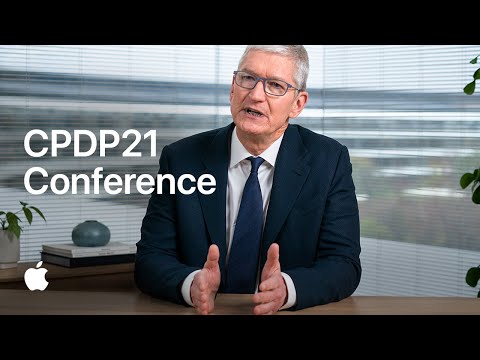
Cook’s privacy philosophy starts with a moral claim: privacy is not a premium feature or a matter of convenience, but a basic right tied to human freedom12. In his view, the stakes are larger than annoyance or targeted ads. When personal life is constantly collected, linked, sold, or exposed, people become less free in how they think, speak, and act34.
He connects that danger to a broader idea about technology itself. Technology does not automatically improve human behavior; it amplifies the intentions and systems behind it5. That is why companies cannot excuse harmful outcomes by saying the tools are neutral. If a business model depends on pervasive tracking or creates harmful social effects, the builder still carries responsibility for those consequences67.
From that starting point, Cook argues for a different product philosophy: serve the user first, and collect less data in the first place89. He repeatedly frames personal information as belonging to the user, which means companies should be restrained and deliberate when handling it10. In practice, that means minimizing data collection, doing more on the device when possible, and designing clear controls so people can make informed choices, as reflected in Apple’s emphasis on privacy labels and tracking transparency in these talks.
Security is essential in this framework, not separate from it. Cook argues that privacy depends on strong security, especially encryption, and he rejects the idea that companies can create special access points without weakening everyone’s protection1112. He also rejects the tradeoff that people must choose between a good product and strong privacy or between privacy and security1314. For him, a responsible product should deliver usefulness while still keeping sensitive information under the user’s control14.
Finally, Cook’s view extends beyond product design to public policy and institutional accountability. He supports stronger privacy rules, pointing to GDPR as an important foundation and calling for comprehensive laws in the United States and globally15. The principle is consistent throughout his remarks: technology should empower people rather than normalize surveillance, because a society that accepts constant monitoring will accept a smaller version of human freedom.
5 principles from Tim Cook
Treat privacy as a basic right
Start from the assumption that privacy protects human freedom, not just preference. When making decisions about products, policies, or workplace tools, ask whether they expand or narrow people’s ability to think, speak, and act without constant observation.
“We see it as a basic human right, a fundamental human right.”
Take responsibility for the systems you build
Do not hide behind the claim that technology is neutral. If your design choices encourage misuse, overcollection, or surveillance, responsibility stays with the builder, so review incentives as well as features.
“…the technology doesn't change who we are, it magnifies who we are…”
Minimize data and preserve user control
Collect only what is necessary, and handle it as something that belongs to the user, not the company. A practical test is whether the product can still work well with less collection, more on-device processing, and clearer user choice.
“Technology does not need vast troves of personal data stitched together across dozens of websites and apps in order to succeed.”
Build privacy on top of strong security
Privacy promises fail if the system itself is easy to penetrate or if special access weakens protection. Design with encryption and avoid exceptions that create vulnerabilities for everyone.
“…security is the foundation of privacy.”
Reject the false tradeoff between great products and privacy
Cook’s position is that useful, elegant products do not require exploiting personal data. When evaluating a feature, push past the assumption that convenience must come from deeper tracking.
“No one should have to decide privacy or security.”
Moments to watch
In his own words
The quotes behind the lesson, word for word from the transcripts. Numbers match the lesson above.
“…we believe that privacy is a fundamental human right…”
“We see it as a basic human right, a fundamental human right.”
“…we lose the freedom to be human.”
“We lose the freedom to be human.”
“…the technology doesn't change who we are, it magnifies who we are…”
“If you build a chaos factory, you can't dodge responsibility for the chaos.”
“Create. Define who you are. It feels a bit crazy that anyone should have to say this, but if you build a chaos factory, you can't dodge responsibility for the chaos. Taking responsibility means having the courage to think things through, and there are few areas where this is more important than privacy. If we accept as normal and unavoidable that everything in our lives can be aggregated, sold, or even leaked in the event of a hack, then…”
“…technology serves people and not the other way around.”
“Technology does not need vast troves of personal data stitched together across dozens of websites and apps in order to succeed.”
“So we choose a different path. Collecting as little of your data as poll, being thoughtful and respectful when it is in our care. Because we know it belongs to you. In every way at every turn, the question we ask ourselves is not what can we do, but what should we do? Because Steve taught us that's how change happens. And from him, I learned to never be content with the way that things are. I believe in mindset comes naturally to young people. And you should never let go of this restlessness. So today's ceremony isn't just about presenting you with a degree.”
“…security is the foundation of privacy.”
“…you can't have a back door in the software…”
“No one should have to decide privacy or security.”
“At Apple, we made our choice a long time ago. We believe that ethical technology is technology that works for you. It's technology that helps you sleep, not keeps you up, that tells you when you've had enough, that gives you space to create or draw or write or learn, not refresh just one more time. It's technology that can fade into the background when you're on a hike or going for a swim but is there to warn you when your heart rate spikes or help you when you've had a nasty fall. And that all of this always puts privacy and security first because no one needs to trade away the rights of their users to deliver a great product. Call us nïve.”
“Proving cynics and doomsayers wrong, the GDPR has provided an important foundation for privacy rights around the world and its implementation and enforcement must continue. But we can't stop there. We must do more. We're already seeing hopeful steps forward worldwide, including a successful ballot initiative strengthening consumer protections right here in California. Together, we must send a universal humanistic response to those who claim a right to users' private information about what should not and will not be tolerated. As I said in Brussels two years ago, it is certainly time not only for a comprehensive privacy law here in the United States but also for worldwide laws and new international agreements that enshrine the principles of data minimization, user knowledge, user access, and data security across the globe.”
Reflect
- Where in your work or daily life have you accepted data collection as 'normal' without asking whether it is actually necessary?
- Think of a product, app, or process you use or manage. How could it collect less data while still delivering the main value?
- When you make tradeoffs between convenience, measurement, and user trust, what would change if you treated privacy as a right instead of a feature?
Check your understanding
Go deeper
 Tim Cook on Privacy: Technology Should Serve People2021 · 12 min · full transcript
 Tim Cook on Privacy: Responsibility Before Credit2019 · 18 min · full transcript
 Tim Cook on Privacy and Encryption: No Back Door2016 · 8 min · full transcript
 Tim Cook on Privacy and Values: Leading With Purpose2020 · 37 min · full transcript
 Tim Cook on Privacy and Technology: The User First2021 · 30 min · full transcript
 Tim Cook on Steve Jobs Legacy: Privacy, Design, and Purpose2022 · 70 min · full transcript