What did Mark Zuckerberg say about how Facebook should handle misinformation and polarization?
Mark Zuckerberg says simply telling people something is false usually backfires, because they stop trusting you or become more entrenched. Instead, he argues that showing people a range of related content and viewpoints works better, because it helps them decide for themselves. He frames Facebook’s responsibility as expanding choices rather than pushing a single opinion.
“So what ends up working sociologically and psychologically, the thing that ends up actually being effective is giving people a range of choices. So if you show, not, "Here's the other opinion" with a judgement on the piece of content that a person is engaged with, but instead you show a series of related articles, related content, then people can work out for themselves, "Hey, here's the range of different opinions. "Or things that exist on this topic. "Maybe I lean in one direction or the other, "but I'm gonna work out for myself where I wanna be." Most people don't choose the most extreme thing. And people end up feeling like they're informed and can make a good decision. So, at the end of the day, I think that that's the architecture and the responsibility that we have is to make sure that the work that we're doing gives people more choices, that it's not a given single opinion that can dominate anyone's thinking, but where you can connect to hundreds of different friends and even if most of your friends share your religion or your political ideology, you're probably gonna have five or 10% of friends who come from a different background who have different ideas and at least that's getting in is well, so you're getting a broader range of views.”
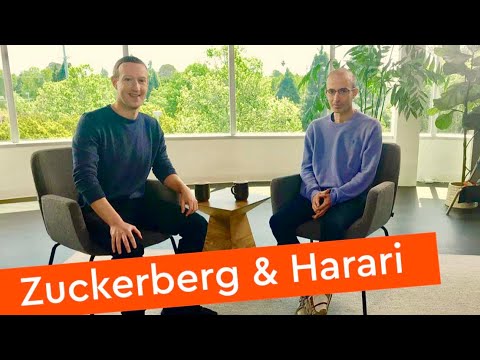
Key takeaways
- Avoid confrontational corrections that trigger defensiveness.
- Use related content to give people a broader information landscape.
- Preserve user choice instead of forcing a single viewpoint.
Context
Toward the end of the 2019 conversation, as the discussion turned to hoaxes, misinformation, and how platforms shape beliefs. The quote above is taken word for word from the recording's transcript.
In the transcript
…they just end up not trusting you. So that ends up not working. If you frame two things as opposites... If you say, "Okay, you're a person who doesn't believe, and you're seeing content "about not believing in climate change. "So I'm gonna show you the other perspective. "Here's something that argues that climate change is a thing." That actually just entrenches you further because someone's trying to control and...
So what ends up working sociologically and psychologically, the thing that ends up actually being effective is giving people a range of choices. So if you show, not, "Here's the other opinion" with a judgement on the piece of content that a person is engaged with, but instead you show a series of related articles, related content, then people can work out for themselves, "Hey, here's the range of different opinions. "Or things that exist on this topic. "Maybe I lean in one direction or the other, "but I'm gonna work out for myself where I wanna be." Most people don't choose the most extreme thing. And people end up feeling like they're informed and can make a good decision. So, at the end of the day, I think that that's the architecture and the responsibility that we have is to make sure that the work that we're doing gives people more choices, that it's not a given single opinion that can dominate anyone's thinking, but where you can connect to hundreds of different friends and even if most of your friends share your religion or your political ideology, you're probably gonna have five or 10% of friends who come from a different background who have different ideas and at least that's getting in is well, so you're getting a broader range of views.
So I think these are really important questions and it's not like there's an answer that's going to fully solve it one way or another. Definitely not it. But these are the right things to talk through. We've been going for 90 minutes so we probably should wrap up. But I think we have a lot of material to cover in the next one of these that we'll hopefully get…
Read the full transcript of Facebook A Year of Conversations series, 2019
Topics
More questions about Mark Zuckerberg
- What did Mark Zuckerberg say about Facebook’s mission and local communities?
- What did Mark Zuckerberg say about AI and whether algorithms can understand people better than they understand themselves?
- What did Mark Zuckerberg say about political content moderation on Facebook?
- Why does Mark Zuckerberg say technology should be open source?
- What did Mark Zuckerberg say about why he created Facebook and how he thinks about content moderation?
- What did Mark Zuckerberg say about censorship during COVID and the pressure from government?
All Mark Zuckerberg answers · All Mark Zuckerberg recordings
How this answer was made: the quote is checked word for word against the transcript of the recording and confirmed as the speaker's own words; the summary above it was drafted with AI from that transcript and quality-checked. Methodology and corrections.