What did Malcolm Gladwell say about Talking to Strangers being a sequel to Blink?
Malcolm Gladwell said he thinks Talking to Strangers is a continuation of Blink, not a contradiction. He points to the opening and closing cases in the two books—Sandra Bland and Amadou Diallo—as examples of the same core problem: people making disastrously wrong snap judgments about strangers. In his view, Blink began by asking when fast judgments work, and this book is the next step in showing their limits.
“Because what is the last story in Blink? - Amadou Diallo. - It's just -- so it's the last major chapter in Blink is about the shooting of Amadou Diallo, a young African man in the Bronx, who is -- a group of police confront him outside of his home and make a series of snap decision judgments of him that are all entirely wrong, and shoot him dead. Okay, what is the opening story of Talking to Strangers? The story of Sandra Bland, a young African American woman who was pulled over by a police officer who makes a series of catastrophically bad decisions about her and she ends up dead. I think of this is a continuation. This is part two of Blink. - This is a sequel? - Thisis a sequel. So Blink was a kind of journey through snap judgments that began with, well, when are they good? And then slowly began to kind of explore the notion that, actually they're only good in a very, very limited set of circumstances.”
Key takeaways
- Books can evolve into a new chapter of the same argument.
- Snap judgments are only reliable in narrow situations.
- Context matters when judging strangers.
Context
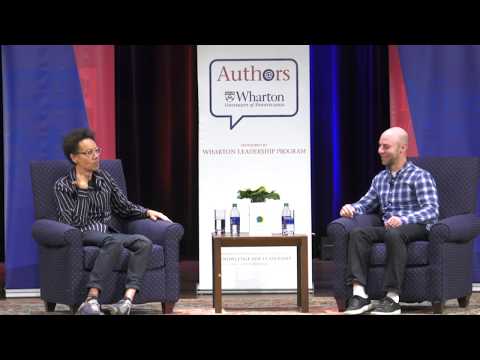
In an Authors@Wharton conversation with Adam Grant at Penn in 2019, Gladwell discussed how Talking to Strangers fits with Blink. The quote above is taken word for word from the recording's transcript.
In the transcript
…interesting observation. And that's the kind of situation that I kind of like. - Okay, so you found yourself in a new one of those now. So I read Talking to Strangers and felt like this is kind of the reverse of Blink, in many ways. - Well, now, interesting you should say that. What -- this is one case where I don't believe I'm contradicting myself. - Why not?
Because what is the last story in Blink? - Amadou Diallo. - It's just -- so it's the last major chapter in Blink is about the shooting of Amadou Diallo, a young African man in the Bronx, who is -- a group of police confront him outside of his home and make a series of snap decision judgments of him that are all entirely wrong, and shoot him dead. Okay, what is the opening story of Talking to Strangers? The story of Sandra Bland, a young African American woman who was pulled over by a police officer who makes a series of catastrophically bad decisions about her and she ends up dead. I think of this is a continuation. This is part two of Blink. - This is a sequel? - Thisis a sequel. So Blink was a kind of journey through snap judgments that began with, well, when are they good? And then slowly began to kind of explore the notion that, actually they're only good in a very, very limited set of circumstances.
And they're mostly kind of troubling. And by the way, it astonished me how few people -- and this maybe is a tribute to how badly that book was written. How few people understood what I was doing in that book. Like, actual serious professors of psychology. I was once on a train to Boston and I sat next to a neuroscientist. So like, I mean, with all due respect…
Read the full transcript of Authors@Wharton conversation, Penn, 2019
Topics
More questions about Malcolm Gladwell
- Why does Malcolm Gladwell say people need to slow down when dealing with strangers?
- Why did Malcolm Gladwell write Talking to Strangers?
- What is Malcolm Gladwell's main idea in Talking to Strangers?
- What did Malcolm Gladwell say about why drunk driving used to be called an accident?
- What did Malcolm Gladwell say about why people miss signs of abuse or deception?
- What did Malcolm Gladwell say about how A Star Is Born treated drunk driving?
All Malcolm Gladwell answers · All Malcolm Gladwell recordings
How this answer was made: the quote is checked word for word against the transcript of the recording and confirmed as the speaker's own words; the summary above it was drafted with AI from that transcript and quality-checked. Methodology and corrections.