The Andrej Karpathy Course
Graduate able to explain how neural networks, LLMs, Software 2.0/3.0, agents, and autonomy work—and how Karpathy thinks about building and using them.

- 13 chapters
- 81 verbatim quotes
- 24 recordings

“I was dissatisfied with artificial intelligence. When I saw machine learning, I was like, this is the AI that I want to kind of spend time on. This is what's really interesting, and that's kind of what took me down those directions. Is that this is kind of almost a new computing paradigm, I would say. Because normally, humans write code, but here in this case, the optimization writes code. And so, you're creating input/output specification, and then you have a lot of examples of it, and then the optimization writes code, and sometimes it can write code better than you. And so, I thought that was just a very new kind of way of thinking about programming, and that's what kind of intrigued me about it.”Heroes of Deep Learning interview, 2019 · 1:32
About this course
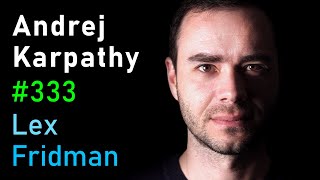
Andrej Karpathy is an AI researcher, educator, former Director of AI at Tesla, and a founding member of OpenAI. He is widely known for making deep learning, neural networks, and large language models unusually concrete through code-first explanations.
Karpathy’s central gift is turning abstract AI into buildable systems: tiny autograd engines, character-level language models, GPT reproductions, data engines for autonomy, and practical workflows for using LLMs.
This course is built only from real recorded talks, lectures, and interviews. Each chapter combines Karpathy’s own explanations with relevant answered questions so you can learn the ideas in sequence: foundations first, modern AI systems later.
Curriculum
- The New ProgrammingWhy deep learning changed what it means to write software.
- Learn by BuildingKarpathy’s curriculum: rebuild the thing until the abstraction becomes obvious.
- Backprop From ScratchThe chain rule becomes a machine for learning.
- Tiny Language ModelsNames, characters, probabilities, and the first step toward GPT.
- Tokens and TransformersThe machinery that turns text into GPT-style intelligence.
- How LLMs LearnFrom internet text to assistants.
- Using LLMs WellPrompting as practical engineering.
- Software 3.0Prompts become programs for a new computer.
- Vibe Coding OSProgramming shifts from typing code to steering, reviewing, and orchestrating LLM workers.
- Autonomy as Data EngineWhat Tesla taught Karpathy about real-world AI.
- Tesla Data FlywheelAutopilot improves by finding failures, collecting fleet data, labeling, retraining, and redeploying.
- Agents and Tool UseWhy capable AI workers are a decade-long project.
- Robotics, AGI, EducationWhere Karpathy thinks intelligence goes next.
- GraduateFinish every chapter to earn your certificate.








has graduated from The Andrej Karpathy Course, completing all 13 chapters on Andrej Karpathy's ideas, in his own words.
- Neural networks are not magic minds; they are mathematical expressions with many trainable parameters.
- Backpropagation is just the chain rule applied systematically through computational graphs.
- Deep learning is a new programming paradigm: instead of writing all behavior by hand, we define objectives, data, and architectures, then let optimization discover the program.
- In Software 2.0, the dataset is part of the source code, and data curation is a form of programming.
- Language models are best understood first as next-token predictors, then as compressed statistical models of internet-scale text.
- Tokenization is not a detail; it shapes model behavior, cost, capabilities, and strange failure modes.