Tim Cook on Privacy
Tim Cook argues that privacy is a fundamental human right because without it people lose control, dignity, and the freedom to think and act fully.
- Privacy is a fundamental human right, not a premium feature.
- Cook links privacy to human freedom: when lives are constantly tracked and aggregated, people think, speak, and do less.
- His practical model is user control, minimal data collection, strong security, and encryption without backdoors.
- He rejects the idea that great technology needs pervasive surveillance to work.
- He wants privacy protected not only by company choices but also by strong laws and global standards.

“We see it as a basic human right, a fundamental human right.”VivaTech fireside chat, 2021 · 4:25
Privacy is a human right, not a product feature
Cook’s starting point is moral, not merely technical or competitive. He repeatedly describes privacy as a fundamental human right, which means it should be treated as something people are owed, not something they bargain away for convenience.1234
That framing changes the whole conversation. If privacy is a right, then the key question is not how much intrusion users will tolerate, but what companies owe people by default. Cook ties this to a broader belief that technology should serve people rather than subordinate them.56
“We see it as a basic human right, a fundamental human right.”VivaTech fireside chat, 2021 · full transcript →
Why privacy matters: it protects human freedom
Cook’s strongest argument is that privacy is a condition for freedom. He warns that when personal information is constantly aggregated, sold, or exposed, people become less willing to think freely, speak openly, and explore without fear.78
This is why he treats privacy as more than a consumer preference. In his view, a surveillance-heavy digital world shrinks human possibility and social trust, because people adapt to being watched. That is part of what he means when he says technology should help people live more fully, not narrow their lives.7510

“We lose the freedom to be human.”Stanford Commencement address, 2019 · full transcript →
The real problem is surveillance as a business logic
Cook pushes back on the assumption that successful technology requires massive tracking. He explicitly rejects the idea that products need vast stores of personal data gathered across apps and websites in order to work well.11
He also makes the point in simple human terms: companies do not need intimate details about users’ routines just to provide a good experience. That reflects a deeper principle of restraint: just because data can be collected does not mean it should be.1213
This is also where responsibility enters his view. Technology, he says, magnifies human intentions, so companies cannot create harmful systems and then pretend they are neutral. In privacy, responsibility means designing against exploitation rather than treating it as an acceptable side effect.14
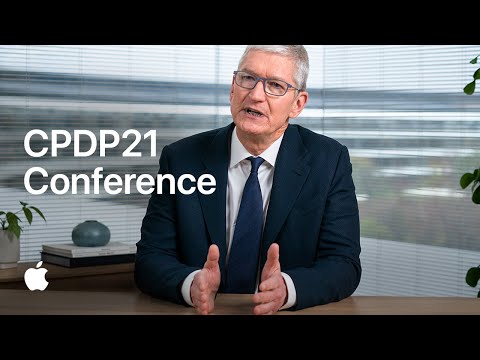
“Technology does not need vast troves of personal data stitched together across dozens of websites and apps in order to succeed.”Data Privacy Day panel, 2021 · full transcript →
Cook’s practical model: minimize data, secure it, and keep users in control
Cook’s privacy philosophy becomes concrete in a few recurring principles. Collect as little data as possible, handle it respectfully, and remember that the data belongs to the user. That is his basic model of control.13
He also treats security as inseparable from privacy. Strong security is not a tradeoff against privacy in his framework; it is what makes privacy real in practice.1718
That is why he defends encryption and rejects software backdoors. His argument is that once a backdoor exists, it cannot be reserved only for the good guys, so weakening security in the name of access ultimately weakens privacy for everyone.1920

“…you can't have a back door in the software…”WSJ interview, March 2016 · full transcript →
Privacy should shape new technology, including AI
Cook does not present privacy as a rule for an earlier internet era. He argues it should be built into new systems from the start, including AI. In his description of Apple’s AI work, privacy is a central design principle rather than a patch added later.22
He also connects this to incentives. A model that does not depend on maximizing engagement or extracting ever more user data can make different choices about how technology fits into life. That matches his broader definition of ethical technology: tools that help people, recede when appropriate, and do not force users to surrender their rights in exchange for usefulness.2310

“Privacy is a very key tenet of our thrust into AI.”WWDC 2024 interview with Marques Brownlee · full transcript →
Company values are not enough; privacy needs law too
Cook does not leave privacy to voluntary promises. He has argued for comprehensive privacy laws in the United States and internationally, and he praises GDPR as an important foundation that should be enforced and extended.24
That matters because his position is not simply that one company should behave better. It is that the digital economy needs rules that protect people from pervasive collection, sale, and misuse of personal information. In his view, privacy should be defended structurally, not only advertised.2411
“Proving cynics and doomsayers wrong, the GDPR has provided an important foundation for privacy rights around the world and its implementation and enforcement must continue. But we can't stop there. We must do more. We're already seeing hopeful steps forward worldwide, including a successful ballot initiative strengthening consumer protections right here in California. Together, we must send a universal humanistic response to those who claim a right to users' private information about what should not and will not be tolerated. As I said in Brussels two years ago, it is certainly time not only for a comprehensive privacy law here in the United States but also for worldwide laws and new international agreements that enshrine the principles of data minimization, user knowledge, user access, and data security across the globe.”Data Privacy Day panel, 2021 · full transcript →
Cook on privacy, in his own words
“We see it as a basic human right, a fundamental human right.”
“…we lose the freedom to be human.”
“Technology does not need vast troves of personal data stitched together across dozens of websites and apps in order to succeed.”
“…you can't have a back door in the software…”
“No one should have to decide privacy or security.”
“Privacy is a very key tenet of our thrust into AI.”
Where to watch
 Tim Cook on Privacy: Technology Should Serve People2021 · 12 min · full transcriptBest concise statement of Cook’s full privacy philosophy: human rights, freedom, regulation, and product design.
 Tim Cook on Privacy: Responsibility Before Credit2019 · 18 min · full transcriptShows why privacy matters beyond devices and apps by connecting it to freedom, responsibility, and self-censorship.
 Tim Cook on Privacy and Encryption: No Back Door2016 · 8 min · full transcriptBest short explanation of Cook’s stance on encryption, user control, and why he rejects backdoors.
 Tim Cook on Apple Intelligence: Privacy-First AI2024 · 17 min · full transcriptBest place to see how Cook applies privacy principles to AI rather than treating them as old-era concerns.
 Tim Cook on Privacy and Technology: The User First2021 · 30 min · full transcriptUseful for understanding how Cook links privacy to tracking, platform decisions, and the broader surveillance economy.
Questions people ask
Sources
Every quote above, word for word from the transcripts. Numbers match the text.
“…we believe that privacy is a fundamental human right…”
“Privacy, we see privacy as a fundamental human right.”
“…privacy is a basic human right…”
“We see it as a basic human right, a fundamental human right.”
“…technology serves people and not the other way around.”
“…technology is used to serve humanity and not the other way around…”
“…we lose the freedom to be human.”
“We lose the freedom to be human.”
“At Apple, we made our choice a long time ago. We believe that ethical technology is technology that works for you. It's technology that helps you sleep, not keeps you up, that tells you when you've had enough, that gives you space to create or draw or write or learn, not refresh just one more time. It's technology that can fade into the background when you're on a hike or going for a swim but is there to warn you when your heart rate spikes or help you when you've had a nasty fall. And that all of this always puts privacy and security first because no one needs to trade away the rights of their users to deliver a great product. Call us nïve.”
“Technology does not need vast troves of personal data stitched together across dozens of websites and apps in order to succeed.”
“I don't need to know what time you go to bed at night.”
“So we choose a different path. Collecting as little of your data as poll, being thoughtful and respectful when it is in our care. Because we know it belongs to you. In every way at every turn, the question we ask ourselves is not what can we do, but what should we do? Because Steve taught us that's how change happens. And from him, I learned to never be content with the way that things are. I believe in mindset comes naturally to young people. And you should never let go of this restlessness. So today's ceremony isn't just about presenting you with a degree.”
“…the technology doesn't change who we are, it magnifies who we are…”
“…security is the foundation of privacy.”
“No one should have to decide privacy or security.”
“…you can't have a back door in the software…”
“Someone can get into data. It is subject to great abuse. Uh, and I don't mean just financial, stealing your identity and all of this. That's awful stuff. And if you've ever talked to somebody that's gone through that, it's a terrible process. Uh, we've all had, probably everybody in this audience, there's some huge percent of it had their credit cards changed. I'm not talking about that either. It's also security. You know, if, if all of the sudden I'm a bad guy and I can determine where all of our key defense guys are, or all of the key media guys are, or whatever, you don't want that. None of us.”
“Privacy is a very key tenet of our thrust into AI.”
“Our model is not one that needs engagement to succeed.”
“Proving cynics and doomsayers wrong, the GDPR has provided an important foundation for privacy rights around the world and its implementation and enforcement must continue. But we can't stop there. We must do more. We're already seeing hopeful steps forward worldwide, including a successful ballot initiative strengthening consumer protections right here in California. Together, we must send a universal humanistic response to those who claim a right to users' private information about what should not and will not be tolerated. As I said in Brussels two years ago, it is certainly time not only for a comprehensive privacy law here in the United States but also for worldwide laws and new international agreements that enshrine the principles of data minimization, user knowledge, user access, and data security across the globe.”
How this guide was made: drafted with AI from the full transcripts of the recordings cited, then checked: every quotation must match a transcript word for word and be the speaker's own words, and an independent review gates accuracy. Methodology and corrections.


