Steve Wozniak on Future of Technology: AI, privacy, and repair
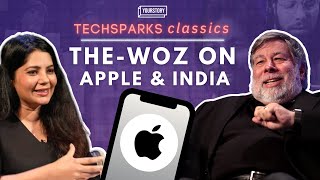

What Wozniak talks about
Steve Wozniak gave this interview to YourStory in 2020 about the future of technology, discussing AI, privacy, right to repair, ethics, and how useful products should serve people over hype.
Also known as: Steve Wozniak interview: "Rethinking the future of everything"; YourStory interview.
Steve Wozniak argues that technology should be judged by whether it genuinely helps people, not by hype. He discusses AI, self-driving cars, robotics, quantum computing, and the limits of what computers really understand versus what humans intuitively know.
He also reflects on Apple’s early days, rejection, nonconformity, and why building useful products mattered more to him than money or status. Throughout, he returns to ethics, transparency, and the importance of freedom for builders and learners.
Later in the interview, Wozniak explains his support for right to repair, his concern about internet privacy and manipulation, and his work on environmental and space-related efforts like Privateer. The conversation frames technology as powerful, but only valuable when it remains accountable to people.
An interviewer from YourStory/Tech Sparks speaks throughout, with Wozniak answering at length.
In his words
“Happiness is smiles minus frowns”
“Intelligence always has to be able to take the next step on its own”
“I do not want to say I am more important than you”
“Ethics is the most important thing of all”
“I do not feel myself as an American; I feel myself as a citizen of the world”
Key points
- AI is useful, but it should not be mistaken for real human intelligence or consciousness.
- Humans still have intuition and understanding that computers do not, especially in messy real-world situations.
- Right to repair supports builders, tinkerers, and curious users who want to safely improve products.
- The internet has drifted away from its original open, global ideal toward surveillance, censorship, and manipulation.
- Wozniak values ethics, truth-telling, and transparency more than money or control.
- Apple’s early success came from building flexible, useful products and adapting to the market.
- He sees space junk, environmental efficiency, and mapping as important long-term technological problems.
Full transcript: Steve Wozniak, YourStory interview: Rethinking the future of everything (2020)
Steve, thank you so much for joining today. You know, all of us here in India and all of us at Tech Sparks are so excited. This is our moment, and I'm so honored to be talking to you today. Welcome to Texas. Great, great to be talking to you all. You know, when it comes to talking about emerging technologies, I don't know where to begin. So we'll begin with the beginning. If you know, we had to take steel and, let's say, that you were born in the year 2000, what would be the technologies that you would be raving about and what would keep you awake at night? Definitely the right timing. I'd be 20 years old. I would definitely, 21 years old. I definitely, uh, um, know where I was going in life by
then. My hunch is, you know, I have such a concern for, uh, how technology is used in making it good and better. I might be working on networks and OS's, to straight down to processors, making secure processors that are more cyber, cyber secure, and building up from the core that way, or working on kind of an Internet 2 that, you know, makes spam go up, almost go away, you know, it has a lot more protections in it, um, unnecessary interruptions. I might be working that way because of my concern for people and their lives, um. Another thing I'd probably be doing is I think I'd be a technical guy where you can put things together yourself, small projects and Internet of Things, look around a home and find little things that could be improved. I think
I'd be putting my skills at work to turn those ideas into reality. Robotics is another subject that comes up because I look at robotics teams in high schools. You know, even in India and here, you have people that have to deal with mechanics or mechanical engineering a little bit, maybe not peer engineers yet, and you have to deal with motors and all the voltages that supply them and the ways to keep things from burning out. You know, like the electrical mathematics of it. And then there's processors and there's sensors with information coming in, steps robots have to take and the decision-making software, so you get too broad. It's a broad range, a spectrum of skills. And that's how I was when I developed the early Apple computers. It was I not only
had the ideas and I was the engineer and I draft things on paper on my drafting board and then I would assemble them and build them with soldering irons. I was a builder, wrote the software and the hardware. I would do it all. So I like, I like that idea. And quantum computing, you know, I was very mathematical and I think I would hope that I had had the right background through college to do quantum computing. The highest course I ever took in college was, um, quantum physics, but to get involved in where that is going and trying to think of strange, strange algorithms and different ways to solve problems, that would intrigue my curiosity. Another thing I'd look at, the important things in the world right now, electric vehicles are coming, it's based on battery technology. In my life, there
have only been two real major advances in batteries: nickel cadmium batteries and then lithium ion batteries. And I'd probably be, uh, if I were chemistry oriented, one to go back into that, just look for, you know, some little, um, ways like they make semiconductors out of silicon, you know, and, um, but they make it out of crystals, the structures, and knowing where different atoms sit, little impurities can make things work better. Or I might be thinking about, I, oh, my whole life I've been thinking about comparing computers to the brain, and then we don't know how the brain's wired, we don't come close to it, but I'd probably be thinking, is there a way to ever, ever create a brain, you know, an electronic device that sort of knows what's going on, looks at your face,
understands things, has feelings, okay? Because you really have consciousness and feelings. And I might be working on that. And I'd probably be starting with saying, is there a formula that's like neurons and synapses? And if you make it a trillion times in software, trillion instances, can it just sort of start learning slowly, slowly, slowly, things like how to speak all on its own, like a young infant does? There's just too many things to be curious about in this world, you know. Interesting things that apply to real people's lives is where I'd be, because that brings me to the question that, you're one of the foremost thinkers in the world on artificial super intelligence, and, uh, you know, and you have had different views earlier. You said that, uh, we artificial intel
ligence can use us as pets and then we'll be used as pets by the intelligence. And now, over the years, you're saying that, uh, it is here, there is a usage of artificial super intelligence, but human intuition, uh, will stay ahead, human intuition will be of paramount, uh, supremacy. Tell us your views and what would you like to tell everyone, because in India we are looking at AI very closely. From when I was extremely young and we didn't have anything in the way of computers like we have today, I started comparing, you know, the brain to a computer program. And one of the earliest programs I wrote back when you couldn't even have computers in schools was a
chess problem, and it just tried every possible avenue to find the answer. And the computer could do a million things a second, no human being could do that, but it didn't come up with an answer. And I finally calculated it was going to take 10 to the 27th years to get all the answers of the knight's tour in chess. I said, human solve it, we, our brain works differently. Now, throughout my life as computers increased, increasing, increased, and singularity came along, you know, and I said, oh my gosh, yes, exponential curves of amount of processing and amount of memory storage, it is going to equal a human brain. We are gonna, I was on stage for a few years saying these computers are going to become conscious, they are going to have feelings, they're going to care about you, which is perfect for a
Student, what if a student had their best friend on a screen that was a teacher, a low-cost teacher that could take them all the way through from second grade to college in one subject, like chemistry, that they got interested in? What if? I thought it'd be so great, and I really believed in it and wanted it. And then I had a couple of instances, especially with a very bright son of mine who's in computer technology. I started rethinking it because by then Bill Gates, I was saying, you know, these computers are going to kind of give us everything we need in life. We just have to sit back and get good clothing and entertainment, food and everything, and we're like the family pets. So I started feeding my pets slice steaks, the best food, because, do unto others as you would unto yourself. And I'm gonna be a pet someday, I'm going to treat my pets the way I would...
Want to be treated. And Bill Gates and Elon Musk and Stephen Hawking started coming in saying computer technology, outthinking us, is going to be the biggest threat to humanity ever. And so I had company. But then I rethought it and I said, wait a minute, there's no computer sitting around with artificial intelligence saying, what can I do that's good for the world? Don't even know what good is, really, how to define it, what could I do, as anything. We haven't even talked about a computer ever doing anything like that, getting the least step. Then, when I went back to school to get my degree 10 years after my third year of college, my name was famous, so I went under a fake name to get my degree at Berkeley. I took psychology major courses. I was a psychology major, and I was thinking about how the brain and...
Works. And all I found out is we don't know how the brain's wired. We do not know that our memories are in the brain; we know that there are processing centers in the brain, we have good proof for that, not a bit of proof at all. But we don't know what a memory is or how it's stored, and that's kind of intriguing. We don't know that kind of stuff. How could we ever make a brain? And I was at the only company I was ever with to figure out how to make a brain. "Takes nine months" is a joke. Uh, so, um, so, you know, but no, there's something about us that we think we're getting closer to just because, okay, we can beat somebody in the game of checkers. My gosh, that's intelligence? No, it isn't. We said real intelligence involves deep thinking like chess. And then we make programs that can eventually win at chess, just because they've, you know, played billions of...
Games and they remember every game. What if a person could do that? Never. So, uh, is that intelligence? Um, no. Intelligence always has to be able to take the next step on its own, and computers are really just programmed right now. We'll program you to do things a billion times and learn how to play a game better than a human. Show Google 80,000 pictures of dogs. Google can recognize a dog better than any human faster. Wait a minute, does Google know what a dog is? My one-year-old granddaughter looks at a dog and knows it has limbs like we have limbs, flexible and soft and hard, and it looks around and has a brain. It decides where to go. The one-year-old infant knows what a dog is. Google doesn't know what a dog is, just what pixels might be...
A dog. We fool ourselves so much on thinking we've got intelligence. And self-driving cars is also horrendous. They, you know, keep saying they solve one little special case and one little scary special case after another. We can make cars drive on normal roads today and that, you know, it is so... um, I totally give up on that idea. It's not worth it. We can make cars have little safety features built in, extra safety features built in, but until they have tracks like trains, they're not going to be able to run in human roads because human roads are unpredictable. There's all sorts of debris that you can't predict exactly what it is, you know? So we should stop thinking that we can make full solutions with artificial intelligence. The word intelligence is the wrong one. I mean, algorithmic...
Something algorithmic, inefficiency, I don't know, but it's actually efficient, so it can't, you can't use that word. But there's probably some word that fits instead of intelligence. We fool people into thinking these are real brains when they're not. But they can be so helpful. You know, the height, the state of the art of computer technology that helps us in the world is called artificial intelligence. You know, sometimes it takes patterns out there and figures out what's real, and it watches you and your life and figures out what you're most likely to do, although that fights my own creativity if somebody thinks they know what I'm going to do next. So I just say happiness is smiles minus frowns. And if you're always worried, oh my gosh, you know, um, how are we going to solve this problem? What is AI? It's going to take over. That's a fear. And that's frowns. And you...
Shouldn't fear it. No, just use it in the best way you can. Um, it's really all to help humans. A few people fear that, oh, once it's weaponized and starts being given some commands, the thing for itself, it can become dangerous to humans. But, you know, you have to look at what is the mass of what's doing. It's really helping us. Steve, I have to ask you this. Uh, you've been a non-conformist all your life. You dropped out of college twice and you've done self-education. In fact, you built blue boxes, PC Cream Soda, and the calculator for HP. You know, for all the young entrepreneurs, startups, everyone watching you today, I want to ask you one...
That has your belief in conventional, uh, education system convention been come back, or are you still the same non-conformist? And what would you like to tell entrepreneurs because they're always trying to do different things, live in, you know, unknown territories, and you've done that all your life. I have always been a non-conformist, but I had an advantage over some non-conformists, which was I was an extremely bright student, way ahead in electronics, way ahead in computers before it existed, and, uh, you know, bright student getting the math awards at my schools. So that gives you some flexibility to be like, today I'm well known, I could be a non-conformist and people think that I could tell you a
total lie and you'll think maybe, oh, that sounds like it's real; it sounds scientific. Um, but I, I discounted authority, those people who say we are you, you will do what we say you do, we are the ones that must be believed, we are above you. I've discounted that since the Vietnam War and I never want to treat people that way myself. I do not want to say I am more important than you. I think better than you, no. I want you to feel very, um, good self-esteem, believe in yourself, have self-confidence. That's important. And, um, and you said I dropped out of college twice. Well, you know what, the first time I took off from college after two years of college, I worked for a year because I wanted to earn the money for college rather than burden my
parents, which really couldn't afford it. Well, that's a, I mean, that's a very honorable thing. That's not like, um, being non-conformist. And then I went back to another year of college, and because I crashed my car that year, oh, I wanted to take another year off and work and earn the money for another car and another year of college just so I could pay for it myself. That's very honorable. That's not like, uh, because non-conformed. But I allowed myself to do it. A very strict person might be taught their whole life you follow these rules, you go on this path, you go to these schools, you attend this, you do that in this order, you, you, you're on time for things, you're supposed to be on time for. Um, that's, that's total conformity. Some people just, I'd be too scared to do anything different than that. And some of us have a lot of fun just enjoying. We
can play pranks, we can play jokes. Look at a comedian. Every story a comedian tells is a phony story. It starts with kind of a made-up story, a lie or something like that. They turn it into humor. And I believe so much in laughter. My formula happiness is smiles minus frowns, and the smiles largely, more than anything else, come from humor, comedy, jokes you make up, pranks you play. Not everyone grows up that way, but between 18 and 23 years old, your personality settles down and that's the person you are forever. You might be that inventor, the creativity, the one that tries to do things that have never been done, or you might just be, I've been a good student, I know how things are done in the past, I keep doing them that way, and I keep doing my job forever. And that's a, that's very conformist, and we grow up
different ways and there's no formula. It's not like a spreadsheet. You can say when you're young. I do believe that how parents bring up children, some of them let them have more freedom like I mentioned, follow your heart, you know. Um, and some of them just, no, no, you'll follow these rules just like a school tells you, you'll follow these rules in life. And some. So I was with my kids, I would not press my values on them. I would not say here's what you have to be in life, here's what you have to do with your life, here's what you may have to go to school, here's how much time you have to spend on certain subjects. I would not do that because I do it very lightly because I don't want to say I believe in being this way, you should be this way. You know, even if it's non-conformity, let people find out on their own. You know, you've got to live your own life. And I was very, very lucky that my parents let
me have a lot of freedom to go in the directions I wanted to go. And I would, you know, and I would do it again. I'll tell you, even the personal computers that started Apple, I mean, it was so different than anything before, out of the books of the engineering books that said what is legitimate for color television. I was a TV engineer too. What's legitimate in the old analog days. And here came this little digital solution that cost zero dollars instead of five thousand dollars, and it popped in my head, but it violated everything in every book on color TV. But it's the reason our first Apple logo was done in six colors. We brought color to our... The first time arcade games were colored, and the first time arcade games were software. These were huge steps for gaming. Have fun. Have fun in life. We all have so much to look up to, you
for. And then that's why the world over, we and everyone watching today would agree with me, there's so much, so much to respect and admire you for. And that brings me to the question, you know, something very close and personal to all entrepreneurs, to all startups, to everyone is rejection. You know, it's so difficult to deal with rejection or to come to terms with what rejection means in life. And more often than not, we all have to go through different kinds of rejections in our lives. I want to ask you, and if you could recount your feelings then, your, you know, HP rejected Mac One and Mac 2 design. What did you feel? What did you feel? What did Steve Jobs, both of you, feel at that time? What did it mean and and what is the
Rejection meant for you in those years. Well, actually, it goes back to a Homebrew Computer Club, which was so inspiring. We talked about a revolution. People were going to have their own computer someday and be able to do what the big companies did, turn the tables over on the authority. And I was so much a part of that. Steve Jobs wasn’t; he was in a different state. He was living on a commune; he wasn’t at The Homebrew Computer Club. I'd been there every day since it started, and oh, I want to do this, and I wanted a computer of my own. I told my father once, "I'd rather have a computer than a home." And the formulas, the prices of parts coming down with Moore’s law, made it possible. So I built this computer, and I showed it off at the club. You know, it wasn’t for a company or a business or to make money. I showed it off.
And I gave away my designs to everyone in the club, and I said you could build your own computer that’s useful for an affordable price, could really solve problems by typing things in. I came up with all these different formats that had never been done before. Every computer had a big old front panel of switches and lights. After the Apple I was shown off at The Homebrew Computer Club, every computer from then on would have a keyboard and a video display. It just, you know, set the tone. But, um, so I developed these things, and it was the Apple I and the Apple II that Hewlett-Packard turned down. And, uh, I wanted them to do it. I loved my company. I'm loyal. I'm so loyal to my company. And Hewlett-Packard back then, we built products for engineers like myself. Oh my gosh, I wanted to be an engineer’s
engineer for life. I would never move up the org chart into management. That's political. I designed things. I'm a solid, you know, design engineer, and I wanted to be at Hewlett-Packard for life. I would never start a company behind their back — an official company. So what I did was, um, propose it to them, and I wanted them to build the personal computer. But they didn’t see the market. They couldn’t see it. They couldn’t see it as a product, and they built products for engineers. And the front product that personal computers became is not what Hewlett-Packard built. They would build a dumb, boring machine for engineers. And a lot of people on the project, they just didn’t, you know, wouldn’t be an arcade video game player. So it’s probably good that they turned it down. And five times. And all the big computer companies were all in the press saying that these
little small computers wouldn’t really do anything useful, and they were going to go away, and it was just a bunch of hobbyists hooking up parts, little builders at home. And they didn’t really appreciate it, but that inspired us even more than ever. And so Steve and I said, okay, you know, he proposed, after I showed him the computer at The Homebrew Computer Club that I already helped other people build, he said, "Should start a company and build— not the computer." We didn’t have any resources, we had no money, no savings account, you know, no experience in business, no rich relatives. So we were going to build little PC boards that the parts go on for twenty dollars a board and sell them for forty dollars a board. Oh, would we get our money back? Who cares? We'll have a company for once in our life. We’ve been
selling my stuff for about five years already. Steve would come into town every once in a while, see what I’d created, and then he would turn it into money for both of us because he had zero money. So he said, "Let’s start Apple." And, you know, we pursued it. HP turned us down. We had to start Apple. And it turns out the market was just at the very tiny starting of a huge growth. And here we were, and we started putting, making, building more than a twenty-dollar board. We started putting chips on it, selling it for five hundred dollars to a local store, and then they priced it. I came up with the price 666.66 — all repeating, indigenous mathematical, almost — and that was, so that was a great one. But that product, the
Apple I, was not even designed as a Steve Wozniak computer. It was designed totally by me, everything hardware, software, same as the Apple II. But it was modified from something else I built to talk to faraway computers. Now it was its own computer. And the Apple II was really the machine that would change the world. And we had my Apple II computer totally developed by me, every bit of hardware, software. We had it before we ever sold and delivered an Apple I. So we knew that the Apple I was just temporary, very short term. The Apple II was going to change the world. But to change the world, you need a company and you need money. It takes a lot of money to build a thousand computers when they cost 250 dollars each to build. So we got an investor. Steve Jobs was the
businessman. He went out, and he pursued every avenue we could raise money and found an angel that was willing to invest 250,000 into us and become an equal partner. So there were not two of us; there were three of us. And Mike Markkula, our investor, he was the adult who told us how to do things and how to run a company and how to set it up and how to organize it, what our jobs would be, and all that. So, uh, so, um, that product, the Apple II, just was so far ahead of the world. It was going to be all of Apple’s profits, all the money we made for the first ten years of Apple. One product was so advanced, and it was a platform that led to so many other hardware devices and program software, um, that it had a lot of growth ability, and it was, uh, it wasn’t restrained.
Open source days. So, Steve, what you're saying is that it was okay that, uh, he turned it down because, at the end of the day, you might get turned down but it leads to what you've created, what you've built, and what the world is using today, right? I believe that it would have really inhibited the world from getting to as easy to use and fondness of computers, things that Apple really brought to the world. Hewlett-Packard eventually did start a project on my floor of my building, where we were designing the calculators, the hottest product in the world at the time. They started a project and, oh, it was going to be a little computer, oh, with a little
video display, oh, with a keyboard, oh, with a BASIC programming language. I've just done all this myself. They had five guys assigned to writing BASIC alone, and a whole ton of people getting assigned to that project. And I, oh my gosh, went to my boss's boss and said, "Look, my interest in life is not calculators, it's computers. I want to be on that project." And they turned me down. That was one of my turn downs. They wouldn't even let me be on that project when I'd done it all myself already. And I said, "I'll do anything, just a little printer interface. Give me—" I didn't try to act like I have to run a project or be important, just wanted to work on it. No, they turned me down. So I guess that was lucky for the world because Steve and I had to do it
on our own with Apple. And, boy, did we show the early path. You know, we failed when we tried to make things different, other computers after that, Apple II. But that was a great start. So always good to start a company with one incredible product. It can take you a long way and buy you a lot of time to have other failures. Now, leading up to the Apple II, of course I had lots of projects I built for fun, and they weren't failures. They all came through and were beautiful, but they weren't worth companies. They weren't done for money. They were just done for fun, things to show off to friends and brought me a lot of joy. And, you know what? That joy motivates you and keeps you going. And so that's an advantage of a type of failure, of just working on things you want to work on for fun. Your mind gets better and better and
better at doing them every time. Now, thank you. Very very insightful. Thank you so much, Steve. You know, I don't know if you followed, but in India this year is the year of IPO for startups. And we had a very interesting IPO with Zomato, and a lot of companies are going for the IPO, startups. And then it's a big, significant year. I want to ask you, Steve, four decades back Apple went for an IPO, and just after the IPO, the stocks came down because there was this, you know, the public sentiment and the investor sentiment was that the innovation around Apple III was not as much as they expected and there was
subdued appreciation in the market. You know why I'm asking you this question? It is that as young entrepreneurs and businesses go and get listed, there would be public scrutiny. There would be, you know, a lot more eyes on you. How do you continue to innovate, build, live with conviction while you are, you know, in the public eye? Why am I not in the public eye? You know, what? I never wanted to be. I was shy. Keep me away from the press. I didn't want to be. And Steve Jobs wanted to be known as an important person and he took over, and you know, all the computer thinking comes from my brain. But he wasn't a computer person. And so his brain came up with computers that all failed. The Apple III
failed because it was a try to force people into my little closer Apple III world, different world, and building the Apple II but put in extra money to make sure it doesn't do what the Apple II owners wanted to do. I mean, it sounds unbelievable, but that's how it was. This is just a marketing mistake. And the Lisa computer, the first computer we did with mouse and all that, we had lots of software packages and everything. We did a great job on it, but Steve, not being a computer person, didn't understand the insights of computers and what it would cost. So, of course, it cost $20,000 of today's dollars to buy, and people don't buy that for themselves for their home. Just too expensive. And the Macintosh was our biggest failure ever. But then, when the IPO was around the time of
the Apple III and our price dropped suddenly quite a huge amount, I was never in it for money, so I didn't care a bit anyway. You know, I just wanted to get great computers to the world. I wanted to enjoy them. I wanted to have great products. And the Apple III was an attempt by marketing really and the executives, and not myself. I was not involved in the Apple III, and they kind of went around me and kind of their idea of what a computer should be, but it was more closed and it was more, it was less, "We're going to give all our open source information to the society." And that was a little bad move. It turned out to be marketing errors, but there were some physical errors as well, some actual concrete trying to build it with, you know, two smaller traces, metal traces on a PC board, and it didn't work out. Some things, a lot of
Things failed. Um, so, you know, I could talk about each of the products, why I think, why I seen what I saw happen, and why they failed. But I mean, anybody can go read about that and come up with their own conclusions. We were flexible though with our Apple II computer. Kept bringing in the revenues even when the other computers all failed, that the attempts all failed. We had the millions of dollars coming in every month. You know, that Apple II was good because it was so flexible. It could grow. When we first started out, it was more of a game machine. After about one year, we spotted a business market, so we shifted direction to the business market. And our top marketing guy who wanted to keep a game division going, uh, Steve Jobs wouldn't let him, so he actually left the company and started a company called
Electronic Arts, one of the biggest in the game industry to this day. And I was actually a founder. That I believed in games and fun. So, you know, but the fact that our machine could just keep—we kept adapting, adapting, adapting to the market. We made smaller versions of it, bigger versions, faster. We changed processors a couple times. We were not a company that was just totally stuck in the mud. Yeah. Steve, now let's move to right to repair across the world. Why do you encourage that? All the technologists, everyone should look at it more closely and participate in this. Yeah, to me, right to repair doesn't mean
that a company has to build a product in a totally remove-the-parts-and-repair-it-as-easy-as-you change parts in your, um, you know, and you're, you know, a printer that you're using or something like that. No, it doesn't mean that that a company has to do that. It just means that building things by normal methods should still be—the company can get in and do repairs on them. Some people who are smart want to spend a huge amount of time that would be worth a huge amount of money normally because they're interested should be able to go in and move a part and put one back in safely. And sure, if they destroy the product, the warranty is not in effect, you know. Um, but it's more to encourage them. I think of builders like I was. I wanted to go in, take something in there. Oh my gosh,
I can actually change this one little part and make it perform a little better. Um, that's the smart person should not be neglected, the smart little builder. And, you know, it's not like a huge amount of your world anyway. You could sell a million computers and there's 10 people out there that kind of know how to or want to take it apart. Of course, every curious person wants to take it apart and actually spot there's a bad part in here. I'll replace it myself. Why not? And why do you have to be forced? Nope, you can only go through this one avenue that charges you a certain amount of money. So it winds up being money, money too the company. We're going to keep control because we don't want you to have any kind of knowledge about our products. We want to be in control of everything, and the more secrets you can keep, the
more control you have. You know, this text box theme is what's next. And then, uh, for everyone, Privateer is a company that you started while we are talking about telecommunication space tech. What you are saying is that we need to clean the space and, and, and, and, you know, waste management in space. Tell us about this and why are you such a strong advocate and believer in this? I've been an environmentalist in my thinking for all my life. I thought, you know, we never turn over the same rivers and the same, um, the same, you know, even clean air and the same forest to our children. Every
generation gets a little less than there was before. And if you know how things work exponentially, that's bad. So I've been, uh, you know, a little strong contributor to causes that I believe were ecological. We've never thought about space except you read a lot of articles about how many things are up in space. Sometimes there's damage from refuse, junk that is just floating around. What if you're driving on the highway and the stuff in the middle of the highway? This is, that's a big problem. Um, we, we plan space launches sometimes today, manned or unmanned. We plan them to deliberately go very short time through the near-Earth fields where there are a lot of junk floating around from Earth. We can actually spot things that are as small as 10 centimeters cubed. We can
spot them up to that, that's the size. We can't spot smaller, you know, and there's a lot of junk floating around, you know, little smaller pieces and a lot of it's not known, it's not well mapped. We're used to maps here on Earth, you know, be it ways or Google Maps or something. And, uh, so our company, Privateer, the first goal is going to be to really create a good map of everything we can that's up there. And you have to launch devices into space to have a better view than from Earth to spot smaller things. And that's where we're starting. And, uh, everybody who has anything up there—satellites are expensive, uh, you know, and space stations are expensive. Anything up
there at all is going to want our maps. I hope. Yeah. Steve, you've also founded a marketplace for funding eco-friendly projects called e-Force last year, and it's allowing platform to hold blockchain utility tokens. Tell us, you know, two questions. Uh, do you think that decentralized platforms can go on to become as big as maybe Uber, Facebook, all these platforms? And the second is, when it comes to crypto and blockchain, what would you say is the signal and what would you say is the noise? Yes, I have so much going on in my life I haven't had time to become an expert in blockchain implementation and a lot of people come up with here are ways that
We can shorten the time per event, and we can scale, but I'm not an expert on that. And I also like the pureness of something that, uh, you know, like Bitcoin, it's just mathematical, and it's not something that special. Little variants of it—I don't like all these variant coins coming out, you know, and some celebrity puts their name on it. It looks like it's just ways to raise a lot of money for themselves. And I do see one thing: if you have companies that are running and they earn a lot of money and all their data is recorded in databases, well, wait a minute, the blockchain is a way to have absolute security that nothing in a database can get hacked or changed or destroyed or anything. And so basically
implementing the sort of form of, I don't know what you call it, but your tokens are like shares of stock. They kind of work that way: if the company goes up, your token goes up; the company goes down, you don't. Start with a company that's making a lot of money and has been making a lot of money for, you know, years and years, and ongoing business is very good. Our business is making companies, you know, more efficient in their use of technology—from lights and air conditioners and insulation further—and we're also involved in carbon credits, you know. But so we're, you know, we're very much into efficiency. That's where our business starts. But you can invest in all of our projects by buying our tokens, and that, I bet, I buy into. It's not just a currency on its own; it's not just a token that
doesn't really equate to something of value. It really equates to something you can measure, and, uh, that's about the only—I'm not a super investor. I don't, you know, I, I really—I don't buy stocks. I don't really have, uh, um, I've never even used the Apple stock app. I don't want to sit there every day: is it up? Is it down? But I'll invest in something very worthwhile and ongoing, like Apple. You know, that brings me to the question that you left April in 1985, and, and, and many would say, uh, before the best days were coming. And then I'm asking you this question because what would you tell entrepreneurs? What would you tell leaders? What would you tell young
leaders? Because, you know, we get attached to what we are building. We get attached to our businesses, our startups, and, and then you have to disentangle, then you have to detach, when you have to let go. How, how was it for you? And how should they be thinking about it? I actually didn't leave Apple. I stayed on Apple's payroll. I showed Apple exactly what I was going to leave and do, because Apple would never do it, and it was a startup. It was an interesting startup to build the world's first universal remote control, programmable and everything. I mean, this was a cool little project, and I knew how to do it, and I knew why I wanted it for myself. So, um, that was really not leaving Apple.
Um, Apple, though, had gotten—see, I'm an inventor. I'm an individual. I did all my projects for Apple that were great, turned it into a great company to them, all in my own just ideas I wanted to pursue and follow. It wasn't like job assignments. Now, Apple had grown big enough that it was, by then, that everything was managed through many layers of management, and it wasn't like a lone engineer very rarely could a lone engineer come up with something and kind of all by themselves develop a whole new category that, you know, might be a big product for us. So, uh, here I had this idea, and, and I wanted to go out and actually make it real, and I did it. And I'll tell you any entrepreneur out there that has some ideas and wants to turn into something real for the world and make it a better world, that's the best thing you can do—both for economics
and the most fun thing you can ever do in your life: have a little company of your own. Foreign person who can answer this question, uh, you know, you are one of the builders and creators of the internet as we know today, and, and what we are—the digital world that we are living in, uh, today, you know, 10 years back, 10, 12 years back, uh, with the advent of social media, the advent of, uh, you know, all these platforms, the big tech players, there was this hope, optimism, and everyone was looking to, no, because it definitely democratized access and, and brought us together. But today we are also living in a world where there's, there's so many
questions around, uh, you know, our privacy, around how technology, how this whole internet is being used. And I want you—are one of the fiercest advocates of digital, uh, uh—which you know, internet's, uh, the power of bringing people together, of using internet for positivity, for change. What would you say? What should the world and what should all the tech players and everyone should be thinking about and then doing at this time? Yeah, even when I was very young, my father talked to me about ancient technologies before digital and all that stuff, but there's good often brings some bad things with it too. For example, studying the atom brought us the atom
bomb—that's just an example. Well, when the internet was brand new, I mean, all this technology brought so much beauty into our lives. The internet was brand new. I could communicate with people in India or anywhere around the world, and, and people could publish knowledge that they had if they were academics without having to go through a third-party profit-making bookseller. Um, this was just a new world. There's no borders. It's not a country, but it exists and works. That was such an exciting dream. It was almost like when I was young, taught how space doesn't belong to anyone, the moon doesn't belong to anyone, and these were high ideals of mine. So that's what the internet represented them. But now it's allowed. Look at the Social Web. The Social Web came. What a great idea: friends being in groups and
Being able to communicate with each other, and then look what it turned into. If we map everybody's interests and know everything about you and every time you click like and what you click like on, we know you better than you know yourself. We can sell it. We can make money on advertisers, causing you more, more spam in your life, you know, and not just seeing the world as a random place but kind of being put into a little niche corner, and you stay in that corner. You don't get to see the whole random world, and that is—I do not, I don't like that. I'm a creative person. I don't want some company saying, "We know what you're going to do next. We know what you're going to think next," you know? No, I want to keep it inside in my own head. And so I kind of don't like those things that have come out, and also the—
Ability to abuse people. And look at the problems that Facebook's going through right now with all these people that have a kind of a political agenda, a motive. They come in, they put out disinformation, and they have ways to spread it so fast. How does a computer grab all the information on, you know, I don't know, 180 million people on Facebook? Well, a person can't go and do 180 million, you know, "I'll go suspect everybody's profile and grab it." No, a computer can do that. And why do we allow these things to exist and not inhibit them greatly? Our values of what kind of morals and ethics we'll have. Ethics is the most important thing of all. Truth telling. These companies don't always tell the truth. They—they keep—
Their secrets. They hide it. If they're—if they ever get questioned in front of Congress, they kind of give blank, no give answer, don't give an answer. No transparency is the heart of everything. I thought of all, I want to be a good person in life, and I do a lot of good things in my life. And the goodness, I always trace it back to when I was young. I decided all comes from: you will be honest, you'll never— you'll never hide something and secretly say one thing and keep people from getting the whole truth. No, the truth is the guidance. And that we've lost a lot of in big technology. Money outweighs, outweighs truth. That money outweighs ethics, which is the truth. Money outweighs morals, which come from ethics, you know? And so I, um, I'm sort of sad where things are right—
Now. It's almost like we don't have an internet anymore; we have 200 internets. Every country puts up its own rules, and owns its own censorship and its own regulations. And, you know, it's almost like countries inhibiting immigration and whatnot, and that's not what it was supposed to be in the beginning, and it's very painful for those of us who saw a beautiful world and saw it taken away. And I don't know how to deal with that. Maybe someday we'll create a new internet that doesn't have these problems. Internet 2, or something, you know? And people might do it on their own. People might do it on their own. We got inspired with a revolution at The Homebrew Computer Club, and that can happen again. Yeah. And thank you for calling it out and speaking because, uh, we need to—
Have more conversation and more leaders like you to speak up. Steve, I have a question for you. And, you know, because all of us are leading, uh, and then the pandemic has brought the world, uh, to experience, you know, and to experience different things. But more importantly, as humans, as professionals, we are all reflecting and introspecting. I want to ask you, ask Steve Wozniak, if you had to look back at the journey so far, how would you say, you know, how about, how what goes in your mind? What do you think about the journey? There's such an eclectic, such a rich life that you've led. Uh, what does it mean? How do you look at it?
Every step of the way on my journey, I was happy and I was truth-telling and I would never change a thing. My mind was really good. Technical decisions I made—some people come back later and contradict them because they were different than what you're taught in school, they're different than what's in books, and no, no, no. I knew my head was in a good place making good decisions all the way. I would never trade who I am, where I am, with anyone in the world. I mean, I gave away my huge wealth to good things, you know: to museums, to people that needed it, to other employees of our company that I felt deserved it. Um, and, and that's, you know, and I'm glad I'm that person. I did not seek big money, I did not seek big power, did not seek—
Um, I did want other engineers to recognize me. I wanted—I wanted engineers to say, "Wow, he did some genius things." I really did want them to appreciate my brain but I was only in it for the brain. Wow. Wow. Yes. Before I let you go, Steve, very quick two questions. One on behalf of all the startups and entrepreneurs. I want to ask you, are you investing in startups? Oh no, I don't really invest. Once in a while, I get pulled in by a friend once a decade, once a decade, and I've joined the couple I joined efforts that you mentioned, and I joined WASU because it's a combination of technology and education. I spent eight years teaching, um, 10 to 13-year-old kids myself. Secret.
No, press aloud, and I also, um, uh, uh. So, I don't know, I forget what the question was, so I can't answer it. And what's your next personal milestone? Next personal milestone? Um, I don't know. You know, I'm so happy I can't stop working for some reason, and I love, I love talking to people. I love my family, my dogs, having a good time, a lot of entertainment in my life, a lot of good things, but I'm so busy. It's so, maybe it's probably to eventually get to the point where it's like I can sit and fish every day at a lake and, you know, just watch TV and play games and, you know, kind of a real retirement, um.
I, I just, you know, I like things that are peaceful and quiet and alone, so I don't know if I'll ever get there. And, uh, you know what, a lot of people, I'm getting to the age that an awful lot of people that I know have died. You know, people in my business area even have died. Um, so I'm totally reconciled with death. You know, hey, if it comes, you look at was your life good, was your life high quality and well implemented? And yeah, so I got nothing to be, nothing to be worried about. Wow, Steve Wozniak, on behalf of everyone here in India, thank you so much. What an honor, what a free-spirited leader that you are. We all have so much to
learn, to look up to you. Thank you, thank you. Keep inspiring, and yeah, very, very proud. Thank you for this conversation. Thank you very much. I do not feel myself as an American; I feel myself as a citizen of the world. Well, thank you so much. Thank you, thanks a lot. Have a good day.
From YouTube captions, lightly punctuated for readability. Timestamps link to the video above. Errors are possible.
Cite this recording
Steve Wozniak, “YourStory interview: Rethinking the future of everything (2020)”, 2020. Transcript and video: Thinkers Archive, https://thinkersarchive.com/steve-wozniak/future-of-technology-yourstory-interview-2020/
Quoting a passage? Link to its exact moment: every timestamp above has its own anchor (for example https://thinkersarchive.com/steve-wozniak/future-of-technology-yourstory-interview-2020/#t-135).